American Freakshow: Our Reality TV-Driven Media Is Killing Our Democracy
The lurid details of Olivia Nuzzi's transgressions and the popularity of "The Secret Lives of Mormon Wives" derive from the same culture of voyeurism.
American democracy is caught in a reality trap. More than ever, our media—from social platforms to the bevy of reality television shows on global streamers—promises to beam real-life people into our homes and lives. Perhaps more than ever, we struggle to recognize the humanity in the people whose lives we are consuming as entertainment product.
At the heart of this is a voyeurism enabled by a media ecosystem that understands that what so many of us want when we watch other people live out their lives on our screens is to see them laid low.
This is not an essay about cancel culture, nor is it exactly one about online polarization, though both of these phenomena are relevant to the crisis at hand. Rather, it is about how this anti-social way of taking in the world around us corrodes the foundations of liberal democracy.
When I argued earlier this year that “it’s the phones,” I was primarily making a case about how engaging at a remove through our screens enables certain pathologies to emerge.
The question is not simply whether electoral democracy can survive the Facebook news feed but whether the beliefs in human dignity and human value that undergird a free society can flourish in the outrage and humiliation circus we have built.
On the one hand, there is nothing new under the sun, and human beings are as they have ever been. On the other, we are in a damnable crisis, and our liberties could be lost for generations if we do not pull out of this moral descent.
Rubbernecking at reality
Tobias Rose-Stockwell describes how enraging, upsetting, and otherwise extreme content overtakes our attention spans in his book Outrage Machine: How Tech Amplifies Discontent, Disrupts Democracy—And What We Can Do About It:
On social media, our attention naturally was edging toward the unacceptable, the outrageous, and the extreme, all without external help.
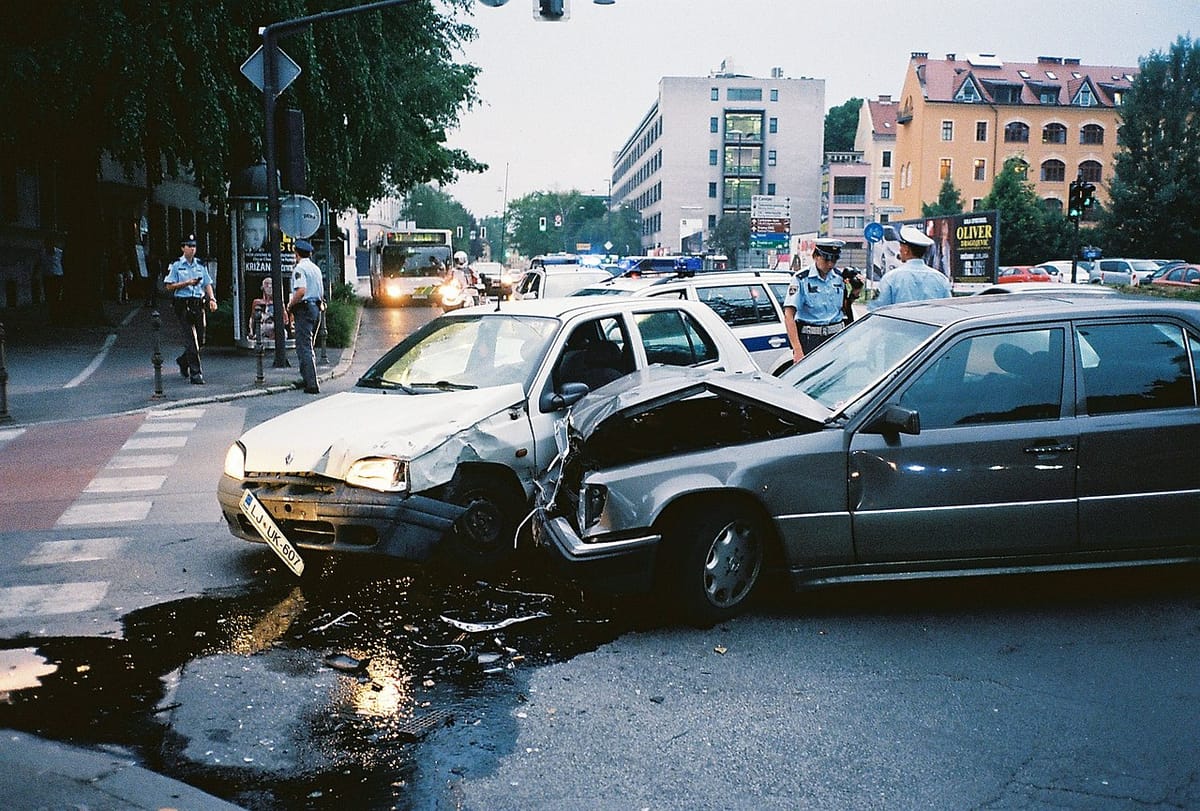
Put another way: No one would ever say they want to see car crashes in their news feeds, and violent content like this is banned and against Facebook’s policy. But if a video of a car crash is posted, you’re likely to watch it, even for just a moment. It’s second nature to be attracted to sensational incidents…
Our feeds became far more toxic as this borderline content flourished…The pattern held true regardless of the claims of Russian interference, bots manipulating users, or the Cambridge Analytica controversy. Malicious actors weren’t the greatest forces behind this bizarre engagement slope. We were. It was like a cavalcade of car crashes on a roadway, and we could not look away.
Rose-Stockwell’s analysis of how outrage chains trigger social media engagement and lock us into toxic feeds is indispensable. But another layer to our attraction to so-called car crashes is perhaps more grotesque.
Our media ecosystem doesn’t only entice us to watch “political car crashes” as Rose-Stockwell calls them but to fixate on human wreckage. We are fascinated and even wildly entertained by people’s self-destruction, watching them be undone by greed, infidelity, narcissism, and a litany of disordered behavior.
This is what I have been unable to stop thinking about as the most recent revelations about Olivia Nuzzi and her attempted rehabilitation have played out in front of us.
Yes, Olivia Nuzzi committed grievous acts of selfishness and crossed the most serious ethical lines. But I cannot shake the sense that it is a deeply irresponsible media environment that is capitalizing on her return, excoriated by an ex whose professional conduct raises its own serious moral questions and giving interviews in which it is clear she is in no position to examine her behavior. None of this is to absolve Nuzzi, but there is a ghastly, gory nature to the coverage and to the interest in it. And there is a grotesque opportunism to the lofty media institutions like Vanity Fair that have tried to put her back into the limelight, only to have to turn around and jettison her when the bet proved bad.
Online, the outrage and invective has often bled into entertainment at the tawdry, salacious nature of the saga, its many tristes and heel turns. Lizza himself has fueled this, doling out piecemeal information on his relationship with Nuzzi and her betrayals. None of it feels like journalism so much as a penny dreadful of elite media decadence.
But this sort of grisly rubbernecking is not limited to social media. Reality television is built in large part on the antics of people willing to trade dignity for modest celebrity and sponsorship opportunities.
Earlier this year, The Conversation’s Noor Gilani asked five experts—all scholars with backgrounds in psychology, film, and culture—to answer whether or not reality television is ultimately harmful. Four of the five respondents said that it is. Dr. Suzie Gibson, a lecturer in literature and film at Charles Sturt University honed in on the voyeuristic aspects of the genre:
Voyeurism – defined as an interest in observing unsuspecting people – can become damaging when the subjects are objectified and dehumanised. And research linking voyeurism to television habits shows people drawn to reality TV tend to score significantly higher on a “voyeurism scale”.
Reality TV’s treatment of contestants perpetuates a culture of dehumanisation for entertainment. There are many reports of contestants facing psychological and physical harm, sometimes leading to anxiety and stress disorders. In extreme cases, contestants have taken their lives following online abuse stemming from their TV appearance.
And while some reality shows produce inspiring figures, such as Alone Australia’s Gina Chick, many leave their participants feeling humiliated.
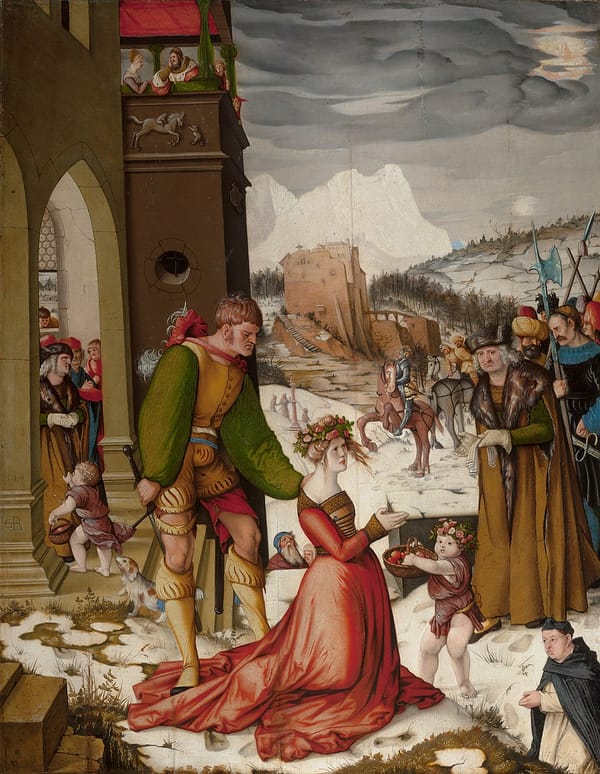
In some ways, “trashy” reality TV mirrors the Roman Colosseum. Contestants are the modern-day gladiators, battling for love, fame and Instagram followers. Audiences can live vicariously through their favourites, while hoping for others’ dismissal or ridicule. This phenomenon is captured by the German word schadenfreude (pleasure derived from others’ misfortune).
In many ways this parallels the phenomenon of the “main character” on social media, wherein a poster finds themselves lambasted and ridiculed across a platform for some errant missive or bit of documented bad behavior. Arguably, that’s what Nuzzi has become. But this isn’t quite the same as public shaming, though that is relevant here. It has a more lurid quality.
The reference to the colosseum strikes me as particularly helpful. There is something visceral in the way we consume real-life pain and angst through our television and phone screens.
Take one of the newest reality hits, The Secret Lives of Mormon Wives. This show, an almost auteurist exercise in semi-scripted verité schlock, throws together young, beautiful women in Utah whose prior claims to fame derive from the glossy, smugly suburban corner of TikTok known as MomTok. But their antics on the show are less maternal and more adolescent. Reviewing the second season for Pajiba, Dustin Rowles wrote,
These women are emotionally stuck in seventh grade, and they’re terrible to each other. Worse, most of them seem completely incapable of breaking the cycle. For two seasons now, it’s been the same drama on loop — same fights, same buzzwords, same performative sob sessions, escalating into ever-higher levels of toxicity…
The show itself exists only to repeatedly force these women into shared spaces — events, parties, getaways — where the same exhausting patterns play out…
It’s genuinely unhinged. One woman — who comes into the season as a beloved friend — gets caught in a few harmless lies (e.g., the Jen Affleck of Mormon Wives is not actually related to Ben Affleck), and the others go after her so viciously that she drops out to take care of her mental health. She’s literally suicidal, and yet some of them still claim she’s “hiding” behind her mental health struggles to avoid “accountability” for saying her husband is distantly related to a celebrity.
And yet this is one of streaming’s newest sensations. It has even dethroned that stalwart of modern American reality entertainment, Keeping Up With The Kardashians.
While not itself a contest show, Mormon Wives does throw its participants into parallel contests of social praise and opprobrium. It’s no surprise that it could drive its own cast to the depths of suicidal thought. Returning to The Conversation’s survey of reality television experts, perhaps the most poignant response came from Dr. Rebecca Trelease, a communication professor and former contestant on The Bachelor New Zealand:
We were taped to mics the entire time, including when we went to the bathroom. After returning home, I found myself automatically reaching for a mic that wasn’t there to distort the recording of family conversations. I had panic attacks and lost 12% of my body weight in two weeks.
As an academic studying reality TV, I think these shows must be informed by research into defining “post-traumatic reality show syndrome”. Participants’ experiences have long-lasting effects, but technically can’t be labelled PTSD due to a requirement of “exposure to actual or threatened death, serious injury or sexual violation”.
The idea that Trump is the manifestation of American reality TV has been with us for some time now. But it’s mostly been said with a bit of flippancy, an indictment of our affection for big personalities and easy, low-brow entertainment.
I think that this moral confusion runs deeper. We’ve turned the human experience into a fishbowl and increased the funhouse cruelty. It’s like we’ve turned Freud’s death drive outward, socialized it, and built an empire of voyeurism from it.
But eventually it takes from all of us. Our participation from the crowd debases and demeans us. And there is always the danger we will one day find ourselves on the other side of the equation. Reality stars and social media “main characters” may well be warriors in a 21st century colosseum, but we are only the audience until we are hurled in ourselves.
The audience and the mob
Of course, our desire to see the pain and suffering of others does often hew to a partisan sense of justice. It is layered inside the moral outrage that drives so much of our online lives.
Max Fisher puts it this way in his book The Chaos Machine: The Inside Story of How Social Media Rewired Our Minds and Our World:
Outrage is a simple emotional cocktail: anger plus disgust. Moral outrage is a social instinct…When you see someone violating an important moral norm, you get angry, you want to see them punished. And you feel compelled to broadcast that anger so that others will also see the violation and want to join in shaming and perhaps punishing the transgressor.
At the level of everyday citizens, no one is necessarily immune to such expressions of rage-tinged schadenfreude. Yes, there is the self-righteous aspect of public shaming in which we flex our moral outrage. But it isn’t only about the punishment—the shaming, the “cancellation,” the ratio. It is a desire for spectacle. Fisher observes, “…moral outrage is not just anger against a transgressor. It is a desire to see the entire community line up against them.”
And if it used to be difficult to obtain a front-row seat to public executions, today we all have perfect digital vantage points. And our social worlds are now constantly brimming with the potential for such eruptions of popular justice. To quote Fisher once again, “It’s like standing in the center of the largest crowd ever assembled, knowing that at any moment it might transform into a mob.”
As Rose-Stockwell notes, many of us join the online mob simply by amplification. Even where we don’t add in our own vitriol, our likes and reposts fuel virality and give us a sense of participation. He writes,
With angry content, this has created what we might call outrage cascades—viral explosions of moral judgment and disgust. These have come to dominate our feeds and our conversations, and are becoming a prominent part of the cultural zeitgeist…
Discourse has always been polarized, but social media has amplified the ratio of extremely polarized content enormously. Through the dominance of these tools-in our media, our conversations, and our lives—we've watched our common discourse turn ugly, divisive, and increasingly polarizing. This is how small indiscretions can become massive cultural moments of moral judgment.
Like a mob, individuals become both executioners and the audience—producers and consumers in a spectacle of rage, cruelty, and gleeful vindictiveness. These moments don’t just make us judge, jury, and executioner, but also a live studio audience for a staged production of justice.
And this is where the voyeuristic element comes back into play. We don’t just want to do harm to the people we see as our enemy. We don’t just want to dispense harsh sentences. We want to watch as they are grabbed and carried along by the mob, led to their inevitable destruction.
A crisis of recognition
Liberal democracy is built on the mutual recognition of individual human dignity. In fact, researchers are finding evidence that empathy and curiosity can make us more democratic, lowering our own support for undemocratic policies and candidates.
At the heart of this is a deep need to see and be seen—not in the washed-out, voyeuristic way our current media system enables, but in the service of mutual understanding and respect. The late Dr. Robert W. Fuller argued that
The need for dignity is more than a desire for courtesy. Dignity grounds us, nurtures us, protects us. It's the social counterpart of interpersonal love. To be treated with dignity confirms our status as a valued member of a group. Dignity and self-respect go hand in hand: dignity accorded us nourishes our self-respect, and a manifest self-respect inclines others to treat us with dignity…
The preventive for indignity and its many far-ranging consequences is recognition. What is required is an understanding and appreciation of each person's role and the contributions he or she makes to others and the world. These can be anything into which time, effort, and care have been put-a home, a scientific theory, a dance, a business plan, a gar-den, a cake, an office, or vacuuming the floor of that office at midnight.
This is the very soul of liberal democracy as a living principle, that every person has inherent worth and that society is the collective product of such inviolable individuals.
If we lose that, there is little hope for institutional reforms and policy fixes. The soul of the project will be dead.
Featured image is traffic accident, by Dino Kužnik