Call You This Liberty?
"Once a mask is involved, people understand it as a sign of weakness. That the government has something to hide."
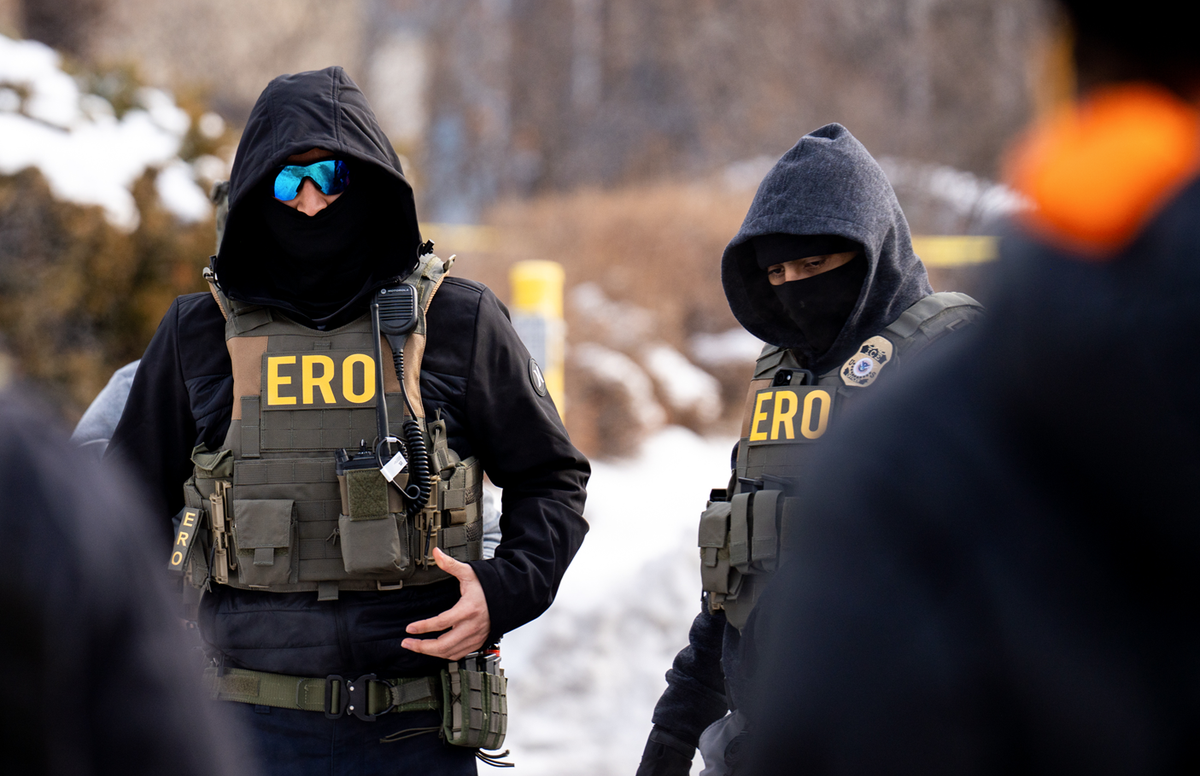
With the proposal to station military personnel in American cities, it seems a rare bipartisan red line has been crossed. Speaking on the Fifth Column podcast, right-wing commentator Megyn Kelly asserted that the government cannot send troops to Chicago without an invitation:
If President Trump did that without an invitation from the Illinois Governor, I would criticize him. I would absolutely go on the air and say you can’t do that…If he sends a bunch of troops to Oregon state to address the crime problem, he and I are going to have a problem. He cannot do that under the Constitution, and I will call him out.
The Supreme Court of the United States ‘concurred’ with this opinion, choosing to uphold a federal ruling blocking the deployment of National Guard troops. Prior to that verdict, Judge William G. Young of Massachusetts wrote a scathing 161-page opinion condemning the Trump administration for, among other things, empowering masked men to terrorize civilians in clear violation of the Constitution. Of particular concern to this Reagan-appointed judge was the use of masks to conduct legally dubious raids, a particularly unpleasant throwback to the terror of the Reconstruction period:
And there’s the issue of masks…ICE goes masked for a single reason—to terrorize Americans into quiescence…It should be noted that our troops do not ordinarily wear masks…It is a matter of honor—and honor still matters. To us, masks are associated with cowardly desperados and the despised Ku Klux Klan. In all our history we have never tolerated an armed masked secret police. Carrying on in this fashion, ICE brings indelible obloquy to this administration and everyone who works for it.
During its first campaign of terror (1867-1872), the Klan killed an untold number of civilians before being finally put down by the federal government. In Klan War, historian Ferguson M. Bordewich tells the brutal story of this mighty federal effort to restore respect for the rule of law and the authority of government. At the center of this moral crusade was President Ulysses S. Grant. The stone-faced general first heard of the existence of this shadowy group while serving as chief military officer in the Johnson administration. In May of 1868, Grant received a distressing telegram from one of his informants in the south. The message described a veritable state of anarchy in the former rebel states: ‘‘Loyal men are being murdered in many parishes…revenge and murders are rampant in our state…can nothing be done to protect our loyal people from assasination?’’ (Grant, p. 613)
The rebbels are going to rise again
Up until that point President Andrew Johnson had turned a blind eye to the many credible reports of mob violence. In his Report on The Condition of the South (1865), German-born war-hero Carl Schurz noted that certain ‘incorrigibles’ were getting away with shameless acts of cruelty against former slaves: ‘‘The pecuniary value which the individual negro formerly represented having disappeared, the maiming and killing of colored men seems to be looked upon by many as one of those venial offences that must be forgiven to the outrage feelings of a wronged people.’’ Kidada E. Williams, author of They Left Great Marks On Me, explains that under slavery, white southerners had been ‘‘incentivized to preserve the financial value residing in enslaved Black people; now, because emancipation had altered this calculus, when Black people resisted, whites exacted vengeance by killing and maiming them.’’ (I Saw Death, p. 47) The reports of a surgeon in Montgomery, Alabama suggest that end of war disputes over labor were often settled by mutilation. One overseer cut through five people for failing to return to a plantation: he scalped one woman to death, took a piece off the chin of a man, and cut off the ears of a few others. On some occasions, the bits and pieces of mutilated black people would end up in shops or family boxes as souvenir trophies (I Saw Death, pp. 45, 60).
The Schurz report included testimony from the Dartmouth-educated abolitionist and brigadier general, Samuel Fessenden, announcing a theme that would run through the entire period of Reconstruction: the lack of adequate federal protection for emancipated slaves and loyal Union workers. Fessenden asserted that racial violence often broke out as soon as the Union forces decamped, leaving freedmen at the mercy of vengeful ex-Confederates. ‘‘They are shot and abused outside the immediate protection of our forces by men who announce their determination to take the law into their own hands, in defiance of our authority.’’ The only way to solve this problem, Fessenden asserted, was to ‘‘have this country pretty thickly settled with our soldiers.’’
President Johnson saw the report as a personal affront and a politically-motivated smear, while Grant and other concerned citizens welcomed this new information as an opportunity to reset the course of Reconstruction policy. Schurz’s detailed exposé of the state of Southern society in the immediate aftermath of the Civil War offered Washington politicians, the New York press, and the re-emerging American nation a worrying view of a region in moral disarray. Barely a year after the Schurz report, the South was ravaged by chronic violence. The newly erected Ku Klux Klan spread from the backwoods of Tennessee to other parts of the defeated South terrorizing black and white alike.
A report by the Freedmen’s Bureau found that at least 440 people were murdered in 1866 alone. A three-day massacre in Memphis, Tennessee, resulted in the death of 46 blacks and the destruction of 84 homes. The burning of churches and the gang-rape of a crippled woman by seven men, including two police officers, did not stop The Avalanche, the city’s pro-Democrat paper, from declaring, ‘‘Thank heaven the white race are once more rulers in Memphis.’’ (Klan War, pp. 16, 28)
In Camilla, Georgia, white gunmen ambushed a parading crowd of black Republicans, killing at least twenty and injuring many more. In Moore County, North Carolina, Klansmen shot a man’s pregnant wife and daughter to death, and proceeded to burn four more of his children to death after the poor fellow testified against the Klan. Lewis Powell, another Republican activist, watched in horror as the Klan shot his wife to death in front of their house. Violet Wallace was spared this terrible fate but would live to tell of her humiliation. When Klansmen failed to capture her husband, they ‘‘beat her with a bridle rein, then with a pistol, and then stomped her when she collapsed. Then one of them pulled down his pants and sat on her face,’’ (Klan War, p. 72).
William Champion, a white Sunday school teacher living in Spartanburg, South Carolina, was stripped and forced to kiss the posterior of Clem Bowden, a middle-aged freedman, and his wife. The pair had been kidnapped from their home and flogged before the Klan. Now they were told to open their butt cheeks upon pain of death. Champion told congressional investigators, ‘‘they held it open and made me kiss it…and also her private parts, and then told me to have sexual connection with her. I told them…I could not do that. They asked me how I liked that for nigger equality?’’ (Klan War, p. 127). In rural Arkansas, the Klan killed a deputy sheriff then lynched an innocent black man. They tied the two bodies together as if kissing and embracing each other, then left the bodies on the road as a warning to Republican agitators (Klan War, p. 127).
If the Klan had a station or beachhead from which its evil plans were hatched, it was North Carolina. According to Bordewich the state was ‘‘a bloody cockpit of surging Klan activity,’’ a ‘‘political petri dish in which the seesawing struggle to stamp out terrorism played out earlier and more dramatically than almost anywhere else in the South,’’ (Klan War, p. 119). In Alamance County, North Carolina, the Klan even employed the services of a ‘professional flogger.’ It was there that Nathan Trollinger was whipped with hickory switches for having allegedly disrespected a white woman. He was made to take his penis out and stab it with a knife. He died from his wounds after fleeing town. In Wilkinson County, Georgia, Mr. Henry Lowther, a black Republican organizer was asked by the Klan whether he would ‘‘give up his stones’’ in return for his life. When he said yes, they castrated him. This was his reward for showing the testicular fortitude to defend the rights of freedmen (Klan War, p. 126-127).
The Klan also sought to undermine the moral fabric of the black family by reintroducing the sexual anarchy of the antebellum period. ‘‘Along with the polling place,’’ notes Kidada Williams, ‘‘the Black family home was a specific front of the white war on freedom.’’ (I Saw Death, p.63) In Rockingham County, North Carolina, a black man was forced to simulate sex with a black girl while her powerless father was condemned to watch this perverse act of degradation (Klan War, p. 126). A certain Amzi Rainey also watched as a daughter was shot by the Klan and all the other girls of the family were forced to witness the gang-rape of an underage girl (Klan War, p. 178). Bordewich also mentions the case of Harriet Simril, a case considered too obscene to be included in the Congressional record. Simril, Bordewich notes, ‘‘was spat on and almost blinded by raiders who took the food from her cupboard and made her cook them a meal, then dragged her into the road and gang-raped her,’’ (Klan War, p. 178). As Bordewich makes clear, the Klan’s ‘‘predilection for sexual perversity’’ was ‘‘designed to shatter the self-confidence of newly freed men and women’’ and to reassert the power of white supremacy (Klan War, p. 127).
While rape and sexual molestation of black women and girls was de rigueur in the Klan-dominated south, mythical notions of sexual purity often saved white women from the trauma of retributive sexual violence. Such a concession to the carefully nurtured conceits of the old-fashioned South did not, however, mean that white women were left completely unchecked. White women who dared to consort with Republicans, especially black ones, were subject to remarkable moral discipline. Poor white women, in particular, did not escape what James Davis Hunter calls ‘boundary work’—the often violent attempts by self-appointed community ‘leaders’ or ‘regulators’ to enforce the moral and social boundaries of race, sex, and gender (Democracy and Solidarity, pp. 93-103).
Bordewich offers two such cases of boundary work. In Chatham County, North Carolina, Klan raiders caught a white woman fraternizing with two black men in her house. They first whipped her into submission then burned her pubic hair with a hot knife (she was pressured to cut off any remaining pubic hair with her own hands). Where masks and drapes were not available, the Klan hid their identity by darkening their faces with paint or tar. Klansmen would carry supplies of the dark substance to ‘tar and feather’ informal rule-breakers, and when needed, torture their victims. When a white woman was caught hiding two black men beneath the floorboards of her house, the Klan forced her to lay down and poured hot tar into her vagina (Klan War, pp. 126, 178).
As violence ‘‘spread over the South like the dew,’’ oppressed families grew more desperate. Sallie Adkins of Warren County, North Carolina, wrote directly to General Grant to lament the shameful killing of her husband. ‘‘His murderarrs are now at large openly, no body moves, no body cares,’’ while her neighbors laugh at her, ‘‘still shunning & scorning us in our agony.’’ She offered an injured woman’s opinion of the often celebrated virtues of republicanism: ‘‘It may be that Republics have no remedy for such state of things,— If so Republics are bad things.’’ (Klan War, p. 113)
A similarly dejected Eduard Hubert wrote from Atlanta, Georgia, ‘‘How long, O Lord, how long, are the true Union men of Georgia to be thus hunted down and mercilessly shot?’’ One Republican official wrote to radical abolitionist Thaddeus Stevens in the Senate expressing his horror at the sight of entire black families (men, women, and children) hanging in Pine Bluff, Arkansas. ‘‘Sir,’’ he pleaded to the elderly firebrand, ‘‘there Must be something done or else I think the Rebbels are going to rise again.’’ (Klan War, p.18,112-113)
At 73, and in poor health, Stevens was in no position to change the status quo. The best he could do is use the remainder of his influence to pressure Congress to act quickly on behalf of the persecuted loyalists in the South. This meant increased military presence in the South, just as Fessenden had recommended (Klan War, p. 18).
‘‘Let not the friends of succession sing to me their siren song of peace and good will until they can stop my ears to the screams and groans of the dying victims at Memphis,’’ he exclaimed. At present, freedmen were exposed to all kinds of outrages without proper recourse to the equal protection of the law. ‘‘By what civil weapon have we enabled them to defend themselves against oppression and injustice?’’ asked Stevens. ‘‘Call you this liberty?’’ (Klan War, p.18, 28) When Stevens died in 1868 it was left to Ulysses Grant and the Federal army to avenge the death of freedmen and uphold the rule of law.
In 1871, Congress passed what became known as the Ku Klux Klan Act. The last of three enforcement acts, the law empowered government officials to do everything in their legal power to protect the rights guaranteed by the Fourteenth Amendment, including military action against outlaws. This was, in Bordewich’s words, the closest thing to ‘‘a declaration of war as Congress could issue in peacetime.’’ (Klan War, p. 193) The law also banned the use of masks at designated times and places. Any armed person in disguise found on a public road threatening citizens would be found guilty of a high misdemeanor during the day and a felony at night. The law’s emphasis on punishing mask wearers was of vital importance to the health of the nation.
To the defenders of white supremacy and the Lost Cause, wearing a mask was an act of heroism and moral righteousness. ‘‘Under its cap and bells,’’ wrote the Richmond Examiner, ‘‘[the Klan] hides a purpose as resolute…noble and heroic…It is rapidly organizing wherever the insolent negro, the malignant white traitor to his race, and the infamous squatter are planning to make the South utterly unfit for the resistance of the decent white man,’’ (Klan War, p. 67). To those who lived under the threat of this ‘invisible empire,’ on the other hand, masks were not just a malicious cover for perfidy, they were a symbol of terror, an unmistakable declaration of war against the most tepid assertion of social and political equality in the new republic. The mere sight of pyramid hats, false faces, white hoods, ‘‘men with horns affixed to their heads’’ and ‘‘ears on their heads like mules,’’ would send deathly shivers down black men’s spine (Klan War, pp. 224, 262).
When Major Lewis Merrill visited the South on a mission to purge the region of hooded lawlessness he found that as many as 80% of freedmen were afraid to sleep in their homes. Those who did, lived in constant fear of violent death. When Merrill and his men finally arrived to enforce federal law, Klansmen fled like rats spotted by a sudden flash of light. In York County, South Carolina, as many as 800 men either fled, surrendered, or were arrested by the federal forces. From 1871 to 1873, the peak years of the Klan war, federal convictions reached almost a thousand, though as many as 683 of those charges were later dismissed (Klan War, p. 213).
Many Union men knew that justice might not be perfectly dispensed. Still, they remained committed to the idea that the strict and impartial implication of the law, and the possibility of conviction for crimes, were necessary to reform the character of the South, restore the public’s confidence in the federal power and its republican system of government, and secure a better future for the nation. ‘‘Without a thorough moral revolution,’’ wrote attorney general Amos Akerman, ‘‘society there [meaning the South] for many years will be—I can hardly bring myself to say savage, but certainly very far from Christian,’’ (Klan War, p. 232).
The government has something to hide
While this infamous era of systematic, widespread racial terror is now thankfully over, the suspicion of men in masks who operate in the shadows and outside of the normal norms of police behavior is still very much alive. When people are allowed to roam the streets of American cities with masks on and little to no accountability beyond what a video camera can provide, the possibility of government abuse and wickedness dramatically increases.
When asked why ICE officers wear masks, White House border Czar, Tom Homan, replied that this measure was adopted to protect agents from being doxxed and exposing their families to danger. While it is reasonable to wish to protect families from harassment and danger, it leaves unexplained the government prosecution of campus protestors who choose to also cover their faces for the exact same reason. Whatever the real reasons for face-coverings, it remains the case that they do not build trust, whether from a law-enforcement standpoint or from a public safety standpoint. One simply cannot expect the public to view such masking as conducive to fair and measured treatment. Quite the opposite in fact. When both individuals and communities see masked men entering an area with force, they panic. It is the natural human response.
‘‘These masked men pull up in unmarked cars and jump out the cars with rifles and detain people…For the average citizen, it looks like it’s a violent kidnapping.’’ explains L.A. Mayor Karen Bass. That is certainly how it felt to Rümeysa Öztürk, a graduate student at Tufts university. After being shuffled into an unmarked car by masked men, she thought this might be her last day on earth. She asked herself the questions: ‘‘Who were these people? Had I been a good enough person if today was my last day?’’ As Bloomberg’s Patricia Lopez explains, a ‘‘toxic combination of secrecy, arrogance and an unsettling recklessness’’ is pervading a newly emboldened ICE as it pursues deportation at any cost.
The American psyche understandably recoils at the sight of armed men in masks. The history of race and law enforcement in America, not to mention the knowledge of mask use in Latin America and other parts of the world, is bound to provoke suspicion. Steven Levitsky, an expert on democracy and the exercise of the rule of law in a global context, was quite blunt in his assessment of the use of masks. Speaking to the Times’ Sabrina Tavernise, he explained that ‘‘the use of masks is without question a bad sign…I cannot think of a democratic country with a reliable rule of law where security forces mask themselves…It just doesn’t happen.’’
When the Middle East journalist Omid Memariam was arrested by the Iranian government, his interrogators intentionally chose not to wear masks in order to convey both the legitimacy of the government and the propriety of the interrogation. ‘‘Once a mask is involved,’’ Memariam explains, ‘‘people understand it as a sign of weakness, that the government has something to hide.’’ With the deaths of Renee Good and Alex Pretti, it is hard to see how the government can convince large portions of the American public that they do not have something to hide. This raises a core issue at the heart of the mask discussion: the erosion of certain basic and long-standing moral and legal norms in America. As Lon Fuller observed in his famous Storrs Lectures on Jurisprudence (1963), there is a kind of reciprocity that exists between government and the citizen with respect to the observance of rules (The Morality of Law, p.39).
The government’s quasi-monopoly on the use of overwhelming and continuous violence makes the state highly vulnerable to public suspicion, especially from citizens who fear—not unreasonably one might add—that the personalities in charge of enforcing the nation’s law will abuse their power. To assuage the fears of a distrustful and slightly paranoiac American citizenry, restrictive laws, as well as various codes of professional conduct and ethics, were progressively introduced throughout the course of the twentieth century to better regulate the behavior of those who have been empowered by the state to exercise legitimate force. One such norm is transparency. Given the tremendous power which police officers and other agents of the state possess, they are expected both by law and society to make every effort to elicit the willing compliance of the public by making their actions open to public examination and judicial scrutiny. The use of masks undermines this outreach and destabilizes the balance of reciprocity between state and citizen by introducing a layer of secrecy at a time of low government trust.
This entirely predictable collapse in public trust has partly to do with the regime’s overt mendacity and disregard for the rule of law. The world of federal policing under this avowedly illiberal regime is one in which, ‘‘increasingly the principal object of government seems to be, not that of giving the citizen rules by which to shape his conduct, but to frighten him into impotence,’’ (The Morality of Law, p. 40). Whenever there is such ‘‘a general and drastic deterioration in legality,’’ Fuller continued, public confusion, annoyance, and resentment grows, until the general confidence in government falls apart. Fuller warned that once this ‘‘bond of reciprocity is finally ruptured by government, nothing is left on which to ground the citizen’s duty to observe the rules,’’ (The Morality of Law, p. 40).
The government’s failure to act responsibly in the Twin cities has not only resulted in needless deaths, it has further degraded the status of American democracy, confirming the judgment of political scientists who warn that the U.S. has entered a stage of competitive authoritarianism. Unless there is a drastic change in policy toward greater transparency and accountability for those who enforce the law, not to mention a return to liberal law-making and conduct within government, there is every reason to believe that more people will get hurt, and the U.S. will further descend into social and political chaos.
Featured image is "ERO agents in Minneapolis after shooting at Portland Avenue and 34th Street in January," CC-BY-SA 4.0 Chad Davis 2026.