Cancel Culture Goes MAGA
MAGA's campaign of government censorship and repression is an assault on fundamental free speech values.
‘‘When you see someone celebrating Charlie’s murder, call them out. And hell, call their employer.’’
With this call to action the Vice President of the United States sanctioned a wave of repression not seen in the country since the McCarthy Era. Greg Lukianoff of the Foundation for Individual Rights and Expression (FIRE) has noted that the modern era of Cancel Culture (2014 to 2023) resulted in almost 200 university professor terminations, eclipsing the 100 to 150 or so academics that were fired during the second Red Scare (The Canceling of the American Mind, 26-27). By comparison, in the two weeks following the assasination, the New York Times was able to identify more than 145 cases of people being fired or disciplined for Charlie-Kirk-speech-related offences. A November report by Reuters found that at least 600 people have suffered official reprimand for online posts. This number excludes the nearly 300 Defense Department employees that were investigated by the Pentagon for similar comments. FIRE’s own investigation found 80 attempts to punish academics for things said about Charlie Kirk, eighteen cases short of the 98 incidents that followed the racial turmoil of the summer of 2020.
In other words, the post-Kirk cancellations have the ignoble distinction of being incomparably swift: what normally takes a month or even a decade to achieve was accomplished in the matter of a few weeks. Lost in the numbers, however, are the lives that have been completely upended by a careless rush to punish disagreeable speech. Lukianoff tells the story of how a retired police officer by the name of Larry Bushart was arrested by Tennessee's Perry County police a mere eleven days after posting a Facebook meme about Charlie Kirk. Unable to pay the $2M bail, he spent 37 days in jail before the charges were dropped. All over a Facebook post.
Speaking as a First Amendment lawyer, Lukianoff offered the following reflection: ‘‘In my 25 years working as a lawyer on free-speech cases, I have seen a lot of overreach. I have never seen anything quite like this.’’According to Reuters, right-wing influencers such as Scott Presler received almost 3,000 submissions of alleged ‘hate’ cases towards Kirk and his associates. The popular Libs of TikTok account combed through thousands of submissions in its ‘war’ to ‘purge’ society of the ‘‘evil psychos’’ who ‘‘want to kill all of us for simply having opposing political views.’’
Suzanne Swierc, a health director at Ball State University in Muncie, Indiana, was fired from her job after someone took a screen shot of a private Facebook post declaring that ‘‘If you think Charlie Kirk was a wonderful person, we can’t be friends’’ (she also said she was praying for his soul). The post was shared online by Libs of TikTok, retweeted by Elon Musk, and condemned by Indiana Attorney General Todd Rokita. Under such feverish conditions it is not surprising that both the innocent and the guilty get hurt: a website raising crypto funds to ‘Expose Charlie’s Murderers’ disappeared after donors invested tens of thousands of dollars.
Beyond its remarkable swiftness, the disciplining, suspension, and firing of more than six hundred people, including such prominent figures as the late night TV show host Jimmy Kimmel, also produced an observable and palpable ‘chilling effect’ on speech. According to George Packer of The Atlantic, a local librarian at a small town in Ohio told him that days after the Charlie Kirk shooting, the usually bustling town library went quiet as scared people began speaking in hushed tones.
Unsurprisingly, ‘‘when there is broad agreement on what constitutes acceptable and unacceptable opinions, prudent persons will conduct themselves so as to avoid giving gratuitous offense to received orthodoxy.’’ So explains Brown University scholar Glenn C. Loury in his book Self-Censorship. Loury goes on to lament the fact that, “For every act of aberrant speech seen to be punished by the thought police, there are countless other critical arguments, dissent from received truths, unpleasant factual reports, or nonconformist deviations of thought that go unexpressed or whose expression is distorted, because potential speakers rightly fear the consequences of a candid exposition of their views,’’ (Self-Censorship, 24).
The government crackdown on left-wing thought has also emboldened conservatives to ‘confront’ and ‘hold accountable’ persons in authority. Bloomberg’s Mary Klas reports that at the University of Texas A&M, students informants are encouraged “to monitor faculty and peers to enforce ideological conformity.’’ In a viral video shared by Texas state representative Brian Harrison, a student is seen confronting English Literature Professor Melissa McCoul about the inclusion of a ‘gender non-binary’ symbol (a purple unicorn) in her “Literature for Children” class.
The student is heard, hand raised, questioning whether McCoul has the legal right to teach such things: “I’m not entirely sure this is legal to be teaching,’’ she explains, “because according to our president, there’s only two genders and he said that he would be freezing agencies’ funding programs that promote gender ideology.’’ The ‘purple unicorn’ episode resulted in the firing of English professor Melissa McCoul, as well as the chair of the English department, and the dean of the College of Arts and Sciences. University President Mark Welsh also resigned.
That a student would be so bold as to threaten a professor with state censure is perhaps evidence that the government’s intimidation campaign is resulting in a changed intellectual atmosphere. Writing for the New York Times, Harvard sophomore Alex Bronzini-Vender reports that federal pressure has not eliminated self-censorship, but put pressure on students and faculty to ‘‘tiptoe around the issue, afraid of saying the wrong thing.’’ Ryan D. Enos, a professor of government, believes that ‘‘student’s willingness to talk about things and to make their voices heard about things is actually more repressed than … it’s ever been.’’ Lukianoff sees these new federal policies as introducing a new layer of danger to campus life. Whereas past censorship involved an often illiberal and ‘unholy alliance’ between student activists and college administrators, the new paradigm has ‘‘politicians and government agencies increasingly driving, directing, and escalating punishment campaigns from outside the university’’ and fostering, in the process, a new culture of self-censorship.
Fear of state and community reprisal is not just processed at an intellectual level, it is also experienced at a neurological level. “You can feel the onset of authoritarianism in your central nervous system,’’ Packer observes, “shock, disbelief, fear, paralysis.’’ After finding pictures of her face, car, residence, and even her mother’s address online, Danielle Meyers, an experienced rural Texan paramedic who had previously responded to hundreds of 911 calls for anxiety attacks, now suddenly recognized the same symptoms in herself: ‘‘shortness of breath. Accelerated pulse. Panicked thoughts. The world seemed to be closing inward, squeezing her like a fist.’’ The symptoms set in soon after Meyers was fired from her job for posting ‘‘Good riddance’’ on her Facebook feed. Julie Strebe, a former sheriff's deputy in Salem, Missouri, who also lost her job after a Charlie Kirk post, experienced similar physical responses. She has been so hounded by community members that she has now installed five security cameras at her home, and only fuels her car at night to avoid neighbors. Ordinary people like Meyers and Strebe who previously thought free speech was a right in America are quickly learning that many once-secure rules of conduct are changing.
While the U.S. is still a liberal constitutional democracy, it is undergoing a democratic erosion of sorts. Such liberal values as due process and free speech are undergoing thorough revaluations, and in many cases, transformations. Those most affected by the silencing power of state censorship in the U.S and the disregard for due process rights have been foreign-born residents, especially those with strong views on the war in Gaza.
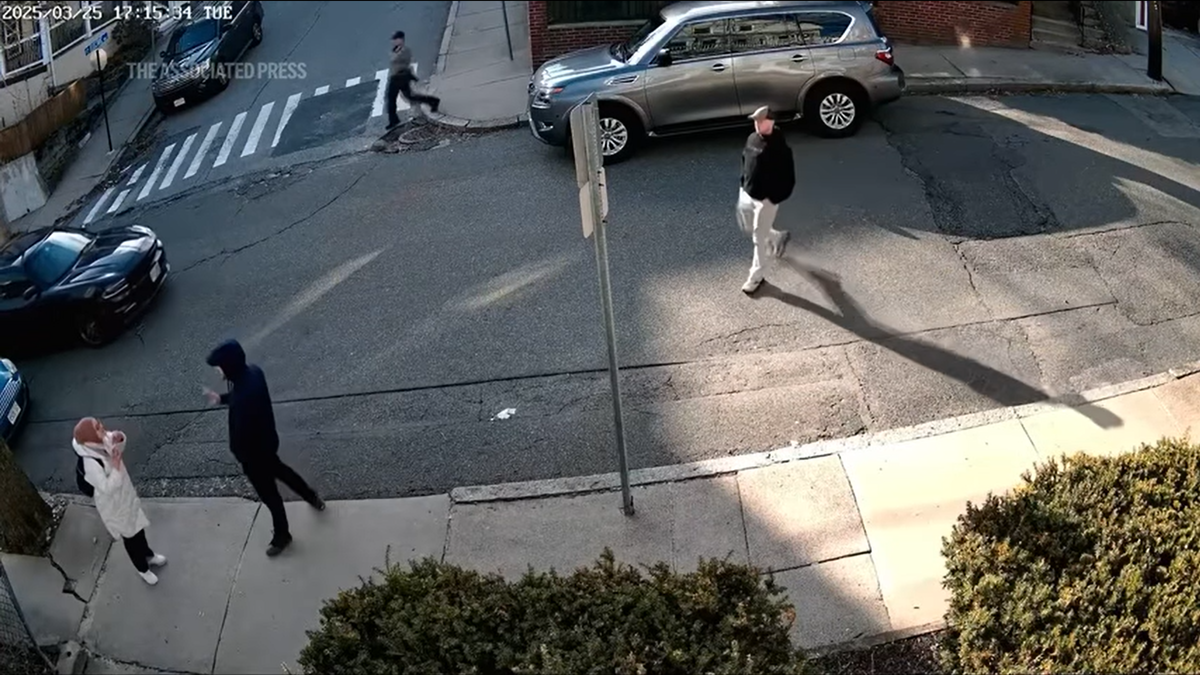
On March 25, 2025 Rumeysa Öztürk, a doctoral student at Tufts university, was snatched off the streets of Somerville, Massachusetts, by six masked law enforcement officers in plain clothes, pressed into an unmarked car, and detained at an ICE facility for a full six weeks. Her crime? Co-authoring an article in the college newspaper, calling for the university to ‘‘acknowledge the Palestinian genocide … disclose its investments, and divest from companies with direct or indirect ties to Israel.’’
Two weeks before her arrest, Öztürk received news that she had been doxxed by a right-wing Jewish group on a mission to ‘expose’ and ‘combat’ anti-semitism on campus. The only evidence of Jewish bigotry provided by the Canary Mission website was Öztürk’s co-authorship of the Tufts college op-ed. According to a ProPublica report, a close friend shared that the doxxing experience unlocked ‘‘a whole other level of terror’’ for Öztürk. It took less than three weeks to turn her nightmare into reality.
Court testimony by Canadian Professor Megan Hyska of Northwestern University suggests that the government’s persecution of political activists had a measurable ‘chilling effect’ on pro-Palestinian advocacy. Hyska described being ‘deeply frightened’ and ‘disturbed’ by the footage of Öztürk’s abduction: “It became apparent to me … that my engaging in public political dissent would potentially endanger my immigration status—that I risked detention and deportation for being publicly politically critical of the Trump administration.” After seeing what had happened to Öztürk, Hyska decided to put an abrupt end to her political writings, correctly concluding that ‘‘it would not be safe’’ to publicly voice her opinions on the war in Gaza. The court proceedings also show that news of Öztürk’s arrest forced Harvard philosopher Bernhard Nickel to adopt a ‘blanket policy’ of public abstention from all political writing and advocacy. He chose instead to ‘‘keep his head down completely.’’
Such glaring cases of self-censorship were presented as evidence in a historic ruling by Reagan appointee Judge William G. Young of the district court of Massachusetts. The remarkable 161-page opinion elegantly rebukes the Trump administration for its attempt to scare immigrants into silence. The opinion convincingly makes the case that at the heart of the administration’s ideological deportation policy is an invidious attempt ‘‘to target a few for speaking out,’’ then use ‘‘the full rigor of the Immigration and Nationality Act’’ to deport targets ‘‘with the intent of chilling such speech’’ and ‘‘terrorizing similarly situated’’ non-citizens into silence. The court concluded that such conduct ‘‘is not only unconstitutional, but a thing virtually unknown to our constitutional tradition.’’
By initiating a campaign of fear and persecution, authoritarian regimes aim to create the conditions of legal uncertainty needed to suck out the energy of the dissident movement, and keep the public in a state of confusion and nonage. This, in simple outline, is the standard operating principle of the censoring powers. Liberals aim to counter this despotism by asserting the right to speak freely and act according to one’s conscience, even if these basic liberties create a ruckus. Liberals stand for the energetic and disruptive criticism of government, believing that such exercise in virtue advances the cause of freedom and promotes progress in society.
The U.S. constitution protects the right of both American citizens and foreign residents to express unpopular, reviled, and at times caustic ideas, without fear of official state reprisal. The detention of Rumeysa Öztürk and the legal threats against Melissa McCoul represent an assault on both the spirit and letter of the law the government swore to uphold, and should be repulsive to the freedom-loving people of the United States.
Featured image extracted from "Turkish student at Tufts University detained CCTV."