
China Between Ogre and Olympus
China may well become the singular Olympus that all mere mortals look up to, but so long as this Olympus is home to Ogres it will struggle to compel the allegiance of the wider world.
-PART I: OLYMPUS
If one statistic could be deployed to summarize China’s meteoric rise to superpower status over the last 80 years it would be this: Between 2011 and 2013, China both produced and used more cement (6.6 gigatons) than the U.S. did during the entirety of the twentieth century (4.5 gigatons). To be clear, that’s enough cement to bury the Island of Hawaii.
Queen Elizabeth I of England remarked in 1563 that Rome wasn’t built in a day. True enough, but thanks to modern technology, management techniques, and sheer manpower, we now know that it can take as little as 14 days to build concrete artifacts the size of Rome. By 2005, for example, China was building the square-foot equivalent of Rome every two weeks.
On average, China uses 1.32 tons of cement per person. That is three to five times the global average and far more than any other industrial nation in the world. Under its ‘empire of cement’ China built five of the world’s 10 largest hydropower stations, including the world’s largest concrete structure: the Three Gorges Dam.
China’s most ambitious concrete project to date is a century-defining dam which flows through Tibet and connects East and South Asia via India and Bangladesh. The Medog dam is expected to require as much as 150m cubic metres of concrete. That is about 60 times more cement than was used to build the Hoover dam, and ‘‘enough concrete to build a two-lane highway around the Earth five times.’’
The new dam is being set up to generate 70GW of electric power, more than the installed total power capacity of Poland, and enough energy to sustain the British Isles. It will take $167B to build what is slated to be the world’s biggest source of green energy, more dollars in fact than it took to create the International Space Station. Transportation costs alone might require another $100B investment, making it not only the world’s most expansive, but also the most expensive infrastructure project in recorded history.
To get a proper sense of the breath-taking scale of this project, consider the fact that the defining construction project of the so-called ‘American Century’, the Empire State Building, cost a lowly $628M. 265 times more costly to create, the Medog dam is being billed as a symbol of Chinese power in the new age of artificial intelligence. By one estimate, the U.S would have to build 116 Empire State buildings to hope to match the amount of steel that will be needed to pull this off.
Or consider the Sevan Driller, which at $500M in initial construction cost, ‘‘can stretch its equipment through 12,000 feet of ocean and still drill a well to 40,000 feet—further below the earth’s surface than most commercial jets fly above.’’ By comparison the Yarlung Zangbo River, which looks like twisted braids from NASA’s Earth Observatory and is the main source of power for the Medog dam, flows at an average elevation of 13,000 feet. Consider also the Troll gas platform off the coast of Norway. That project cost $650M to complete. It would take 246 times that amount to match the lump sum of money and resources that the Chinese state is investing in this new trans-Asiatic project.[1]
There is no doubt China is an economic Olympus. Only a country with vast resources and manpower could even dream of undertaking such a physics-defying initiative. The trouble is that China is also a moral ogre. China constantly and contemptuously ignores ethical standards, imposes uniformity of thought and life on everyone it comes into close contact with, and despite being firmly plugged to the global economic market is still a shockingly secretive society. China’s illiberalism is its greatest liability, one which threatens to hobble its every effort to eclipse the U.S. as the world’s hegemon.
In How China Loses, Luke Patey notes that some of the pushback against China’s assertiveness ‘‘is a consequence of both Beijing’s strategic missteps and overreach.’’ Such blunders on the world stage are partly a result of China’s outsized influence. As diplomats Kurt Campbell and Mira Rapp-Hooper wrote back in 2020, ‘‘by leaving a power vacuum in the world’s darkest hour, the United States has bequeathed China ample room to overreach—and to demonstrate that it is unqualified for a position of sole global leadership.’’[2]
This disqualifying moment arrived when the Chinese leadership obscured the origins of covid, censored whistleblowers, imposed sanctions on truth-seeking nations, and turned the procurement and delivery of vaccines into a geopolitical contest. Xi’s imposition of a harsh quarantine on millions of people, followed by his hard-headed refusal to adopt a more moderate approach to pandemic management eroded public trust in the central government. The immediate result of this overstep was financial timidity, capital flight, and mass emigration. According to an analysis delivered by Bloomberg and the Financial Times, China’s slowdown may have cost it its spot as world economic leader. It may well be that as a result of its covid policies China will not be able overtake the U.S. as the world’s most powerful economy, at least within this century.
There is also no reason to think that this disgracing of the government leadership will not happen again. As Susan Shirk explains in her book Overeach, China’s switch from a collective style of leadership based on mutual accountability to a more personalistic style of leadership centered on the dictates of the head of state has increased the risk of government overreach. In Breakneck: China’s Quest to Engineer the Future, Dan Wang offers further evidence of an alarming ratcheting of oppressive measures at a time when China is under inordinate moral scrutiny and facing difficulties broadening its alliances. When a government purposefully frustrates the problem-solving capacities of its citizens (by limiting their ability to coordinate the containment of a deadly virus for example) and consistently chokes out civilian opportunities for public feedback on government behavior, it severely limits its ability to adapt to complex challenges that require the self-starting initiative and unfettered zeal of talented individuals.[3]
It is of course possible for closed societies like China to withstand severe shocks to their system, but the repressive dynamic within such societies will have an overall tendency—in the short-term at least—to put such closed societies at a great disadvantage compared to their more liberal rivals. The divergent paths of the American and Chinese economies in the immediate aftermath of the pandemic is proof of that.
The pandemic was in some ways a test of two competing systems: on the one hand, a ‘closed society’ where secrecy, deception, and censorship are ubiquitous, and on the other an ‘open society’ which prides itself on the free exchange of ideas, the transparency of its institutions, and the subservience of its public officials to the rule of law. China may well become the singular Olympus that all mere mortals look up to as an awesome and mighty force, but so long as this Olympus is home to Ogre-like characters it will struggle to compel the allegiance of the whole wide world.
PART II: OGRE
In March of 2020, the world was brought to a grinding halt. News of a fast-spreading and deadly airborne virus emanating from China, forced entire countries to shut down. To address the unfolding medical crisis in their country, the Chinese government declared its ‘zero-tolerance’ for covid, and required all citizens living in major outbreak areas to undergo repeated testing. As a safety precaution, all citizens were placed under lockdown to allow medical professionals to quarantine and treat infected patients.
When severe social and economic disruptions ensued two years later, Chinese officials ignored both foreign and domestic expert advice to scale back their costly ‘zero-covid’ policies. Undeterred, the authorities decided instead to step up their draconian measures. According to an analysis by The Economist, an estimated 1.4 million Chinese people lost their lives to covid in the two months following the opening of the economy—a number which could have been significantly lower if the government had not initially delayed news of the outbreak and knowingly withheld the most effective vaccines from the public.
Dan Wang, a research fellow at the Hoover History Lab at Stanford University, lived through all three years of China’s ‘zero-covid’ strategy. His book, Breakneck offers an insider view of life in a closed society (both literally and figuratively). He describes China’s pandemic policies as a ‘‘powerful reminder of how the engineering state could accomplish things that few other countries would even attempt, while revealing how its literal-minded enforcement can lead to tragic results for human well-being and freedom.’’[4]
Wang recalls the constant surveillance, forced relocations, and food shortages, all of which grew worse with every new discovery of a vaccine-resistant variant. During the lockdown in Shanghai, local authorities often ran out of food to distribute and repeatedly messed up deliveries. It was not uncommon for desperately hungry families to fall sick after forcing themselves to eat expired government-delivered food. Wang tells the story of how his friend ‘Emma’ opened her ‘government-organized’ food delivery only to discover “a freshly slaughtered chicken, still with a few feathers on it. She had no idea how to prepare it; she also had nothing else to eat. So she went to YouTube. After psyching herself up, she pulled up a video to learn how to gut a chicken, grimacing as she eviscerated it.’’[5]
All central planners face coordination problems, but as Wang explains, the Chinese government’s difficulties were aggravated by its inflexible desire to control every aspect of human existence. On some occasions, as in the seaside campaign to check fresh-caught fish for covid, this ‘literal-mindedness’ proved ‘whimsical’. On other occasions, the government’s overinvolvement was no laughing matter. This was undoubtedly the case when a truck driver held up bottles of his own excrement to protest the long hours waiting at a covid checkpoint.[6]
The food shortages and long delays forced many city people to resort to the private sector for interim solutions. Unfortunately, most businesses were simply unable to cope with the unusually high demand. Even with the best of luck, the odds were simply not in the public’s favor: with 11,000 delivery workers in Shanghai it was simply mathematically impossible for businesses to meet the needs of 25 million city dwellers.
Young Chinese professionals, who unlike their parents and grandparents, had never had to face food shortages, had to wake up at 5am every morning to join virtual breadlines. This was done with some urgency: failure to secure food could well mean starvation. Whatever they received was consumed with the knowledge that they might not get a chance to order more food to their apartments for the next few days. Wang, who was living in Shanghai at the time, offers his own breakdown of the exacting process:
The thing to do was to set a lot of alarms—6:00 a.m. for Meituan, 6:30 a.m. for DingDong, 7:00 a.m. for Freshippo, 8:00 a.m. for Yonghui—to place an order in the half minute before all the food was snapped up on these platforms.’’[7]
Competition was so fierce that the very second a food delivery app went live, its stock would run out within a few minutes. Famished shoppers would then have to spend several hours refreshing the pages of various delivery apps in hopes of finding some fresh stock of food. Success beating other hungry scavengers for food on one particular day was no guarantee that one would not face hunger again a few days later.
Online shoppers were restricted to virtual quotas, often only able to purchase a small number of basic items such as leafy greens once every few days. By March of 2022, the situation got so bad that accredited botanists had to get on Chinese social media to warn the public not to eat the bamboo shoots that were growing in their apartments. In the U.S. and Europe, many working professionals developed an interest in gardening and botany as a pandemic pastime. By sharp contrast, attending to a growing plant on the corner of one’s apartment balcony was a matter of life and death in China.
In the presence of hostile observers
When the coronavirus first appeared in Wuhan, China, the medical authorities in that city conspired to keep both the existence and reach of the virus a secret. As the Washington Post reports, ‘‘in mid-January, everyone was covering their eyes…the province did not allow the city to report, the city did not allow the hospital to report, and the hospital did not allow the hospital department to report. It was just covered up layer by layer, causing the golden period of prevention and control to be missed again and again.’’
Wang, who was living in Beijing during the first known outbreak there in January of 2020, confirms that officials in Wuhan suppressed news of the fast-spreading virus ‘‘for the most picayune of reasons’’: to ensure the smooth running of the annual political meeting held in two sessions (January 6-17) at the beginning of the new calendar year. When Beijing used the occasion to send medical experts to investigate reports of SARS-like symptoms among some hospitalized patients in Wuhan, the municipal leaders downplayed the medical significance of the reported cases.[8]
The Washington Post reports that the investigative team ‘‘struggled to gather evidence that the novel coronavirus was transmittable from human to human. They were stymied by local interests intent on keeping the epidemic under wraps so that their political bosses could hold their annual meetings in a calm atmosphere.’’ When investigators tried to have a look at what was going on inside the city’s hospitals, they were told by hospital staff that there was nothing to see and were skillfully directed away from the emergency care section and infectious disease wards.
The few doctors that were interviewed by the investigative team refused to divulge any information that might give Beijing the impression that the city was under a medical crisis. Hospital chiefs with first hand knowledge of what was really going on, generally deferred to local health officials and kept quiet when those same leaders reassured the central authorities that they had nothing to worry about. Zheng Guang, a Chinese epidemiologist was told that ‘‘the illness was quite light, not much different from seasonal influenza, and that there’d been no illnesses among hundreds of people with close contact.’’
While the provincial and central authorities pretended everything was normal, medical experts were growing restless. According to the records of the U.S. Department of Health and Human Services, by late December 2019 Chinese researchers had isolated, mapped, and uploaded to an American database a near-complete sequence of the virus’s structure. In a blow to China’s policy of state secrecy, the Fudan university scientist who first sequenced the new coronavirus shared his work with an Australian colleague. Desperate to keep news of the outbreak a secret, the Hubei authorities ordered labs that were sequencing samples from Wuhan to hide their data from the public.
Authorities also decided on January 11 to withhold CT scans of sick patients from medical staff to maintain the illusion of a mild infection spreading through the community. Those who knew otherwise were silenced. In mid-January eight whistleblowers were arrested by local authorities for trying to alert the public about the impending health disaster. They were all forced to sign papers confessing to rumor-mongering, and sidelined by the authorities. Exhibiting a stunning degree of disregard for the well-being of local residents, the Wuhan authorities cleared the way for 5 million people to leave the city for the Spring Holiday Festival, and in early January gave their blessing for thousands of families to feast together during the annual holiday banquet held just six miles away from the infamous Huanan Seafood Market. It took the healthy skepticism of a number of veteran disease experts for the central government to finally declare a state emergency in China.
Some researchers estimate that as many as 20 million people worldwide died from COVID-19, during the pandemic including 1.2 million Americans, and between 1.5 and 3.5 million Chinese. Had the leaders in Wuhan acted quickly and in the interest of public safety, rather than the interest of the current regime, perhaps the virus would not have spread so easily around the mainland and killed millions of people around the world. By one estimate, had Chinese officials taken more urgent care to contain the spread of the disease just a week earlier (in mid-January), the number of infections would have been reduced by two-thirds. Another study found that if China had moved to control the outbreak of the disease three weeks earlier (in mid to late December), it might have prevented 95% of the country’s cases of infection. The reason this did not happen is because the Wuhan authorities were scared to upset the central authorities, and the central authorities were in turn worried that global knowledge of the plague would damage the credibility of the regime.
The psychology behind this multi-layered cover-up is not that hard to understand. Writing in 1810, the Swiss philosopher Benjamin Constant observed that "Farther away from the consequences of its measures and not experiencing their effects in an immediate way," the state "discovers its mistake later." When it "does discover it, it finds itself in the presence of hostile observers. Quite correctly it is afraid of being discredited by the process of rectification."[9]
Fearful that its mistakes will be exposed, the government deals with the situation in secret. It initiates an internal inquiry and tries to figure out what went wrong to determine whether this blunder can be kept from the public altogether, or whether it must prepare to inform the public and quell any possible revolts. While the government conspires, precious time is lost; time that could have been devoted to the critical task of containing the existing damage.
‘‘Between the moment when government strays from the path of virtue,’’ Constant continues, ‘‘and the moment when it notices, lots of time slips by; but even more between the latter point and the moments its starts to retrace its steps.’’[10]
By the time the government figures out what went wrong and how best to proceed, the situation has grown worse and far more complex. In the case of Beijing, the conspiracy to keep the coronavirus a secret allowed the disease to spread well beyond the epicenter of infection, forcing the government to undertake a complete shutdown of society.
Perhaps more psychologically perplexing than the now infamous decision to hide the reality and lethality of the novel coronavirus was the Chinese government’s refusal to make the clearly more effective Western-made Pfizer and Moderna vaccines more readily available to its aging population. At the center of China’s covid debacle was President Xi Jinping, an ideologue whose current grip on power is reminiscent of the chaotic revolutionary years when the country’s policy agenda reflected the political priorities of the supreme leader. Eager to fight a new ‘cold war’ against the United States, Xi committed a tactical error when he staked his personal reputation and the legitimacy of the communist Chinese system on the complete elimination of the novel coronavirus. Xi and his party men saw the spectacular success of the initial covid campaigns, including the quick manufacture and rollout of domestically produced vaccines, as an irresistible opportunity to assert the superiority of the Chinese way of life.
As part of its ‘vaccine diplomacy’, Chinese-made vaccines were distributed to the four corners of the globe, and several heads of states bolstered the credibility of the nation’s medical field by publicly receiving several shots. To avoid any embarrassing comparison between western and eastern-made vaccines, the Chinese government banned the import of foreign vaccines and actively discouraged citizens from using them. Its propaganda arm spread rumors about the health risks associated with foreign vaccines and further stigmatized western medicine by closing its borders to foreigners who had not received the party-approved vaccines.
But as new variants emerged, and the omicron strand in particular proved more resistant to homemade vaccines, the Chinese government was forced into the compromising position of having to double-down on claims of vaccine superiority, even as thousands of vaccinated individuals were ending up in hospitals and crematories. The government’s refusal to make the Western vaccines accessible was particularly hard to fathom given that by the spring of 2022 the inefficacy of the Chinese vaccines were already common knowledge, even within official government circles.
As early as January 2021, for example, clinical trials in Brazil indicated that China’s Sinovac vaccines were only half as effective as the Pfizer/Moderna vaccines. By August of that year, further studies revealed that Sinovac was not as good at protecting elderly populations from hospitalizations and deaths: Sinovac was only 55% effective at protecting people over 70 against hospitalization compared to a 90% protection rate for the Pfizer vaccine. The University of Hong Kong found that the western vaccines were 30% more effective at preventing hospitalization and death for people over 80.
These scientific results, and the increasing death toll in big cities, were enough to encourage some senior professionals within the Chinese medical fields to speak out against the government’s policies. In March of 2022, for example, Dr. Ding Seng, the dean of Tsinghua University’s School of Pharmaceutical Sciences, publicly conceded that the existing Chinese vaccines weren’t protective enough against new variants. Alas, even the recommendations of some of the country's top experts were not enough to convince the central government to reconsider its position.
As Nancy Qian of Northwestern’s China Lab observed soon after the Shanghai uprisings of 2022, by staking so much on the zero-covid strategy, the Chinese political leadership positioned itself “between a rock and a hard place.” On the one hand, insisting on a strict adherence to zero covid rules risked further damaging the economy and sparking further protests. On the other hand, a delicate pivot away from the ‘Chinese-style’ lockdown would likely increase infection rates and the death toll, pointing to the ineffectiveness of local vaccines and the emptiness of the government’s claims to cultural superiority. In the end, Chinese officials had no choice but to open their society in order to avoid a complete decimation of their national wealth.
An uncertain and wavering course
Looking at the duplicitous and contradictory ways of despotic regimes, Constant noted that it was not uncommon for governments, ‘‘sometimes struck with the danger of continuing with defective arrangements, sometimes with the danger of repudiating them,’’ to follow ‘‘an uncertain and wavering course’’ that ‘‘ends up doubly offensive.’’ Finally, after much confusion, ‘‘when the erroneous policy collapses, new troubles result from the upset to people’s calculations and the slighting of their practices.’’[11]
The long-awaited opening of the Chinese economy disrupted the flow of everyday life as hospitals and mortuaries became overwhelmed with bodies, and residents were left to fend for themselves without proper medical guidance and resources. Several rural areas faced a severe shortage of medicine, and medical professionals across the country braced themselves for long hours of underpaid work, and an increased likelihood of death. This was not the first volte-face, but only the latest in a long series of abrupt changes. In his book, Wang vividly recalls being told by Shanghai officials in March of 2022 that Shanghai has no plans for city lockdown, only to be told the very next day that the city was being put on lockdown.[12]
Upset at the arbitrariness of state policy, some Chinese nationals seemed genuinely dismayed by the government's ability to get away with sheer contempt for the intelligence of ordinary people. Speaking to The Economist, a protestor bitterly complained, ‘‘They’ll do whatever they want. The so-called period of ‘relaxation’ could be reversed tomorrow…even if our resistance made them change policy, they don’t think that they did anything wrong. It is absurd.’’
A person acquainted with modern Chinese history might have asked this dismayed protester when has the Chinese Communist Party ever failed to ‘‘do whatever they want.’’ Take the one-child policy for example. Determined to bring down the birth rate, Chinese officials carted off rural women in their third-trimester of pregnancy to nearby abortion centers. A report by the Washington Post described ‘‘expectant mothers, including many in their last trimester’’ being ‘‘trussed, handcuffed, herded into hog cages and delivered by the truckload to the operating tables of rural clinics.’’[13]
Reviewing the events of the 1980s and 1990s, when at least 35% of China’s fertile women were sterilized, Wang describes women being treated ‘‘in much the same way that farmers spayed their pigs.’’ On quite a few occasions, the surviving babies were finished off by medical poisoning or by crushing the baby’s skull. This state-sanctioned infanticide often took more traditional forms. As Wang notes, ‘‘more typically, doctors would smoother the newborn or leave it to die of exposure.’’[14]
Unrestrained by any sense of morality, Zeng Zhaoqui, a communist party secretary, ordered the termination of every pregnancy in Guan Country, no matter how advanced. To make sure the job was done, Zhaoqui sent local strongmen to roam the country in search of pregnant women. Zhaoqui’s ‘Hundred Childless Days’ (May-August 1991) is disturbing evidence of a Communist Party instinct to annihilate (bring to zero), rather than to seek out moderate solutions. As Wang notes, ‘‘there is no confusion about the purpose of zero-Covid or the one-child policy: the number is right there in the name.’’[15]
The possibilities are certainly endless when the state has, in principle at least, all the tools it needs to realize its plans. In fact, the government’s ability to simply execute its vision, ethics and economics be damned, is what separates China from the U.S. As Wang is now famous for saying, “China is an engineering state, which can’t stop itself from building, facing off against America’s lawyerly society, which blocks everything it can.’’ Whereas the U.S. has become the regulatory state, filled with meddlesome lawyers, and crippled by layers of bureaucracy and red-tape, China is now the premier engineering state, led by professionally-trained engineers with far-reaching social ambitions, and driven by a rage for order not seen since the rise of the British Empire in the first quarter of the nineteenth century.[16]
As Wang makes clear throughout the book, China’s engineers are not just technical engineers, interested in hydraulics or computer software; over the past twenty-years they have aggressively resumed their role as social engineers—reaching deep into every nook and cranny of people’s private lives. At the University of Shanghai students had to display a green code on their phones to gain access to the shower. Students’s shower allowance only remained active for a set five and a half hours every two days. ‘‘It’s such a strange feeling,’’ reported one student, ‘‘the idea that all our daily activities—what we eat, or when we can take a shower—are included in the authorities’ plan.’’[17]
Wang was very familiar with the government’s color scheme. Only a green code could open the door to a restaurant. Walk past a restaurant with a known infection and your green pass might turn yellow, instantly providing the government with a reason to carry you off to quarantine. It is important to remember that unlike Europe and North America, where people exhibiting mild cold symptoms were encouraged to use a testing kit, and if positive, to stay home for the mandated period of recovery, all suspected cases of infection in China had to be processed at a central location, no ifs or buts allowed. Simply buying a testing kit online could result in a company of men and women in white hazmat suits (the ‘Dabai’ or ‘Big Whites’ as they were locally known) breaking into your home and dragging you away to a central location to undergo further tests.[18]
The healthy were not allowed to step out of their apartments and were constantly surveilled by walking robots and flying drones. One particularly dystopian video recorded the nightly screams of people living in two separate apartment buildings under lockdown. Wang says that one night in April of 2022, a drone was seen flying across the Shanghai skyline telling apartment residents via speakerphone: ‘‘repress your soul’s yearning for freedom…do not open your windows to sing, which can spread the virus.’’ The message, which was first uttered by one of the city’s top mental health officials, played on a loop to the puzzlement and annoyance of the huddled masses.[19]
Thus, far from marking a retreat from the devastating encroachments on individual freedoms which marked the terrible days of Chairman Mao, the arrival of Xi Jinping is driving the country back to a kind of obligatory despotism. If anything, the pandemic allowed the state to further extend its empire over the human body. While ‘‘the one-child policy brought the Communist Party to reach deep into women’s bodies, the digital surveillance developed as part of zero-Covid has allowed it to control even a person’s daily access to her shower.’’[20]
Wang’s characterization of the Chinese government as an unapologetic invader of the private realm and an impulsive and blunt annihilator of complex man-made problems should concern all sober-minded liberals. In The Road to Serfdom, F.A. Hayek warned of ‘‘the habits of thought of the natural scientist and the engineer’’ illegitimately and imprudently imposed ‘‘on a sphere to which they are not appropriate.’’ When the missile engineer Song Jiang was appointed chief military scientist by then leader Deng Xiaoping, he used a flawed mathematical model to conclude that China’s ‘optimal’ population level was no more than 700m, and that unless drastic measures were taken, China’s population would reach 4.5b by middle of the twenty-first century, and ‘would continue to grow forever’.[21]
The model was junk and the notion of a population time bomb (popular with the Club of Rome) completely fallacious, but the mathematically-rich approach did not fail to impress the scientifically-trained leaders of post-revolution China. Even as petty local chieftains were ordering women’s fully formed babies to be murdered, Song wrote in his coauthored book on ‘population science’ that ‘‘using statistical and quantitative research methodologies, population studies have been freed from interference of human emotions and the damaging effect of popular ethics.’’ There is no doubt that all semblance of morality was visibly absent from the minds of those who crafted the one-child policy.[22]
What liberals should learn from such episodes in the history of state activism is the vital necessity of protecting the individual from becoming the plaything or test subject of some distant bureaucrat. The liberal policy, as outlined by Constant, Hayek, and others is that ‘‘individuals should be allowed, within defined limits, to follow their own values and preferences rather than somebody else’s; that within these spheres the individual’s system of ends should be supreme and not subject to any diction from others. It is this recognition of the individual as the ultimate judge of his ends, the belief that as far as possible his own views ought to govern his actions, that forms the essence of the individualist position.’’[23]
Those who see politics as a means through which to realize the grand ambitions of their life are bound to be frustrated by the nature of constitutional politics. In 2013, the Canadian Liberal Party leader, Justin Trudeau, praised the Chinese government’s ability to get things done by force: ‘‘there’s a level of admiration I actually have for China,’’ Trudeau explained. ‘‘Their basic dictatorship is actually allowing them to turn their economy around on a dime.’’
The history of China in the twentieth century, paired with the events of the last five years, expose the imprudence of this way of thinking. Burdening the executive and legislature with extensive checks on their power may at first seem strange to ambitious politicians, for in many ways it makes it harder for committed public servants to accomplish their desired ends, but such limits on their power is actually in the public’s interest.
The logic of liberalism dictates that statesmen must be made weak to protect society from the distorting effects of power. ‘‘From the fact that it is easy to commit errors in legislation,’’ Constant noted, ‘‘and that errors of this kind are a thousand times more harmful than all other calamities, it seems to me that one should decrease the chance of these errors as much as possible.’’ One of the surest and most reliable ways of decreasing the chance of political abuse is to constrain the power of politicians.[24]
China’s perplexing covid experiment, one which not only defied reason but made the country’s leaders look like callous bureaucrats, is a sobering reminder of the dangers of concentrated power and the need for a system of limited government to safeguard the public from the arrogance, bad ideas, and the peculiar psychologies of powerful statesmen.
[1] Leif Wenar, Blood Oil: Tyrants, Violence, and the Rules That Run the World (Oxford: Oxford University Press, 2016), xxxii.
[2] Luke Patey, How China Loses: The Pushback Against Chinese Global Ambitions (Oxford University Press, 2021), 15.
[3] Susan L.Shirk, Overreach: How China Derailed Its Peaceful Rise (Oxford: Oxford University Press, 2023)
[4] Dan Wang, Breakneck: China’s Quest to Engineer the Future (New York: W.W. Norton & Company, 2025), 129.
[5] Wang, 139.
[6] Wang, 140, 152.
[7] Wang, 140.
[8] Wang, 148.
[9] Benjamin Constant, Principles of Politics Applicable to All Governments, edited by Etienne Hofmann and translated by Dennis O’Keeffe (Indiana: Liberty Fund, 2003), 56.
[10] Constant 2003, 56.
[11] Constant 2003, 56.
[12] Wang, 137.
[13] Wang, 110.
[14] Wang, 109-110.
[15] Wang, 109.
[16] Wang, 2.
[17] Wang, 153.
[18] Wang, 134,138.
[19] Wang, 138.
[20] Wang, 5, 169.
[21] F.A. Hayek, The Road to Serfdom: The Definitive Edition. ed.Bruce Caldwell (Illinois: University of Chicago Press, 2007), 72-73, Wang,103.
[22] Wang, 105.
[23] F.A. Hayek, The Road to Serfdom: A Classing Warning Against The Dangers to Freedom Inherent in Social Planning (Illinois: University of Chicago Press, 1956), 59.
[24] Benjamin Constant, Commentary on Filangeri’s Work, ed. Alan S. Kahan (Indiana: Liberty Fund, 2015), 34.
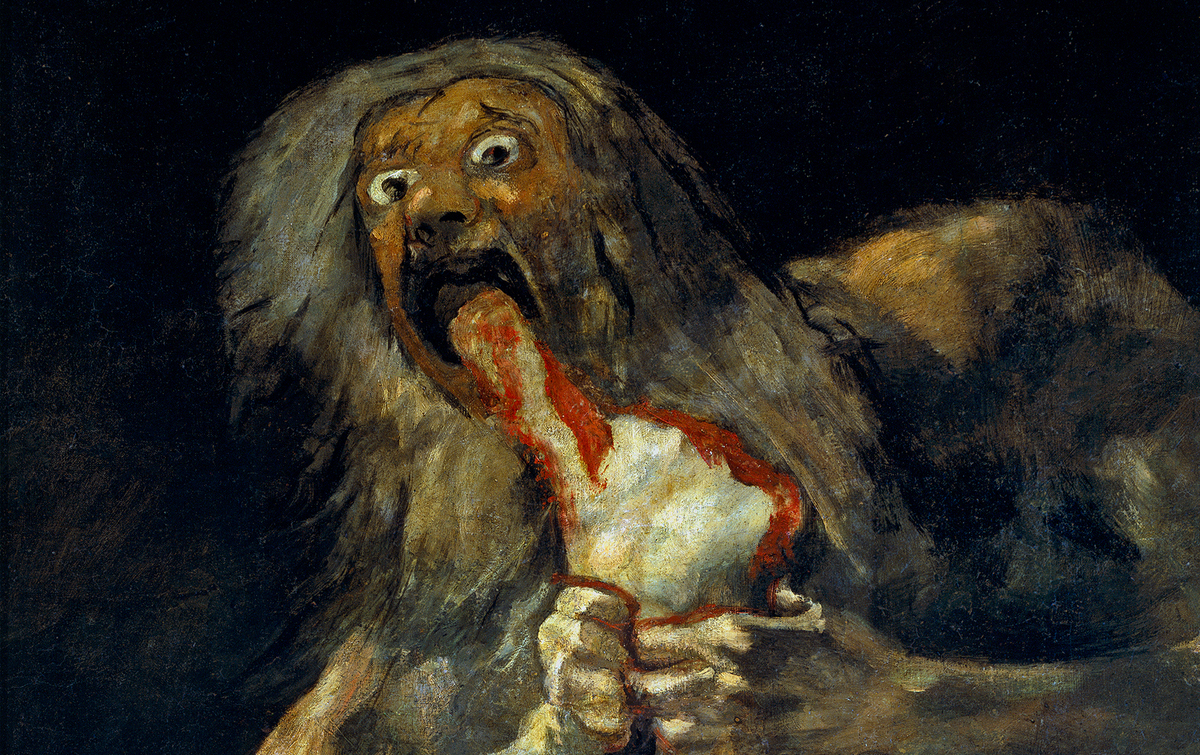
Featured image is "Saturn Devouring His Son," Francisco Goya 1819-23.
CORRECTION 12/18/2025. Neither The Great Wall of China nor Troll A is visible from the Moon, contra Weinar (xxxii). The essay has been updated to reflect this fact.

.jpg?ref=liberalcurrents.com)