Cringe is Good, Earnestness is Strength
On irony poisoning and the importance of being earnest.
If you’re a creature of the modern social internet, you know that it’s a place where negativity often reigns supreme. In many ways, this is an understandable feature of the moment we live in. People are angry about the injustices they see every day on their phone screens; they’re anxious about the crises of climate change and faltering democracy; and they’re frightened about a future that feels more like a threat than a promise. But the result is that a lot of our online worlds—and our offline ones, too—are saturated in an irony and defensiveness reminiscent of adolescence.
And so, I think one of the key challenges of living in an era of internet alienation and rising authoritarianism is finding the will to be sincere, to embrace a certain unvarnished and earnest form of expression in a world where affect and posturing predominate. This means foregoing an aura of coolness or detachment in favor of emotionalism and vulnerability. It means resisting the impulse to cruelty and snark and instead opting for restraint and compassion. And it means being unembarrassed and authentic.
In short, it’s not only helpful but vitally important to be cringe. Cringe and all its saccharine associations are, for lack of a better word, good. But first, I think it’s helpful to lay out why the alternative of irony and coolness is so dangerous to any real politics of change.
It’s a well-known story by now that many of the media figures who have defined the last decade-plus of Trumpism began their online lives in the irony-rich soil of places like 4chan, Something Awful, and other Internet forums. Online discourse in the social media era has always had a healthy dose of forums-inflected humor and viciousness. And despite the ascendancy of alt-right and other far-right figures, this style of online engagement is not limited to one segment of the ideological spectrum. It’s a real problem on the left, too.
The core issue is that bad behavior online gets reinforced as we socialize ourselves into bubbles of cynical and mean-spirited engagement.
The kind of radicalization that can occur online through these interactions and through mass events like dogpiling is an example of the more general process of group polarization. What happens in the context of social media, as researchers have observed, is that “affective animosity” between groups can get dialed up in intensity through the combative practices of trolling and online feuding.
And the practices people use to cajole, antagonize, and humiliate each other online can have escalatory effects. As Elle Reeve describes in her book Black Pill: How I Witnessed the Darkest Corners of the Internet Come to Life, Poison Society, and Capture American Politics, the internet offers myriad ways to induce us to be our worst selves. While Reeves focuses on the metastasizing of misogynistic and racist subcultures on the online right, her insights have relevance for internet culture and political socialization more broadly.
In the book, Reeve makes a crucial, pithy observation:
Irony, in most cases, is not real. It does not matter what someone *really* believes. They don't always know what they believe. If they believe it enough to laugh at it, they believe it enough.
A lot of the toxicity that has spilled out from the internet into our electoral politics began as, or was at least couched as, jokes. But what both journalism like Reeve’s and sociological research shows is that there can be a transformative and accelerating effect to speaking in this register. Of course, we’ve seen the devastating effects of this mentality from the right, but it’s a problem across the spectrum, as a desire to seem edgy and a need to dominate the people we see as our enemies incites us to joke about taboo and offensive subjects.
To my mind, this is all a stark reminder that the line between irony and identity is blurry. And it’s a testament to how our behavior can condition our moral character rather than simply flow from it. As Kurt Vonnegut wrote, “we are who we pretend to be.” So who is it that we want to be?
My colleague Toby Buckle recently argued on Bluesky that a lot of people who attack “normie” liberals for their lack of coolness really just “mean the pussy hats, the warren voters, the grandmas protesting ice.” As Buckle asserted, snark about “being at brunch,” is often just a gender-coded attack on a certain kind of middle-aged and older woman.
The writer Moira Donegan made echoed the point succinctly:
Look, sometimes when people say they hate “liberals,” they mean “women.”
The core conceit of what Donegan and Buckle are saying is that there is something seen as feminine and maternal about the politics of resistance liberalism. In short, cringe politics are not just rejected for being uncool but for being too girly, too motherly.
Not to wax too Freudian here, but I think the core point about coolness and femininity is a piercing one. We are still being subjected to endless discourse about the supposed need for macho, beer-swilling, pot-smoking commentators on the left who can go toe-to-toe with the right’s manosphere influencers and cancellation-seeking comedians.
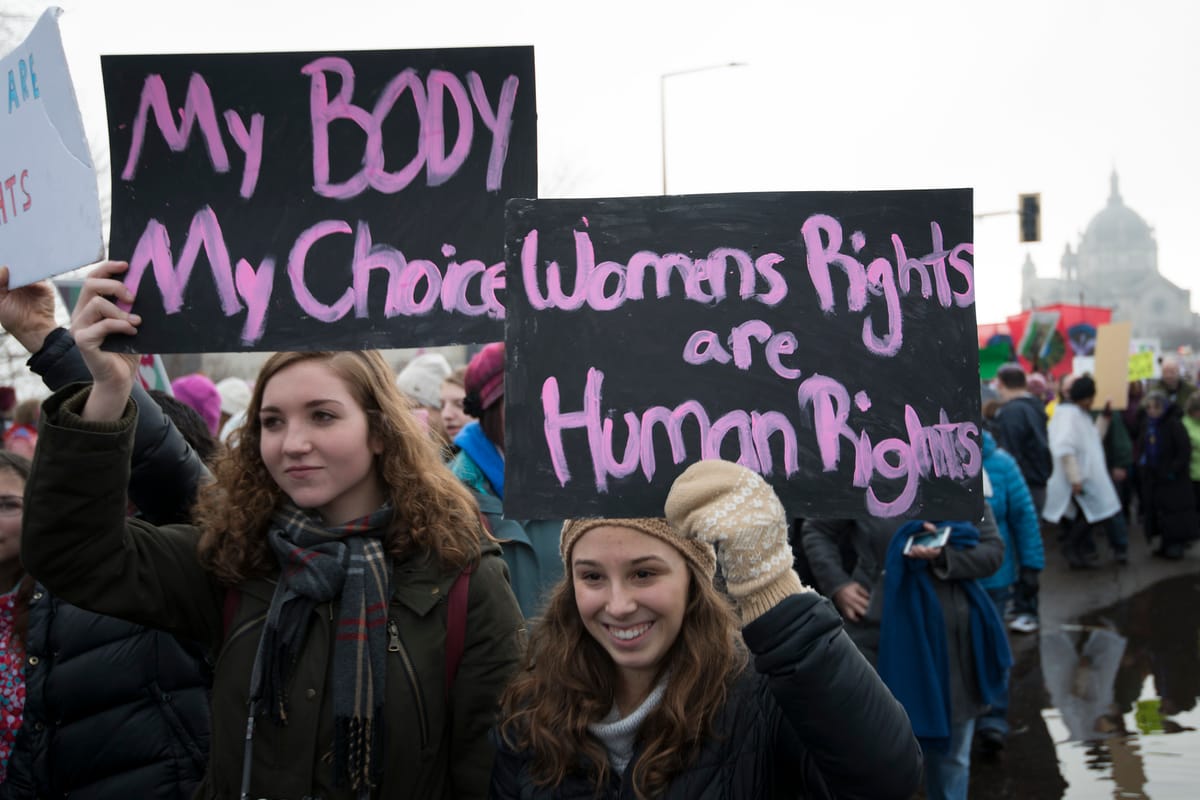
Coolness is almost always framed as manliness in a traditional, normative sense. Trump’s defeated opponents, Hillary Clinton and Kamala Harris, are mocked by many, including online progressives, on sexism terms about their appearance and approachability. Similarly, the pink hat wearing liberal women who have marched consistently against Trump since his rise, the kind of liberal archetype so many online sneer at as overly earnest and ultimately ineffectual, are regularly discarded as “wine moms.”
But this is wrong. Those marches mattered. The political work done by a lot of middle-aged women to register voters, sign political petitions, and organize communities matters. And it’s all been done with the delightfully unvarnished—some might say “cringeworthy”—enthusiasm of people, particularly women, unafraid to show they care. It was Renée Good, a thirty-seven year-old mom in an SUV, that ICE agent Jonathan Ross gunned down in Minneapolis.
What I find encouraging here is that we can choose, even in a moment of terrible injustice and rising authoritarianism, to abandon pretense and embrace earnestness. We can opt to be not only warmer and more open-minded but committed to expressing ourselves sincerely and without regard for how cool—or macho—that might make us appear.
And I think this is important because I believe in a politics of grace and persuasion. But I also only believe these things are possible when a relationship exists, when mutual trust and care have been established. And I see all the things that make up what we call cringe as being prerequisites to establishing meaningful relationships.
You cannot do this sort of politics if you are not willing to be vulnerable. You cannot do it if you are afraid of seeming emotional or dorky, or if you are too worried about placing a foot wrong. You can’t build strong and lasting relationships without these things. And it’s a fear of being cringe that will keep you from some of the most meaningful experiences and interactions you may ever have.
In short, cringe is good. Cringe works.
Featured image is Women's March against Donald Trump in St. Paul, by Fibonacci Blue