From Powerlessness to Power
We will not achieve any of our ultimate goals without exercising state power, and the most effective way to take state power is through nonviolent but confrontational resistance.

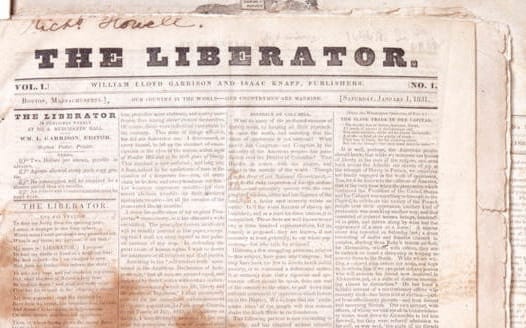
In 1853, agents of the federal government arrested Anthony Burns in Boston. They grabbed him under false pretenses. Armed soldiers prevented locals from attending his trial. He was convicted under the authority of the Fugitive Slave Act of 1850. Masses of angry citizens organized to prevent it—but under military guard, Burns was transported south to slavery in Virginia. From the perspective of 1853, the slave power looked unbeatable.
But Amos Adams Lawrence said afterwards: "We went to bed one night old-fashioned, conservative, compromise Union Whigs & waked up stark mad Abolitionists," (Battle Cry of Freedom p. 120).
In 2026, agents of the federal government murdered Renee Nicole Good in Minneapolis. Seventeen days later, they murdered Alex Pretti. Pretti was peacefully filming these same federal agents as they laid siege to his home city, going door to door without warrants, breaking into homes, snatching people off the street. A half-dozen agents wrestled Pretti to the ground. After he was immobilized at least two of them began firing at him, one of them emptying his magazine into Pretti's defenseless back.
From the perspective of 2026, MAGA can look unbeatable. Their masked thugs are running wild in American cities, snatching people off the street and from their homes. Murdering American citizens with apparent impunity. Trump speaks offhandedly about becoming a dictator or a king or serving a third term.
There's a story one can tell. Nonviolent resistance is working. The No Kings protests put millions of people in the streets. Protests against Trump have only been growing in numbers. Everywhere ICE goes they are hounded by ordinary Americans who want to know why masked thugs are kidnapping our neighbors. The resistance is working: Trump's support is collapsing.
And yet. He's still in the White House. Carrier battle groups still maneuver at his whim. ICE is still in Minneapolis. Their concentration camps are still operating. We have not thrown the bastards out.
So can nonviolent resistance really be said to be working? Is nonviolence really the answer? We are told that real power grows from the barrel of a gun—and if we want the state to take us seriously, we need to get guns of our own, or at least turn to more forceful, more violent tactics. After all, the slave power wasn't beaten at the ballot box: it was beaten on the battlefield. Martin Luther King might have preached nonviolence, but the murderers of James Chaney, Andrew Goodman, and Michael Schwerner were brought to justice by the guns and badges of the FBI. That nonviolent stuff'll get you killed. This struggle we are in today only ends with us storming the Winter Palace and dragging Trump out of his golden ballroom—we are told.
The Bolsheviks remain a touchstone, even a hundred years hence, because they were leftists and they won. They might have built a nightmare—they might have murdered by the millions or, in China, by the tens of millions—but they won. So surely we should fly the red banner, form the Red Guards, pursue armed resistance—right?
This was the theory of the Russian Bolsheviks—in 1905. They developed armed cadres and prosecuted a revolutionary insurrection against the tsar. They were crushed, decisively, by 1908. Their revolutionary violence was perceived as chaos and disorder, their slaughter by Pyotr Durnovo applauded by the basically conservative peasantry that constituted the vast mass of the Russian imperial population (Stalin p. 87). Lenin fled back into exile. Stalin was sentenced to Siberia, trapped in arctic Kureika where sixty-seven people lived in eight hovels (Stalin insert 1 p. 11).
How did they go from this crushing defeat to paramount authority in the Russian Empire? Despite many later obfuscations, the Bolsheviks did not overthrow the tsar. The tsardom self-abolished because its own incompetence was losing a cataclysmic war. Political prisoners were released from the gulags. Stalin traveled three thousand miles from the empire's frozen extremities to its heart. He stepped off the train in Petrograd with nothing but the clothes on his back—and a typewriter (Stalin p. 173). When German intelligence put Lenin on that sealed train, they didn't arm him with guns or bombs or even fungible currency.
He didn't need them. Lenin was a poaster. The tsardom had imploded, the Provisional Government was ascendant—and manifestly failing to solve any of the empire's problems. The war continued. The hunger continued. Lenin rode to power on a simple message: PEACE. BREAD. LAND. Because people believed in that message—because they believed he had a plan to solve the crises afflicting their nation—because socialism had become the language of resistance—they followed him. The pages that came off that typewriter of Stalin's had more impact than bullets or rubles. The Bolsheviks did not build revolutionary cadres from scratch. Trotsky co-opted the existing security services of the state—the famous soldiers and sailors of the Petrograd Soviet—not through armed resistance, but through poasting. (And organizing.)
By the time they stormed the Winter Palace there was barely anyone any longer willing to defend it. To put it another way: the Bolsheviks did not win the revolution by first creating the Red Guards. They were able to create the Red Guards because they had already won the war of ideas.
In all of these cases—the Civil War, the Russian Revolution, the Civil Rights Movement—you will notice a familiar story. You start out of power. You win a war of mass politics—you get enough of the mass of people to support your cause—and this carries you in to state power, which you use to consolidate and further that political project.
One might add MAGA to this list. Trump did not ascend to power at the top of an armed insurgency. He won an election. He won that election by winning the narrative, or at least enough of it, in enough places. By winning that election—by winning that election with his own party largely consolidated behind his MAGA program and his personal power—he attained the titanic powers of the state, and began to use them.
Even Lenin took power on the occasion of an electoral event—the convocation of the Second All-Russian Congress of Soviets of Workers' and Soldiers' Deputies. In America far more than Russia of 1917, elections are the coin of the realm of politics. This is true in a way that runs deeper than any formalist understanding of electoral politics.
So don't buy a gun. You're not going to out-shoot BORTAC. You're not going to out-opsec the FBI. You're not fighting a civil war in a nation divided on stark ethnic or religious lines. You're not materially supported by a major outside power. You're not facing a civilian paramilitary that operates at arm's length from the government. Armed insurgency is not a winning strategy for us. Resistance is.
Elections are the people, speaking. Even if Trump decides he wishes to run for an unconstitutional third term—even if he attempts to rig the election—even if his cronies on the Supreme Court say this is all acceptable—elections have a power all their own in the American consciousness. If the security services abandon Trump—if they stand aside and allow us to drag him out of his golden ballroom—it will be because they heard the fateful lightning that is the voice of the American people speaking.
This is a key point. Authoritarian regimes always have nominal authority over their armed forces. Authoritarian regimes fall anyways. They fall when the security services are no longer willing to pull the trigger against the regime's domestic enemies—or go over to the other side. This is achieved by winning that war for hearts and minds—by demonstrating that the overwhelming will of the people stands against a failed regime.
Let us be clear: we want the power of the state. We wish to hold the criminals of the regime accountable. We wish to seize back the public funds looted by Trump and his cronies. We wish to undo the damage he has done to the government. More than any of that we wish to rebuild. We want American Reconstruction. We will not achieve any of these things without exercising state power.
But even if your goal is to acquire and exercise the power of the state, including the violent power of the state, it does not follow that the best tactic for achieving this is armed resistance. In our world, nonviolent but confrontational resistance is the most effective way at building towards that goal—as the empirical evidence shows.
As Professor Omar Wasow has documented, in the American cultural context, nonviolent resistance to brutality is effective at building mass support. Most acts of resistance are not witnessed in person: they are filmed and photographed and spread via mass media and social media. When these images tell the right kind of story, it brings people on side.
Nonviolence is effective. It is also difficult. A man slaps you in the face, you want to slap back. He invades your city, kidnaps your neighbors in the night, murders innocent men and women in the street—you might want to do more than slap. As Wasow has also documented, violent resistance—especially violent resistance that gives the appearance of disorder—turns the public against you. It shifts the story from a "resistance to oppression" frame to a "crime" frame. That is what the Trump regime wants. Those are the images they have been trying to manufacture since taking office.
There will be casualties. Look around you. Do you have a plan for winning that does not involve casualties? There will be casualties. It's on us to make sure their sacrifice leads to victory.
Minneapolis is a microcosm of Wasow's model. As government brutality has escalated, individual acts of resistance have galvanized mass mobilization. We have not seen the end of this. We have not seen the end of what Minneapolis is capable of.
This is a model of what we must work towards nationwide over the next three years.
They will attempt vote suppression. This has been the Republican goal for every election of my adult life. We are ready for this. We must ready ourselves for more extreme measures. They may attempt to physically block us from voting. We will stop them. In extremis they may try to destroy ballots. We must be ready, with citizens actively following federal agents and monitoring election facilities.
It is going to be rough. We are going to have to endure. We are going to have to find reserves of fortitude in ourselves. The black hole of social media wants to pull you down. Trump is trying to pull you down. They want us to give up. They want us to be afraid. To despair.
Fear is natural. But beyond fear we must keep our eyes on the prize instead.
When 2028 comes we must be at the point where the military will not support a Trump coup—the rank and file, the lieutenants and colonels, will not pull the trigger. The organs of state power—the police, the military, the courts, the bureaucrats—they must recognize that whatever the man in the White House says, we have won the election, and are coming to power.
As others have noted, however, it rather matters a lot who takes power and what they plan to do with it. As Steven Kotkin puts it, "It is in the corridors of power, centrally and provincially, where the revolution finds an outcome," (Stalin p. 138). When the tsar abdicated, he was replaced by the Provisional Government of Alexander Kerensky, a nominal liberal who intended to implement a democratic, parliamentary Russia. Unfortunately, Kerensky was also a feckless incompetent who continued the war and failed to resolve any of Russia's social crises. It was Kerensky's failures that opened the door for Lenin, and all the horrors that followed thereon.
As Trump consolidated the Republican Party around his MAGA program, we must consolidate the Democratic Party around American Reconstruction. This means winning primaries. This means winning over moderates. This means having policies ready to go day one so that our politicians have rational and actionable plans for exercising power.
We will continue to resist. We will continue to bend the national narrative. We will continue to put millions of people in the street. In the elections later this year—in the elections of 2028—we will win by such a margin that the result is undeniable. And when it comes time to certify that election and inaugurate a new President in the cold January of 2029, we will turn out in the streets of Washington DC by the millions. There will be no funny business this time.
We will get the Democrats on board with American Reconstruction. We will primary the squishes. We will elect those who know we are at war and fighting is no longer optional. We will bring around the moderates and the holdouts. We will walk into the corridors of power with a plan to repair our broken republic.
We will win.
Featured image is The Liberator