How the Supreme Court Enabled Trump's Unilateral War on Iran
For almost a century, the U.S. Supreme Court has been incredibly solicitous of executive power in foreign affairs.
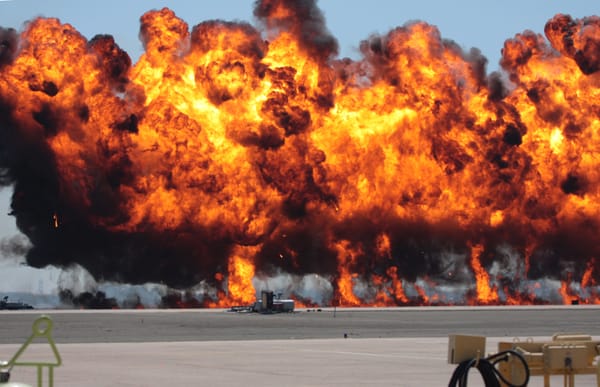
On February 28th, President Donald Trump announced the start of “major combat operations” against Iran, with the explicit aim of overthrowing the ruling regime. The U.S. and Israeli militaries have bombed the Supreme Leader Ali Khameini’s compound, killed other senior government officials, and already hit civilian targets as well, including the bombing of a school for girls, which killed over 100 people. Iran has retaliated against U.S. military bases and allies in the region with strikes of its own. Donald Trump has started all of this without military provocation or a declaration of war from Congress.
In typically Trumpian fashion, these actions are shocking to the common understanding—and the intent of—the U.S. Constitution, while also representing the natural endpoint of conservative jurisprudence. The U.S. Supreme Court has been incredibly solicitous of executive power in foreign affairs, particularly when the president invokes a real or imagined emergency. The Court has handed executive lawyers sweeping descriptions of the president as the nation’s “sole organ” in foreign affairs and the ability to operate relatively freely in the “zone of twilight” between Congressional approval and disapproval. Again and again, the Court has given the presidency greater and greater tools to wage war without Congress. The result is a constitutional ecosystem in which launching massive military operations without Congressional authorization has become legally unsurprising—even when it escalates into something that the president openly calls a war.
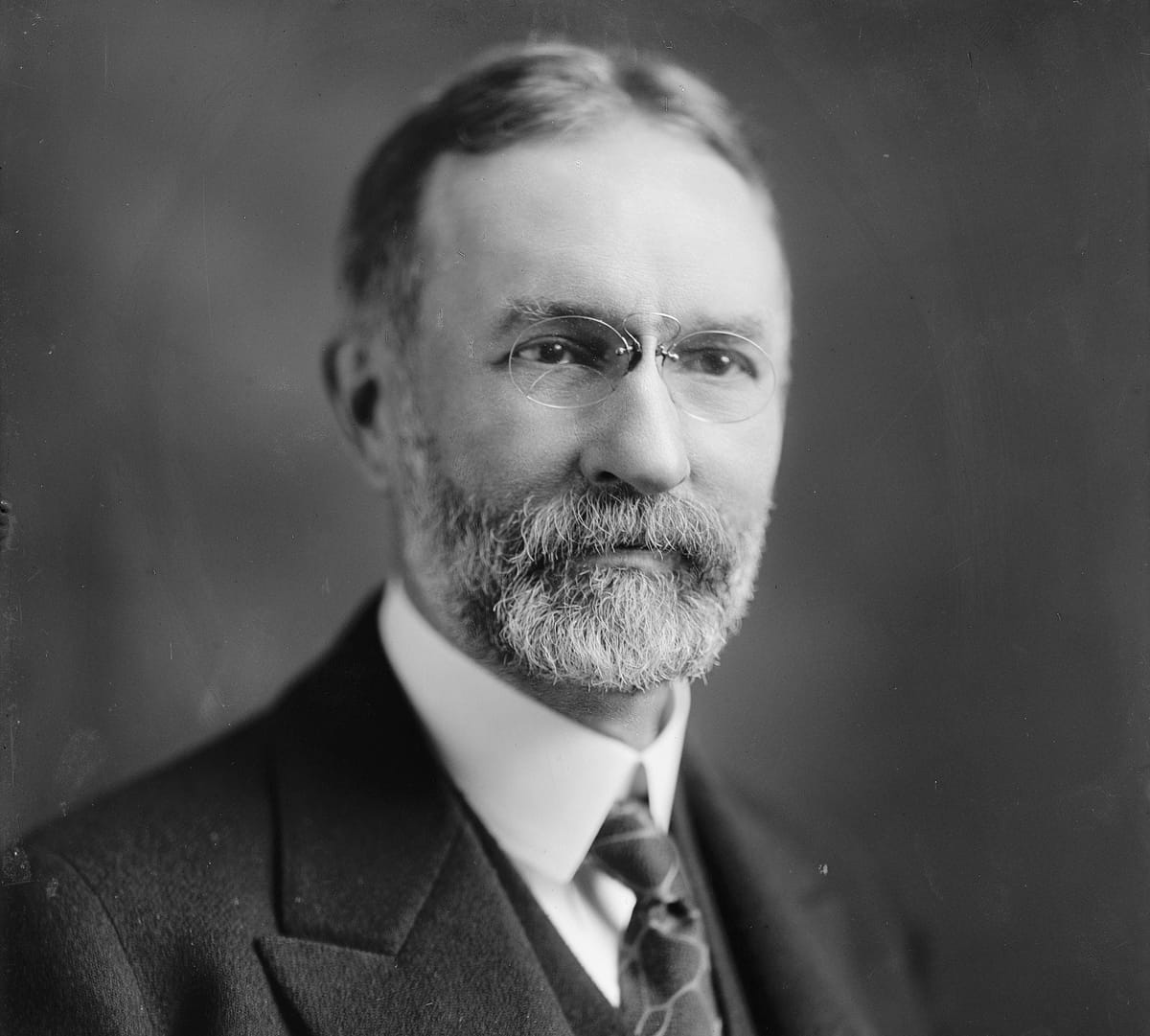
Justice George Sutherland laid the foundation in 1936, in U.S. v. Curtiss-Wright Export Corp. An early entry in the United States corporations’ long record of fomenting war in South America, the Chaco War saw extensive arms sales to both Bolivia and Paraguay, with mounting casualties on both sides. When Congress authorized President Franklin D. Roosevelt to prohibit the sale of arms to the warring countries, he did so, but some companies continued their sales. Under indictment for violating the embargo, Curtiss-Wright Export Corporation challenged the embargo as an unconstitutional delegation of power to the president. The Supreme Court rejected that claim, essentially holding that beyond not being an unconstitutional delegation of power, the embargo’s authority arose from the president’s inherent powers.
Sutherland described the president as the “sole organ of the federal government in the field of international relations,” borrowing a phrase from an 1800 speech by John Marshall. More consequentially, he drew a sharp distinction between the federal government’s domestic and foreign powers. He asserted that the Constitution was meant to enumerate the federal government’s domestic powers only. According to the opinion, in foreign affairs, national sovereignty passed from the British Crown to the United States as a whole at independence, bringing with it inherent external powers that do not depend solely on constitutional text. In this telling, the president’s authority in external relations was not limited to the powers laid out in Article II. Rather than playing a co-equal role in managing foreign affairs, Congress was relegated to a more supportive role. Although the holding of Curtiss-Wright upheld a congressional delegation, its broader language suggested that the executive’s foreign affairs powers are both plenary and structurally distinct from the Constitution’s ordinary separation of powers constraints.
Scholars have spent generations explaining why that history is contestable. Critics note that the Constitution carefully enumerates powers over war, commerce, and treaties, and that the framers were wary of unchecked executive authority. They argue that Sutherland’s account of inherent national powers overstated continuity with British sovereignty and underplayed the Constitution’s text and structure. But the Court has never repudiated the decision’s grand rhetoric. Instead, the “sole organ” dicta has become a kind of constitutional North Star for executive branch lawyers that the courts have been happy to accede to, where foreign affairs require distinct consideration separate from the normal constitutional order. Supporters of broad presidential powers have relied on the Curtiss-Wright analysis to argue that even the 1973 War Powers Resolution—where Congress reasserted its warmaking authority by requiring specific actions when the president initiates hostilities—is unconstitutional.
In 1974, the Supreme Court ruled itself out of many foreign affairs decisions as well. In Goldwater v. Carter, members of Congress challenged President Jimmy Carter’s unilateral termination of a defense treaty with Taiwan. The plurality opinion held that foreign affairs were conducted between the president and Congress, and that the political question doctrine precluded judicial review. Essentially, if the Court does not want to wade into questions of Congressional authorization for foreign affairs actions, it can stay out of it by calling it a political question best left to the political branches.
Even the case celebrated as a high-water mark for limits on presidential power, Youngstown Sheet & Tube Co. v. Sawyer, has had a more ambiguous afterlife. Justice Robert Jackson’s famous concurrence set out a tripartite framework: Presidential power is strongest with congressional authorization, weakest against congressional prohibition, and somewhere in between—the “zone of twilight”—when Congress has been silent.
That “zone of twilight” has become the executive branch’s favorite terrain. Military strikes and limited uses of force typically occur in precisely that space where Congress has not clearly authorized the specific action, but it has not clearly forbidden it either. After Congress failed to pass a war powers resolution prohibiting military action, it could be argued that Trump is acting in that “zone of twilight” now, even as he wages open war.
Since Youngstown Sheet & Tube Co., the Supreme Court has rarely confronted a president at the front end of a military campaign, and even more rarely has it attempted to halt one once underway. Jackson’s concurrence is often invoked as a cautionary framework, but in practice it has functioned as a vocabulary for executive flexibility. Presidents characterize military actions as falling within inherent commander-in-chief authority or within the “zone of twilight,” and courts have tended to step back rather than test those claims in real time. Even on domestic issues impacted by international relations, the Court has readily stepped out of the way when the government violates Constitutional rights during wartime in cases like Korematsu v. United States and Debs v. United States.
Part of that reluctance is doctrinal. As in Goldwater, the political question doctrine provides a ready off-ramp. When private parties sue the government for war powers violations, courts often conclude that the dispute turns on sensitive military judgments constitutionally committed to the political branches. The result is that litigation over war-making power is often dismissed before any court squarely addresses whether the president had proper constitutional authority.
Once the shooting starts, courts are structurally ill-suited to stop it. Injunctions against the ongoing deployment of troops or active hostilities raise profound separation-of-powers concerns of judges directing battlefield strategy from the bench. By the time a case is briefed and argued, bombs have already fallen, troops have been deployed, and foreign policy consequences have rippled outward. Judges are wary of issuing orders that could endanger service members or signal disunity to adversaries. In effect, once a president initiates force, it produces a momentum that is difficult to reverse. At that point, there are few options for reining in the executive.
That dynamic has repeated across administrations of both parties. From Korea to Kosovo, from Libya to strikes against non-state actors across the globe, presidents have characterized military operations as limited, defensive, or falling short of “war” in the constitutional sense—often without a formal declaration from Congress. Courts have generally declined invitations to police the line. The combination of Curtiss-Wright’s expansive language, Youngstown’s flexible middle category, and Goldwater’s political question escape hatch has created a one-way ratchet: the president can act first, and judicial review, if it comes at all, arrives too late to matter.
In that ecosystem, the practical difficulty of judicial intervention becomes a constitutional argument of its own. Once military action is underway, halting it would require courts to assert not just interpretive authority, but operational control over foreign affairs. Faced with that prospect, the judiciary has consistently chosen restraint. The consequence is that the most consequential decision—whether to initiate hostilities—often escapes meaningful judicial scrutiny altogether. Not that the Roberts Court has had much of a problem supporting Trump administration lawlessness anyway, but even if it wanted to, Trump’s team knows that the Court has already given them everything they need to act unilaterally. The world is now paying the consequences.
Featured image is Justice George Sutherland, by Harris & Ewing