Just Throw the Nazis Out Of Your Bar
Lessons from Nicholas Ensley Mitchell’s "On Bigotry"
Bigotry appears to be everywhere today. The rise of the MAGA movement and Trump’s own personal history of bigoted comments make for arresting realities in America. We see ICE deporting migrants in front of our eyes, for no other reason than the colour of their skin, and violent excesses are becoming increasingly normalised. The politics of not simply humiliation but harassment and violence are here with us.
But neither should we believe that bigotry is the worst it has ever been. Lynchings in the South used to be public spectacles, photographed as if they were a prize or a moment to be proud of. Sodomy laws were only made unconstitutional in 2003, and only in 2020 was it deemed unconstitutional to fire someone for their sexual orientation. The progress in race relations, gender, and sexual minorities is simultaneously monumental and recent. It is also under threat from the radical right, who seek to roll back America to a more bigoted era.
Nicholas Ensley Mitchell’s On Bigotry presents itself in the style of Timothy Snyder’s On Tyranny and Jason Stanley’s How Fascism Works and draws some inspiration from these efforts throughout. Divided into twenty lessons, On Bigotry relies upon clear and precise definitions to guide the reader through what bigotry is, how it manifests itself, and what societies can do about it. Far from being bogged down in academic prose or esoteric theory, the book focuses on short, clear essays with plenty of dictionary definitions to guide the lay reader. This is further helped by the fusion of personal experience with academic analysis to build a strong case about how we can recognise bigotry, even when it hides behind other forms of politics. The mission in his book is not focused on how to ‘win over’ bigots or defeat them in a battle of wits. This is precisely because Mitchell believes bigotry cannot be fought over or negotiated with—it must be confronted and eventually defeated.
Bigotry is the opposite of intellectual, reasoned thought because it makes claims about the world without evidence and encourages irrational behaviour
This is a lesson for centrist politicians who believe they can dance with the bigoted devil. Far from being willing to compromise, the bigot is definitionally unable to see reason or agree to disagree. No platforming bigots is not silencing them; rather, it is refusing them a chance to further spread their poison openly and at your expense and time. After all, why would you want to debate someone who dislikes your very essence and being? Just as Bernard Williams refused to debate Oswald Mosley because of his odious positions, Mitchell advocates the same.
Instead, Mitchell focuses on advocating for a radical anti-bigotry and not allowing bigots to become acceptable. Using examples from the American South, where Mitchell grew up, where Bar owners quickly threw out the first Neo-Nazi even if they were quiet and polite, lest they begin to bring friends and take over the space, Mitchell advocates not for toleration but for acceptance, which requires outright and full-throated rejections of bigotry. We can all too clearly bear witness to how quickly tolerance of bigots affects government institutions. The bigot will think generationally and take what advancement they can, even if that is only being allowed in the public space. Better not to give them an inch than to let them take a mile.
Seeing all bigotry as part of an intertwined web, Mitchell takes an axe to the notion of the ‘progressive bigot’ i.e., the ‘feminist’ TERF or the anti-white activist fighting for racial minorities. Bigotry exists as a method of reasoning, and if someone is prone to being a bigot to one group, they will naturally advance onto others. Indeed, for Mitchell, precisely because all groups are made up of a variety of identities, an anti-black bigot must necessarily be an anti-female bigot because their prejudice will necessarily affect black women. Mitchell, in this instance, uses intersectional theory to provide a useful plank describe the universality of bigotry effectively throughout.
All forms of bigotry are interconnected because people exist in multiple communities. A racist is also a sexist, homophobe, transphobe, and xenophobe.
This move is possible because, unlike others, Mitchell acknowledges that bigotry transcends any singular class or type of person. Instead, bigotry is presented as a way of thinking in its own right that is universal—it traps the educated, the smart, the dumb, the rich, and the poor alike. Mitchell critiques our popular imagination of the bigot by using Tyler Austin Harper’s provocative critique of White Rural Rage to demonstrate how scholars, as well as our popular imagination of the bigot (A White, poor, gun-owning, race-baiting man) misinform our aesthetic of the bigot. Using the example of Hannah Arendt’s own refusal to support the integration of Little Rock High School in Arkansas and the sheer volume of well-educated Nazis highlights well how educated people can fall into the bigotry trap.
Brought together, Mitchell not only diagnoses and explains bigotry convincingly but also explores the effects on wider communities, even those from where the bigot emerges. Using welfare reform as one example, Mitchell highlights how white bigotry has undermined the fight against uplifting poor white people’s lives because of the fear of helping poor black people. In more superficial edge cases, such as ignoring the effects on the disabled community post-COVID, Mitchell directs the appeal
The chapter on how bigotry disguises itself may feel slightly outdated in the world of Trump and Nick Fuentes. Proclaiming that if most bigots paraded themselves in Nazi tattoos and lost their sense of reflection, then confronting and stopping bigotry would be easier, may feel as if it belongs to the world of the 1990’s when bigotry hid itself behind crime, markets, and concerns over community cohesion. Quoting the infamous Lee Atwater, the man behind the Southern Strategy, in a world where Presidential candidates can proclaim people’s dogs and cats are being eaten, feels a little like being stuck in the past. Bigotry, at least amongst a minority of people, is popular even when spread in the open.
Yet, defining bigotry as adaptive and anti-fragile is perhaps one of the strongest lessons the book has to give. The package of options—be that bullhorn or dog whistle politics, self-pitying identity politics, and conspiracies give the bigot plenty of room to retreat, reform, and revive. It demands that we think about bigotry more clearly and to reject the notion of the acceptable bigot on the grounds of being subject to bigotry ourselves.
There are questions to answer, though. Mitchell cites the argument that there is no point in arguing with bigots because it is a code of behaviour that people live by. But this proclamation fails to cohere with his later belief that former bigots, those who have reformed and now live non-bigoted lives, become anti-bigots if we do not engage or argue with bigots. It is never particularly clear how bigots can reform themselves, barring social shaming and personal reflection. We may presume that some bigots will always remain that way, and such people as Karl Popper argues cannot be tolerated, but this remains in tension with Mitchell’s desire to ‘call in’ bigots who are prepared to be re-educated and recognise the error of their bigoted ways. Such openness is admirable, but practically, it is unclear how it sits within the framework of the rest of the book.
Mitchell also recognises that racial minorities can be bigoted against majorities. This is a part of the argument which some left-wing and liberal minded people may find difficult to accept. Racism, as typically defined, is intersected with power, but Mitchell argues that even if the systemic effects of racism fall onto minorities, a bigoted mindset transcends political power. There may be a hierarchy of effects, but no actual hierarchy of bigotry.
On Bigotry recognises the diversity and reality of bigotry in everyday life and how bigotry comes to be baked into national life. This useful work is not located within deep political theory but is a very practical and observant effort at detailing the effects of bigotry on policy, life, and communities. It should be read widely and taken seriously, even when we may disagree with some of its diagnoses. Mitchell’s effort is a laudable one and much needed in public and political life.
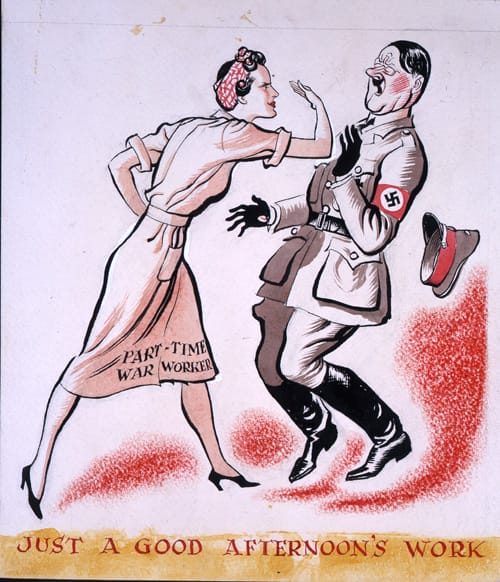
Featured image is Just a Good Afternoon's Work