Overcoming Indifference
On the political disenchantment of Gen Z.
Every once in a while, I encounter a book that speaks so clearly to the questions that keep me up at night. In 2025, that book was An Unfinished Love Story: A Personal History of the Sixties by Pulitzer Prize-winning historian Doris Kearns Goodwin. The dual memoir follows Goodwin and her late husband Richard “Dick” Goodwin during their time working in the Johnson and Kennedy White Houses, where they each got a front-row seat to many of the defining moments of the 1960s. Many of the historical events depicted in the memoir were familiar to me, yet the intimacy of the memoir forced me to look at this era in a new light.
The rugged determination that characterized much of the Sixties, from the optimism of the Kennedy years to the heartbreak and rage of 1968, carries on throughout the memoir. Goodwin and her husband personified a generation whose experiences and values feel increasingly elusive today. They lived in a period when mass movements were able to influence policy, culminating in legislation that altered the lives of millions, when credibility gaps had the power to sink a presidency, and journalists commanded respect from across the political spectrum.
Goodwin is careful to reject the romanticization of the sixties. Her recollections of the decade are interspersed with anecdotes of the ways in which the sexism and racism of the era manifested in everyday life, such as the unspoken segregation that was practiced when she was in college, or how Dick’s career was almost limited by antisemitism. Yet reading the memoir, I couldn’t help but feel a sense of loss about the present moment.
Alongside landmark moments like LBJ’s “We Shall Overcome” speech (penned by Dick Goodwin), which continues to be invoked in progressive politics today, smaller moments would linger the most in my mind. At one point, Goodwin quotes a prescient section of LBJ’s speech at the University of Michigan where he clarified the intentions behind “The Great Society.”
“For better or worse, your generation has been appointed by history to deal with those problems and to lead America toward a new age. You have the chance never before afforded to any people of any age. You can help build a society where the demands of morality, and the needs of the spirit can be realized in the life of the Nation … a place where men are more concerned with the quality of their goals than the quantity of their goods.” I am now in a similar position to the students LBJ is addressing here. In a few months I will leave behind my collegiate life to join the “real world” and put what I’ve learned into practice. Yet the path to this “new age” seems more fraught than ever.
I was reminded of this quote months later when I read an article titled “The Boomers Are Protesting Trump. Where Is Gen Z?” about last summer’s No Kings demonstrations. The same generation that came out during the Sixties was out again, yet as the article pointed out, they were joined by vanishingly few members of Gen Z. I was one of the exceptions, joining demonstrators in NYC, yet even in the moment seeing a crowd that disproportionately resembled my parents and grandparents made me feel somewhat out of place.
These demographic issues feel especially jarring given that in recent memory, young people have been at the forefront of various social movements, and polls have shown that many young people, including those who voted for Trump, are now staunchly opposed to his policies. So where are we? Drawing on data, political scientist Brendan Nyhan, offers some potential answers. No, young people are not indifferent to what is going on, nor has online culture completely drained our attention. Instead, Nyhan identifies a much larger problem: ingrained cynicism. He writes:
Consider the experiences of the last few years. The racial justice movement that peaked in 2020 ended in disappointment and backlash. The Gaza protests provoked intense conflict without delivering clear political or policy victories for their organizers. Maybe most important, Mr. Trump himself is back in the White House, suggesting a futility to opposition and activism among young people who have only ever known him as the central figure in our politics. He first took the oath of office when today’s first-year college students were in elementary school.
This quote echoes my own experience. I was raised in a civically engaged family, I’m named after my maternal great-grandfather, a proud Black man who coached New York’s first racially integrated track and field team. As a child, I would accompany my parents when they went to the polls, and in 2022 I went into that same polling place to cast my first ballot. In recent years I’ve found myself interning and volunteering at various non-profit organizations and political campaigns to help bring progressive ideals into actual policy. Although I continue to see the value of civic engagement, my cynicism about people, politics, and institutions has only grown stronger.
However, as Nyhan writes in his conclusion, the incorrect response to this moment is not to dismiss or downplay the cynicism, but rather to overcome it. To create, in his words, a “morally compelling form of resistance that can deliver results.” There are some signs that this resistance is beginning to emerge: the outrage over the murder of Nicole Good and Alex Pretti by ICE has inspired a cross-generational movement that has forced even previously silent elected officials to condemn immigration officials. Last year, both moderate and progressive Democrats were elected in state and local elections by channeling voters' frustrations.
There are still many reasons to be cynical. While I wholeheartedly support the protestors in Minneapolis, I cannot help but notice that the killing of two White people has inspired more direct action than years of well-documented dehumanization of Black and Brown immigrant communities. While Mamdani was able to build a New Deal style coalition by rallying diverse communities around shared values, many of his imitators seem more interested in burning bridges than building them. The war with Iran has led to an outpouring of Islamphobic and antisemitic bile both on and offline, reflecting how bigotry, once condemned by those in power, has become depressingly normal.
The stakes of this current moment are too dire to be reckless. Trump and his collaborators have shown time and time again who they are and it took many people too long to see that. To build a coalition that can compare with the past, we need to acknowledge the severity of our current dilemma—otherwise we risk losing, and with us, an entire generation to indifference. Instead, we must honor the dead, the deported, and the dispossessed by fighting like hell for our future.
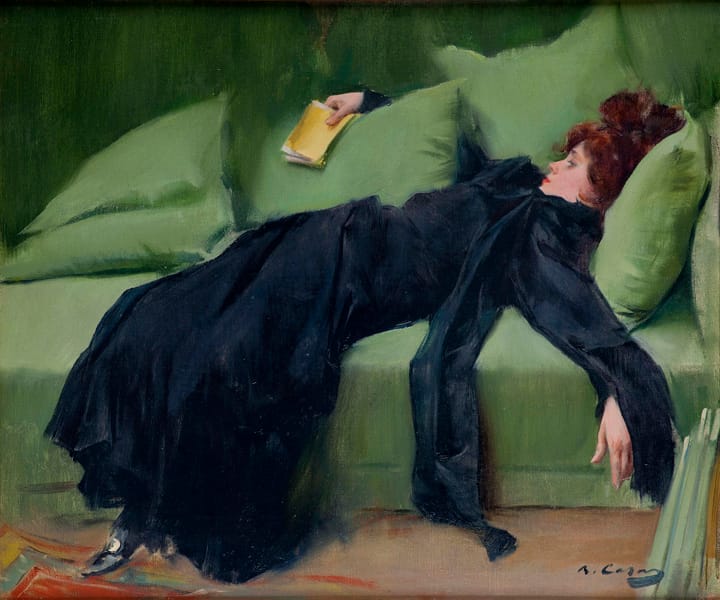
Featured image is by Ramon Casas