The Biggest Thing Since Steam
Flipping the renewable energy script.
If there's one problem facing the story of renewable energy among American progressives, it is the grimness of the vibe. Renewables, as the story goes, are necessary to fight climate change, save the planet, and do our duty to our fellow living creatures. These things are, of course, all true. But the delivery feels like urging people to eat their vegetables. Yes, it will be good for you and will create new jobs, but any sense of green energy making life better and more exciting feels out of reach. At its worst, the renewable story is one of dutiful necessity tinged with resignation that will bring a meaner, more austere world. All we get in return is a virtue dividend. With messages like that, it is no wonder that solar and wind power are about as exciting as a plate of canned spinach.
But what if that story was wrong and renewable energy isn't just a righteous yet painful solution to our problems? What if it was the herald of the greatest revolution in energy since the steam engine? Is it possible, even reasonable, to say wind and solar adoption is less like choking down your greens and more like sampling finest ambrosia that will change everything?
The good news is such a utopian vision is far closer to reality than the dour minimalism that dominates much of the conversation and society at large. Contrary to much of the larger message, the buzz among green energy advocates like Bill McKibben and journalists like David Roberts is excited, animated, and upbeat. Their optimism is rooted in proven, consistent, and repeatable improvements to renewable energy generation and storage technologies which have reached a dramatic watershed that even the Trump regime's dogged, vicious attacks cannot restrain.
In the realm of energy generation, the most consistent dynamics are cheaper technology which begets cheaper electricity. Since 2010, the cost of a solar panel has fallen from $2 dollars to $0.20 per watt by 2020 while the cost of land-based wind turbines have similarly plunged from $2,100 per kilowatt to $1,440 by 2019. Greater adoption has also led to falling energy prices, as illustrated in Figures 1 and 2 below, with the cost of electricity falling in direct proportion to how much renewable capacity has been installed.
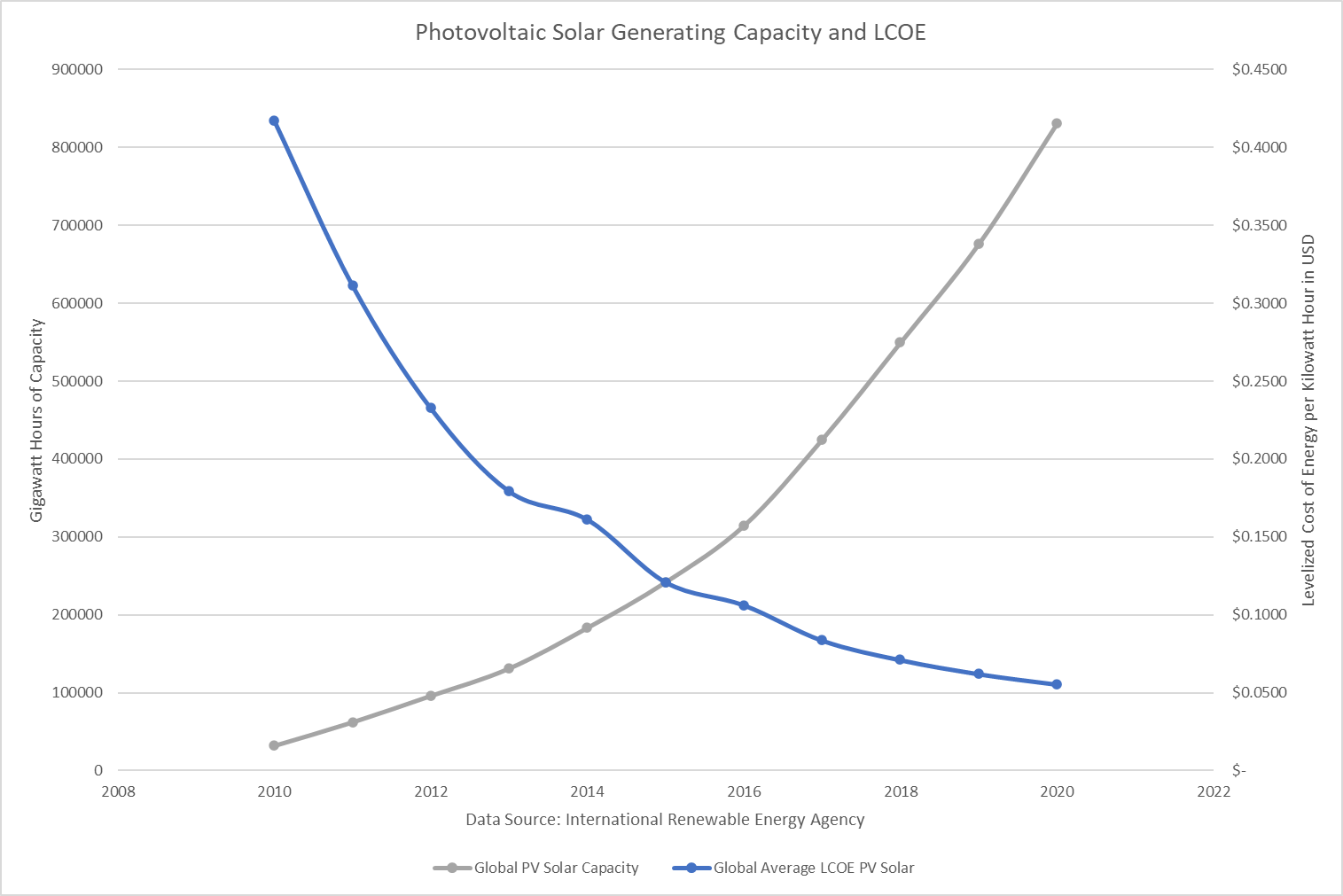
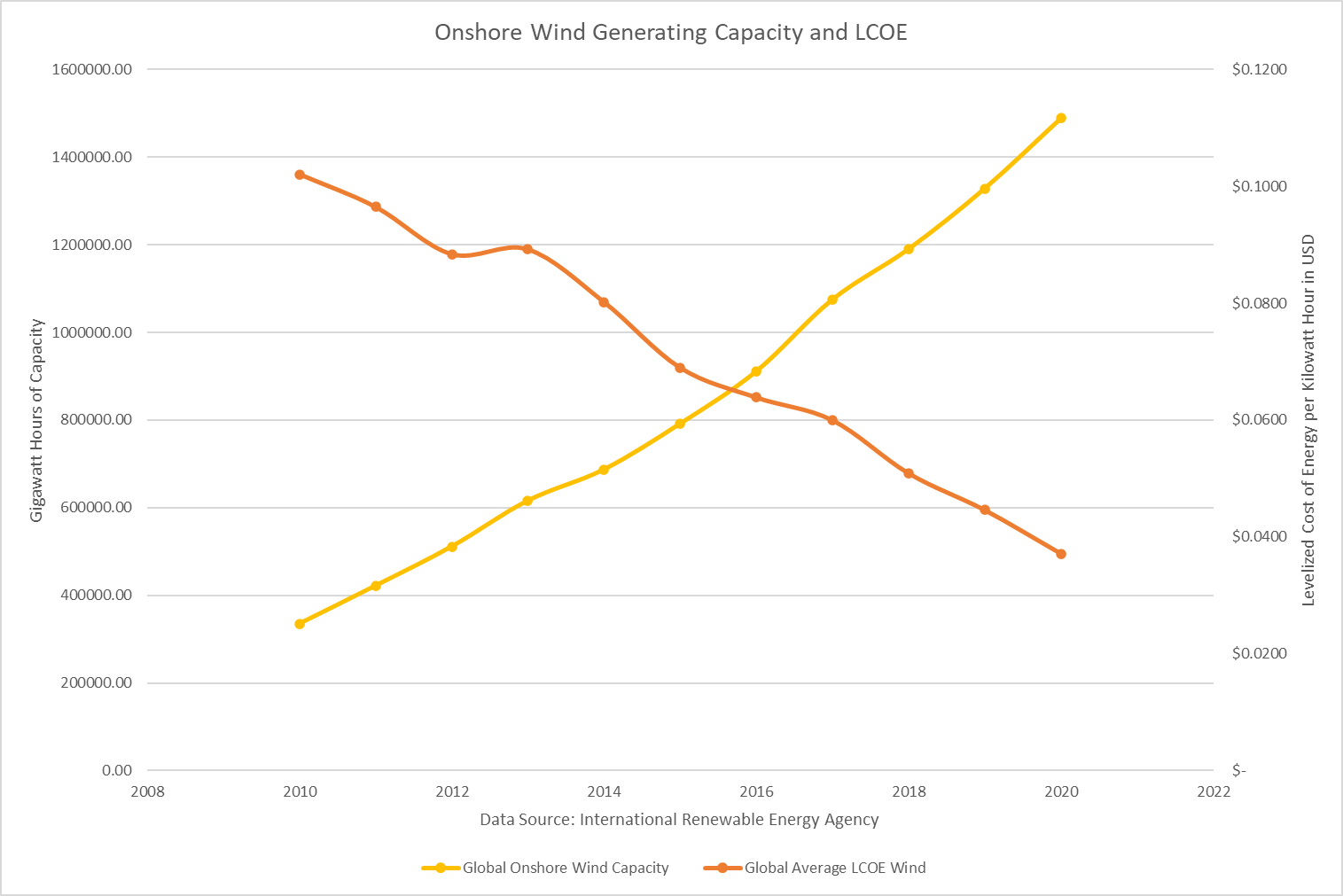
These dynamics are so consistent that in 2022 the bank Credit Suisse confidently forecast that the price of energy was on track to fall to one cent per kilowatt hour, a 90-200% decline from the American $0.10-$0.20 average cost, by 2025 and to fractions of a cent by 2030. Even this prediction may have been a bit conservative. Australia, thanks to exploding solar energy production, is about to roll out an ambitious program that makes all electricity used during peak midday production hours free for enrolled consumers in the states of New South Wales, South Australia, and parts of Queensland beginning this coming July. The national government plans to expand this program to all of Australia by the beginning of 2027. These stunning developments are also happening in a world where at best 30% of all electricity is renewably produced, a very promising sign when achieving net zero will require getting as close to 100% adoption as humanly possible.
Yet these energy sources are not bulletproof. They do, as Donald Trump is wont to point out, suffer from periods of reduced or nonexistent generation when the sun doesn't shine or wind doesn't blow enough which is a phenomenon known as intermittency. These realities are why dirty energy advocates have long claimed renewables alone can't satisfy all of our energy demands and baseload sources like nuclear or natural gas will be needed for decades to come.
Enter the energy storage revolution. Just as renewables have experienced a dramatic transformation, batteries and hydrogen fuel have risen to meet the challenges of our energy future. In the world of batteries, the same lithium battery systems sustaining your laptop and smartphone have scaled up to powering cars, trucks, homes, and communities. These batteries have made it possible to store excess solar and wind power for use when renewable energy generators hit slack times, ensuring round the clock, easy access to clean, cheap energy.
Lithium is also not alone in this story. Fears of flammability and insecure supplies of rare minerals have pushed researchers to develop increasingly effective sodium ion batteries capable of filling lithium's role in electric vehicles and grid storage without the risks or need for difficult to source minerals. These batteries are far cheaper, thanks to their reliance on more plentiful sodium instead of the somewhat rare lithium, and also less prone to the fire risks associated with lithium-ion systems.
Further grid level solutions, like iron flow and gravity batteries, have harnessed even cheaper technologies and one of the fundamental forces of physics for electricity storage that keeps the lights on at night and when the wind stops blowing. Manufacturers are also exploring thermal batteries, which use bricks superheated by electric heaters, to store energy for especially power-intensive operations. The components of all these batteries—whether sodium, lithium, thermal, gravity, or flow—are also recyclable making it possible to make new batteries from the components of dead or obsolete storage systems.
These battery systems are also not the only options available. Hydrogen fuel, once the stuff of science fiction, is on track to becoming science fact. Recent advances are on track to push the price of green hydrogen to less than $2.5 per kilogram by 2030, making it cheaper than gasoline. Viable hydrogen fuel cells, which require no combustion or risk of catastrophic detonation, have also recently been tested in cars with Toyota having released their first hydrogen fuel cell vehicle, the Mirai, in 2015. Aircraft designers in Europe, meanwhile, completed the first successful test of a purely electric, liquid hydrogen fuel airplane, the H2FLY HY4, in 2023 and Airbus is expecting to begin testing their first purely electric, hydrogen fuelled airliner, the ZeroE, by 2027. Best of all, hydrogen can be produced using renewable electricity and benefits from the falling cost of energy production.
When you add all these developments up, you arrive at what experts like Saul Griffith call too cheap to meter energy. This, in short, is energy that is so cheap to make, store, and distribute that it isn't worth charging users based on how much energy they consume. Instead, it makes more sense to charge low, fixed rates which cover the proven to be marginal costs of maintenance and ensure the cost of energy will remain low, stable, and most importantly highly predictable or even follow the Australian example and provide the electricity for free.
For an economy that has long felt the pinch of energy prices, most recently thanks to the surging demands of AI datacenters, a free energy economy where nearly all devices and participants benefit is an economy where everything would be solidly more affordable than it is today. Anything and everything that requires energy would enjoy predictable, marginal electricity costs, reliable access to power, and benefit from the savings experienced by every other actor. The widespread, systemic nature of these savings in the cost of energy and production would multiply each other, creating something of an economic snowball effect that would mean renewable economies would totally outcompete fossil fuel economies at every level. While such an energy economy would not solve the affordability crisis alone, it would make the problem far easier to fix and greatly reduce the cost of implementing needed solutions.
Therefore, it is well past time for liberals, progressives, and leftists of all stripes to stop talking about eating the vegetables of climate politics and start praising the sweet, heady nectar of the ongoing energy revolution. Embracing the revolutionary, world-historic potential of renewable energy means promising more than just saving the planet and guaranteeing a future for all. It could represent a complete transformation of our society from one defined by scarcity to a world founded on prosperity, abundance, and security for all. Wouldn't that be something worth sacrificing for?
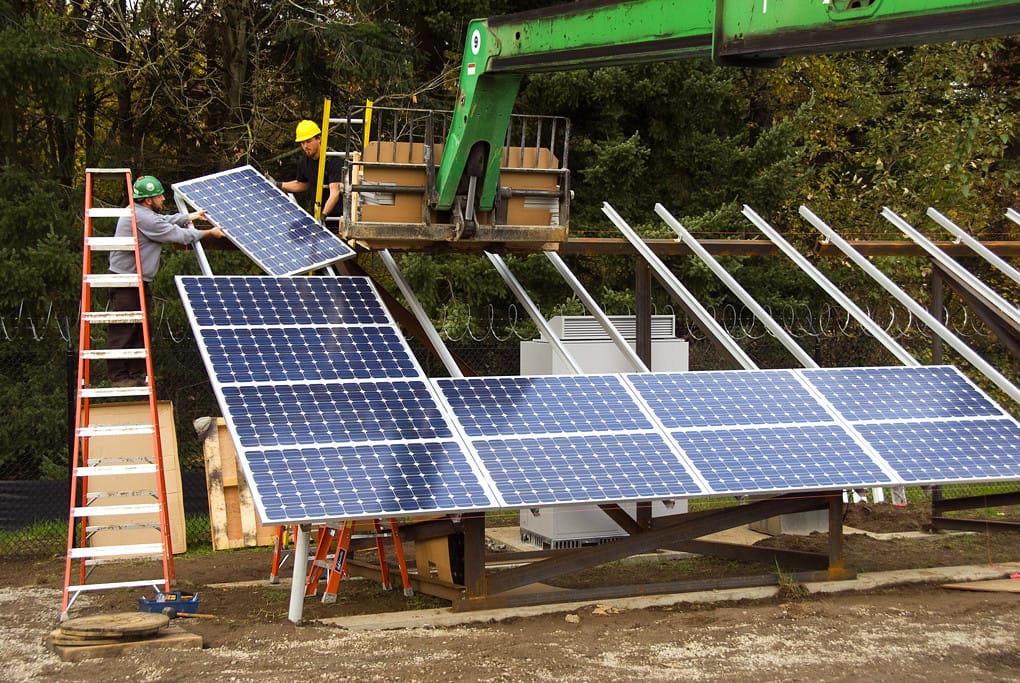
Featured image is Installing solar panels, from the Oregon Department of Transportation