The Devil's Bargain
Nazism and the moral collapse of German Christendom.
First they came for the communists, and I did not speak out because I was not a communist. Then they came for the socialists, and I did not speak out because I was not a socialist. Then they came for the trade unionists, and I did not speak out for I was not a trade unionist. Then they came for me, and there was no one left to speak for me.
The Niemöller Confession, 1946.
“First they came for the communists, and I did not speak out.” So goes the first line of Protestant theologian Martin Niemöller’s famous war memorial poem. Delivered at the end of the war to various audiences across occupied Germany, the sermon series was a call to repentance for the sins of the German people. On October 19, 1945 the Council of the Protestant Church in Germany issued The Stuttgart Declaration of Guilt, the first official document acknowledging the church’s role in the Holocaust and the untold suffering of millions of people around the world. The statement read:
By us infinite wrong was brought over many peoples and countries. That which we often testified to in our communities, we express now in the name of the whole Church: We did fight for long years in the name of Jesus Christ against the mentality that found its awful expression in the National Socialist regime of violence; but we accuse ourselves for not standing to our beliefs more courageously, for not praying more faithfully, for not believing more joyously, and for not not loving more ardently.
Niemöller’s poem was an attempt to build upon this admission of guilt to reach out to a German public that was still in fierce denial. All but forgotten is the Frankfurt edition of this poem which states that the Nazis first persecuted the communists, then “got rid of the ill, the so-called incurables.” This line refers to the Nazi ‘euthanasia’ murder program which claimed the lives of almost 300,000 people between 1939 and 1945. Properly understood, the mass murder of these ‘defective’ civilians was not a separate genocide, but the beginning stage of the Holocaust.
As historian Dagmar Herzog explains in The Question of Unworthy Life, Germany’s religious institutions did not just fail to resist the growing calls for mass murder, they often welcomed this coarsening of public attitude toward the very people they were supposed to protect.
The publication of Karl Binding and Alfred Hoche’s “Permission to Annihilate Life Unworthy of Life’’ was a watershed moment in the history of German Protestantism. Released in 1920, just as Germany was slowly coming to terms with the economic and social consequences of its defeat in World War I, the slim volume was an attempt to clear the way for the flagrant killing of those who did not seem to contribute anything of value to society. Combing through a range of ethical, religious, and legal arguments for the existing prohibition on euthanasia, Binding concluded:
‘I can find neither from the legal, nor the social, nor the moral, nor the religious standpoint any grounds whatsoever not to permit the killing of these humans…who arouse horror in almost everyone who encounters them.[1]
What should have been a swift, universal, and uncompromising moral condemnation from all sectors of German Christendom turned out instead to be a muted response. Whatever tepid objections were first raised by the few men and women of conscience within the Protestant and Catholic establishments were eventually nullified by the much more striking and growing commentary of outspoken religious genocidaires.
Herzog highlights the contributions of eminent theology professors such as Arthur Titus of Berlin—a teacher of the famous protestant martyr Dietrich Bonhoeffer—who expressed support for the state-sanctioned killing of ‘‘sprouts’’ (i.e. severely disabled individuals) whose ‘‘soul-life had not been raised above the plant or animal level.’’ As religious leaders began to speak more openly about the goodness of sterilization and euthanasia, lay people responded in kind. In the years leading to the political triumph of the Nazi regime, the disabled were variously described as ‘‘vegetating clumps of flesh’’ and sub-human kehricht (thrash), whose ‘useless’/‘wasteful’ lives could be ‘eliminated’ or ‘abbreviated’ for the greater good of the national community.[2]
Even when opposed to the outright killing of human beings, religious leaders with doctorates in theology couched their arguments in paternalistic terms. One notable contributor to the debate insisted that disabled people should be kept alive to remind German citizens what happens when genetically sick individuals reproduce in defiance of the laws of nature. Other clerics opposed the murder of ‘idiots, imbeciles, and cretins’ but welcomed the sterilization of the disabled as a way to prevent the ‘monstrous’ copulation of the ‘feeble-minded’ and the ‘degeneration’ of the German race.
With the passage of the sterilization law of 1933, Protestant hospitals and charities jumped at the opportunity to do what the law had previously prevented them from doing. Herzog notes, for example, that doctors at the Bethel institute, near the city Bielefeld, could hardly keep up with the newly established weekly sterilization schedule.[3]
To the dismay of those familiar with the church’s moral teachings, and in particular its historic call to respect the incalculable value of human life, a growing number of German pastors began to pay heed to various sorts of ‘economic’ arguments for euthanasia and assign numerical value to human beings. In an earlier iteration of his poem, theologian Martin Niemöller recalled,
A conversation with a person who claimed to be a Christian. He took the view: Maybe it is really right, these incurably sick people just cost the state money, they are for themselves and others only a burden. Is it not the best for all concerned if we get rid of them from our midst?[4]
The question of whether or not to kill the disabled to ease federal costs was deemed most applicable to the Unnütze Esser, so-called ‘useless eaters’ who were utterly dependent on their religious caretakers for their day-to-day needs and survival. Because these ‘empty-human shells’ were unable to keep themselves alive—never mind work for a living—without the help of others, their worth as human beings was thought to be less than zero. The early religious proponents of state genocide argued that these ‘‘minus-variants’’ of the German Volk (or people) needed to be ‘substracted’ to free up space and money for ordinary Germans bearing the full brunt of the economic depression.[5]
Behind all of this number-crunching was an all-too human desire to rationalize a ferocious preference for murder. As Herzog testifies, eugenics ‘‘served beautifully as distraction from the extensive collateral damage in a nation undergoing rapid industrialization; it provided flattering, cost-free ego boosts for those lucky enough to be deemed nondeficient; and it offered crudely simplified explanations and readily available scapegoats to focus one’s anger when the world seemed unfair.’’[6]
When Nazi officers started visiting faith-run institutions in the spring 1940, religious authorities at charities and hospitals across the country began petitioning state officials for the exclusive right to administer last rites to the patients in their care. At the killing center of Kaufbeuren, nuns were more concerned about observing norms of sexual propriety than saving lives. When female patients were placed in a male ward, the religious outcry over sex mixing led to a relocation of the female patients and the orderly administration of lethal injections.[7]
When the journalist Ernst Klee discovered many decades later the full extent of the church’s involvement in the horrors of the holocaust, it upended his faith. It was during archival research for his 450-page book, Euthanasie (1983), that Klee learned that ‘‘a significant number of church and charity men were revealed to be, however inescapably and sorrowfully so, contaminated by negotiations with the killers.’’[8]
The harsh reality is that the German people did not seriously object to the sterilization and occasional murder of the severely disabled. This made the work of the Nazi regime a lot easier. Rather than struggle to convince the German people to let them do their worst, it would be more historically accurate to say that Hitler and his band of true believers rode a populist wave of homicidal ideation straight to power.
Once there, the Nazis could confidently rely on the willing co-operation of the clergy to give the German people what they had always wanted: the sterilization, and in some cases, the medical death of the ‘incurable idiots’ who had for ‘years and decades’ supposedly ‘drained’ state coffers and ‘sapped’ the nation’s vitality.
Herzog’s book deftly reveals the damning scope of the church’s involvement in this ghastly program of extermination. Sadder still is the irrecoverable cost of this abdication of moral duty.
[1] Dagmar Herzog, The Question of Unworthy Life: Eugenics and Germany’s Twentieth Century (Princeton, N.J: Princeton University Press, 2024), 51.
[2] Herzog 2024, 56-57.
[3] Herzog 2024, 57, 58, 61.
[4] Herzog 2024, 78.
[5] Herzog 2024, 69.
[6] Herzog 2024, 15.
[7] Herzog 2024, 100.
[8] Herzog 2024, 99.
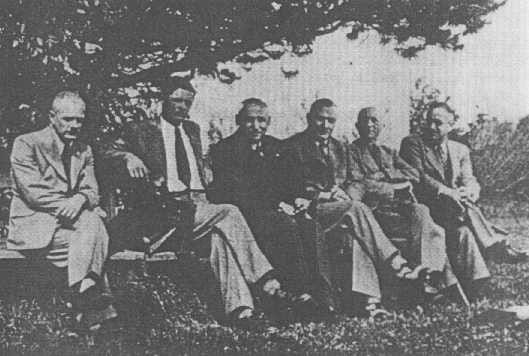
Featured image is Personnel of T4