
Dreaming of a Blue Texas (Out of the Jaws #13, with Jesse Dollemore)
On apocalyptic thought in the evangelical community, the role of liberal media in the struggle against fascism, and more.

In a time when the ruling party seems to be totally fine with breaking every law, every rule, and every norm that was holding our country in the general shape and consistency of a democracy, what should the opposition party be willing to do? Are there times when retaliation that goes against one of our principles might serve a greater purpose? Are there times when it would only further erode our values? Trent and Caitlin ask political theory professor Jacob T. Levy what he thinks.

Half the Answer can be heard on Spotify, on Apple, on YouTube, on Amazon, and elsewhere via its RSS feed.

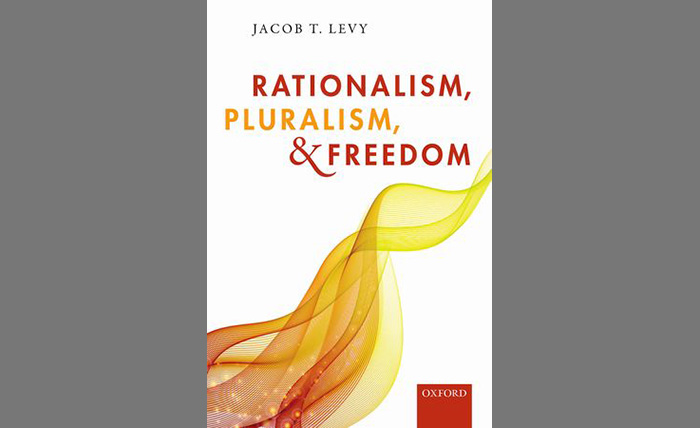 Tomlinson Professor of Political Theory Jacob T Levy


John Roberts decries heated criticism of the Supreme Court
 Charles P. Pierce
 Balls & Strikes
 Claire B. Wofford
 Robert P. Beschel Jr.
US House lawmakers press Paramount CEO on Warner Brothers acquisition
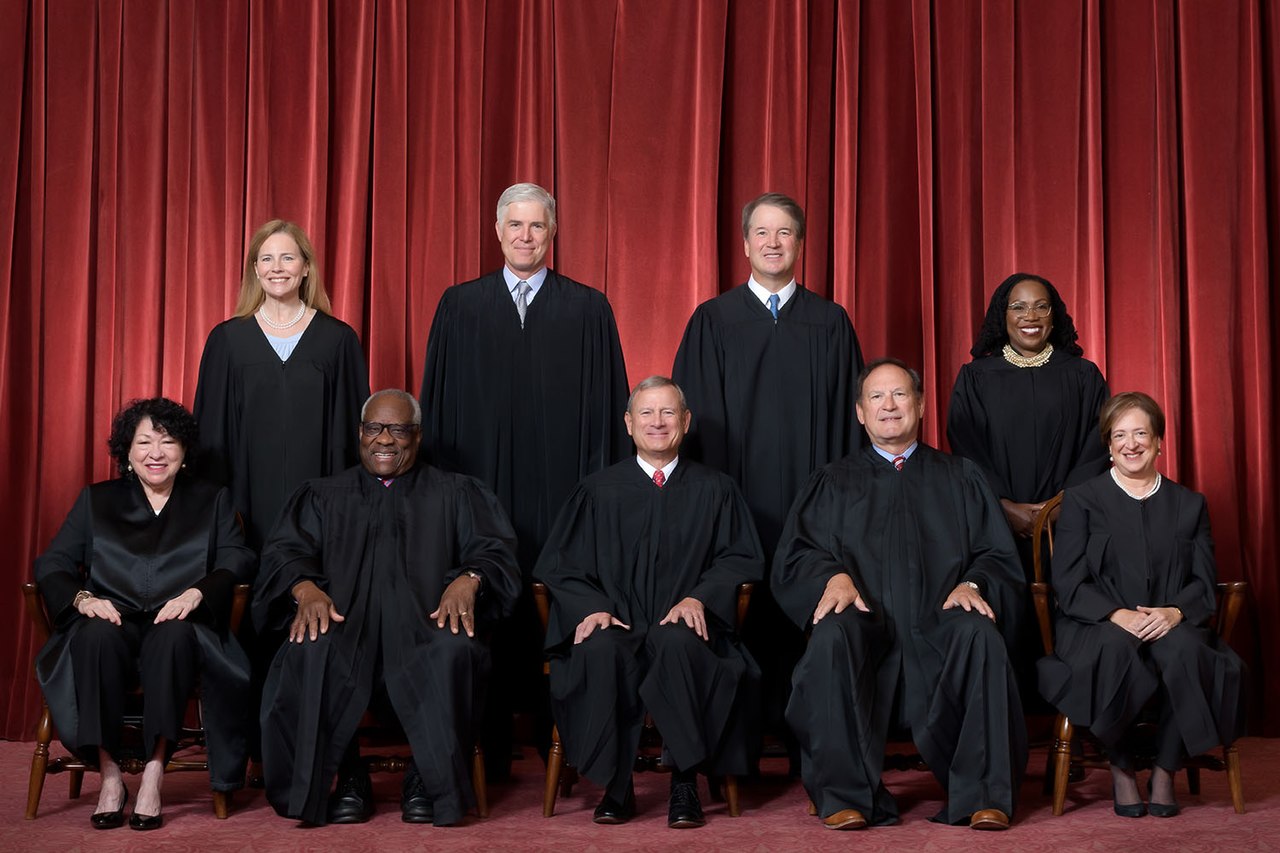
SCOTUS photo By Fred Schilling:



**Caitlin M. Green** [00:20]
The phlegmy days are here again. Here we are. It's Liberal Currents, Half the Answer. I am your host, Caitlin Green.
**Trent R. Nelson** [00:51]
Well, Caitlin, the counter is reset. It had been what, almost two months since a discernible illness? It felt like forever, is what it felt like. Well, Caitlin, you're sick, but so is this upcoming discussion. This upcoming discussion is sick. Yeah, I know, I know — sick, bro. Absolutely. Well, you know how we love recidivists, we love our return guests. Well, we have one of our favorites. The co-host of this program has previously called him one of the patron saints of Liberal Currents. Well, hallowed be thy name, it is Jacob T. Levy. He hath returned. Tomlinson Professor of Political Theory, Associate Member of Philosophy, Coordinator of Research Group on Constitutional Studies at McGill. He posts here. He says he's an aging geek, but we don't believe her. Sir, how are you today? Good day to you. How have you been?
**Jacob T. Levy** [01:59]
I've been doing well, thanks. Aging is a basic fact. I don't think that I said this last time — Adam Smith said famously, "there is a great deal of ruin in a nation," and we are determined to put this to the test. I'm going to put a metaphor counter on you, Trent.
**Caitlin M. Green** [00:20 cont.]
And yeah, that is the intro I want to go with, Trent. With me, of course, is my co-host, Trent R. Nelson, who's gonna have to do a lot of the heavy lifting in terms of vocalizing, because listen to me — it's not great. We're back to zero.
**Trent R. Nelson** [00:51 cont.]
You give me too much credit. I think it's more like one, but it was a great month.
**Caitlin M. Green** [00:20 cont.]
Yeah. Oh, yeah. Sick — I mean, we were just talking about Lord of the Rings before we started recording, so I don't know — aging geek? The aging part we can debate, but the geek part...
**Trent R. Nelson** [00:51 cont.]
We love that, it's true. Correct. One can confirm. Well, sir, it's been a great pleasure to have you. The previous time — this time we would love to continue our last discussion, which was on the health of American democracy, and as that was several months ago, well, we may need to recap all of the hysteria that has come past over the time since. So before we get into all the nitty-gritty, what's America's health looking like, sir? How's American democracy? How's that going?
**Caitlin M. Green** [00:20 cont.]
She's fine, right? She's gonna come out of it. She's good. She's good, right?
**Jacob T. Levy** [01:59 cont.]
That's exactly right.
**Trent R. Nelson** [00:51 cont.]
Oh. Well, that sounds really very reassuring, doesn't it? Well, sir, there's a lot of angles to go at it here, so I guess, you know — the best way to eat an elephant, as they say, is piece by piece. So we'll start with internally: how is American democracy? Let's go. American democracy internally, right — we'll talk about the consequences of a disintegrating internal democracy after we get through what hath been wrought by the President since January 20, 2025.
**Caitlin M. Green** [00:20 cont.]
Yeah, we're tapping the top of it, and we're going. This baby can fit so much ruin in it.
**Jacob T. Levy** [01:59 cont.]
Yeah, right.
**Caitlin M. Green** [00:20 cont.]
Can I also suggest the best way to eat an airplane, because then there's less animal cruelty in it, and also a guy did that one time — I read in the Guinness Book of World Records when I was a child, so I'm sure it was completely accurate.
**Caitlin M. Green** [04:22]
Yeah, I think —
**Jacob T. Levy** [04:29]
The two biggest facts are the effective concentration of all governing authority in the executive branch and the replacement of rules of impersonality, impartiality, and sometimes nonpartisanship with a regime that's just openly, transparently favoritist, personalist, and corrupt. Each of those is a problem. The combination of them is a multiplicative problem. When all power is in the executive branch and the executive branch is personalistic and corrupt, that means that the stakes for successfully ingratiating yourself with the President or the inner circle of his court go through the roof. And when there's no other agencies that have the authority to say no to the political executive — whether those be the other branches of government in the constitutional tripartite system, or whether they be other parts of the executive branch that have been traditionally relatively independent but are decreasingly so, or not at all, like the Department of Justice — then the regime of bribery and favoritism that's happening at the center doesn't have any institutional, rules-based pushback anywhere else.
**Caitlin M. Green** [06:05]
So that sounds great. That sounds like we're doing super good in terms of the will of the people being executed by our government. I'm really excited. I heard that John Roberts is really disappointed in all of us. I don't know if you heard that — he's actually so sad that we all think that he might not be perfectly impartial. And to that I say: I'm really sorry. I'm so sorry.
**Jacob T. Levy** [06:20]
It's not everything that's gone wrong in the last year and a half has been in the Supreme Court, or because of the Supreme Court, but a great deal of it has been directly abetted by the Supreme Court. And the Supreme Court is determined to — and by that I mean the Trump majority on the court is determined to lock in many of the worst features. Since the last time we talked, the Supreme Court has effectively completed the gutting of the Voting Rights Act, leaving us now in the very strange situation that any kind of gerrymandering goes forth with the court's blessing — resulting in the really chaotic arms race of gerrymandering that as we talk we are still right in the middle of — except the one kind of gerrymandering that has arguably direct constitutional authorization in the 15th Amendment, which is gerrymandering to enhance and protect the actual effective voting power of members of disadvantaged ethnic, linguistic, and racial minorities, and specifically African Americans. The idea that that's the one thing you can't do with the district — you can do anything else at any time — the one thing you —
**Trent R. Nelson** [06:49]
Right, yeah.
**Caitlin M. Green** [07:37]
Right. Well, because that's DEI, that's DEI, and DEI is the real racism, so we can't be doing that stuff. We can't be protecting the voting rights of minorities. Okay, anti-white racism is real racism, okay, and we need to protect the whites.
**Trent R. Nelson** [07:55]
Yeah.
**Trent R. Nelson** [08:10]
I mean, the way that I heard it described — and of course, you know, we would love your thoughts regarding this — right, that essentially you can say that we would like to change the districts for political reasons, for highly partisan reasons. We can actually almost say we would like to change this district so that it votes more reliably Republican, as long as you don't say that it's to disenfranchise anyone. You can do this, and if they come back at you and say, "Well, you're disenfranchising Black folks, you're disenfranchising Latino folks," whatever the case may be — they can just retort and say, "Well, no, this is because we suspect that they'll vote more reliably Republican." And this is the idea. That happens all the time, doesn't it? Don't people always change the things that help them to succeed? Isn't that always what happens?
**Jacob T. Levy** [08:52]
I think —
**Jacob T. Levy** [09:05]
That's right, and the authorization of partisan gerrymandering by the court is now several years old. It had been a gradual process that then got finalized before Trump returned to office. The court has decided — wrongly, in my view, wrongly in the view of social scientists — that it's simply intractable to try to come up with a standard by which to measure how much partisan gerrymandering is too much. And so the court just threw up its hands and said that's a political question up to the political branches to resolve, which in a very deep institutional sense begs the question, because it means that political branches that are elected under corrupt and rotten boroughs and districts that are so wildly unrepresentative that you can — in some states, North Carolina is getting close to the point now where Republicans could lose the majority vote for the state legislature and still have a veto-proof majority in the state legislature. So telling people they have to go back to the legislature that was elected under those rules to fix the rules is dishonest. It happens more than never — we don't want to just sarcastically wave our hands at it — but it's not the thing you expect to happen most of the time.
What's really changed on this piece, in particular, in the last year and a half is the full-throated nationwide embrace of mid-cycle gerrymandering and the end of an idea that partisan gerrymanders should still have some degree of balance or moderation in them — that state parties, state legislatures would have a degree of embarrassment as the mismatch between the expected vote share and the expected allocation of seats got too wild. Instead, with two congresses in a row where the House majority was in the single digits, the Trump administration actively encouraged states, starting with Texas, to engage in mid-cycle — that is, not only once every ten years, but whenever we feel like it — mid-cycle partisan gerrymandering with maximum aggressiveness, trying to squeeze as many Republican seats out of each Republican-controlled state as possible.
They were counting on the thought that Democrats wouldn't be able to respond in kind, in part because some of the largest Democratic states have, over the last 15 years, shifted districting to one or another nonpartisan or bipartisan process, often relying on a nonpartisan independent expert commission, and that's been very successful. It has disproven the idea that there's no tractable measure for better and worse — those independent expert commissions have been doing a very good job at making the case for better rather than worse. But it means that states like California and New York didn't have the immediately available option to retaliate. Governor Newsom in California decided that he would make the case for a four-year waiver of the California rule in order to be able to competitively retaliate, and we were off to the races. And now it's been just an astonishing year of aggressive partisan gerrymandering in not quite every state that has considered it. Indiana — Indiana's Republican legislature refused to go along with it, leading to the defeat, as we're talking two days ago, in Republican primaries of five of the seven Republican state senators who voted against the aggressive gerrymander, because Trump intervened in Republican primaries for state senate, which is not something you usually think of a president as doing, but he's willing to put it all into trying to squeeze every last House district out of a round of gerrymandering.
**Trent R. Nelson** [10:39]
Yes, of course.
**Caitlin M. Green** [10:36]
Yeah. Yeah, I think —
**Jacob T. Levy** [09:05 cont.]
So yeah — I mean, the likelihood that Republicans keep the House in the midterms is looking really, really low. And the fact that Democrats have fought the gerrymandering wars basically to a draw preserves the strong likelihood that they retake the House. And yes, Trump is furious about this. But so the Supreme Court's rule hasn't changed in the last year and a half about this stuff. What's changed is the political practice, in a way that it's hard to immediately see how there will be any slowdown. Is the new normal status quo that every time a state ends up with a partisan trifecta — one party in control of the governor's house and both houses of the legislature — they simply completely, partisanly re-gerrymander in search of as close to a unanimous House delegation as possible, and trying to entrench their state legislative majority as deeply and unfairly and as long as possible? For right now, it looks like that's where we are. The change — all of that was a setup for the "however" — the change is the now clear rule that the one thing you can't do is deliberately create majority Black districts, Black or Latino.
**Caitlin M. Green** [12:50]
Yep, I think — yeah. Also on a personal level, I feel like our boy Trump is hurting for a W. He's really hoping to rack up some W's. So maybe — maybe he's got a grudge against these people who kind of denied him, because that's racism. Everyone knows that.
**Trent R. Nelson** [13:42]
Now —
**Trent R. Nelson** [14:15]
Yes, I — right, I think.
**Trent R. Nelson** [15:35]
However —
**Trent R. Nelson** [15:43]
Right.
**Jacob T. Levy** [15:48]
Yes, yes.
**Caitlin M. Green** [15:50]
Yeah.
**Trent R. Nelson** [15:51]
Everyone knows that's racism now, sir. Thank you for that brilliant rundown. You used the term "courtier" before — that's a term that we generally identify with monarchs or authoritarians of yesteryear. But I think that's an accurate description of the people that beckon at Trump all the time. Can you sort of go into how personalist-led governments often have these hangers-on, these sometimes favorites, sometimes unfavorites — it often changes quickly with the circumstances that are happening around the country?
**Jacob T. Levy** [16:35]
I could just try to avoid going into my intro political theory lecture on Weber, but — why would I give the lecture, or why would I avoid it?
**Caitlin M. Green** [16:41]
Why would you do that? Why would you? Yeah, that's not what we're here for. Oh no, why would you try to avoid it? Some of us didn't get the privilege of being in that class, so you know, let's hear it.
**Jacob T. Levy** [16:35 cont.]
Okay, so sure. In the evolution of what we think of as the modern state — what political scientists call the Weberian state — the key gradual transformation has been from extremely personalistic systems, which include not only the highest level of leadership, like the king, but really importantly the elites around the king, who brought their status with them — most characteristically they were high status because they were nobles, they were high status because their family had wealth to begin with. A transformation from that world into a world of offices where status is conferred by appointment to a job. And those are, as Weber calls them, ideal types. It's not that any system has ever been without personal favors. It's not that any US presidency has ever been without the so-called kitchen cabinet of people he brought along for the ride with him, who are not confirmed cabinet officers but are the people he really trusts more than he trusts his cabinet officers.
But we haven't had anything for at least generations — and probably ever in the United States — like the monarchical structure of Trump and his family, where it is, for example, Trump's son-in-law, who is not an appointed cabinet officer, is not a Senate-confirmed ambassador, but Trump's son-in-law, who is off running negotiations — both to allegedly try to end the Russia-Ukraine war and allegedly to try to end the US-Iran war — just trotting around the world as ambassador without portfolio and without Senate confirmation on no better basis than the idea that he's one of the few people who other countries believe might be able to strike a deal that Trump would feel bound by.
So Senate-confirmed ambassadors who — at least some of whom have regional expertise, at least some of whom know languages, at least some of whom came up through the professional ranks of the Foreign Service — those seats are shockingly empty this late into a presidency. Trump has a Republican majority in the Senate. It's not that Trump couldn't get ambassadors confirmed — it's that he's not bothering, because he's running foreign policy out of his family and off his Truth Social account. And he doesn't trust those independent professional experts to be intermediaries or to have any real authority. He doesn't even trust his own Secretary of State to have any real authority. He will let Marco Rubio go out and announce a policy in the afternoon that he will undercut on Truth Social at two o'clock.
**Caitlin M. Green** [19:49]
Right, right.
**Jacob T. Levy** [16:35 cont.]
No, no, that's right. So you're hard-pressed to say there's a powerful cabinet officer anywhere in the Trump presidency. Not that there aren't competing factions — not that power doesn't move back and forth — power moves back and forth a bit, but it moves back and forth in the fashion of courtiers. That is to say: who is the shadow president most personally in the president's favor?
We had a long beginning of the Trump presidency in which the shadow president was Elon Musk, who was not a Senate-confirmed officer of any sort, not an employee of the United States government, but was given the vague pretense of an agency to run by hollowing out an old agency and renaming it DOGE. And Elon Musk and his Twitter account then got to override budgetary decisions of the United States Congress. The most frequently powerful shadow president is Stephen Miller — not a Senate-confirmed officer. He is a paid White House official, but he's exactly this other kind of paid official: he's one who's along for the ride in Trump's personal retinue as his white nationalism whisperer.
**Caitlin M. Green** [20:12]
You know, I'm not sad about Marco Rubio having a hard time, but I would not like to be him. That job seems awful, and he's shuffling around in shoes that are too big. There's no good part of that job.
**Trent R. Nelson** [20:21]
Horrendous.
**Trent R. Nelson** [20:45]
Right.
**Caitlin M. Green** [20:51]
Yeah, weird. Nope, so funny. Right. So is it that he's just particularly skilled in maintaining favor with Trump? Is that what keeps him around, or does he have other ways of keeping himself kind of near the levers?
**Jacob T. Levy** [16:35 cont.]
And I don't really know an answer to that. I do think that he was effective early in the presidency in a way that Musk wasn't at putting his people into other various jobs. But now some of those — his people have fallen into disfavor, and some of them have left office, and yet Miller's power and standing doesn't ever seem to be affected by one or another of his people ending up scapegoated as the public face of failure at Homeland Security, at ICE, at CBP, and so on. It just has to be the case that Trump is really, really genuinely committed to Stephen Miller's white nationalist life project, and he really believes that that's winning politics for him, if only it can work right.
**Caitlin M. Green** [20:51 cont.]
Yeah. Well, and he has to believe that Miller can deliver on it, right? That whatever his idea for how to get the white nationalist utopia is going to work.
**Trent R. Nelson** [23:17]
I think that Stephen Miller has probably, out of everybody, learned best how to be that sort of professional son to the president. I mean, the fact that he has not really fallen out of favor at all across what's now amounting to one term, and then a whole Biden term, and then another Trump term — he has real staying power. And I do suspect that it's because they have similar ideological beliefs, but some individuals just know how to dote on people in a certain way that keeps them close. I've been reading a lot of Johnson Carroll books recently again.
**Caitlin M. Green** [23:28]
I think — yeah.
**Jacob T. Levy** [16:35 cont.]
But he — I mean, Miller isn't — Miller doesn't ever have to do the performance that the cabinet officers have to do at the cabinet meetings of going around and singing the hosannas to great leader. It helps, I suspect, that Miller is so personally charisma-less that he is immune to the temptation of thinking that he could ever be the public guy, and so he makes no effort to be the public guy. He contrasts, say, Steve Bannon, whose association with Trump is this endless series of — he will act as kind of a useful behind-the-scenes whisperer and advisor for a while, and then he will go out in front of a microphone and tell everyone how he's really important and powerful and influential, and Trump will get annoyed, and then his stock falls again. Miller never makes a show.
**Caitlin M. Green** [24:18]
Dude — yeah, no, that's right. Even when he goes on TV, he's talking about Trump and how, "Oh, all you evil people being mean to Trump." But he's not self-aggrandizing, that's true. He's kind of his own kind of aspiring celebrity slash actual celebrity, whereas Stephen Miller is like a shitty little son in search of a shitty little dad, and he's found one. And that's beautiful.
**Trent R. Nelson** [24:57]
You'd never do that. Yeah, no, that's a good point. And we always talk about how in personalist systems, and how in authoritarian systems in general, there's always this wariness regarding who the rising people are that might be seen to be able to push me out or be able to usurp some of my power at some point. And so sure — playing that low-key role, doting on the president in so many ways, not getting out on camera, not having his own show. Right, Steve Bannon has his own program, Steve Bannon does his own thing. That's a really, really great point. Yes — he's Wormtongue from Lord of the Rings, if I can say that.
Now, sir, you brought up in your earlier run-through that we need the different branches of government to be pushing as well as the president pushing. Why doesn't the Senate — sure, why have we not seen the Senate, that body that was in so many ways designed almost specifically to stop not only positive progress from happening too quickly, but also negative progress from occurring — why are they paralyzed? Why have they paralyzed themselves?
**Caitlin M. Green** [26:00]
Yeah. No. Yeah, I think —
**Jacob T. Levy** [26:13]
And other parts of the executive branch. So the way in which the separation of powers was designed has almost never worked, because it was designed for a world without parties, and within a decade of the founding, that was out of date. We've had a variety of ways in which the US system has found other stabilizers — not the formal structure of separation of powers, but something else helping to infuse it.
One of those stabilizers, unfortunately, for a long time was the Jim Crow character of Congress in general, and the Senate in particular. So even when there was a Democratic trifecta in Washington, a Democratic president could expect pushback from a Democratic Senate, because the Democratic Senate was heavily a white conservative Democratic Senate. There weren't 51 northern liberals, even if there was a northern liberal president. There was the strange ramshackle coalition that was the Democratic Party through most of the Jim Crow era.
Sometimes the separation of powers has seemed to work just because we kept getting divided government, and with divided government you would get pushback — not because, as the founders imagined, a member of the House of Representatives really cares about the House of Representatives and a member of the Senate really cares about the Senate, but because Republican majorities in Congress really cared about being Republicans and therefore opposed a Democratic president and used their investigatory powers and used their power of the purse in a variety of ways. And that has sometimes led to paralysis and gridlock, but at least led to macro opposition.
Where are we now? We're now in a situation where the parties are successfully ideologically sorted. It didn't happen right away after the civil rights revolution — it took 30 years, but since 1994 the parties have been successfully ideologically sorted. The parties are really closely balanced. Over the last 30 years, the House has changed party control more often, and the Senate has changed party control more often, and the White House has changed party control more often — each of those is true — than over any other 30-year period in American history. We keep getting 50-50 presidential elections, or even 49-51 where the 49 wins. We have an extremely tight competitive constant struggle for control of each house of Congress.
That means that congressional partisan majorities feel really fragile. So that means that if you have a Republican majority in both houses of Congress under a Republican president, and the Republican president is ideologically and personally committed not to having to ask other people to do stuff — Trump hates asking for permission, and Trump's advisors are fully on board with the idea of a powerful executive branch who can undo the post-Watergate reforms that limited abuses of presidential power — and Trump personally wants to make sure that he sets the precedent that even if Democrats retake both houses of Congress, he gets to go on doing everything. So he's made a point of not going to Congress. Even with his partisan co-partisans having majorities in both houses, he just won't ask them to do stuff.
He could have gotten possibly even majorities for some of his tariffs and trade war policies — he didn't try. And he's gone out of his way to discourage Republicans from being in the business of taking votes on it. It's not that he thinks that it's popular and you would help his co-partisans by getting — it's that he wants to establish the principle that he gets to decide tariff policy unilaterally. Again, going back to the interaction between powerful executive and a favoritist executive: if he can set tariff policy unilaterally, then he gets to sell it. He gets to sell exemptions for bribes. He gets to say, "If you buy enough Trump coins, then your industry isn't devastated by a trade war." Whereas when Congress sets a tariff, it just sets a tariff — it actually sets a rate and a rule that you can't change on Truth Social overnight.
**Caitlin M. Green** [31:52]
Ah — sorry, I just had to scream. No. No, no — we bring Gillian to make me cry. We bring you on to make me scream.
**Jacob T. Levy** [26:13 cont.]
Sorry. Yes, you don't invite me on here to tell you how well things are going — that's not my —
So why no pushback from the Senate? Because senators are afraid of getting primaried. And in a very, very, very closely divided electorate, the Senate majority is afraid of jeopardizing its majority, which can happen if they pick fights with someone who has the power to engender divisive primaries as they're seeking reelection.
**Trent R. Nelson** [32:14]
Yes.
**Caitlin M. Green** [32:15]
Yeah.
**Caitlin M. Green** [32:40]
It does feel a little bit like they're hiding from a Tyrannosaurus Rex — like, if they breathe, if they move a little bit, they're afraid they're gonna make someone mad, right? Like, it's gonna be either they push back against Trump and then the MAGA faction gets mad, or they help Trump too much and then the Never Trump Republicans get mad at them, and so they're just like: if we don't move, they can't see us.
**Jacob T. Levy** [26:13 cont.]
Nobody's scared of the Never Trump Republicans. Yes, some of them are trying to preserve a little bit of self-respect. Some of them are trying to preserve lifetime electability against the possibility that the tide could turn.
**Caitlin M. Green** [32:40 cont.]
No. Okay, fine. I was hoping they had a little power still. Okay, so they're just trying not to make MAGA mad — is that what you're saying?
**Jacob T. Levy** [26:13 cont.]
Some Republicans actually would vote against tariffs if they were called on to vote, because their own personal ideological convictions, the views of their financial supporters and the business community all push in the other direction. And they'd rather not be tarred for the rest of their political careers with having cast votes in favor of a policy that turned out to be unpopular or destructive or pushed the world into a trade war. So easier just not to pick the fight and try to wait it out.
**Caitlin M. Green** [32:40 cont.]
Oh, sure. Because the tide could turn, right?
**Jacob T. Levy** [26:13 cont.]
You'll get these occasional exceptions, and things are closely divided enough that when there's an exception, you can see things happen. When Thom Tillis said that he wouldn't approve the new Trump appointee to chair the Fed as long as there was an active Department of Justice investigation into the outgoing chair of the Fed — that Tillis rightly said was sheer political retribution for Trump's disagreements with the Fed's existing policies — you needed all Republican votes in order to advance the nomination through the relevant Senate committee. And when Tillis said "You don't have my vote until this investigation is dropped," then the investigation was — well, paused. We are now hearing that that doesn't mean it won't be restarted now that the confirmation has gone through. But nonetheless we did see that one senator can pick a fight and do something. So then it got striking that so few of them have done that over the last 18 months.
**Caitlin M. Green** [33:35]
Okay. Right.
**Trent R. Nelson** [33:36]
Sure.
**Trent R. Nelson** [35:23]
And the six-year term that they all get is supposed to, to some degree, insulate them a little bit more from public opinion than the Congressional House with its every two years. There should be, as there was for many decades, this idea that presidents come and go and most of the time we're still here. Yes, you — I mean, you could be Harry Byrd and run it for decades, and then be dying, and be like, "My son is going to take this now," and then he runs it for another two or three terms. And so that is, I guess, the genesis of my question, right? With all of these historical points that we're aware of — the conservatism, the power, the idea that six years, people are not going to remember every single gripe they've had with me over six years — all of these things, and yet we have not seen a great pushback in so many instances.
**Jacob T. Levy** [26:13 cont.]
And it is for life, and it is for life until we wheel Strom Thurmond off the floor at age 101 to die. Well, we are seeing active Trump and Trumpist and Trump-supported primary challenges for Republican incumbents — most prominently right now, Ken Paxton against John Cornyn in Texas. And it's not that Cornyn isn't a conservative senator and a very reliable vote for Trump's agenda, but he is not an utter loyalist, that's right. And Cornyn may well lose. Even if he doesn't lose, he's going to have spent a lot of his money and energy for the year fighting off a very nasty Republican primary challenge that might mean that he loses in November. So if you think that you want to be senator for life, then — I see your point that that long-term time horizon should make you feel more confident, but the other side of it is it means you think you have a lot to lose, and you can just wait things out.
**Caitlin M. Green** [35:51]
Apparently — yep, great. Yeah, he's not an attack dog for Trump, and that's what he wants. Plus, you know what's the — back to my T-Rex theory: just don't move, and they won't see you, and then you can keep your seat.
**Trent R. Nelson** [37:58]
Well, that's not going to work for some of them, as you noted. Sir, John Cornyn and Ken Paxton are in a heated battle, at which polling — as of this recording — suggests neither will do well against James Talarico. Somehow — whether that is true or not, we'll have to wait to see how it goes, but the race to the bottom in certain states is not perhaps the fight that you want to be picking.
**Jacob T. Levy** [26:13 cont.]
This is the electorate that has elected Ted Cruz repeatedly.
**Caitlin M. Green** [35:51 cont.]
Well, like — I don't know how important charisma is in this particular race, but neither one of those Republican men have any, and Talarico has, like, a lot. So if we're talking about what it's like to actually put him in front of a voter and be like "What do you think of this guy?" — it's gonna be like "Yuck" versus "That's a nice boy."
**Trent R. Nelson** [37:58 cont.]
Actually — man, yes. Donald Trump even says the whole Senate would thank him if he made Ted Cruz a Supreme Court justice. Now, that is one of the funniest things that the President has said, because nobody wants Ted Cruz. The hanging out is the worst part, methinks, probably about Ted Cruz, and that is with all his policy being stated.
**Caitlin M. Green** [35:51 cont.]
That's true. So Christmas must not be that important to them. Well, I mean, they wouldn't have to hang out with him as much if he was a Supreme Court justice, so maybe that's why they would take him. We could not subject Sonia Sotomayor to that — that would be cruel and unusual punishment.
**Trent R. Nelson** [37:58 cont.]
That is Trump's last great blow to the liberals on the Supreme Court, sir.
**Caitlin M. Green** [35:51 cont.]
A lifetime ago. Yeah, I respect that, and I agree with it. I think that's right.
**Trent R. Nelson** [37:58 cont.]
Well, thank you for running all over the internal workings of the American system and American democracy. Unfortunately, though, the horrors don't just stop at our borders, sir. They emanate outward. What has our internal strife produced externally? What does the rest of the world — what have they been appraising us and saying since last we spoke about how the world was appraising us?
**Caitlin M. Green** [35:51 cont.]
Well, it assumes that Trump doesn't have any other goals or beliefs other than "I should be able to get away with what I did with Epstein," and it's like — no, he's got other stuff going on too. That's true, but also —
**Jacob T. Levy** [26:13 cont.]
I don't remember quite when we last spoke, but I'm reasonably sure that the entire second Iran war didn't exist then.
**Trent R. Nelson** [37:58 cont.]
Didn't exist. We hadn't kidnapped a Venezuelan president. We had — and we hadn't. It was like a different time, sir. It was like a different world.
**Caitlin M. Green** [43:14]
Right.
**Caitlin M. Green** [43:30]
Yeah, right. Yeah. Right — I'd like, you know, if I burn down your house to distract from the fact that I'm robbing the bank next door, you still have to put out the house fire. You can't —
**Jacob T. Levy** [26:13 cont.]
I do think that the easily successful Venezuelan military operation unfortunately directly contributed to the disaster that the US has now gotten itself into with Iran. Trump came to think that all military action was as easy as blowing up fishermen's boats in the Caribbean, and it's kind of fun to kill people, he thinks. And the quick successful resolution of the US attack on Iran last summer also led him to believe, "Hey, I can just do this whenever."
We were coming off a moment of particularly bad politics for Trump domestically after the assault on Minnesota, and the degree of border enforcement there escalating into violence against protesters and to deaths. Trump was facing pushback on border enforcement, Trump was facing genuine unpopularity about the abuse of tactics, and I think that just meant that he was very willing to try something to change the subject.
I've mostly been very reluctant to use the language of distraction during the Trump presidency. There's a lot of people who have their one thing about the Trump presidency, which will sometimes, though not always, be Jeffrey Epstein, and they will think that anything that isn't that is a deliberately engineered distraction from it — by which they also mean something like you or we shouldn't pay attention to it because it's not important, it's a shiny distraction they're putting in front of us to keep us from the real thing. And there's more than one real thing in the world.
**Caitlin M. Green** [43:30 cont.]
That's right.
**Jacob T. Levy** [26:13 cont.]
Yeah, so across cases, I've been of the view both that things aren't being done as deliberately engineered distractions — because no, Trump and his inner circle have a lot of things they're trying to do and trying to rush through as quickly as possible — and that there's not some duty of responsibility only to pay attention to one of them, whichever one, because it turns out that many of them are truly horrifying, terrible, and consequential.
This is the first really big moment when I think there could have been an element of deliberately engineered distraction. That doesn't make it, in the other sense of distraction — it doesn't mean we ignore the single biggest thing that the US has done geopolitically in the last couple years and the tremendous damage that it's wrought. But it might well, given the timing and given the lack of any real urgent event triggering it — there might well have been an element of political orientation toward "Well, let's start another war."
**Caitlin M. Green** [45:12]
Yeah, I think —
**Jacob T. Levy** [26:13 cont.]
Still — yeah, that's right, that's right. But the war has gone catastrophically in just about every imaginable way from Trump's own perspective, from Trump's family's perspective. The strategic politics of the Middle East has always been about cementing a personalistic alliance between Israel and the conservative Gulf monarchies. This war has destroyed mutual trust, both between Israel on one hand and the Gulf monarchies on the other, and between the Gulf monarchies — it has turned what had been a developing rift between Saudi Arabia and the UAE into an actual rupture between them.
What the administration has set out as its real Middle East goal — the only thing that it would count as a true accomplishment, which is normalization of relations between Saudi Arabia and Israel — that is not happening in the next single digits of years. It is not happening during the Trump presidency after this.
And it's been a centerpiece of US strategic policy at least since World War Two, since 1948 effectively, that freedom of navigation — which the US has been strategically committed to since its founding as a trading power separated from its trading partners by oceans — freedom of navigation centrally meant freedom of navigation through the Persian Gulf and the Straits of Hormuz. And we are not getting out of this without it just being a new fact — whether or not we admit it's a fact, whether or not we legitimize it as a fact — that Iran has a veto over ships passing through the Straits of Hormuz. And Iran is going to both monetize that and use it for increased political and strategic pressure on its rivals in Middle East politics.
We've done massive damage to Iranian infrastructure, inflicted massive harm on Iranian civilians, killed a lot of Iran's upper leadership, and we're going to leave behind an Iran that is more powerful on things that US security policy is supposed to care about than it's ever been.
**Caitlin M. Green** [46:08]
Yeah. What — but we have a strong man! It's lethality, lethality above all.
**Trent R. Nelson** [47:11]
Just about — I mean, Vietnam is famous in American history as this great psychological defeat, this great functional defeat as well, but surely a whole generation of folks psychologically hurt by what went on there in Vietnam, and of course all of the allies that participated in that conflict. But Trump has somehow speed-run seemingly like Vietnam. This is seemingly — and of course, tell me that I'm wrong if it seems that way — this seems like even more quickly disastrous than the first disaster that I lived through, which took up 20 years of time, 25 years in the Middle East. It seems like it's just more destructive, more horrendous, more dumb, and we lost faster.
**Jacob T. Levy** [26:13 cont.]
Oh, sure. Right, we're less than 60 days since this war began. 60 days after the beginning of the invasion of Iraq under George W. Bush, the US looked utterly dominant.
**Trent R. Nelson** [47:11 cont.]
Right, right — we don't look utterly dominant now. Well, I mean, what is it? It is this. We've spoken about it with Greg Sargent before, and I know that they've spoken about it on Neoliberalism, and Adam has spoken about it quite frequently — this idea that the Trump administration seems to have, that all soldiers need to be built like G.I. Joe figures instead of very, very smart, right? Like everybody needs to be a beefcake, nobody needs to know how to read properly. And I feel like this has — I mean, the chickens are coming home to roost. We have, as you noted, sir, our best and our brightest, which apparently is just the president's son-in-law, and it's always just the president's son-in-law — he's in charge of doing all of the things that we don't accomplish, but he is the best we've got.
**Jacob T. Levy** [26:13 cont.]
No, no, there — but the fetishization of the war fighters lets us talk about someone we haven't mentioned yet, who's Secretary of Defense Pete Hegseth, who was my very early on choice as the worst pick among Trump's —
**Trent R. Nelson** [47:11 cont.]
And do you feel vindicated, sir?
**Jacob T. Levy** [26:13 cont.]
Yes, I absolutely do.
**Caitlin M. Green** [46:08 cont.]
Oh, no — he's not doing the Enigma code. There's no way he can do that. Yeah, like, couldn't get worse at this point. Yeah, I can't believe — if you would slander him like that. First of all, I find it very interesting that you won't call him by his correct title, which is Secretary of War. I bet you also call it the Gulf of Mexico, you coppy bastard.
**Jacob T. Levy** [26:13 cont.]
There it is. The Gulf of Mexico, Gulf of America thing is bizarre, but it's actually, in a sense, a harder case, because it's not clear who in the US government actually would have the authority to rename geography, whereas for cabinet offices there's an answer: the Department of Defense was authorized by congressional statute. It is still Department of Defense until and unless Congress passes a new statute.
So Hegseth, who is utterly unqualified to be Secretary of Defense, never having run a large organization, suddenly taking over the largest organization in the — be obsessed with just utterly bizarre fetishistic things about a very idiosyncratic alt-right kind of masculinity, along with a really nasty version of Christian nationalism, and — was chosen only because he was an enthusiastic supporter of war crimes. What got his attention, how he won Trump's attention, was by repeatedly on Fox calling for the pardons of soldiers who had been convicted of war crimes. Convicted of war crimes because they were turned in by other soldiers. Members of the US Armed Forces, for generations, have really deeply been taught and trained and internalized the rules and norms about the laws of war. That doesn't mean that there haven't been terrible things that have been done by the US Armed Forces — Abu Ghraib — but it does mean that there is an ethos that has been reinforced and reinforced and reinforced for generations in the US Armed Forces, that Hegseth just went on television and said "We should never punish a soldier for anything they've done, even if they were turned in by other soldiers." It's the only reason he's Secretary of Defense.
Hegseth during this conflict has a couple of times from the Pentagon podium used the phrase "no quarter," because I think it sounds tough and manly. What does "no quarter" mean? No quarter means surrenders won't be accepted. "No quarter" is simply a synonym for "we are going to commit war crimes." We will not take POWs. If you raise your hands and surrender, we will kill you. That's what "no quarter" means.
This is closely related to Trump's willingness to threaten genocide — to Trump thinking that it just sounds like manly tough talk to say that if Iran doesn't comply with a certain set of conditions by a certain time, it will lead to the destruction of their whole civilization.
**Caitlin M. Green** [50:40]
Yeah.
**Caitlin M. Green** [50:44]
It's the Department of Defense. Like, he could do pull-ups, you dough.
**Caitlin M. Green** [51:44]
Yep.
**Caitlin M. Green** [51:54]
Yeah.
**Trent R. Nelson** [52:11]
Correct.
**Caitlin M. Green** [52:12]
Right.
**Jacob T. Levy** [26:13 cont.]
Well, I don't see much sign that Iran has been fooled into thinking that diplomacy with Trump is useful. We are now how many weeks into just endlessly — we don't really have a ceasefire, and we are continuing to shoot at each other, but we do continue to have Jared Kushner or Marco Rubio show up at a table, and we'll pretend to talk to each other. But Iran is now in a locally powerful position. Oil is not moving through the Strait of Hormuz, and it is Iran's calculation that the longer that goes on, the worse it is for everyone in the rest of the world more so than it is bad for them, and so their power only grows.
So they'll accept a ceasefire, and everyone will continue to pretend to call it vaguely kind of like a ceasefire even when there's still firing going on. But no — they are not taking seriously anything like real offers from the Trump administration. To the extent that there are any offers, they're not showing up asking for a security guarantee. It's been true since the beginning of this conflict that they didn't have any reason to believe that, because there was a conflict last summer, and Iran didn't do anything new between then — the US just restarted this war and restarted it in a campaign of mass assassination. There's no reason in the world for the Iranian ruling class to treat diplomacy with the US as a useful thing.
**Caitlin M. Green** [52:50]
Yeah. Right, yeah. Yeah, yeah, yeah — but then, hearing that, why would you ever then expect to be treated fairly? Why would you ever proceed as though diplomacy was an option, or surrender was an option, or anything, right? Why wouldn't you just maximize your own sort of ruthlessness at that point?
**Caitlin M. Green** [54:00]
All right. Right. Yeah.
**Jacob T. Levy** [26:13 cont.]
Hegseth and Trump, both having an obsession with short-term sounding tough over long-term rational interest — they don't actually care that they've destroyed the US's credibility as a negotiating partner.
**Caitlin M. Green** [55:12]
Yeah, right. Right — well, I heard they were planning to do something really scary, so I don't know, seems like — right, well, we're all done with all that silly woke stuff, like fixing problems, okay.
**Trent R. Nelson** [56:06]
Woke to fix problems — that's correct. I have read that the Omanis, who have been doing a lot of the intermediary work for years — I've heard reports that the Iranians don't really think that — and I guess this probably shouldn't be breaking news, right? The Iranians are kind of confused by the fact that we keep sending people that don't know anything over. And allegedly we had some reasonable deals that Iran had offered before this fighting was flared back up, and it was as though the Americans did not understand what was being offered and the value of what the Iranians were trying to do. And so if that is true, and then you've gone through the 60-plus days of nonsense — yeah, diplomacy is out the window.
There's no reason to think that the people that got rid of the JCPOA, the people that keep prodding, the people that keep poking, the people that seemingly send unqualified individuals to speak to my team of seven PhDs — why would that fix anything? And I don't know where we go as a nation from here if not only is diplomacy not reliable, but we lose 60-day wars to Iran.
**Jacob T. Levy** [57:09]
Great.
**Jacob T. Levy** [57:41]
There's a reason why personalism got crowded out. We should think that's surprising — why would it be the case that ruling elites gave up the system that was best for their bribery market and best for their ability to promote their failsons? Personalism has lots of advantages to ruling elites. However, it has tremendous long-term, large-scale disadvantages, due in part to a lack of expertise and due in part to a lack of credibility.
There's no one who can now speak for the United States government as the United States government in a way that not only Iran but the EU or Canada or Russia can really take seriously as representing the long-term commitment of the United States government as a corporate entity. That weakens the United States. Trump thinks it makes him personally sound stronger because he gets to use big-boy words in his social media, but it actually weakens the United States because it cannot credibly make deals.
**Caitlin M. Green** [58:56]
Right, yeah — I mean, it gets back to the issue that comes with concentrating all your authority in yourself and bypassing all these other kinds of things, is that anybody who speaks for me could say something, and then tonight I'm going to Truth out that it's the opposite. "Actually, I win," and it makes me feel good because I changed a whole policy, but doesn't do anything for credibility, stability — all those woke things.
**Trent R. Nelson** [59:27]
Well, sir, we know that you are a busy individual, and we can't keep you for as long as we'd like, although we'd like to keep you for as long as we can. Before we let you go, though, we would like to get to one final topic that I think was really wonderfully brought up by you in one of our discussions off camera. What is America to do with — as we noted earlier regarding gerrymandering — with what we might consider, and what we probably should rightly consider, illiberal or anti-democratic machinations that the political opponents of a liberal society are utilizing, have been utilizing?
And we spoke about this in our first discussion, and in that discussion you were clear that we must, to the best degree that we can, uphold our standards that we are fighting for — otherwise, what are we fighting for? But as all of this horror has progressed, I'd like for us to maybe reflect back upon that and hear what you've been musing on regarding that in the time since.
**Caitlin M. Green** [1:01:07]
Yeah. Yeah, I think —
**Jacob T. Levy** [57:41 cont.]
So there are some kinds of violations that can be met with retaliatory violations, and gerrymandering is just our really good case. We're right in the middle of it, and it is a reasonable, rational reaction on the part of Democrats to counter-gerrymander in this conflict. You want them to constantly articulate "We're the ones who want to end this process, and here's our proposal for ending the process, but until the process is ended, we will take part in it, and we will punch back."
Problem is, a lot of things aren't like that. You can coherently say "I'm gerrymandering right now, and here's my proposal for ending gerrymandering." I think for a wide range of the kinds of abuses the administration is engaged in, it's very difficult to see what that looks like.
**Caitlin M. Green** [1:02:05]
Yeah.
**Caitlin M. Green** [1:02:25]
Yeah, yeah. Right — prosecuting those would be great.
**Jacob T. Levy** [57:41 cont.]
So the Trump administration is engaging in nakedly partisan, retributive, vengeful prosecutions of the people the president considers his enemies — which often simply means people who investigated him for his crimes, or people who are voting in ways that he doesn't like them to vote. That's utterly destructive of the rule of law — it's the destruction of the rule of law, not only of Democratic Party power. And I don't think we can be happy about the prospect of a new Democratic-run Department of Justice playing a retaliation game.
Now, Trump and his personal circle have committed a whole bunch of crimes. That's why Trump got indicted. But the question: should a Democratic Department of Justice engage in baseless, retributive, partisan, nakedly retaliatory prosecutions? The answer has to be no. But there's not a way out of that.
**Caitlin M. Green** [1:03:02]
Right? Right, because there's not a way out of that once you're doing it — you don't have that option.
**Jacob T. Levy** [57:41 cont.]
No, and we care about the rule of law. We don't only care about advancing Democrats rather than Republicans. However — trying to live up to the standards has a tremendous cost too, and living up to the standards unilaterally also isn't a stable outcome.
Two cases that I think of together. One is the purge of the civil service — Schedule F, the reclassification of a great deal of the upper ranks of the civil service as being subject to dismissal for disagreement with the president, in effect for political purposes, rather than as traditionally being protected by civil service employment protections and having an expectation of something like nonpartisan neutrality in carrying out the functions of the upper civil service. So that's one.
And the other is freedom of the press, including a relatively impartial, nonpartisan application of regulations of the companies that own the presses. So in the Trump administration we get, on the one hand, things like Trump filing massive unjustified defamation lawsuits in order to try to threaten the companies that own CBS or ABC, for example, with bankruptcy if they don't pay him off. And on the other hand, the abuse of antitrust regulatory approvals — it's a bad system that there's so much discretion in the antitrust merger process anyway, but we've gotten away for a long time with the badness of that system not being made totally apparent, because people were trying really honestly to do well by it. But at this point the administration is perfectly openly saying "We will threaten the licenses of broadcasters that are broadcasting news we don't like, and we will favor mergers and acquisitions by media owners whose politics favor us over those whose politics don't favor us."
So why do I pair those two things? Because the norms at stake are really important ones in both cases. We actually really want an independent expert civil service. We really want freedom of the press and a press that is actually autonomous from the political powers that be. But those rules don't work four years on, four years off. Because if it's four years on, four years off — if it's Democrats play by those rules and Republicans don't — then everyone involved, they're not going to return to a baseline of neutrality or impartiality or nonpartisanship. Even when there's a Democrat in office, they will be wholly captured by the threat of future Republican retaliation the whole time.
So we end up with a press that is wholly subservient to the Republican Party, regardless of whether Democrats are in power or not. We end up with an upper ranks of the civil service — and even more dangerously, the upper ranks of the officer corps of the armed services — wholly subservient to the Republican Party, regardless of whether a Democrat is in power or not. This isn't a problem Democrats can fix by themselves. Neither branch of that decision tree works. But at the current moment it's hard to see who else there is with whom Democrats could strike anything like credible long-term deals to de-escalate.
**Caitlin M. Green** [1:04:02]
Learn —
**Trent R. Nelson** [1:06:03]
Yeah, right.
**Trent R. Nelson** [1:06:36]
Right.
**Trent R. Nelson** [1:06:41]
So — absolutely.
**Caitlin M. Green** [1:06:43]
Great.
**Caitlin M. Green** [1:07:00]
Yeah, I think —
**Jacob T. Levy** [57:41 cont.]
So this is what is keeping me up at night these days. Trust me — if I knew the answer, I would have already said it.
**Trent R. Nelson** [1:07:14]
Yeah.
**Caitlin M. Green** [1:07:34]
Yeah, okay, so what do they do? What do they do? What should they do? No, no, no, no — just give me a quick, just one quick little thing they can do so they can fix the media environment and the antitrust laws and the civil service and Schedule F, and yeah, just one. Just — "doctors hate her, she's got one little trick" — let's hear it.
**Jacob T. Levy** [57:41 cont.]
Okay, counter-offer. If one of your future guests comes up with something, please send me an email to remind me.
**Caitlin M. Green** [1:07:34 cont.]
Kicking the can down the road — we can't have that. Okay, and when you think of the thing, just message us, and we'll tell everybody. It'll be fine, yeah.
**Trent R. Nelson** [1:08:06]
Jacob T. Levy, absolutely brilliant stuff. Thank you so much for educating us, for kicking that can down the road, and for telling us what keeps you up at night — surely you're not alone. All right, yeah, it'll be a two-way road — if we get a guest, we'll bring you on. It'll be a good deal, sir. Can you remind all of our listeners and all of our viewers and all of our patrons, all of our loved ones — can you tell them where they can hear more about all the stuff that you do? They can read your work, they can hear you, they can see you — any of it, all of it, sir, please do.
**Jacob T. Levy** [1:08:29]
I'm the author of two books, including *Rationalism, Pluralism, and Freedom*, which is one of the books that's highlighted on a Liberal Currents graphic as being among the sacred texts of the tradition. My writings and talkings are all available online at JacobTLevy.com, with a CV with active hyperlinks and with lists of links to all of my podcasts and lectures on video. I've just recently written an essay for the newly launched Liberalism.org that touches on some of the things that we've been talking about here. How long a list do you want now? The list isn't the website — the list is at the website.
**Caitlin M. Green** [1:07:34 cont.]
That's right. That's pretty good. That's right, I think. Bye-bye.
**Trent R. Nelson** [1:09:38]
As many as you got. There you are, folks — the list is at the website. Go support Liberalism.org, they're doing good work too. And go support Jacob T. Levy. He is — you don't get to be patron saint without having sacred texts. I don't suspect so. There you are, sir. We appreciate you so much. And well, to everyone that's been hanging out with us — you know that understanding a question is half of an answer, and this is, of course, Half the Answer. With your co-hosts Trent R. Nelson and Caitlin Green, until we do this thing all over again — be well.

On apocalyptic thought in the evangelical community, the role of liberal media in the struggle against fascism, and more.

American politics is being structured around rape as a core pillar of Trumpism.

How we need to think about court reform in the future.

Donald Trump is changing the landscape of D.C., from East Potomac Park to the Kennedy Center to the 'Arc de Trump.'
Sign up for the newsletter and get our latest stories delivered straight to your inbox.