We Have Organized, and More Must Do So
Minneapolis has shown us the path.

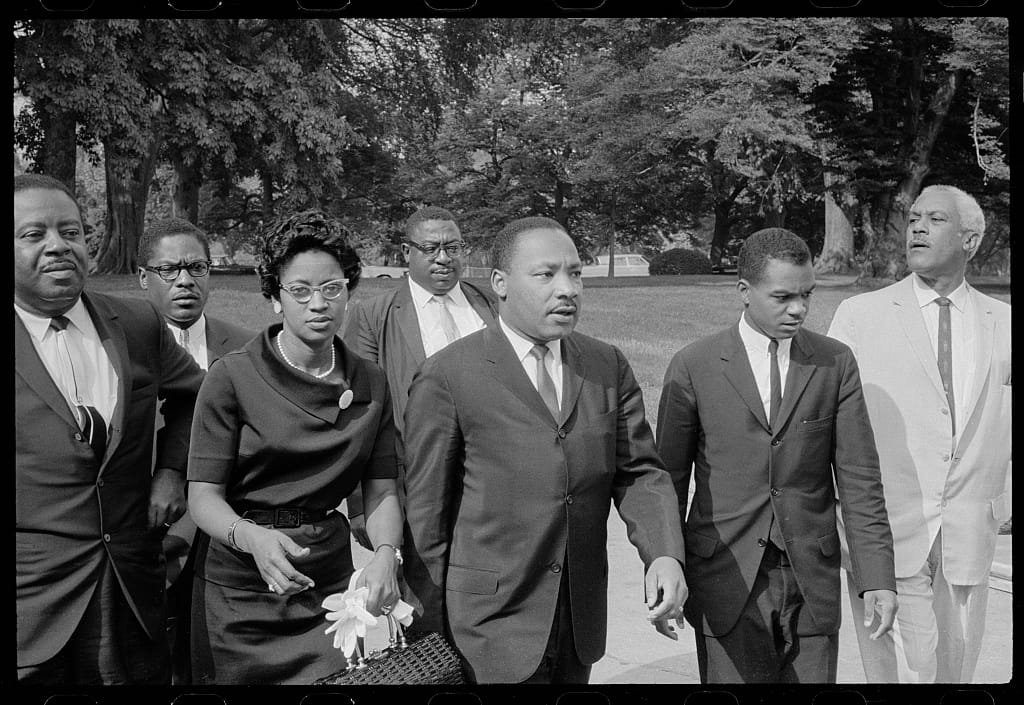
On this day, a celebration of the life and legacy of Martin Luther King, Jr., in the 250th year of our republic, and in the midst of a rapidly escalating attempt to end it, my thoughts are on the ordinary man, rather than the larger than life legend. In the legend, King appears like a biblical prophet, laying bare our faults and laying a path for our salvation, before predicting his own murder by the forces of darkness.
MLK the ordinary man, on the other hand, was only 26 years old when he was thrust into the national spotlight with the Montgomery bus boycott. Before that, he was simply one Baptist minister among many in the South, just another black church leader living in one of the most oppressive systems America has produced, second only to slavery itself.
MLK may have become a legend, but he did so through the tireless work of other ordinary people like himself, most of whom would not go on to obtain any great fame. In Montgomery, there were people to coordinate anyone who needed a ride, there were people driving the cars—and there were the ordinary members of the local black community, who put up with the inconveniences the boycott imposed and the personal risks entailed in standing up to Jim Crow.
There is a certain kind of political theorist who longs to go back to how they imagine organizing worked back then. Their ideal is “democratic centralism,” “the idea that the central party's views would be decided democratically, but once decided would be enforced hierarchically.” They reject the turn to what they call horizontalism, the formless, leadership approach showcased at Occupy Wall Street and similar contemporary protests. Horizontalism can be quite disruptive by drawing large crowds, and does have some advocates, but has proven ultimately toothless to drive real institutional change. Some theorists in a more pessimistic mood simply conclude that democratic centralism is no longer possible under current conditions, and therefore mass politics is doomed.
These theorists are simply wrong on the facts. For one thing, the Civil Rights movement in particular was wildly successful with an astonishingly small number of organized activists. And it is hardly alone in the pantheon of successful movements in failing to meet the democratic centralism model. It is simply defeatist to believe that the specific challenges of our era are insurmountable.
In August of 2024, looking ahead to a potential second Trump term, I argued that we can organize. An obvious statement, perhaps, to the many who organized during the first Trump administration and indeed, long before that. But the point was less about the brute possibility than to argue that we must never give up on rethinking how we organize, in taking advantage of new tools and seizing opportunities that arise. In showing a willingness and a commitment to adapt creatively to known or unanticipated challenges.
In Minneapolis-St. Paul, this is not an academic matter. They are organizing, to a degree difficult to imagine for those who are not living there. And they are not alone; indeed many of the approaches they have adopted have come from lessons learned in Chicago, in LA, in other cities that experienced similar invasions by our own government in 2025. Like the boycotters in Montgomery, this is not part of some grand design, something worked out well in advance by a disciplined organization. This is something that ordinary people have taken it upon themselves to do. Some of them have developed new tactics as events unfolded, and shared the lessons they learned. Others have simply put their trust in those coordinating these actions, and gone to the front lines, putting life and limb at risk to protect their neighbors.
It is not enough. The administration’s forces will no doubt adapt to these tactics in time, and we will have to continue to adapt to their adaptation. And those of us who do not live in the Twin Cities cannot afford to wait for an invasion on a similar scale before we begin this work.
Talk to your neighbors today. Do not wait until things get as bad as they are in Minneapolis, until ICE agents numbering in the thousands are openly marauding your streets and causing chaos. Even if it is on a much smaller scale, I guarantee that ICE and other associated goons are already active near you, already hurting your neighbors. Seek out training to become an ICE observer today. In Minneapolis, everything down to WhatsApp groups for parents of kids in a single classroom was mobilized as infrastructure to coordinate resistance to the invasion; simply becoming a more active participant in such chats today will put you in a better position later.
Today, almost 58 years after MLK was murdered, more than 97 years after he was born, and as we approach the 250th anniversary of our founding, ordinary Americans are coming together again to protect our way of life. Many of us have organized towards that end, and more of us are doing so every day. We need yet more to do so, if we hope to weather this dangerous season together and still have a republic left by the end of it. On this January 19, let us remember the man, not the myth, and take inspiration from his example for the fight to come.
Featured image is part of the U.S. News & World Report Magazine Photograph Collection at the Library of Congress, and was taken in 1965.