What If Iran Doesn’t Want the War to End Yet?
America is not the sole actor in this war—the enemy always gets a vote.
Before American financial markets opened on Monday, March 23, nearly a month into the U.S-Israeli war on Iran, President Donald Trump announced that the U.S. and Iran have had “very good and productive conversations regarding a complete and total resolution of our hostilities in the Middle East,” and therefore the U.S. would refrain from attacking Iranian power plants as he had threatened last week. Iranian state media portrayed that as the U.S. backing down in the face of Iran’s warnings, and speaker of Iran’s parliament Mohammad Bagher Qalibaf said no negotiations had taken place, claiming that Trump was lying “to manipulate the financial and oil markets and escape the quagmire in which the U.S. and Israel are trapped.”
All sides in this conflict have incentives to lie and spin—psychological warfare, signaling resolve, posturing for domestic audiences, shaping outsiders’ opinions, establishing negotiating positions, etc.—so no one should take either at their word. Outside observers can’t know if any talks really took place, and if so, what happened in them. Pakistan reportedly offered to mediate, and sent Iran a 15-point plan from the U.S. Iran has rejected that offer, according to state media, and it continues blocking the Strait of Hormuz, the choke point at the end of the Persian Gulf through which about 20% of the world’s oil and natural gas usually flows. Missiles are still flying, global energy shortages are worsening, and the U.S. is sending about 2,000 soldiers from the Army’s 82nd Airborne to the Middle East, adding to the 4,500 Marines already in route.
On the competing claims about progress or lack thereof, it looks like Qalibaf’s statement is more accurate, especially the part about Trump manipulating markets. Economic damage is accumulating, and fewer Americans supported the war at the start than any post-WWII U.S. conflict. Gas prices have risen about a dollar per gallon since before the war began at the end of February, creating political liabilities for the president as his party faces a challenging Congressional election this November.
It also looks like there’s been some massive insider trading. 15 minutes before Trump’s announcement, trading in oil and S&P futures spiked to an unusually high volume, with $580 million betting on an oil price decline alone. Then the market opened, oil plunged, stock indices rose, and someone made a fortune.
But is Qalibaf right about the second part, that the U.S. and Israel are trapped? Do America’s leaders want the fighting to stop more than Iran’s? If so, Iran would now be more in control of the war than the militarily superior countries that started it.
Trump could order U.S forces to cease all fire tomorrow, much as he ordered them to attack. Others can urge him to keep going, but the power is the president’s. He could take whatever agreement Iran is willing to give, lie that it’s a great victory, pretend Iran gave him what he wanted, pressure Israel to stop, and claim he deserves the Nobel prize.
But that’s very unlikely, at least in these conditions. No matter how hard Trump lies, the war would be an embarrassing loss for the world’s premier power. At the start, the president talked of regime change and unconditional surrender. Then America and its local ally bombed for a few weeks, killed top leaders, found the regime more resilient than expected, started offering to deal, and got nothing.
Stopping there would end America’s status as the dominant military power in the Persian Gulf, which it has held since WWII. Iran’s successful resistance to American attack would establish this geostrategic region as contested, altering the international system.
U.S. and Israeli forces have dominated Iran’s skies, striking targets at will with relatively few losses, but don’t have any concrete military gains, such as captured territory they could offer to trade back. The U.S. is reportedly considering an attempt to seize Kharg, a small island in the Gulf over 250 miles from the Strait of Hormuz that Iran uses for oil exports. But a ground invasion is riskier than airstrikes from afar, and capturing it would still leave American forces exposed to Iranian fire. More drastic options include an attempt to capture territory around Hormuz to force it open, which would be harder to take and hold, and still might not stop Iran from getting enough shots off to sufficiently scare shipping and insurance companies out of sailing.
Whatever the U.S. does, if Trump ends the war he started without some sort of military victory or substantial concession, he’ll look unbelievably weak. The American attack would go down in history as Operation Epic Fail. (That’s the White House’s fault — they teed it up when they gave the U.S. campaign the stupid, way-too-online name Operation Epic Fury.)
If Trump tries to back down without concessions, Israel might argue against it, even try to play spoiler by hitting natural gas fields, power stations, desalination and water treatment plants, or other sensitive Iranian targets. But after this large joint-assault, a determined White House could probably get them in line.
And the Israelis would likely take it as a win, a successful round of “mowing the grass.” Iran’s missile capabilities and production are significantly reduced, and Israel could shift all its focus to its war in Lebanon, which includes attacks on Iran-allied Hezbollah and razing Lebanese villages near the Israeli border in pursuit of a permanently occupied “buffer zone.”
But by the same “mow the grass” logic, Israel does not want to stop yet. They see more Iranian capacity to destroy, and they might not have another opportunity for years.
Trump faces pressure to continue the war until regime change or at least some sort of victory from Israel, Saudi Arabia, hawks in his administration and the military, and personal ego. He hoped for a Venezuela style-decapitation, removing the national leader but leaving the regime intact, making a corrupt deal with the next leader in line. Except Iran isn’t like that — It’s a theocratic, nationalistic, revolutionary regime. Mojtaba Khamenei has succeeded his father as Supreme Leader, and the regime appears in tight control domestically.
Trump and Netanyahu have encouraged Iranians to revolt and overthrow the government. But even in the unlikely event that happens, Trump reduced the odds of success by attacking after Iranians rose up, and government forces killed tens of thousands of them. Many who would organize and perpetuate a rebellion are now dead or in prison.
Iran’s military forces, namely the Revolutionary Guard, are holding their own. They reportedly diffused operational freedom to various subunits, spread out across the vast country, and utilized analog communication such as motorcycle couriers. That design limits the impact of enemy precision strikes, and helps the overall force withstand decapitation attacks.
Despite nearly a month of American-Israeli bombardment, Iran is getting shots off daily, firing drones and ballistic missiles at Israel, American bases, and allied Gulf Arab states, including oil and gas infrastructure. With small explosive-laden boats and threats from the air, they’ve kept Hormuz closed, creating the spectacle of Trump demanding that other countries help force it open and getting rebuffed.
Militarily, Iran can probably keep this position for a while, taking a lot of damage, but still getting shots off. And every day further disrupts the global economy, creating shortages in gasoline, jet fuel, fertilizer, and more that will be increasingly unignorable. Concern about the economic damage likely drove Trump’s offer to negotiate.
But would Iran want to end the war now? In hard power dynamics, this is the strongest position the Islamic Republic has ever been in, the most leverage they have over the United States since the 1979-80 hostage crisis.
Iran is likely thinking of longer-term security. If they can endure more U.S.-Israeli bombing — and the war so far indicates that they can — then they can increasingly establish their ability to crash the global economy, a deterrent even the United States must respect.
Iran can also show nearby Arab states that their bargain with America isn’t worth it. Saudi Arabia, Qatar, UAE, Bahrain, and Kuwait all host U.S. bases, and are all under daily Iranian attack, running low on American air defense interceptors, their economies squeezed. They’re surely mad at Iran for bombing them now, but after the war, their most lasting impression might be that the U.S. couldn’t protect them.
Under these conditions, Iran has good reason to reject any peace offer from Donald Trump that includes concessions, or even an unconditional ceasefire.
Trump has repeatedly shown the United States cannot be trusted. In his first term, he broke the JCPOA, a nuclear deal that took a decade to get, which Iran was following. Now in his second term, he bombed Iranian nuclear sites last year, stopped and pursued talks, then launched the current war while the U.S. and Iran were negotiating. Some influential Iranians are likely arguing that Trump’s latest offer is a ruse, and Pakistan-mediated talks are just playing for time while the U.S. moves more military forces into position.
Some factions might want to make concessions, but that doesn’t mean enough will. In particular, the Revolutionary Guard, and more hardline elements within it, may be gaining power domestically, even as the U.S. and Israel reduce their military capacity. Foreign assassinations have taken out politicians who advocated diplomacy, such as former parliamentary speaker and lead nuclear negotiator Ali Larijani.
A few days before Trump’s offer, the Wall Street Journal reported that Iran’s conditions to end the war are control of access to the Strait of Hormuz including collection of transit fees, security guarantees to ensure the U.S. doesn’t attack again, the end of Israel’s military operations in Lebanon, the closure of U.S. military bases, and financial compensation for U.S.-Israeli aggression.
That could be bluster, or an absolutist stance to negotiate down, but it doesn’t sound like a government about to capitulate.
Before Iran gives up their leverage, they likely want to establish that the U.S. and Israel cannot pocket any gains and attack again soon. They do not want to be an ongoing victim of mowing the grass.
At the same time, it’s unlikely Trump backs down while Iran is still shooting, or takes a deal where he’s an obvious loser.
That points to stablemate or escalation, more death and destruction, and a global economic disruption that will be bigger than many currently expect.
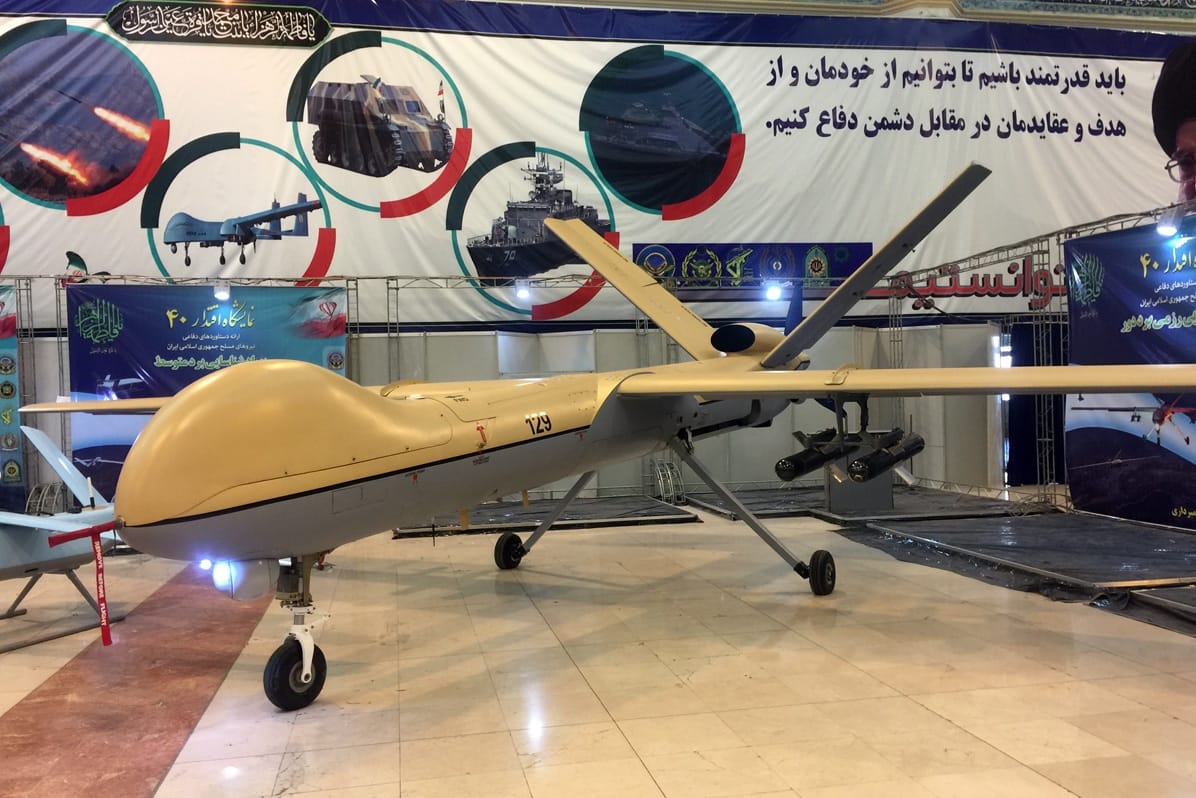
Featured image is Shahed 129 UAV, by Fars Media Corporation