
Liberal Currents Live: Rape Culture, Male Supremacism, and the MAGA Right
American politics is being structured around rape as a core pillar of Trumpism.

DC cops assisted the DOGE boys in breaking into the United States Institute of Peace office in March 2025—and now journalist Marisa Kabas of the Handbasket has obtained their body cam footage from that day. She tells Trent and Caitlin how she did it, and they discuss the total disregard for life, law, and locked doors that was on display that day, as well as the frustrating events following Marisa's FOIA success.
Half the Answer can be heard on Spotify, on Apple, on YouTube, on Amazon, and elsewhere via its RSS feed.


 Marisa Kabas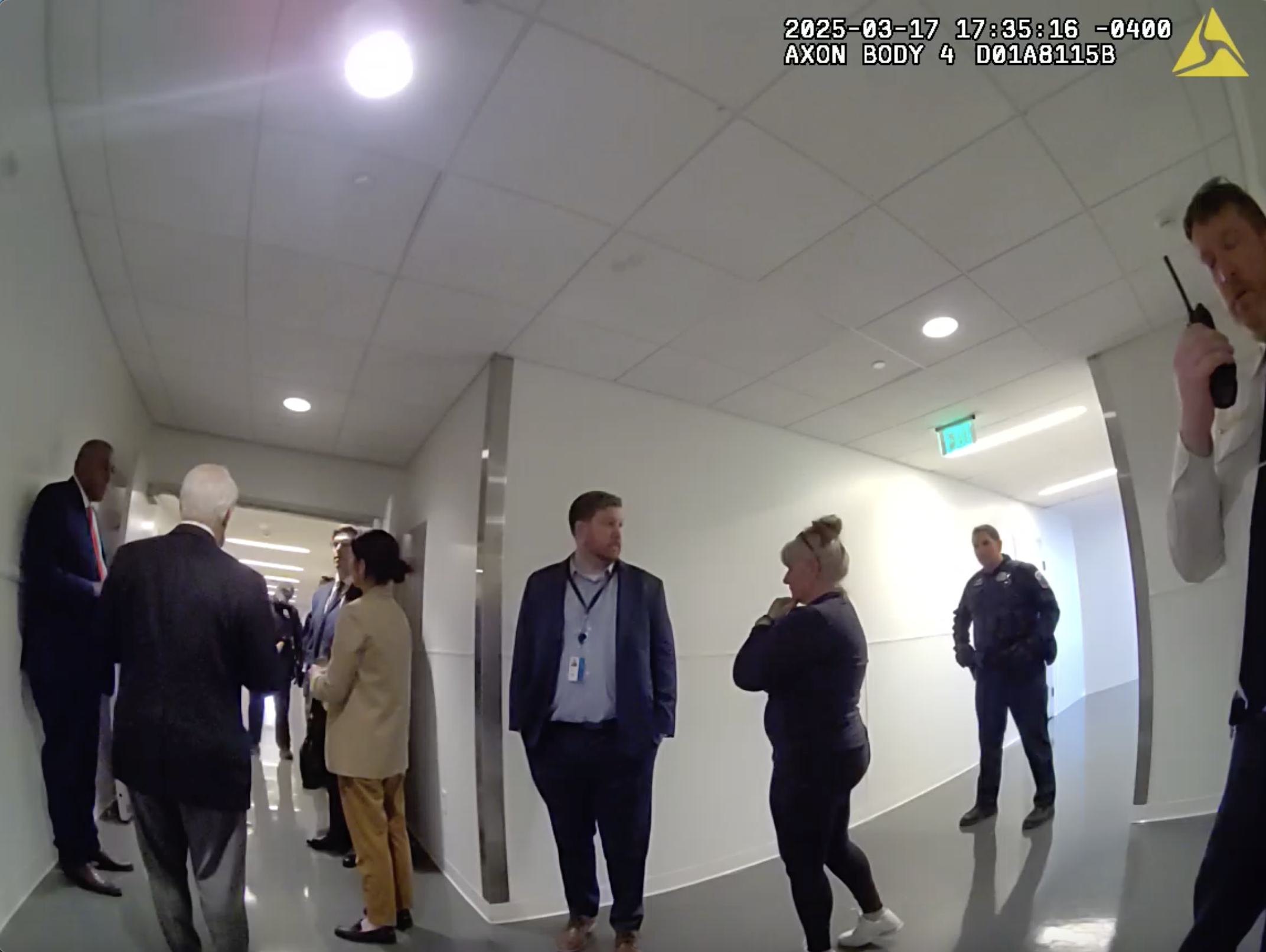
 Joseph Cox
**Trent R. Nelson [00:00:30]**
Happy days are certainly not here. Let's just be frank and honest here. Things are getting a little bit rough out on the seven seas, but we're managing to hold on best we can. And well, you know that understanding a question is half of an answer, and this, of course, Half the Answer with your hosts Trent R. Nelson and Caitlin M. Green. We're co-hosts, but it goes smoother off the tongue the first way. Well, Caitlin, every single solitary week we have such fun. We get to hang out with the most interesting people, and well, you know, we're not the only ones that often think they're the most interesting people. Sometimes they're so interesting that, well, you try to steal their work. Caitlin, who are we talking to today, and what are we talking about?
**Caitlin M. Green [00:01:21]**
Trent, it sounds like you're accusing me of stealing Marisa's work, which I would never do. I will always cite Marisa. This is a proverbial "you." It wasn't me. I didn't plagiarize, I promise. We brought Marisa Kabas back. I'm so excited. How are you, Marisa?
**Marisa Kabas [00:01:41]**
I'm doing fine despite the horrors. It's so true. I, despite myself, keep going.
**Trent R. Nelson [00:01:46]**
The horrors persist, but so do you.
**Caitlin M. Green [00:01:52]**
Well, how's your health? How's your personal -- how you doing?
**Marisa Kabas [00:01:58]**
Well, like I told Trent before this, I just got back from Pilates, so trying to get a little movement into my life, because mostly I'm just cooped up in my apartment, hunched over my laptop, writing my stories.
**Caitlin M. Green [00:02:06]**
Endorphins, yeah, cool. Well, I'll tell you what I spent my weekend hunched over, which is the toilet, because we got norovirus at my house. I have been to hell and back. I have seen the devil's butthole and it winked at me. It is bad. That's actually my skeleton back there. I barfed it up. Things are bad. We've turned a corner now. Everybody's like 48 hours out from -- oh, it was our whole house, by the way. It was all four of us, plus my parents, who live in a different house, but they still got it, and my brother. Literally everybody got hit. So yeah, we're having a bad time, but everybody's pretty much good now. It's like a running joke now that Caitlin's just always the sickest, and that's not the life that I have known for most of my life. I'm not prone to sickness, really. So this has been a weird winter. Oh God, we really are coming up on half a year. I have my doctor on speed dial at this point. I've been to the imaging center multiple times. I'm so monitored.
**Marisa Kabas [00:02:32]**
That's pretty cool.
**Marisa Kabas [00:02:52]**
Well, welcome back to life, my minister skeleton.
**Trent R. Nelson [00:02:53]**
For the last five months we've been dealing with random illnesses from Caitlin, but we've turned a corner.
**Trent R. Nelson [00:03:22]**
That's good.
**Trent R. Nelson [00:03:36]**
Well, speaking of monitoring, Caitlin, it seems to me as though DOGE was supposed to be monitoring us, and yet it seemed as though we should have been monitoring them closer than we have been. And well, we're here to -- they are twerps.
**Caitlin M. Green [00:03:50]**
Those little twerps, those little freaking dweebs with their stupid little chinos and their bad haircuts and their parents who clearly didn't care enough to raise them with a moral compass. What is happening?
**Trent R. Nelson [00:04:03]**
What's happening, Marisa?
**Marisa Kabas [00:04:07]**
What is happening? Great question. Well, today is actually the one-year anniversary of the DOGE raid on the United States Institute of Peace. So happy anniversary, I guess.
**Caitlin M. Green [00:04:19]**
Wow, I would have baked a cake if I had realized.
**Trent R. Nelson [00:04:19]**
Right, right, I would have put on a sweater.
**Marisa Kabas [00:04:29]**
Yeah, what does one wear to mark such an occasion? But yeah, so one year ago we were in the thick of DOGE mania, and they kind of just fell off at some point last spring. I'm sure everyone listening knows about the Department of Government Efficiency, which was run by Elon Musk, and it was just a bunch of little Silicon Valley bros running around having no idea what they were doing. And I don't think it even exists anymore, to be honest. I don't think there are any employees remaining of DOGE. But just now, a year later, we're finally starting to get some inside looks into what was actually going on in their little heads. And part of that was the body camera footage from the raid on the Institute of Peace that I was able to obtain via a lawsuit with the Reporters Committee for Freedom of the Press. And so it's been a revealing couple of weeks in terms of finding out what DOGE was really doing during that time.
**Caitlin M. Green [00:05:32]**
Let me just say really quick that it's actually very in keeping with the whole shambolic nature of DOGE and how it works, right? I just went to look it up, because I was like, what is the status of DOGE? And literally on the Wikipedia page for DOGE, it's like, DOGE's status is unclear. Part of it is that they took another entity and renamed it, right? So it was the US Digital Service, and then it became the United States DOGE Service Temporary Organization, which was supposed to end this coming July. So it's technically not actually over, but then nobody's actually doing DOGE actions, right? And Musk was supposed to be the head of it, and then he named Amy Gleason as Acting Administrator. But then Trump kept saying, "Well, Elon's in charge. Elon's in charge of it." And then they had a falling out, right? And so Musk was like, "Actually, I'm stepping away."
**Trent R. Nelson [00:06:01]**
Right, great.
**Marisa Kabas [00:06:21]**
A guy who wasn't ever working for the government was like, "I'm stepping away from the government." It's like --
**Caitlin M. Green [00:06:46]**
Yeah, it's like, okay, enjoy. No change in your life then, I don't know, except that you don't get to hang out at the White House anymore, which is probably a big blow to his ego, honestly, because he really thought he was big man on campus, and that he really had Trump's ear. He thought he was doing what Mamdani was actually doing.
**Marisa Kabas [00:06:58]**
Cool, yeah.
**Marisa Kabas [00:07:05]**
Do you think he sees those types of the two of them and just cries into a bowl of futuristic Cheerios or whatever weird food he eats?
**Caitlin M. Green [00:07:16]**
Oh my gosh, it's just nuts and bolts in a bowl, because he just -- he's just a person, right? So he can't actually eat those things, but he just makes himself because he wants to believe. Yeah. It's that, or it's Bachelor Chow. I'm trying to figure out which Futurama reference to make. It's either he's eating Bachelor Chow, "now with flavor," or it's when Fry went to the robot mental institution and thought he was a robot and kept drinking oil and stuff. It's one of those two. I don't know which one he is.
**Trent R. Nelson [00:07:25]**
Yeah.
**Trent R. Nelson [00:07:47]**
It's definitely number two, and I'll throw in another reference. It's definitely Grandma's Boy, right? It's definitely like robot legs.
**Caitlin M. Green [00:07:57]**
Yeah, perfect. So anyway, DOGE -- we don't know what's up with it now. Nobody's in charge, nobody's doing it, but it's still technically maybe exists, sort of.
**Marisa Kabas [00:08:09]**
Yeah, maybe. But the main people that were involved with it, who became the face of it a year ago, are not involved anymore, certainly, or at least not in any sort of public-facing way. And they loved being public, so I don't think they're around anymore. But yeah, between the footage that I was able to obtain via my lawsuit and then also these depositions that were published by the National Endowment for the Arts -- there was a lawsuit about their DOGE takeover, and those just happened to drop a few days after I released some of the footage.
**Caitlin M. Green [00:08:44]**
Right? Insane timing. And that was also a win for the historians, because it was in conjunction, right? So Trent, let's mark up a point for you. The linguist didn't do this, so you win.
**Trent R. Nelson [00:08:56]**
Shout out. Shout out to the historians. We don't get a lot of credit often, but hey, you know what, we'll take the win. It's one of our S-tier functions, to be sure. Marisa, before we get into the depositions, can you give our audience a bit of backstory regarding your work getting this footage, and the release, and of course some of the hubbub around that? It's useful for people to know as well.
**Caitlin M. Green [00:09:04]**
One thing you will do is obtain archival materials.
**Marisa Kabas [00:09:32]**
Sure. So let me try and abridge this as much as I can. So this raid happened a year ago. The police responded to DOGE entering this building, the United States Institute of Peace. They are an independent entity. They privately own their building. But the Trump administration, Trump himself, decided, "We want that building. It's ours now," which -- I didn't think that's how real estate worked, but apparently it did. And so yes, part of the deal: bully your way through the door. And so these officials -- some were from DOGE, a couple were claiming they were from USAID -- just some randos basically showed up at the building March 17, 2025, and the people who worked at the building, who owned the building, were not leaving. They're like, "We're not getting out of here just because you say so, because you're waving around a piece of paper and saying that you're the new president now."
And so the people inside the building called the Metropolitan Police Department, which is the local police department of the District of Columbia, and said, "Hey, these people are trying to break in." And they managed to kind of get through the very first door, and they're like, "They're trespassing." And then on the flip side, the DOGE people and the US government -- actually, Ed Martin, who is kind of an online personality for being unhinged and is also a US Attorney, because that's the world we live in --
**Caitlin M. Green [00:10:03]**
Trump clearly does and always has --
**Caitlin M. Green [00:11:04]**
Right? I think we talked about him with Amanda Moore a little bit, because he's like a groper kind of a person, yeah.
**Marisa Kabas [00:11:13]**
Yeah, that makes sense. He called the police department as well on behalf of DOGE, saying these people are not leaving the building which we own now, because we say so. So it led to this sort of face-off. And I was talking with people involved in it as it was going on that day. I was getting messages. So I became very invested in this raid. And it occurred to me, even in the moment, that it was a very peculiar situation because the police were involved. And I had been following DOGE so closely up to that point, but we hadn't had any video footage, really, of them. We had pictures. You had these weird kind of passing screenshots of them entering a building -- they were pretty much ghosts.
And so I realized the cops need to wear body cams, and that body camera footage can be obtained by the public. And so I thought it would offer a really unique insight into literally what it was like to come face to face with these boys. So I submitted a request, didn't hear anything back. I connected with the Reporters Committee for Freedom of the Press, which is a nonprofit legal organization that supports journalists and the First Amendment, and they agreed to represent me in a lawsuit to pursue the FOIA request for this footage.
And what followed was months and months of back and forth with the police department's lawyers, their in-house legal counsel. They released a bit of the footage in the fall, but it was about 30 minutes of nearly six hours, and so that naturally just made me more curious. I said, "What are they hiding?" And then finally, after a lot of back and forth, we won our lawsuit on February 18 of this year. And it was wild. The judge on the spot ruled in our favor, which my lawyer said had about a 1% chance of happening. So yeah, the judge -- she had it, and she wrote a little something to read. It wasn't a written order, but I have the transcript of what she said in the hearing. And she was basically saying we pay these people's salaries. These are taxpayer-funded workers, and the public has a right to know how they're operating.
And the government's argument was that it was violating the DOGE members' privacy by releasing the body camera footage immediately. Yeah, I don't know. It made no sense. It was a loser argument from the start, but they were able to drag it on and kept it under wraps for so long. And then finally they were compelled, within 14 days, to release it. And so a couple of weeks ago, I finally got the tapes.
**Caitlin M. Green [00:14:09]**
It feels like that same -- oh, my gosh -- feels like that same cry-bully kind of thing that the ICE agents do, where it's like, "Oh, it's not fair for you to observe what I'm doing. That's not nice. What about my family? And what if I'm exposed as having literally abused all of your rights and also your body and maybe killed you?" I don't know, man. That's kind of the risk you take. That's part of what you signed up for, my friend.
**Trent R. Nelson [00:14:29]**
You are a public employee. You're a public employee there. I mean, as you know, all the time, Caitlin, right? There is no doxing a public employee. They work for us. We have every right to know what they're doing, why they're doing it, what justification they have for doing it. And as Marisa has noted --
**Caitlin M. Green [00:14:48]**
Right? Yeah. And it's not like republishing the name of their children's elementary school and a list of their greatest fears, right? It's literally what their name is and what they did on the job.
**Trent R. Nelson [00:15:03]**
Right, right, which juxtaposes incredibly well with all of the people who do dox people, right? And are like, "This is where this person lives. This is where their beautiful child goes to school, right? This is the size of the window in the front of their house." These are all much more dangerous things than "Let me know what you're doing in a building that you don't own that you're just running up into." I didn't ask for that.
**Caitlin M. Green [00:15:27]**
On behalf of us, ostensibly, the American people.
**Marisa Kabas [00:15:33]**
And the police have body cameras for a reason. There's been a lot of talk this year actually about body cameras in regard to ICE, and that's sort of the flip side of it, where it's like, that's not going to solve the problem, but they are there to at least create some record of something that happened. And they have, in some cases, been really useful to victims of police brutality. I would never say that about my dear neighbor Chuck.
**Trent R. Nelson [00:15:48]**
Hold on, Marisa, are you telling me that the lovely Chuck Schumer might be out of step as it concerns his demands?
**Caitlin M. Green [00:16:07]**
Yeah, far be it from any of us here to suggest --
**Caitlin M. Green [00:16:20]**
Yeah, he's made himself everyone's neighbor. He's actually everybody's neighbor. That's not fair. Is Maduro still your neighbor? He's still there? Yeah, so you've got everybody over there.
**Marisa Kabas [00:16:29]**
Yeah, he's chilling. You're the weird bougie mall that they built down by the water. The jail in a Mall of America.
**Caitlin M. Green [00:16:40]**
That's weird. I know about the secret apartment in a mall, but I didn't realize there was a jail in the mall. That's crazy. Oh, okay, the mall is in the jail.
**Marisa Kabas [00:16:46]**
Hold on, the jail isn't in the mall. It's next to it. But it's just a weird vibe. You're like, "Oh, you're sitting at a brewery with friends," and it's like, there's the jail. So body camera footage, yeah, it's become this weird thing. But in this particular case, it was actually really, really important, and it was something that the government was very keen on keeping under wraps. And so it was interesting -- at the hearing, the judge asked the police department's counsel, "Can you point to a specific instance where they're having their privacy violated that would illustrate what you're arguing?" And the lawyer said no.
**Caitlin M. Green [00:17:22]**
Right? It's just generally a concern. I'm just really worried and sad. You've made me sad, and so could you please rule in my favor?
**Trent R. Nelson [00:17:42]**
So what did the other five and a half hours of body cam footage that we weren't supposed to see -- what was it showing that was so dreadful? Just the faces of Officer John? What --
**Marisa Kabas [00:17:57]**
Lots of butts in stairwells, going up and down. It showed --
**Caitlin M. Green [00:18:00]**
Yeah, that's body cam footage, man. It's like, the camera is never showing you -- if that guy's walking behind somebody on some stairs, it's just butts. Sorry, everybody.
**Marisa Kabas [00:18:13]**
That fish-eye on the chest is just a brutal angle for everyone. Everyone looks horrendous. So sorry, maybe that's what they were trying to hide. They just didn't like -- and it makes you look really wide in the middle, and then --
**Caitlin M. Green [00:18:00]**
Yeah, because their jaws all look huge and it's disproportionate because of the fish-eye. Yeah. "Please don't share this with the world. I can't bear to let them see my massive midsection."
**Marisa Kabas [00:18:36]**
Yeah, not because I was being a monster. But yeah, the footage showed a few things. First of all, it showed how complicit the police were in getting DOGE and these other officials into the building. When you hear the word "raid" and you hear about what happened, you kind of have this sense of, like a spy thriller, and they're getting in, and it's really intriguing and fancy. But no, they literally opened -- it's not that at all. It's a bunch of bumbling cops standing around who probably had not ever heard of the Institute of Peace before, who had barely any idea what DOGE was at that point, didn't really know why they were there, and made that very clear when they were talking to the different officials from both sides. But they literally opened the door, the side door to the building. And there's this one clip where the former head of the Institute of Peace's security team -- he sees the door open and he tells the police commander, "Don't, please don't let anyone in." Props the door open, lets the DOGE team walk in. And that was all they needed. They were inside the building at that point.
**Caitlin M. Green [00:19:02]**
Right? It's like John Krasinski with a bunch of SWAT guys or whatever. Good with the hand signals.
**Caitlin M. Green [00:19:56]**
Yeah, oh, so it's like the vampire rule. I didn't realize --
**Marisa Kabas [00:20:07]**
A lot of similarities between vampires and these people, actually. But they not only just let them in, but then the police -- when the USIP people knew that they were being raided, they locked down the security in the entire building, and so it locked all the interior doors, and there's a lot of them. It's a really large building. And they shut down the elevators, so everyone was sort of stuck in little compartments of the building, wherever they were.
**Caitlin M. Green [00:20:43]**
So this is why we get a lot of stairwell footage.
**Marisa Kabas [00:20:07]**
Exactly, well, exactly, because they were desperate to get onto the other floors of the building, because a number of employees from the Institute of Peace were still there. They were refusing to leave. And so a lot of the footage is literally cops with lock-picking kits, busting open doors, busting open fire doors in stairwells, busting open glass doors in hallways, using all these crazy tools. At one point they're using knives. I didn't know that was a lock-picking tool. There was one point where there were two knives on one.
**Trent R. Nelson [00:21:14]**
Hold on, hold -- I thought they brought in the police to stop something like that from happening, not to have it happen.
**Caitlin M. Green [00:21:27]**
I didn't really realize police carried knives. Is that for cutting seatbelts or something? What is that for?
**Caitlin M. Green [00:21:44]**
"Excuse me, police, I would like to do a break-in. Can you assist me?" "Yes, absolutely. We are right on it. I'll bring my best lock-picking stuff and also a knife, for some reason."
**Marisa Kabas [00:21:52]**
Honestly? Well, there's one point in the footage where one of the cops says to one of the other cops, "Oh, where's the kid who picks locks?"
**Caitlin M. Green [00:22:01]**
"Why do you have a kid" -- whatever. No, I get why police should be able to pick locks, right? That makes sense to me. However, not here, not today, not for this reason. Not to do crimes.
**Trent R. Nelson [00:22:05]**
Absolutely, absolutely, yes. That's not the weird part. Yeah, exactly.
**Marisa Kabas [00:22:12]**
And also, the group that responded from the Metropolitan Police were a special forces, like special response team. So --
**Caitlin M. Green [00:22:22]**
Oh, so, "Hello, police. I'd like to do a break-in." "Absolutely. I'll send my special team that's for doing break-ins. We'll be there right away." "Thank you, sir. Love you. Bye." "Love you too. The end."
**Marisa Kabas [00:22:28]**
Exactly, exactly. And this police commander who was ahead of that whole operation, he's had a lot of controversy himself. When he was off duty, he shot and killed someone a couple years ago and was never --
**Caitlin M. Green [00:22:42]**
You know, who among us, right? We all remember the sweet cop from Die Hard. That's actually how you know it's the good guy.
**Marisa Kabas [00:22:55]**
Jason Bagshaw is sort of a local legend, and now he is becoming a national legend after his role. And it was interesting, because the cops -- from watching the footage -- they weren't coming in like guns blazing. They were just idiots and really out of their depth. And I did not feel bad for them for one second, but it wasn't malicious. It was more just like they had no idea what to do. And instead of stepping back and being like, "Maybe we should assess the situation better before we start busting open doors," they're like, "Oh, I guess we'll just pick the locks."
**Caitlin M. Green [00:23:30]**
Right? Yeah. I mean, paperwork, Marisa. Paperwork is fake and gay. We all know this. Paperwork is for girls, and are we a bunch of freaking women? I don't think so. Let's break open the door. We want to do the fun part.
**Trent R. Nelson [00:23:39]**
That's true. It's true. Paperwork is -- yeah, but again, I mean, this is not even the regular police not knowing what the hell's going on, right? Which is in itself something that many people think happens each and every day. But this is the special forces, right? We send the special people who also have no idea what the hell is going on. Can somebody know what's going on? Is there more special forces that does know what's going on?
**Caitlin M. Green [00:24:12]**
Well, they brought the lock-picking guy and showed him a door, and he's like, "I know exactly what to do." It's like you took a truffle pig to the forest. Do you think he's not gonna snuffle around? He's not gonna go, "Hang on a minute. Are these truffles legally ours?" No, you brought the truffle pig to the forest. He's gonna find some truffles for you. And they're all racing, and nobody stopped to ask, "Should we be -- are there -- could there be landmines in this forest? I don't know. Let's sniff around and find out."
**Trent R. Nelson [00:24:21]**
Right? Because that's his only function. He's lock-picking guy. That's his title.
**Marisa Kabas [00:24:36]**
There were like eight truffle pigs, which was --
**Marisa Kabas [00:24:45]**
Right. And there was so much confusion, because I think what actually ended up happening was that the police didn't know that they were responding to two calls at the same time. They only thought they were responding to the government's call, and so the USIP people were so confused, because they're like, "We called you guys. Why are you helping them?" And so I think that was also lost in communication.
But in the end, the DC police shouldn't have been there in the first place. This was a federal matter, and the local police force were getting in the middle of something way over their heads. And at one point one of the DOGE guys is like, "Oh, the FBI is coming. The FBI is on their way." Unclear. It was just a lot of lock picking, a lot of bumbling cops.
And then also, what was so revealing about these videos is that you were able to see how the DOGE people spoke to people at these institutions, people who have served their entire lives in the federal government. All of a sudden, one day, these random people they've never met before are busting open doors and asking them questions. To the point where there's one part where this woman, Lincoln Rapier -- she's USAID, DOGE, unclear -- she's badgering one of the USIP guys about why he's in the building and where he was working that day and what he does, and he kept saying, "Please speak to our head of security. Please speak to our lawyer," again and again. And she was following him around, and he literally had to run away from her. She was so invasive. Not only did they invade the building, but she was invading his personal space, and it was just so disrespectful.
**Caitlin M. Green [00:26:44]**
I don't know if I'm really uncultured or something, but before this Trump administration I had never heard of the first name Laken, and now they have made me hear about it in two cases, right? Because there's Laken Riley, which they're obsessed with, and then there's this person who works for DOGE, I guess, or did. Or I don't know where she is now -- she could be on Little St. Barts or whatever, who could say? She could be anywhere. Allegedly, hypothetically, legally speaking, that's not a claim I'm making. She could be literally anywhere. She could be in the center of the earth. But the point being, I don't know any Lakens, and there's two now affiliated, whether on purpose or not -- sorry, Laken Riley, you didn't ask for that -- with Trump. What is this? I don't know. Are there other famous Lakens that I should know about?
**Marisa Kabas [00:27:17]**
There's -- I think there were other Lakens swimming around in the lake. It's definitely a name that comes up in Trump world. It's just kind of --
**Trent R. Nelson [00:27:49]**
No, Jalen. Jalen is a sports thing. Jalen is apparently a sports thing.
**Caitlin M. Green [00:26:44]**
Okay, if it's a sports thing, then Trent would be laughing at me right now, because I don't -- yeah, I do know about Jalen because it became linguistically interesting. Jalens are extremely overrepresented in the NBA, because the kind of parents who are going to invest time, energy, and money into getting their child to be really good at basketball are also very aware of basketball legends, and so a lot of them happen to be named Jalen after the person that they admire. Jalen Rose.
**Marisa Kabas [00:28:18]**
And Michael Jordan just won an Oscar. So, been a time for --
**Caitlin M. Green [00:28:25]**
Michael A. Jordan, silent. Michael C. Jordan, where are you? Michael B. Jordan, today is yours.
**Trent R. Nelson [00:28:33]**
So, Marisa, thank you so much for your hard work, and it was your hard work, right? Not the hard work of other people who aren't you. Isn't that correct?
**Caitlin M. Green [00:28:53]**
It's not like it was that unique of an experience for you, either. I feel like you've had this happen before. Okay?
**Marisa Kabas [00:28:46]**
Yeah, so, an interesting experience that I believe you're alluding to. This was especially rough, though. This hit me the hardest, just because of all the work that I had done. So what happened, for all you listeners, is that the footage was released to me by the government two weeks ago. It was a Monday, so two weeks ago yesterday. And it was six hours of footage. I was kind of figuring out what to do with it. I was watching every single minute of it, of course, taking furious notes, just trying to build up a story, trying to see what the themes were. And it's not something that you can digest in two seconds. For me, it was the first time I ever had to deal with that amount of footage. And again, I'm on my own, so I don't have a team working on this with me.
So I was taking a couple of days, and then I got an email from a local NBC News reporter in Washington who had congratulated me right after I won my lawsuit. And I had never spoken with him before, but I thought he was just being nice. Famous last words. And he said, "Can I have your phone number?" And I was like, "Sure." And then he calls me the following day. So this is Friday of that week. It's around two o'clock in the afternoon, and he says -- he starts by saying, "You did such amazing work. Thank you so much. I really admire your stuff. I've actually never read it before or heard of you before, but good job. But we're going to be publishing the story with the footage on the five o'clock news today, because we heard that the footage had been released to you, and we filed a separate FOIA request." And once it's public, it's easy -- they know that it's there. "So we're essentially scooping you on the footage that you received."
And I kind of blacked out. I didn't even have time to be upset in that moment, because I just had to get to work. And I asked if they could hold the story till Monday. He claimed that they couldn't. He's like, "But we can interview you for our little story about it, if you want, as a consolation." I was like, "Sure. I mean, I guess I'd rather be in it than not at all." So I did this Zoom interview. But in the midst of all this, I'm furiously writing a story about it, trying to get something out before the five o'clock news, which is not a type of deadline I'm usually working on. I was pulling clips and posting them to YouTube and looking at my notes, and I've never worked that fast. It was so stressful. And I just had this burning in my gut, like, this isn't cool. This sucks. They didn't do anything illegal. It was just a crappy thing to do. And so at 4:59 I hit publish on my piece.
**Caitlin M. Green [00:31:05]**
Yeah, Marisa was not home.
**Marisa Kabas [00:32:19]**
I was like, I can live with myself now, whatever happens. I did it.
**Caitlin M. Green [00:32:11]**
Oh my God, that's incredible. Oh, wow.
**Caitlin M. Green [00:32:26]**
Right? The paper trail is there. We know it was you, and also the legal record is there. You've been working on this for ages.
**Marisa Kabas [00:32:36]**
Yeah, timestamps don't lie. So I was really happy about that. But then I immediately turned on the stream of their local news station and watched the piece they did, and they said, "First on Four," like, "You're seeing this footage that we've obtained." And then it's six minutes of clips and this reporter interviewing the former lawyer for the USIP. And then finally it's like, "And then blogger Marisa was the one who actually was able to get this footage released as a result of her lawsuit." Yeah. No disrespect to bloggers. Blogging is an art that I'm actually very bad at. But that's not what I do. I'm a journalist.
**Trent R. Nelson [00:33:16]**
I mean, to be fair, a lot of the bloggers are also bad at it. So it's not just you, Marisa.
**Caitlin M. Green [00:33:26]**
It's a different type of thing. It's a different type of thing.
**Marisa Kabas [00:33:38]**
Wow, shots fired. Bloggers on notice.
**Caitlin M. Green [00:33:42]**
I mean, listen, we know that blogging is part of the family exploitation ecosystem that we don't like to look at. The mommy blogs -- some of them are unethical. Not all of them can be Julie and Julia, right? Some of them are the Ruby Franke or whatever.
**Marisa Kabas [00:34:03]**
Yeah, so I was a "blogger." Oh, and in my conversation before that aired with the journalist, he was very demeaning to me and kind of talking down to me. And it was just a really gross situation. So the thing airs, it was not to my liking, and I kind of had to sit with it. I was feeling so angry.
And my freaking moral compass is always like, "That's mean. Why would you do that?" I would never do something like that. And I know that's not how the world works. It's very naive. It's this very naive part of me. But I would never do that to someone. And I couldn't digest it.
And then what really pushed me over the edge and got me to talk about it publicly -- because up until this point I hadn't said anything, which is very unlike me -- my mom actually sent me an Instagram version of their report, and nowhere in the video does it mention me or my work. Not even the clip that they included in the broadcast. There's a little mention in the caption, but nobody's reading the Instagram caption. Everyone's just watching the video. And so if you saw that, you would think this was their work.
And so that was the kick I needed to post about it online, as one does. I wrote an email to the news director of NBC Four Washington, really laying out everything that happened so that no one could say I was misrepresenting the situation. I wanted him to see it, but I also knew I was going to share the text of the email, so I wanted people to really understand the mechanics of this breach of trust and disrespect and just ickiness. Again, people are like, "Well, it's not illegal." Something doesn't have to be illegal to be wrong. And unethical. And I even said in my email, "It just sucks."
And so I got a lot of support, and he wrote back the next day. Not even -- worse. Anytime it was so stupid, so weak. I'm pretty sure it was written by ChatGPT. It definitely had the vibe. It was a very weird --
**Caitlin M. Green [00:35:28]**
Yeah, that's what heroes do.
**Caitlin M. Green [00:36:35]**
I totally get you. You're not just feeling betrayed. You're feeling stabbed in the back.
**Marisa Kabas [00:36:41]**
Yeah. "We commend you. You did great work. Sorry we misspelled or mispronounced your name. Bye." And so at that point, there was nothing else to be done. It was sort of like, I gotta just let this be what it is.
**Trent R. Nelson [00:37:01]**
Well, let me just say, before we get into any of that nastiness, just because the world doesn't work like that does not mean that you should not be that way, right? Just be -- I mean, it is good and right to be good and positive and to be kind. And it's only naive -- it's only naive because we have many, many selfish people in the world. That's the only reason it's naive. If everybody was ethically motivated and morally justifiable in these ways, then it would just be good. It would just be considered right.
And that's something that we have to hold on to. I mean, everyone loves to quote George Orwell saying how everything is shit, right? But one of my favorites is that even if you were the only person to understand or believe in the thing, that doesn't make you crazy, right? It doesn't make you crazy to be the only one who thinks that it's good to be nice. It means that you live in a crazy world where other people don't think being nice is right. It's good to be nice.
**Caitlin M. Green [00:37:18]**
Gotta be the change that you want to see in the world, right? That's Dr. Seuss, I think.
**Caitlin M. Green [00:38:09]**
It is good to be nice. It's good to help people. It's good to stop people from dying by giving money to services that keep them alive all over the world. And anything that can be done to nail these DOGE boys' feet to the dang floor -- pardon my French, I guess. Why did I say "dang" like I'm your aunt? Dang. Dad, do you have any Christmas? And also --
**Marisa Kabas [00:38:48]**
But I do think it was sort of this meta thing where I was covering this injustice that happened in the government, and these bullies who took over something that didn't belong to them, and then had to have this happen in a journalistic sense. It was just like, come on, this is a little heavy-handed. It's a little schlocky.
**Caitlin M. Green [00:39:14]**
We definitely all would like to have some words with the writers of this particular program, because it is a mess, and a lot of it is way on the nose, right? It feels like we've jumped the shark ages ago. And I think we need to wind it down and try a reboot in like 10 years and see how it goes, right? And everybody's matured a little bit. We just need a break.
**Marisa Kabas [00:39:27]**
Too many storylines, really.
**Trent R. Nelson [00:39:37]**
All right, back to basics. So we need a break, right? Absolutely. So Marisa, all of your wonderful work got us more information than we had before, and this was really vital and crucial to understand, for the people to understand better what this DOGE machine actually was doing, what its motivation was. I mean, I still hear from people claiming that DOGE just saved us more money than you can even imagine. The government just wastes money. All it does is throw money away. And if it weren't for these nice 21-year-olds -- Dog Turd, or whatever their names are -- we wouldn't be able to do anything, right? We would just be wasting money. So these depositions that have been released, thanks to historians -- what's in them? What are these folks saying, and how goofy do they look? Oftentimes?
**Caitlin M. Green [00:41:36]**
So what was the standard? What was it?
**Marisa Kabas [00:40:18]**
There are many hours of these deposition tapes. They feature Justin Fox and Nate Cavanaugh, who are two of the main DOGE guys who were also at the USIP raid, coincidentally, so I got to see them in both of those settings. And yeah, they go on for hours. They are asked about all of the grants that they cut from the National Endowment for the Arts and the different related agencies. And I think the clip that really went viral was one of Justin Fox being asked, "What is DEI to your understanding? What does DEI mean?" And he couldn't answer it. He kept saying that there's an executive order defining DEI and "that's what we used to frame whether or not we were going to cancel a grant or not." And the lawyer who was questioning him said, "Yeah, no, no, I get that. I get that, it's in writing. But you had to have something in your mind. You weren't just looking at two sheets of paper at all times." And we also learned that they used ChatGPT, so they obviously were putting these into search queries.
**Caitlin M. Green [00:41:50]**
Yeah, right. Well, that's why stuff about genetic diversity and anything that had "non-binary" or "cis" in it, even if it was chemistry, would end up getting flagged, because they were doing this very ham-fisted sort of automatic process that sucked.
**Marisa Kabas [00:42:13]**
Yeah, it was not nuanced whatsoever. And in the process they were destroying people's careers and fields of research, and they were just kind of slashing things as they went. And the really revealing moment was when he was asked specifically about projects exploring women in the Holocaust. And he said -- the lawyer asked, "Why was that DEI?" And he's like, "Well, you know, gender and the females." That was all he could squeak out.
**Caitlin M. Green [00:42:47]**
Yeah, right? Because there's two genders: there's regular and political, right? So this one was about the political kind.
**Marisa Kabas [00:42:58]**
Exactly. And it was just really embarrassing, and it was really revealing as to the intelligence level of these guys. This one, Justin Fox -- I think he's rather dim. And then the other one, Nate Cavanaugh, I think is just a real jerk. And they're not even that young. Nate Cavanaugh looks 16, but he's 29 years old. He is an adult. He should know better. I mean, knowing what we know about 20-something boys, let's be honest. But he should.
**Caitlin M. Green [00:43:27]**
Yeah, right. No, but I became a parent at 29. Come on, you should be able to take some responsibility.
**Trent R. Nelson [00:43:37]**
Right. Well, part of this whole kerfuffle -- I mean, of course, we just brought up ChatGPT. Marisa, you just brought up ChatGPT. There is a meme that lives rent-free in my head. And the meme goes, "Isn't it amazing that ChatGPT knows all of the things that I know nothing about and only 40% of the things that I know anything about?" And I think that really needs to be understood better, right? These folks were using ChatGPT, and they don't know anything. They are not government employees. They know nothing about grants. They don't even know how to describe and define DEI. So you're just letting a computer, letting a machine, do this. I mean, it's as insane as getting a beautifully worded email about some work that you tried to take from somebody and being like, "All right, ChatGPT, let's just figure out how to get this one."
**Caitlin M. Green [00:44:37]**
"Respond in a compassionate way that doesn't take any responsibility. Yeah, please don't incriminate me in any way. Thank you. Bye."
**Trent R. Nelson [00:44:45]**
Right, right. I mean, just absolutely, the first thing that comes to mind is, where is the accountability? Where is the internal accountability? And this goes for DOGE. This goes for reporters and journalism. Where is the accountability that says, "Wait a minute, I can't just be leaving all of these difficult situations to the algorithm"?
**Marisa Kabas [00:45:14]**
Yeah, there is, at this point, no accountability. And in another moment from the deposition that's gotten a lot of attention, a lawyer asked Cavanaugh, "Do you have any background in reviewing grants or any sort of related field?" And he's like, "No, but I've read books."
**Caitlin M. Green [00:45:35]**
Honestly, doubt. Press X to doubt. Because maybe Harry Potter.
**Marisa Kabas [00:45:44]**
Well, that's what the lawyer said. The lawyer said, "Okay, which books?" -- I'm paraphrasing, of course. And he goes, "There are no books. There are no books." Yes, all the best ones. All of them. And so these depositions are the closest thing I think we're coming to accountability, because at least they're being embarrassed by the words that came out of their mouths. And in fact, they were so embarrassed by them that a judge ordered to have them taken down because they were so upset about the reputational damage that was being done.
**Caitlin M. Green [00:45:52]**
He didn't have that voice. Okay, yeah, I can't name any. Oh my God, it's Sarah Palin reads the newspaper all over again. "Which newspapers?" "Oh, all of them. All the ones."
**Caitlin M. Green [00:46:25]**
Right, again. "Oh, my feelings." Okay. Sorry about your feelings.
**Trent R. Nelson [00:46:32]**
Right, right, but again, where is this concern for the reputation of average people, right? Who are being told that their jobs, that their life's work, that their research, that their passions -- that they're actually all just bullshit. That you're researching things that don't matter because they happen to involve Black people or Jewish people. And you don't matter, right? You traffic in paperwork, which, as my co-host noted, is gay. And so we got real problems with that as a result.
**Caitlin M. Green [00:47:09]**
Yeah, we have a long-running list of things that are gay and girly, which is: it's paperwork, it's peace, it's talking, it's getting shots. Yeah, unfortunately. I wish more of us should be --
**Marisa Kabas [00:47:38]**
Yeah, there's no accountability on their part. And you see their little smirks, and they seem really proud of themselves, and also really annoyed that they have to answer for all the stuff that they've done in the smallest way possible, by the way -- just really accounting for one specific day during this period when they did so much crap, as seen in the videos that I got. So this is nothing, and they seem really annoyed by it, because guys like that do not like to be held accountable.
**Trent R. Nelson [00:48:09]**
So, Marisa, can we play a little hypothetical game real quick? And I'm just asking you because I have legitimate curiosity. If a group of people who weren't sanctioned by, I don't know, Congress, or by any legal documents or paperwork or decrees, if they just came into an institution, right? Let's say they're Russian, instead of 29-year-old white boys from Pennsylvania, right? They just came in and just started wiping grants clear. Is that all generally on the up and up? Is that considered legal, to just have random people coming in and destroying government-developed institutions and innovations?
I mean, is this very normal? Could Caitlin and I do this? Not that we want to, but I need to understand why no one is saying -- I need to understand better how, as you noted earlier, two institutions call the police and the police are like, "Oh, better help the government," right? But which part of the government? The legal part of the government, or the ad hoc version of the government that apparently exists now?
**Caitlin M. Green [00:48:22]**
Yeah, I'm going to the Department of War. Get in, bitches.
**Caitlin M. Green [00:49:29]**
Right? Yeah, I've just formed an organization called the Department of Not Being Such a Goddamn Raging -- priapsis? That's not even a word. Priapism is what -- I don't even know how that -- the Duggar bump. And we're gonna go to the Department of Defense, slash war, slash whatever, and we're gonna take care of things, and the police are gonna help us break in, right? Yeah. Okay.
**Marisa Kabas [00:49:41]**
So yeah, as long as you have the right friends, you can do that. The idea of something being legal is sort of a construct at this point, right? It's basically gone from "what is legal" to "what can you get away with." And of course there have been many lawsuits, and there have been a lot of back and forth, but overall they were able to bust in, and the speed with which they did it prevented the very slow legal system from catching up with them fast enough. So before it was too late, they had Social Security information, and they were trying to give it to their private employers. And there just are not enough people to go out and investigate every single instance, and there's also just not a lot of political will to hold those people accountable at this point.
**Caitlin M. Green [00:50:39]**
This is the Silicon Valley ethos, right? Move fast and break things. Which, even -- I actually had an opportunity to go to a Meta office recently. It was weird. And I saw the signs, and they don't say "Move fast and break stuff" anymore. They say something very neutered now, like, "Move fast, but do good things. Make sure you're nice."
**Caitlin M. Green [00:51:40]**
Right, I mean, we've known this forever.
**Trent R. Nelson [00:51:22]**
Well, again, if this bears repeating, as Marisa just noted, legality is a construct, and it requires participation, right? It requires people being like, "All right, this is what the law says to do. I'm going to attempt to abide by this as best as I can." It requires that. But people forget. People think that these things are automated to some degree, that if somebody in the judicial branch does something that steps over a line, there's some type of siren, right? An alarm system that goes off like, "Whoa, checks and balances in place now, buddy!" Does not work that way.
And this is just, I think, the most blatant example. But of course, we go back into American history and we can find many instances in which the President has been like, "Well, actually, I don't think I'm gonna really enforce that very well." I was just going through Reconstruction history again, and there is this constant fear -- yeah, if the Democrats get back in power, they're just going to make everything a slave country again. There's a real fear for years afterwards that at any point, Republicans must win, because at any point Democrats could reverse the course of the tides. And this is something Republicans did.
**Caitlin M. Green [00:52:52]**
Then guess what happened? You'll never believe it. Yeah, past is prologue.
**Trent R. Nelson [00:53:04]**
Yes, past is prologue, and unfortunately this is what we're dealing with again. So what have you seen, Marisa, as it concerns the fallout from the depositions, as well as your work? In terms of public-facing -- what are you seeing?
**Caitlin M. Green [00:53:24]**
Oh, wait, sorry, this is -- I'm really derailing. But I have one more favorite moment from the depositions before we get into big picture. And I think Marisa knows which one I'm thinking of. Which is the one who has the dark gray crewneck sweater. Do you remember? That's Nate. Okay. Nate -- his face. There's a word in German. It's not a common word -- people don't -- I ask German people, they're like, "What are you talking about, Caitlin?" But it technically exists, and it's Backpfeifengesicht, and it's a very punchable face. And that's what he's got.
And so he is asked, "You don't regret that people might have lost important income to support their lives in cutting all of these grants?" And he said, "No, I think it was more important to reduce the federal deficit from $8 trillion to zero," right? And he's pretty confident about that answer, and then seems completely taken aback by the fact that there might be a follow-up question, which is, "Did you reduce the federal deficit?" Because if it was worth it to reduce -- if the thing was worth it for the effect -- did you get the effect? Did you reduce the federal deficit? And he just goes, "No." No, he didn't. Not at all. Cool. So you ruined a lot of lives, right? And for a benefit that simply did not materialize. The deficit is not different after the fact. Cool, you're a hero, actually. He's a tragic hero, actually. If you think about it, he's like Frodo. "It is done," right? He's done it.
**Marisa Kabas [00:54:53]**
You're bravely failing, basically.
**Trent R. Nelson [00:55:07]**
I grew up hearing a story about my now-deceased great-grandmother, whose sweater I sometimes wear on this program. And she grew up during the Great Depression, as many did, and she would drive to a town about 25 minutes away to go get milk, because at the town 25 minutes away it was ostensibly less expensive, right, by cents. And she would go drive because of the principle of the deal. But my father would always say, "Grandma, just go down to the store and get some milk." Yeah, it's penny wise, pound foolish, right? These people don't really understand where the money goes.
**Caitlin M. Green [00:55:37]**
Right? You'll save the gas money.
**Caitlin M. Green [00:55:58]**
Yeah, but the thing with grandma is that she's supporting a business that doesn't bilk their customers. So that's worth something.
**Trent R. Nelson [00:56:04]**
Shout out to my grandma. I loved her so very much, right? But the point of the matter is, Grandma, you could have just gone downtown, right? Hey, DOGE guys -- no more wars, right? That's where you get a lot of the deficit, right? Going to Iran. Paperwork? Oh no, you're right, you're right. Girly and gay is not going to work.
**Caitlin M. Green [00:56:19]**
Trent, you know what's gay and girly? Not being at war. That's girly and gay. And that's why the war has actually been going on for decades. If you checked, it's been 47 years, actually. It's been 47 years that we've been at war. Also, we're not at war. It's an "excursion." It's an excursion that is also sometimes a war if you ask me on the right day. It's been 47 years.
**Trent R. Nelson [00:56:41]**
When am I getting the Titanic? When am I getting the Titanic? It's been 47 years, right?
**Caitlin M. Green [00:56:19]**
I thought you were gonna say, like, the iceberg going, "It's an excursion."
**Trent R. Nelson [00:56:59]**
Both are applicable. I think both are applicable. All right, so he has a very punchable face, no accountability. DOGE did not wipe away our deficit, and in fact we're spending billions of dollars to replace Ayatollah Khomeini with -- *looks at notes* -- Ayatollah Khomeini. So, Marisa --
**Caitlin M. Green [00:57:21]**
Yes, who's now got more reasons to hate us because of the stuff we did.
**Trent R. Nelson [00:57:28]**
And from what I understand, he is not the most intelligent of the peoples that they might have raised to that position. In fact, the original -- I did a piece several years ago actually talking about who might be the person to replace Ayatollah Khamenei. And I had this gentleman on the list, but he wasn't my pick. The first Ayatollah's grandson, actually super progressive -- well, contextually speaking, right? Thank you. Anyway, what has been the fallout? What have you sort of garnered as the fallout from the work that you've done, and the depositions? Let's pretend we already know what Blue Sky reacted like, because we do.
**Caitlin M. Green [00:58:00]**
Yeah, contextually speaking.
**Marisa Kabas [00:58:02]**
Well, the reactions to the DOGE footage -- I think everyone, in some sense, forgot about them, because just so much has happened and every day there's 12 things that are really concerning. And so it was sort of like taking us back to an earlier time, and I think it was a good reminder that we do have to dig deeper into things that happened in the past. And I know that sounds really basic, but that's history, right? It's important for history, for us to look at even very isolated moments that we think may reveal something larger about the times in which we live.
And that's what I felt about the Institute of Peace raid. I felt like we need to see that, because I think it will create an important historical record for what that time was like, and for us to be able to look back on what was done to the federal government.
**Caitlin M. Green [00:58:16]**
Other than just people on Blue Sky taking potshots at these guys, what other results have there been?
**Caitlin M. Green [00:59:32]**
Yeah. I think it's also really important to think about the idea that different people are going to be working on one thing for a while, and that's how it kind of has to be, right? As an independent journalist, you took on a huge opportunity cost by focusing your energies on this lawsuit and on going through all this footage after you got it and reporting on it, because if you were just trying to keep up with the two dozen things a day that are scary in any amount of detail, you wouldn't have had the ability to deliver us this thing that's really valuable, right? And so we just have to hope that for each thing that everybody seems to have forgotten about, there's somebody that's working on it and is going to deliver us a bundle of useful information.
**Marisa Kabas [01:00:20]**
Exactly. And with the depositions coming out around the same time, it was just a total coincidence, but it was really good confirmation, because we got to see them from yet another angle, and it showed the different work that different groups or different individuals are doing to get some sort of justice, or at least --
**Caitlin M. Green [01:00:36]**
Yeah, right. You weren't the only one still thinking about this, right? The historians were too.
**Trent R. Nelson [01:00:43]**
Yeah, and as you noted, 12 different things happening each day. Oftentimes 12 new things, right? It is difficult, I think, for people to keep track of it all. And one of the things that I actually fear is that because of the 12 new things each day, because of the moving fast and breaking stuff, because of the disregard for the speed of the legal system, there are going to be many things that in the years to come, journalists will have excavated, will have dug into really seriously, and will have put together the context better -- that people won't even remember. They won't even really remember that it happened. Because how do you remember each individual drop of rain during the storm? It's unmanageable.
And yet, thanks to you, thanks to many other positive and wonderful journalists putting in hard work, we have more than we would have. And as you noted, we have some validation that this was all very bad faith. This was all very much designed, regardless of whatever they think, to put us in a real bind as it concerns how our nation functions.
**Caitlin M. Green [01:02:17]**
Right? And it took a lot of really unscrupulous and careless people, thoughtless, to make this possible. Not caring to check into things, or not wanting to because it would be less fun. I get a real sense of this cowboy attitude, like, "Let me kick in the doors, let me make a big show, let me meme about it, let me post a video on X.com the Everything App." Literally, "What's the most fun option for me personally? That's what I'm gonna do," with no care for how it affects other people. And it just reflects a real moral rot, and a brain rot, honestly. That just sucks.
**Trent R. Nelson [01:02:57]**
Yep. So let's touch on that real quick again, because obviously that came into our orbit just a second ago. How many people are excited that we're attacking Iran? In your experience, Marisa?
**Marisa Kabas [01:03:04]**
Yeah, both the meanest and dumbest people are in charge, and I think that was really hammered home these last couple weeks.
**Caitlin M. Green [01:03:08]**
Yeah, and I guess that's true in Iran too. Isn't that fun? We're getting it. Thanks to us.
**Caitlin M. Green [01:03:35]**
Yeah, well, fortunately the entire international community is coming together to help us clear the Strait of Hormuz, right? Because they're so excited to be a part of this fun endeavor.
**Marisa Kabas [01:03:44]**
That's been really interesting to me, because it was sort of nice to see the international community finally being like, "All right, Trump, enough. We're not playing your stupid game. You're killing your own people. You're killing other people. This is pointless." And then he's admonishing them for not supporting him. It's like, what is going on here? Is this a sorority? This is so strange.
**Caitlin M. Green [01:04:11]**
When he's like, "Oh, the results are going to be bad for you." And it's like, in what way, dude? What are you gonna do?
**Marisa Kabas [01:04:21]**
How could it be worse? That's the thing. Things are really, really bad for a lot of countries right now, and so us helping you is only going to make things worse for us and for everyone else.
**Caitlin M. Green [01:04:31]**
Yeah. You want us to dump a bunch of money and resources and sacrifice our soldiers' lives for what?
**Trent R. Nelson [01:04:38]**
Everybody knows that after you belittle and demean your friends, after you take advantage of them, after you push them around, after you call them names, everybody knows that after you do that with your friends, you ask them for help, and they come running to you, right?
**Caitlin M. Green [01:04:57]**
That's right. Well, it works in Mean Girls, right? It worked for Regina George all the way up until she got hit by a bus. So what's the worst that can happen? Right? And then you're magically nice, and that's how the movie ends. The end, goodbye. So that's what's gonna happen to Trump, right? The bus is dementia, and he'll become a sweetie pie. One day he's gonna wake up -- simply, his neck rash is gonna enter the brain and be like, "Oh my God, it's a mess in here," and fix it. Sorry.
**Marisa Kabas [01:05:06]**
Yeah, you can end up in a head brace, I guess.
**Trent R. Nelson [01:05:36]**
Oh no, no, no, no, the neck rash. That was all the evidence that we needed to confirm, as we did in one of our last episodes, right, that Trump is not going to sequester himself when he gets bitten by a zombie, right? That man is -- it's absolutely right. And then there's the shot where you see him checking his arm and it's all fucked up.
**Caitlin M. Green [01:05:45]**
That's right, he's the guy who lies about the zombie bite, for sure. Yeah. He's like, "No rebar. I just -- I ran into some -- it was -- I cut myself with my sword." It's nothing. I'm fine. Meanwhile, he's fine. We're fine. Everyone's fine. And if you suggest that he's not fine, it's gonna rain down fire and terror, the likes of which has never been seen. You're gonna suffer like you've never suffered before, and other vague threats courtesy of the guy who's totally not a zombie. Okay? Good. Yep.
**Marisa Kabas [01:06:10]**
It's totally fine. He's fine. We're fine. Everyone's fine.
**Marisa Kabas [01:06:35]**
He's losing his juice, and the fact that he can't order around even our closest allies is a really bad sign for him, but perhaps a good sign for us that we're not going to just keep going in this completely pointless war that has already killed way too many people, that is destroying Lebanon. I feel like we really aren't talking about that enough, because again, the 12 things a day. But Lebanon is being leveled. And we can't be a part of that, and we don't need to be, and there's no public will to be. And so hopefully, soon enough, we'll be able to extricate ourselves somehow.
**Caitlin M. Green [01:07:23]**
Yeah, I don't know about you, but I'm having to play this horrible game of every day going through the Rolodex of my friends and where they're from and where their families are from, and being like, "Am I worried about Sarah's parents today? Am I worried about Natalie's aunt?" Who am I worried about today?
**Marisa Kabas [01:07:38]**
That's what happens when you have friends who are not all white Christians from one place.
**Caitlin M. Green [01:07:49]**
Despite the names that I just said sounding like they are white Christians, that was an Iranian and Lebanese friend. Let's all check in with the Lakens in our lives, because I bet they're having a rough time too, just like the various Lakens that you know. Just text them and see if they're okay. Because their name is in the news and it's never for a good reason, so just check on them. Yeah, she's got a Dutch name, "of the lake," and I know that now because I Googled it, and so that's nice.
**Trent R. Nelson [01:08:29]**
Shout out to the Dutch. It's a beautiful language. It sounds like goofy English. It's a lot of fun. So closely related.
**Caitlin M. Green [01:08:35]**
It is, and that's only because we're so closely related. And that's fun. It's nice that we have cousins.
**Trent R. Nelson [01:08:29]**
Yeah. And if you go to the Frisian province, apparently that's the closest of the Dutch dialects to English. So you can really -- when I was there, you're driving around, you're sitting in the trolley or the bus, right? And you're hearing these sounds that sound like English sounds. But then you listen harder and you're like, "What the fuck are they saying?" It's fantastic.
Marisa, you are fantastic. We appreciate you so much. The Handbasket -- it is a top publication. Not a newsletter, not a blog site. It is a top-tier publication that we rely on to get really, really good information, information we can trust. And certainly for all of our Liberal Currents listeners and viewers, well, you should be giving Marisa some money as well, to be sure.
Marisa, we have to let you go, because unfortunately that's how time operates. But can you please remind us where we can find all of your wonderful work, where we can read your rantings, where we can follow you, where we can support you?
**Marisa Kabas [01:09:06]**
Sure. So you can find me at thehandbasket.co. You can sign up for a free subscription. You can sign up for a paid subscription, which is nice too. I'm on Blue Sky too much. You can find me there. It's just my name. And I'm also trying to do more Instagram stuff with The Handbasket, so follow thehandbasket.co -- that's D-O-T-C-O, that's the handle. And sometimes there's stuff there. Sometimes there's not. I'm really good at selling it. Just follow it.
**Caitlin M. Green [01:10:15]**
I love it. Yeah, I am going straight there to subscribe and/or follow. If I weren't already, I would be. Anyway.
**Trent R. Nelson [01:10:35]**
Marisa, you are supreme. We appreciate you. Caitlin, what is this? What have we just been doing here?
**Caitlin M. Green [01:10:41]**
Oh, I thought I was just talking to my friends on the phone. What is this? This is – oh, this is Half the Answer. This is Half the Answer, where understanding a question is half the answer. And next time I see you, I will have no stories of illness. I will have been totally fine in the intervening days, and we're all going to celebrate that. And that's my plan and my promise to you. This has been Half the Answer, where understanding a question is half the answer. We love you. Bye.

American politics is being structured around rape as a core pillar of Trumpism.

How we need to think about court reform in the future.

Donald Trump is changing the landscape of D.C., from East Potomac Park to the Kennedy Center to the 'Arc de Trump.'

Are drones fundamentally altering the nature of war for the worse, not for the better?
Sign up for the newsletter and get our latest stories delivered straight to your inbox.