
A Hard Look at Libertarianism
Quinn Slobodian's 2025 book provides the starting point of a more thorough post-mortem.

What was Andrew Jackson's favorite gelatin-based meal? Why did Hillary Clinton feel a deep and urgent need to tell everyone about her fantastic chocolate chip cookie recipe? Did Ronald Reagan really eat that many jelly beans? We answer these questions and more with Bennett Rea, creator and host of Cookin' With Congress. Plus a little taste test!
Half the Answer can be heard on Spotify, on Apple, on YouTube, on Amazon, and elsewhere via its RSS feed.



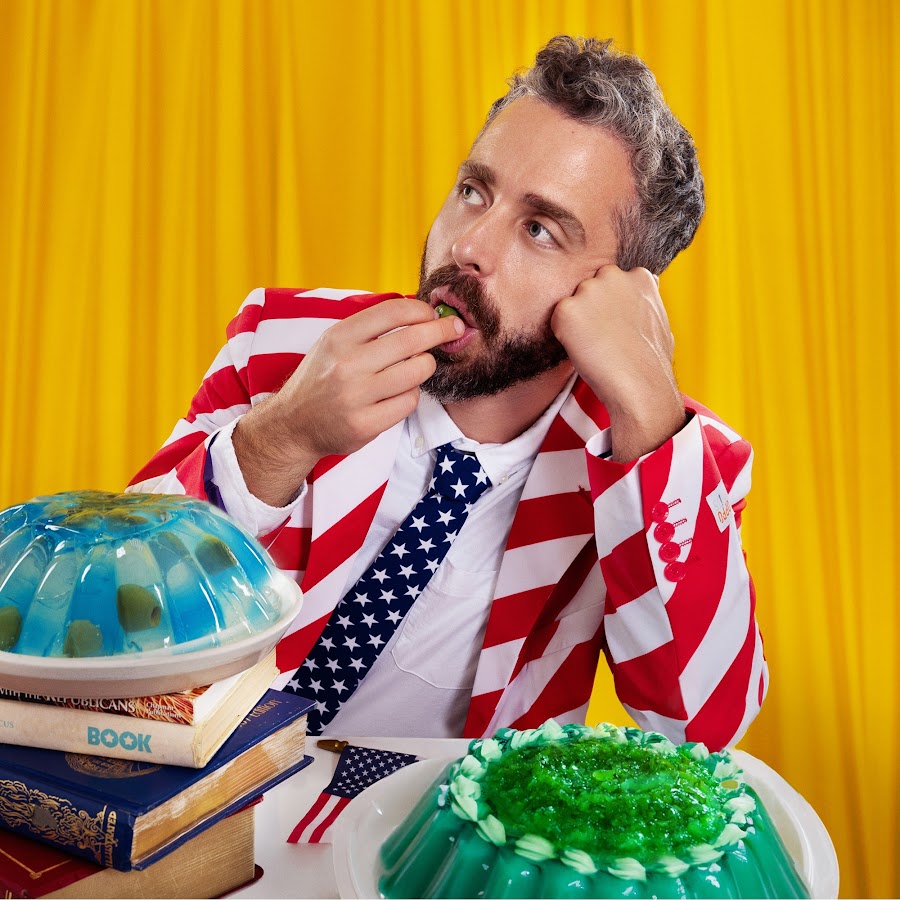
 Bennett Rea
Cooking with Congress on Instagram
Cooking with Congress on TikTok
**Caitlin M. Green [00:00:02]**
Can you explain to me why I added celery leaves at a different time from parsley, and why that mattered?
**Trent R. Nelson [00:00:09]**
No — because they look the same.
**Caitlin M. Green [00:00:30]**
Well, hungry days are here again. This is, of course, Half the Recipe, a cooking show where we cook, and that's what it's always been. And if you thought it was something else — I don't know, that's kind of on you. I am your co-host, Caitlin Green. With me, of course, is Trent Nelson. As a linguist, I'm an expert on the things that interact with your tongue, and that's why I totally know what's about to happen. And Trent, as a historian, you, of course, have a special connection to the topic of today's discussion. So who do we have?
**Trent R. Nelson [00:01:05]**
Well, here on Half the Recipe we're always looking for the answer, if you would — and, well, we're always hungry for all of them. Today we are hungry for food, however, and we are hungry for food that is tinged with time — food from our past, which we are in some cases very proud to find, and in other cases horrified to learn that people — again, how do they fit all that stuff into Jello?
Well, today we are really thrilled to have the marvelous Bennett Rea. You know him just like we do — maybe a little less cool, though. He's the host and creator of Cooking with Congress, and you've probably already seen what that program has done and where it's been — on places like CBS, or just when you're scrolling YouTube or Instagram, or really any place — going back into time and finding these recipes, trying these dishes from folks like George Washington all the way up to Donald Trump. Although, to be sure, there is much more McDonald's in that episode than in the previous ones. Sir, how are you? Thank you so much for joining us.
**Bennett Rea [00:02:28]**
Thanks for having me on. I'm doing great. I'm doing well today — it's sunny, it's beautiful, and I'm excited to talk to you two.
**Caitlin M. Green [00:02:45]**
Yeah, we're really excited. I've been telling Trent that this episode has been load-bearing for my mental health — I was looking forward to it really a lot, because I was like, we need to have some fun.
**Bennett Rea [00:02:58]**
Let's get you out of that dark hole.
**Caitlin M. Green [00:03:05]**
So, as we kind of alluded to, Trent and I each attempted some of the recipes on your website, and we will be presenting them to you later. And I chose to make one guaranteed delicious thing, one thing that could kind of go either way, and one full-on atrocity. So that's what I'll be presenting to you as we go.
**Bennett Rea [00:03:25]**
That's how I attend parties at this point in life. When I go to the potluck or something, it's like, okay, I'm going to bring one thing that's disgusting, one thing that's a question mark, and then a for-sure, everyone's-gonna-like-it — usually a batch cocktail.
**Caitlin M. Green [00:03:45]**
Yeah, exactly — perfect. So we're right on the same wavelength here; I'm so pleased. So, Bennett — Cooking with Congress. You now have multiple different avenues, or categories, for your content, right? There's cooking and trying historical recipes that were presented in some way by a politician. There's also eating like a politician for a day, or a week. And I don't know how you did it — I watched your Reagan video, and that was so many jelly beans. Like, what's going on with the jelly beans?
**Bennett Rea [00:04:15]**
330 was his average, I guess — just constantly throughout the day. I mean, he was like Atkins back in the 80s — very Hollywood diet, right? He came from California. So a lot of carbs and not a lot of protein until you get to dinner.
**Caitlin M. Green [00:04:35]**
Yeah, that was wild. I could see the relief on your face eating the chicken piccata at the end of the day, where you're like, oh my god — real food, and broccoli. That must have felt so good.
**Bennett Rea [00:04:48]**
That was not a very happy day for me, to be totally honest. I was surprised — I'm not a huge candy and sugary-little-snack person. I'll go for a chocolate-covered pretzel over jelly beans or Nerds gummies, or whatever else.
**Caitlin M. Green [00:05:00]**
It's like multiple pounds of jelly beans a day — that just seems punishing. But I guess he enjoyed it, so — how did he do that? I don't want that much waxy stuff in me. The jelly beans, it's like — it feels like wax going down, like he's just lining his stomach.
**Bennett Rea [00:05:06]**
Maybe he kept his teeth somehow, which is ridiculous to me.
**Trent R. Nelson [00:05:25]**
Way too much. But on the other hand, Harry Truman — I mean, that is like a top-tier day. He was well balanced. And again, like you said, that little kicker in the morning — that might be the ticket.
**Caitlin M. Green [00:05:40]**
Okay, so what is he having in the morning?
**Bennett Rea [00:05:45]**
I kind of did it for him — and I want to be clear that I've not just picked that up as a habit since starting: shooting bourbon. It's like a hard start to the engine, a shot of bourbon before anything else — a morning constitutional and a shot of bourbon before breakfast. And it really does feel different than having a drink late at night, which disrupts your sleep. He had those as well sometimes. But I loved Harry Truman's day. It's definitely a top three — lots of vegetables, all made from scratch, at a time when boxed dinners were starting to get popular. And yeah, I would give it a shot.
**Caitlin M. Green [00:06:20]**
Sure, yeah. Well, I'll certainly add that into my preschool drop-off routine — a shot of bourbon, and then just hop behind the wheel. It's a little far to walk, I'm afraid, so the other parents are just gonna have to watch out for me.
**Trent R. Nelson [00:06:40]**
So, Bennett — before we go on and really get into the meat and potatoes — and of course the puns are just going to be horrendous all episode, so you'll forgive us — how did you get into doing all of this? Covering this, researching foods — and this will probably segue us back into what Caitlin had asked before — some of these other avenues that you've gone down, like eating like a 37-year-old painter from Iowa.
**Caitlin M. Green [00:07:05]**
Oh God, Trent, I'm so scared.
**Bennett Rea [00:07:13]**
Yeah, well — when I was in high school, I took that career day test that everyone takes, and mine said I should be kind of an online historical Jell-O food creator, and so that's that.
The whole idea actually came from this old cookbook that my wife's grandma gave me seven years ago — maybe eight years ago at this point. The South Dakota Centennial Cookbook is a classic in this house. When she first gave it to me — and she's since passed, five years ago at this point — she handed it to me and just thought I'd like it. I have no idea why. It feels like this kind of serendipitous moment, where I hadn't expressed interest in old vintage recipes or anything. She just pulled a cookbook out of her big library, and it happened to be from her home state of South Dakota, and it happened to have recipes from lots of politicians from South Dakota — state senators, the governor, et cetera. And they were all disgusting. They're all so weirdly named — diabetic cucumber salad, and probably some names that are no longer okay to say. There was happy ham, which is just a can of beer poured over a ham and baked in the oven.
They were fascinating — that this was the best, right? The best of the best that these folks could do. They thought about this — like, what am I going to submit? Probably my best recipe. And my best recipe is sugar-free lime Jell-O mixed with mayonnaise and cucumbers, right? That made me laugh so hard. And the fact that the President of the United States at the time, Ronald Reagan, and George Herbert Walker Bush also submitted recipes just kind of pinged this obsession that I've always had with the presidency, ever since I was a kid. And I was like, I gotta recreate these recipes. So I started making them. Wine jelly from George Herbert Walker Bush was the first one I ever made. I did make that diabetic cucumber salad, and they were so, so gross — and I kind of fell in love with the idea right then and there.
It took years to find the right format. I didn't do the video format for real until 2023 — so, three years ago is when I put it up on TikTok, because it felt like you could be more raw and sloppy and not as polished, whereas Instagram at the time had to look beautiful, and I did not feel that the food I was making was going to look beautiful. I got shouted off Instagram — rightfully so, at that point in time. But now, hey, it works.
**Caitlin M. Green [00:08:36]**
Hey, this is curated. You didn't deserve Instagram — why not? So, did you grow up in a household where it was understood that Jell-O was for all occasions and all types of food, or is that a new concept?
**Bennett Rea [00:09:00]**
I didn't grow up in a Jello salad household. We lived in suburbia for a good chunk of my life, but we had a lot of rural influences, because my dad grew up on a farm — we would go out and hunt squirrels and stuff like that. So I ate a lot of strange meats when I was a kid. I was very exposed to, hey, try whatever — anything could be good, you never know. Except ketchup. I got a real beef with ketchup. Everyone can like what they like — I'm not gonna yuck your yum — but it's a disgusting thing. It's the only food I don't like, truly, flat out. Just, nope, I do not like it. Which is weird, because I've tried a lot of different foods out there.
**Caitlin M. Green [00:10:20]**
Wow, coming out hard out of the gate for ketchup. Yeah — of all the things that you have attempted, good God. That thing haunts my dreams. Whose was that — the fish in the gelatin?
**Trent R. Nelson [00:10:58]**
I have seen you try to eat a fish in gelatin, sir. Andrew Jackson.
**Bennett Rea [00:11:05]**
Yeah — and it makes sense, doesn't it? You're like, yeah, that's Andrew Jackson. Sure, why not? Those are my favorite episodes. My favorite recipes are where the person and the dish are so spiritually tied together. The ham mousse — Richard Nixon. There's something about the ham mousse where it kind of looks like Richard Nixon, you know?
**Caitlin M. Green [00:11:20]**
From any other person, you'd be like, oh, that's the worst thing you've ever done — but it's Andrew Jackson, so... They're both — this evil dish came from that evil man.
**Bennett Rea [00:11:31]**
Going back to the Jello — the one experience I have with Jello salads that I remember was that my Aunt Donna would always bring them to Christmas. We'd go over to my Grandma Ray's house, out on the farm, out in the countryside, to this gorgeous farmstead, and it was my dad's sister who would bring Jello salads — that was her specialty, every single year. And it came in these molds where the outside of the mold sort of looked like Jello too — it's decorated to look like the inside, if that makes sense, with red speckles, so it looks like confetti almost on the outside. She would bring them, and then at the table she'd reveal it — take the top part off, and there it was, the Jello salad. It was usually a red Jello salad. And she brought them for years, and no one really liked them, because they were gross. Some of them, I'm sure, had carrots in them, vegetables, whatever else. Some of them were just straight desserts. But no one touched them — everyone was after the pumpkin pie, or the pecan pie, or pretty much any other food on the table.
And so one year — exactly one year — same deal, they're on the table. My Aunt Donna goes through the whole dinner, it's like an hour long, it's lovely. And then afterwards my aunt says, "So, did I find my new Jello salad recipe this year?" And we're like, "Yeah, yeah, it's not bad." And she goes and she takes the mold and she pulls it up to reveal there was nothing underneath it. No Jello salad this year. And so that confirmed everyone's fears — that no one really cared about it. And for the next six years, she just brought the empty molds and put them on the table as a joke. There were always those molds on the table. It became an in-joke for the family — oh, do we have the Jello molds? Set them out there.
**Caitlin M. Green [00:13:25]**
Wow. An empty mold. God, I love that.
**Trent R. Nelson [00:13:50]**
Yeah, you know what — that's good on her, right? That's wonderful. Didn't blow up the spot — made it into a thing. Now it's a family tradition that you know it's there, and we chuckle about it.
**Bennett Rea [00:14:00]**
Exactly. Exactly — integrated into it. Yeah, great sense of humor there from Aunt Donna. So, shout out to her tradition of pulling the Jello reveal. I like that — an entertainer.
**Caitlin M. Green [00:14:07]**
And it's nice to know that showmanship runs in your family — there's a tradition there. So, I have enjoyed scrolling through the recipes and seeing, over time, things kind of diversify a little bit. You could kind of get lost in a sort of sameness, and then eventually you're like, oh, Ilhan Omar has brought her Little Mogadishu hot dish, and it's like a lovely little fusion of her home cuisine and the place where she lives now, and it looks really, really appetizing. Have you noticed a change over time, of the congressional makeup giving you a little bit more of a break, food-wise?
**Bennett Rea [00:14:50]**
Yeah, 1,000%. I mean, you look back at some of the recipes in the 50s and 60s, and it's not so much that there's a sameness as there is just a lack of so many of the modern spices and cuisines that we would consider now. It's shocking how few Italian dishes there are in the 40s, 50s, 60s in these old congressional cookbooks. There's a significant lack of representation for pretty much any other ethnicity besides Midwestern whites — that's most of it, right? The mayonnaise salads. And frankly, cakes — there's tons of cakes, and those are some of the better recipes, thank goodness.
But I see it over time. When I'm eating like George Washington for a day, even just the plain color of the food — if you put it all on a plate, you're like, this is pretty beige, or light green. Those are mostly the colors. You get to John Adams — same beige, light green. You start to see some more as you go further on, but especially in the past forty years, there was a direct correlation between the diversity in Congress and the improvement of the recipes over that time period. They really did expand — they brought in all sorts of different cuisines. I think the Little Mogadishu hot dish is a great example. But one of the earlier recipes that I remember really enjoying was from Representative Kika de la Garza — a Hispanic representative — and it was a coffee gelatin. And I was like, oh, this is actually a delicious Jello dish — he managed to make Jello good. I was fascinated by it. If you've ever had a Japanese coffee jelly, it's fairly similar to that — espresso-infused gelatin layered in with a rum-infused whipped cream. It was delightful. I've actually served it to guests since making it. Not something I'd say about, you know, tongue in aspic.
**Caitlin M. Green [00:17:25]**
Yeah, that sounds magical. Love that. So how do these recipes come out? Like, who's giving them to whom? Where are you finding them?
**Bennett Rea [00:17:40]**
There's a number of different sources — I kind of break them down to three major sources. There's this thing called the Congressional Club Cookbook. There are, I believe, 13 editions of it, dating back to the 1920s — it started about 100 years ago. They started off as recipes from the wives of congressmen — it was kind of this little club, a congressional club, and it was bipartisan, and all the wives would submit their best recipes. Later on, it started to add recipes from the actual sitting Congress people as well. That had been going on — I think the last one was 2005, which is when bipartisanship apparently died. It feels like that, unfortunately.
I like to think that, in some small way, the fact that I'm making these recipes and highlighting this Congressional Club Cookbook — maybe we'll get another one next year, who knows? I've reached out to them, and — crickets. Which is very strange, because I don't know who's keeping it alive, if anyone is, which is a shame. The last chair — and I feel bad for not knowing her name, but it's because so many of them go by, like, Mrs. Mitch McConnell or whatever — it was Mrs. Trent Lott. I don't know if you remember Trent Lott at all — very interesting character in politics.
**Trent R. Nelson [00:18:55]**
Oh yeah. Yes — Mississippi, I believe.
**Bennett Rea [00:19:00]**
Yeah, from the South — so some interesting recipes from Trent Lott. I think she was the chair of the Congressional Club. I don't know if it's even got a chair to this day. So that's one big resource.
**Caitlin M. Green [00:19:10]**
Yeah, well, they're very busy doing really important stuff, you know.
**Bennett Rea [00:19:20]**
The other one is these weird cookbooks, like the South Dakota Centennial one I talked about — a ring-binder cookbook. The First Ladies cookbook — classic, I have that one as well, it's a wonderful one. Those less formal cookbooks will usually be for fundraisers, so people will submit recipes — politicians will submit recipes for schools. I have found a tiny little high school in South Carolina, I think, or North Carolina, that had a recipe from Nikki Haley and Arnold Schwarzenegger — random celebrities — because they'll just use their connections to grab a recipe and publish it there. So there's lots of those cheap little fundraiser cookbooks that exist.
And then the third one is really the First Ladies cookbook and the more official cookbooks from White House chefs — the Treasury of White House Cooking, Henry Haller's books, Walter Scheib's books — all fantastic, and they contain some good recipes and some strange recipes, but a lot of history in them too.
One last weird spot that used to exist on the internet, and doesn't now, was this CongressCooks-exclamation-point website. It is gone. Thank God for the Internet Wayback Machine that saves websites, so I can still go there and find it. But that is where I found a lot of the more modern recipes — early 2000s all the way up to, I think, 2011 — submitted from people like Mitch McConnell, people like Larry Craig, which is maybe my favorite recipe of all time. And they were equally as silly and weird and awful as you would expect. But that website doesn't exist anymore. Bipartisanship died — no one's working together to put food out there into a common place, unfortunately.
**Caitlin M. Green [00:20:48]**
Yeah, as a sociolinguist, I am extremely interested in identity work and self-presentation — how these recipes might function as a way for the Congress people and the presidents to convey to people something either about themselves or about how they view their audience. Have you noticed any patterns there? Have you been able to discern anything about what they're saying about themselves when they present a dish as, "This is my recipe, for you"?
**Bennett Rea [00:21:15]**
Yeah, absolutely. There's a number of different patterns that happen with those recipes that are presented in a public format. A lot of them, you can see, have maybe been focus-grouped, right, or workshopped, before they're released to the public. I was talking to Scott Simon about this — I don't know if that actually made it into the NPR interview; we had a nice long conversation — and he was saying he worked in a congressional office at that time, and all the recipes that his particular congressperson released went through rounds and rounds of edits: how does this fit with the brand, the image of the politician? So it's very thoughtful and considered.
I think about when Hillary Clinton released her recipe for chocolate chip cookies, right, back in the day. She was trying to push back against her previous comments that she got a lot of heat for — where she said, you know, I could just stay at home and bake, but I chose a professional career instead of staying home and baking cookies and making tea — which did not go over well with a huge subset of people. And so she was like, oh, actually, you know what? I do have a cookie recipe, I just forgot about it. Here it is — I'm gonna put it up against Barbara Bush's chocolate chip cookie recipe in a contest and blow her out of the water. Which she did — she won. But also, to make those chocolate chip cookies, she asked all of her best friends who were chefs. She had people taste-testing — she had a group come together and help her create a really great cookie recipe, because she didn't have one on hand. That's why she made that initial comment in the first place. A political tool, in some ways, right? Whether it was effective is kind of hard to tell. It was effective in winning a contest, and the recipe still exists out there — I've made them, they're very good chocolate chip cookies.
**Caitlin M. Green [00:22:55]**
I was really thinking hard about that — like, what was she telling us? Yeah.
**Bennett Rea [00:23:00]**
Another thing that you often see with these recipes is a lot of regionalism. Think about Walz, right? He's got this turkey trot tater tot hot dish — say that 50 times fast. Minnesota is the number one producer of turkeys in the entire nation.
**Caitlin M. Green [00:23:18]**
Ready — yeah, and hot dish. So, are you supposed to eat the turkey trot tater tot hot dish before you do the turkey trot run, or after? Like, for your fuel?
**Trent R. Nelson [00:23:25]**
Yeah, and hot dish — oh yeah. You know, it's funny, because I told my dad that I was doing this today, and he said, you should try to throw him a curveball and bring a hot dish. And I said, there's no curveball that this man isn't hitting out of the park.
**Caitlin M. Green [00:23:45]**
That's not a curveball.
**Trent R. Nelson [00:23:50]**
Absolutely. And every family has, as you noted, sir — every family has their own version, has their own recipe, has their own how-grandma-made-it-in-1948-and-we've-been-eating-it-ever-since. And there is something there that, as both of you have alluded to, is attempting to connect to people on a very authentic basis. Like — oh, I did have a chocolate chip cookie recipe. Oh, I do have a hot dish. Oh, you eat weird Jello with cucumbers in it? So do I.
**Bennett Rea [00:24:15]**
Oh — I think you're supposed to eat it before, if you're a real Minnesotan.
**Caitlin M. Green [00:24:27]**
Do you think they really did eat that?
**Bennett Rea [00:24:30]**
I think that they really did eat that, especially in the day. And there are so many different interesting theories about why they ate that. One of my pet theories is that everybody just smoked too much, and so their taste buds were gone, and they're like, no, this is good, this is good — I like this Jello.
**Trent R. Nelson [00:24:49]**
I've been joking — the amount of Valium that must have been prescribed during the 1950s. I mean, like — what are we having, honey? Gel with peppercorns in it?
**Bennett Rea [00:25:20]**
With ketchup. Bravo.
**Caitlin M. Green [00:25:25]**
Yeah, I can really taste the lime. Yeah — get a little revenge. "Here, I worked really hard on it, for you."
**Bennett Rea [00:25:35]**
If you're upset with your Don Draper husband going out and potentially cheating on you, I can't think of a better way to get some innocent passive-aggressive revenge than serving someone a frozen cottage cheese mayonnaise Jello for dinner.
The hot dishes — I'm so excited. I was going to do it in the spring, for timing reasons, but I was like, hot dishes in spring feels kind of wrong. So I think this fall I'm going to do a hot-dish-a-thon. Because they used to have that, actually — again, on the theme of bipartisanship being dead — they used to have the Minnesota congressional hot dish contest for years. All the Minnesota representatives would submit their hot dishes — Tim Walz is like a three-time winner, he crushed it at that; that's where that dish is from — and Republicans, Democrats, independents would all be in it. Al Franken used to host it. Maybe that's also part of why it went away for a bit. I want to taste through all of them — there's dozens — all the hot dishes that have been made by Congress people, and gain 45 pounds, and just rank them all for my own curiosity. So look for that, probably this fall, if I can find enough frozen tater tots.
**Caitlin M. Green [00:26:20]**
That might be the first time I actually cook a hot dish — it'll be one of those, along with you, because that sounds very fun. I've never made one. I mean, I guess I've made casseroles, but those are not the same.
**Bennett Rea [00:26:35]**
Oh, you've never made one? Oh, it's really worth it.
**Trent R. Nelson [00:26:40]**
They're not the same, they're not the same. Yeah, and it's funny, because I cooked in a kitchen for many years, and so when you try to be like, "Oh, I could make a roux for you — instead of getting the cream of mushroom," they're like, "No. We're going to get the Campbell's soup, and we're putting it in, and there's nothing you can do to stop us. You're not gonna make the potatoes nice, you're not gonna make the soup nice." And there's something, again, very authentic about that — not in the sense of the food being authentic, to be sure, but in the loyalty to the recipe, the loyalty to the taste. The taste is living inside the brain, and they would know if it was the 30%-less-sodium one. We're not doing that, and you can't make us. Yes, absolutely.
**Bennett Rea [00:27:46]**
Yeah, exactly — and you want it to be as dense as a neutron star. You don't want that, like, "Oh, it's a little lighter." No, no, no — when you pick up a casserole dish filled with hot dish, it should hurt a little, yeah.
**Caitlin M. Green [00:28:05]**
It has to taste physically heavy. And that's beautiful — and that's how you know your family loves you: they're straining your biceps when it's time to carry the dish.
**Trent R. Nelson [00:28:20]**
So, let's start going through some of these. Harry Truman was a top day for you — in the top three, you said. Can you name the other two? I suspect that it's not John Quincy Adams with the bread scraps — although, shout out to John Quincy Adams. And it's probably not Woodrow Wilson — I was gonna do the grape juice egg shooter, I just didn't have the courage. So what are the top days, and maybe what are the worst days? And then we could go to Congress — yeah, then we could go to Congress, where I'm sure it's even hairier somehow.
**Bennett Rea [00:28:54]**
I mean, it's really tough, because it became like a quasi-religious experience, and I felt just so proud — but I think William Taft's day might be up there. It was painful at times, and it made me sweat, and I didn't eat for 25 hours afterwards. But I legitimately think it was the closest to a religious experience with food that I've had in years. It's like a weird mix — I'm kind of like Joey Chestnut, you know, on a very small scale.
**Caitlin M. Green [00:29:40]**
Oh my god, this is like a mind-over-matter, mastery-of-the-body kind of situation. "I'm an American hero." So, okay — walk us through the day. What's the day like for Taft?
**Caitlin M. Green [00:29:58]**
Please do. You're killing us.
**Bennett Rea [00:30:05]**
So the day starts with an absolutely enormous breakfast. A 12-ounce steak was pretty common — which is a big steak — and that was also on doctor's orders, half of his usual-size steak. He would normally open up with a 24-ounce, and his doctor's like, "You need to cut down on your steak." And he was like, well, I'm not going to get rid of my daily steak in the morning, but I'll do 12 ounces.
**Trent R. Nelson [00:30:18]**
Right — a man has to live, right? He always wanted to be a Supreme Court justice, you know. Part of his tragedy is that his wife was one of the first modern First Ladies, in the sense of having a program that she wanted to operate, and I believe she had a stroke a few months into his presidency — that was a huge blow to him. And then losing the friendship of Roosevelt was also a really big blow. So he was much happier when he got to the Court again.
**Bennett Rea [00:31:03]**
Yeah — a man has to live and die on his own terms. And the thing I also related to with William Taft is that he was stress eating too. He gained maybe 60, 70 pounds while in the White House, and shed it as soon as he was on the Supreme Court afterwards — where he was like, "Oh, Supreme Court? This is an easy job."
I relate to that so hard, as someone who — some people, with food, will stress eat, and other people stress don't-eat. I've never been able to stress don't-eat. Something about William Taft — before I started this project, I liked him, and then going through that day, and learning more about everything with Helen that happened, and how he was left with like 1,500 pieces of unfinished legislation from Roosevelt that were just, "All right, continue my legacy" — and he was like, but I want to make my own legacy. I got a lot of empathy for him, and he's climbed up there into being one of my favorite presidents of all time from a historical perspective. Yes, I love Bill Taft.
**Trent R. Nelson [00:31:46]**
He's probably one of the nicest people to be president. Yeah — Billy Possum.
**Bennett Rea [00:32:00]**
Right — there's a few of those guys where everyone really enjoyed this person. Billy Possum, I know. He's also the reason I ate possum for the first time, so I don't hold it against him. He's the reason I have possum in my freezer right now.
**Caitlin M. Green [00:32:10]**
Right — Billy Possum, yeah. Okay, so he's — oh my god, we'll get back to that. So he starts with his morning steak. What happens next?
**Bennett Rea [00:32:20]**
So we get the morning steak, lots of other foods as well. The only thing he did not like was eggs — he would never eat eggs, so that was not on the breakfast menu. But otherwise a big, full breakfast: morning steak, potentially some waffles, pancakes, lots of coffee, fruits, et cetera.
Lunch — five to six courses. This is the time period where we moved into three meals a day. It used to be just a late breakfast and a mid-afternoon supper — those were your main meals. By the time we get to Taft, he's doing three meals a day. We're eating everything from a beautiful, rich lobster stew — which is one of my absolute favorite recipes that I've ever created, because there's no recipe for it. We just had to take historical notes, and I had to whip it up based on research. So I'll tell you about it, but I won't tell everyone, because it's not widely out there — but it is in my upcoming cookbook, which I'm super excited about. The rich lobster stew.
**Caitlin M. Green [00:33:00]**
Okay, I was gonna ask if a cookbook was coming. Amazing.
**Bennett Rea [00:33:10]**
I am in the throes of it right now. Just last night I was whipping up cocktails — three of them, for a final recipe test. But I don't look like I just drank three cocktails, hopefully.
So — there's the rich lobster stew, there's turkey, there's green peas. He's got, I believe, another steak. That was the one thing I couldn't finish throughout the day. It ended up being like 8,200 calories. There was a second steak, and I couldn't do it. My stomach — I was like, I'm gonna throw up. Despite the fact that it took me like two hours to eat dinner, I still couldn't quite make it. I exceeded the limit, I think, and I still had to eat dessert — so I had to save room for the dessert, which was bonbons and a four-color cream fruit pie, which was delicious. And so I really had to ask, can I finish the steak and even get to the dessert? Unfortunately, I couldn't. I always try to be transparent with that stuff, too, instead of just being like, yeah, I ate it. I could easily just be like, yeah, I ate all of that — but I didn't make it.
**Caitlin M. Green [00:34:10]**
Steak, sir? A second steak? Not today. Yeah — listen, the human body does have limits, okay, and you did meet them. You had to prioritize — like, you were gonna miss out on the bonbons. You had to get it done.
**Bennett Rea [00:34:25]**
Yeah — I didn't want to miss out. I needed something sweet after a day full of savory things to kind of wrap it up.
So Taft, hopefully, in terms of the food itself, is way up there. Herbert Hoover — great day of eating, because he was so out of touch with the way North America was eating, which was, right, Great Depression era — but he's having lobster and sipping on excellent cocktails. So his day is also way up there. I would say those are probably my top three: Truman, Taft, and Herbert Hoover. LBJ gets close, but — Cutty Sark scotch is awful. The canapés, those are not bad. But no, it doesn't quite crack it.
**Trent R. Nelson [00:35:04]**
I knew you were gonna bring him up.
**Trent R. Nelson [00:35:37]**
You didn't want to eat cantaloupe all day either, sir. Cantaloupe and scotch.
**Bennett Rea [00:35:50]**
Yeah. And I really liked the James Madison day, actually, fairly recently — that was pretty nice as well. That was a surprising one that has gone up, definitely into the top 10. I still have 10 more to go, though, so who knows — maybe drinking all day like Franklin Pierce will get into the top five.
**Caitlin M. Green [00:36:15]**
Yeah, I don't know — how do you manage your life when you're like, no, sorry, I'm living a day like Pierce, which means that I will be wasted and won't be able to actually do anything useful for you?
**Bennett Rea [00:36:25]**
I have an incredibly supportive and wonderful partner. She's the best — that's how I manage it. It's like, okay, today — I'm so sorry, I'm not going to be able to drop anyone off at school, I can't pick her up from school, because I'm drunk by nine. So much. I love you.
**Caitlin M. Green [00:36:45]**
Yeah — just write me off. So, am I correct in thinking that your wife is vegetarian — pescetarian? What is it like for them, you know, potentially walking into your house, and then it's, you know, beef or something? Like — cool, sure.
**Bennett Rea [00:37:00]**
She's pescatarian, and so is my daughter. So they eat fish — not fish Jello, but they eat fish in the house. Oh yeah, it's bad. It's bad sometimes. I bought an air purifier mostly just to get rid of the smell of a whole tongue being boiled for three hours. The air purifier going, all the windows are open, the range hood fan is going full blast, I've lit three candles — and still, to walk into the house — "Oh God."
I time it with my wife going into the office to work, being out of the house — like, okay, good, today's a good tongue-in-aspic day. Or today's a great day to be cooking, oddly enough, a whole turkey — that's one that just sets her off. So if I'm cooking a whole turkey, like it's Thanksgiving, I'll pick a day where she's at the office. I do what I can. I try, I try, but there are certain times where it's like, you know, I'm so sorry, but there's gonna be a big meat Jello in the fridge next to your food, and you're gonna feed our child.
**Caitlin M. Green [00:37:40]**
Oh God, the tongue. Great — yeah, that's very considerate.
**Trent R. Nelson [00:37:50]**
No lutefisk episode? Yeah, well, that's really considerate. We love that.
**Caitlin M. Green [00:38:13]**
Yeah — you can wave at it before you go to your wholesome meal.
**Trent R. Nelson [00:38:40]**
Now — the yard of flannel. I made it. I think where it all fell apart was when we made it, we didn't whip it enough, because I think you need to whip it a good deal, from what I've seen. And yours, when you make them, always look so beautiful and creamy and delicious, instead of having little things in there that you could see that you don't want to see. The taste was fine, but I think the consistency could have been better, and we did not finish it.
**Bennett Rea [00:39:02]**
Back and forth — I go pitcher to pitcher, back and forth 50 times, quite literally. A lot. It's to the point where your arms start to get kind of tired. If you've ever made a Ramos gin fizz, it's a similar thing — you have to go for an absurdly long time. You think, oh, it's got to be done by now — it's not done. You keep going. So that's, I think, the key to the yard of flannel.
I love it as an iced drink, actually, because as a hot drink you have to reheat it to get it up to the right level — you have to do the old iron-poker-in-the-cocktail thing, which is where it came from. But it's a really lovely winter drink — it's kind of become one of my go-tos in winter. It should be creamier and thicker than eggnog; that's the goal. So yeah — 50 times, pitcher to pitcher, or cup to cup, whatever you do. Get some verticality there, you know — really let it go.
**Caitlin M. Green [00:39:47]**
Oh, wow. Just so impressive.
**Trent R. Nelson [00:39:58]**
We will do it again, and we will do it better this time, for sure. Okay — so we did three great ones, and I've seen all of those, and I can attest they are fantastic. Fantastic for William Howard Taft, in the literal sense of the word. But let's go into the bottom three. And I can't believe that FDR isn't going to make this list, because Eleanor was taking revenge on FDR. This food is both, as you noted, much more connected to what's actually going on, right — how people are eating — but also, it is devious, sir. These are devious concoctions.
**Bennett Rea [00:40:30]**
The green Jello salad — the fact that that graced the plate of a president just makes me feel joy. A lot of joy. Like, you know what? Even the most powerful people in the world were forced to eat things that they did not like, and it looked like an irradiated placenta.
**Caitlin M. Green [00:41:10]**
Now, are we sure he didn't like it? Maybe he just loved irradiated placentas.
**Caitlin M. Green [00:41:52]**
We've got to stop with this. Disregard.
**Bennett Rea [00:42:00]**
We're pretty sure — there's actually a lot of notes back and forth, which is fascinating, from Franklin to Eleanor, like, "Please have Henrietta stop serving me this dish, I do not want it," or, "Henrietta has served me the same chicken dish seven days in a row, I'm losing my mind, please tell her to stop." And they'd just keep doing it — "He needs the consistency. Just don't worry about him. Don't listen to him." Henrietta would have meetings with FDR, and then go to Eleanor afterwards, and Eleanor would just be like, "Ignore him. Ignore him. That's fine."
But his drinks — I liked his cocktails a lot. That was probably the best part of his day. I did enjoy the green gumbo as well — very herbaceous, and a different style of gumbo than I'm used to; I like the New Orleans South style with sausage and whatever else. But FDR is down there because of the gelatin and other items. It's just such a contrast to Hoover, right, who came right before him.
Bottom three — I mean, honestly, John Quincy Adams. Not a great day. Just crackers for lunch is not my favorite. Ronald Reagan is a bottom three for me as well. Dinner saved it from being a totally miserable day, but the constant jelly beans — little sugar bombs — was not for me. And soup for lunch. I've talked to a few people about this, but I don't believe that soup is a meal. I believe that soup is a side — 95% of soups are not a meal for me personally. If I wanted to drink my lunch, I'd become an alcoholic or something. Not to hate on a very specific brand, but I'm gonna hate on it, because I think it's morally outrageous — Soylent is my nightmare. What if every good part about food was just blended into a liquid? It's my nightmare, and soup and Soylent are a little too close. I enjoy soup, I just need something to dig into. And so because he was eating a lot of soup and a piece of bread at lunch, I didn't really enjoy that either. His breakfast was also very classic 1980s — very carby and light. I was hungry — I was angry-hungry, hangry, whatever you want to say — by the time we got to the piccata, which was at least very good.
**Caitlin M. Green [00:43:00]**
That's so sad. Your teeth want to encounter something — like, I feel that your jaws want to do a little work for it to be a meal. Just drink it, yeah. Yeah, that's rough — but you had to live like that until evening. That's really — I actually showed that video to my husband, just to be like, "Oh my god, look at this," and he was like, "That looks like a good day." So I don't know who I married anymore.
**Bennett Rea [00:44:17]**
The amazing thing is, some people look at that day and they're like, 300 jelly beans and soup? Yeah, that's me. And someone will probably look at Harry Truman's day and say, a shot of bourbon to start the morning? No, thank you. So everyone's got their own preferences.
A stiff cocktail, yeah. When they entered the White House, the staff were making the old fashioneds with a muddled cherry and a muddled big piece of an orange and sugar, and the Trumans were like, "Get rid of that — we're making them how we like them." And so it's just bitters, a little bit of sugar, mostly whiskey.
**Trent R. Nelson [00:44:36]**
Yeah, but Harry Truman's is, as you noted, very well organized, and it seems reasonably thought out. And the vegetables, as you noted right on this program, were well cooked. And I like how he liked his drinks with his wife — with nothing other than alcohol in them. That was funny.
**Caitlin M. Green [00:45:23]**
All right — well, I mean, they had a lifetime of practice, I guess, getting that taste acquired.
**Trent R. Nelson [00:45:30]**
They were living. So — then give us the third.
**Bennett Rea [00:45:36]**
So Reagan's down there, John Quincy Adams is down there. The third one — it's purely between two. Calvin Coolidge had some habits — just nibbling all day on raisins and nuts and stuff like that — that are not really my style. But I can't let the ketchup on cottage cheese go, for Richard Nixon. No matter how good the dinner was — and the excellent wine that he drank, and I mean excellent wine. His breakfast of wheat germ — he was not a man who enjoyed food openly. He was like, food and sleep are a waste of time. And that is the opposite of how I feel about both of those things. And when he poured ketchup on cottage cheese and called it a day, I had checked out. He also liked it with pineapple, which is a way more acceptable version of that, but the ketchup on cottage cheese, to this day, still sticks with me as a very easy-to-make horror show.
**Caitlin M. Green [00:46:30]**
That's rough. Right — I mean, at that point, why not just have plain cottage cheese, right? If food is dumb, what is the ketchup doing for you, exactly? Yeah — making things much worse, right? Would you like to suffer? How about this? We're a cottage cheese and Mandarin orange family — that's a snack that we have. I just can't wrap my head around the ketchup, because it's so easy to just open a can of oranges.
**Trent R. Nelson [00:47:16]**
Bennett — for me, I look at food, having worked in a kitchen — and I suspect that many others who haven't worked in a kitchen appraise it this way too, to some degree — it's a visual thing as well, right? It's a visual thing as well as an ingredients thing. I close my eyes, and I see cottage cheese, and I'm like, this is a visually unappealing thing, plain. And then somebody was like, now we should add red sauce to it. And to me, that is just — wow. Not only did you want to eat that, but you looked at it and you said, this looks delicious, I am excited for this. They should have known that he was a psychopath.
**Bennett Rea [00:47:50]**
It's so easy to open a bottle of ketchup and just try it, Caitlin. I think you should at least try it.
**Caitlin M. Green [00:48:00]**
I don't know what I did to you that you're wishing these ills on me.
**Bennett Rea [00:48:21]**
It's amazing to see, also, the aesthetics — and those old Jello salads as well, right? Some of them have a little bit of beauty to them; so many of them do not. The aesthetics of our food versus the food of the 1950s, 60s, and 70s — at times, even food that was considered attractive or beautiful at the time, you're like, wow, standards have changed. We have gotten a lot better at this. We've studied more, we've brought in other cultures and cuisines. The food photography of the 50s, 60s, 70s — the best-looking food still looked, at best, ugly-beautiful. Beautiful to me, in my eyes, as a retro-recipes fan, but man. It's so interesting to see that change over time.
Oh yeah — the ham mousse, yep, absolutely. One of my earliest ones that I ever wrote about in a few different places. I've made the ham mousse five times. I brought it to a potluck once with my friends, and I think one person was like, "I kind of actually like it." Everyone else was just like, "You're a bad person." It was great.
**Caitlin M. Green [00:49:07]**
Like a weird little dog that you love. Is it Nixon that did the ham and gelatin? What's going on there? You have to leave. You have to go. And you had no idea. Well, okay — so is it any better, shredded and suspended in Knox gelatin? It doesn't make it better. That's so weird — ham in its worst possible form.
**Trent R. Nelson [00:49:42]**
Hold on — I think we do [need to talk about this]. And by the way, ham mousse sounds horrendous — nightmare fuel, right? But you have previously listed, I believe, your favorite and least favorite of the meats, and ham makes an appearance way down the list. And I've only reconciled this recently, after I let myself remember that ham is a carcinogen — that's the only thing that has helped me to reconcile it, because otherwise, I grew up with a Midwestern father, and so ham steaks are a part of the tradition.
**Bennett Rea [00:50:26]**
Yeah — of course, I'm sure it's something historical for me as well. I had a bad experience with ham that I don't fully remember — maybe I'll work it out in therapy — and that's the reason why it's like 63rd on my list of best meats. So many people — I was like, ham is a bottom-three meat, and they're like, whoa, whoa, I thought we were okay, you and I, and now I am upset. That was maybe one of the most controversial things I've ever said on the show. That, and that Fig Newtons aren't cookies.
Oddly enough, it does not improve. I have to take that into account too, right? I'm ranking this after I've had it as a mousse made by Richard Nixon — so maybe there's some bias there I need to get past. But everyone's food preferences are biases, you know what I mean? At the end of the day, there's no objectively best-tasting meat. Everyone's preferences are different. So someone out there is saying, nope, ham is the best meat of all time — they are 100% correct. Someone out there is saying that tripe is better — that's me, and I'm correct too. And ham is not bad. It's just the worst of a good thing, which is meats.
**Caitlin M. Green [00:51:46]**
Well, tripe is good. That's not fair.
**Caitlin M. Green [00:51:57]**
I did have that experience when I went to Scotland with some friends in college, and I was like, I want to try haggis. And they're like, you're a monster. And I was like, I want to try haggis. And I tried it, and I was like, this is among the best things that I've ever had — I love this so, so much. And they never looked at me the same again, and I've had to live with that in the intervening 20 years. But it's so good. It's like spiced meat — it's great, it's really good. I had it once sort of as historically intended, right, just as presented — and then I also had it in a puff pastry. Amazing.
**Bennett Rea [00:52:40]**
Yes — I've never tried it. I would absolutely love to try it at some point. It sounds great. It's really good. Oh, well — I mean, to be fair, I could basically crunch up all the sunglasses and pens that I have in this cup on my desk and put them in a puff pastry — sharp, but good. Delicious.
**Caitlin M. Green [00:52:55]**
Right — and then you put it in your puff pastry. It's true, but this is one of the things that's actually good in a puff pastry.
**Bennett Rea [00:53:00]**
Yeah, actually, I really like that. But I would absolutely try it. There's really no food that I won't try unless it would literally kill me to eat it. So, why not? Why not? The world's big.
**Trent R. Nelson [00:53:10]**
Yeah, absolutely. I mean, when you go to Belgium, they're like, hey, you know what you should try? You should eat horse. And as an American, you're like — yeah, I hadn't thought about that recently, or probably ever, but let's go for it. They have these wonderful little fry stalls, fry shops, that you just walk into, and you're like, yeah, give me one of those horse sausages. And it's good — it tastes like a sausage, it's fine.
And I think, as Caitlin was sort of alluding to earlier on when she was talking about how we try to relate culturally — when we go places, the great patron saint Bourdain helped many of us learn that we've got to go out and eat all the food and try all the culture and engross ourselves — let ourselves be enveloped by the stuff around us. Have you felt that, going from 1788 all the way up to 2026? Have you felt more connected, in some ways, to history?
**Bennett Rea [00:54:27]**
Absolutely. I think that's the whole goal of the eating-like-a-president, eating-like-a-First-Lady series. It started from the idea that I wanted to find recipes from certain figures, but I couldn't — they just didn't exist, or they weren't producing their recipes in such a nice, easy form as the Congressional Cookbook or the South Dakota Centennial Cookbook. And then I realized — it's different to have a published recipe that has been workshopped and sent out in a fundraiser or campaign piece, versus what they actually eat on a given day. Those say two different things about you, right? One is what you want people to know, and the other is who you truly are.
And so to me it was experiential learning — to see what it was like to live in 1787, but also what it was like to live as this person in 1787. What were the wealthy elites eating back in this day? Oh, they're sipping on Madeira and having a massive three-course breakfast — versus what were the soldiers eating? They're eating firecakes, which is just flour, water, salt — that's it — cooked over a fire until it's ashy and hard. So you really do get to learn a lot about the history of it. It's connected me to that time period. The experiential learning is fantastic for me — it sates my curiosity.
And it has a weird humanizing power that I think is critical to learning about history. There's two ways it could go, but for me, it's humanizing these mythical, almost outsized figures. It brings them down to size, right? We're past the pure jingoism or hero worship, but we're also not at straight-up demonization. You're like — no, this is still a person, eating like how I would eat, except very differently. It humanizes them, brings them down to size, and reminds you — historically, so far, these are all just men, right? They are men who are fallible, who have faults, and who are not all-powerful, or mythic, or legends. They are human beings. And there's something very potent in that reminder that I get when I eat like them.
We love to make myths — we really do. We love to build up people into this unassailable figure. We like to build statues and tell stories — it's our natural human instinct to tell stories. But in that, we sometimes forget that they still had just as full of a human life as we do right now, as every living person does right now. And so through this series — this is kind of the ghost of the show, that I don't talk about a lot on the show — we are, in this series, getting the humanization of these massive mythical figures. Hopefully it draws you closer and empowers people to be like, oh yeah, that's what a president is — just a guy. A talented guy, a crazy guy, in a big house, right? But hopefully it's empowering to people. These are just men of history. That's all.
**Caitlin M. Green [00:57:06]**
Yeah, I think it's so important to think of history as — you know, it's done by people, it's a human endeavor. And to think of history as something other than involving human people would, I think, be a mistake. So I love that. That's the guy in a big house. Yeah, that's right.
**Trent R. Nelson [00:57:20]**
That's really beautiful. I agree. He eats his ham mousse just like I do. No, that's really brilliant.
**Caitlin M. Green [00:57:40]**
One spoonful at a time. So how was your seven days of Trump? What was that like?
**Bennett Rea [00:57:50]**
Exactly. Brutal — that was really difficult. I've not done a lot of seven-day diets. I have one that I'm going to do next year, I think, as well — it's actually a seven-day Bill Clinton diet. He was put on a diet while he was in the White House — this excellent book, Dinner with the President, by Alex Prud'homme, kind of revealed that. I had not heard that story before. He was put on a very strict diet, so I'm going to do that for seven days.
**Bennett Rea [00:58:59]**
Otherwise, Trump is the only one that I've done for more than one day, because it was leading up to the election. And his diet is so insane and so processed that I kind of feel like I got pickled for however many days. I was concerned on day seven — I remember having a moment where I was drinking my ninth Diet Coke, sitting on the floor of my bathroom, like, I'm not actually having a heart attack, I'm just in my own head. And I was totally just in my own head about it — like, you're so silly, you're overthinking this, you can't get a heart attack from this much Diet Coke, that's insane. And then I looked it up, and I was like — it is a lot of sodium. My body wasn't happy, but I was also a little too anxious about how unhappy it was.
But yeah — I drank 4.23 gallons of Diet Coke in a week. That wasn't great. My taste buds were blown out by Oreos and KFC. Here's the thing: it tasted very good for several days. Oreos are delicious. I even enjoyed the Filet-O-Fish sandwich from McDonald's — I hadn't really eaten a lot of those, and I was like, these are underrated. But long term — well, short term — I felt the impacts, for sure. After a week, you could kind of see it. When I was editing, I looked at it on camera and I was like, I kind of look different on day one and day seven. That's not good.
**Caitlin M. Green [00:59:50]**
Yeah — like, you actually do. You are stressing things a little. Yeah, I love KFC. It's amazing that it didn't take more than a week to be like, my body composition has changed — I'm made of different stuff now. Yeah, it's a shock.
**Bennett Rea [01:00:10]**
I guess, right — like, you could just buy your way out of bad health choices? You really can, I suppose. I don't know any other way around it. Or maybe it's just what you're used to. In my daily life, I don't eat a lot of that stuff, and so it's a system shock. But maybe if you're like, nope, that's all I've eaten for 40 years — maybe eating a blueberry might give them, you know, sepsis or something.
**Trent R. Nelson [01:01:18]**
Warren Buffett is famous for eating like a five-year-old, you know? He says that, from studies, five-year-olds are the healthiest people, and so we should be emulating their diet — which consists of, like, McDonald's and sweets and a bunch of stuff that blows your taste buds out. But I think, as you noted, it's a mix of composition and also conditioning. I mean, Al Michaels, the announcer — he's famous for having never eaten a vegetable, allegedly. This is something that he brags about, and that is bragged about him, and he has a whole story — I'm not gonna go into it. But I couldn't imagine living that way. It's nice to have different things. When you're young, oftentimes you're picky, but then as you get older — especially when you work in the restaurant business, either in the back of the house or the front of the house — I found you've got to know what food tastes like. How are you going to be able to describe it if you don't know what things taste like? And then you eat more things, and you're like, oh, maybe I should just order the thing the way that the guy who knows food better than I do thought it should be made — even though I don't love black olives. And that's a big game changer, when you get to realize that things are supposed to go together, and they help to make things taste good. You just got to trust the process, right?
**Bennett Rea [01:02:50]**
People get set in their ways with food almost more than any other kind of habit, I think. Like — no, I don't like this, I never liked this, I never will like this. Even with ketchup — the thing that I truly don't like — I gave it a seven-day shot, like two, maybe three years ago, where I was like, I've always said I don't like ketchup, I don't try it on anything. Is that honest? And so I tried it every day for seven days, on different stuff, to see how true that really was. And at the end of it I was able to admit: okay, I don't like it on a cheeseburger, but if someone served me a cheeseburger with ketchup, I'm not gonna wipe it off or something weird. Do I like it on fries? No — but if it gets a little bit on my fry, I'll put up with it. Do I like it on ice cream? No. That's just insane. Don't do that. But interrogate it, right?
**Caitlin M. Green [01:03:36]**
It doesn't ruin it. Yeah, I don't know about that. Do you dip your fries in anything, or do you just eat them with salt?
**Bennett Rea [01:03:42]**
I think it's mostly just plain. I don't do this, but I would prefer mayonnaise over ketchup — or vinegar, frankly.
**Caitlin M. Green [01:03:46]**
I was gonna say — they're good in aioli.
**Bennett Rea [01:03:48]**
Yeah — that's just mayonnaise, right? That's just fancy mayo.
**Trent R. Nelson [01:03:49]**
Absolutely. And vinegar — vinegar is good with salt. I love mayonnaise. Fry sauce is really good — like European mayonnaise from the Netherlands, that's really good. And I don't like ketchup either, but there is only one ketchup that I will eat, and it is also German: it is curry ketchup, one of their innovations from their friendship with the Ottoman Empire. Yeah — and the currywurst as well. You have currywurst with the curry ketchup. That's the closest it'll come for me as well.
Well, sir, you've just been absolutely brilliant, and we appreciate you so much. And as Caitlin noted before, you inspired us to make food too, because we wanted to cook like you — we wanted to cook like the folks from back in the day. And, well, we've done just that. Caitlin has a horror to show you, but she also has some really good things. I have all good, bland Puritan foods. Yes — you go first.
**Caitlin M. Green [01:05:00]**
I'm ready. I almost put on pearls and went full trad wife, but I thought that's maybe a bridge too far. Yeah — unfortunately, I let them taste some of these recipes, and then they just died right there in the background. All right, so should we take turns, Trent? Okay, I'll go first.
First, I have created Ronald Reagan's onion and wine soup. So — my husband absolutely hates onions because of the texture, and when I told him that it would be pureed, he was like, "Well, okay, then." And so, yeah, that's what we did. I know that in the recipe you said not to use an immersion blender, but I don't actually have a different kind of blender, so I did use an immersion blender. So this is butter, onions, beef broth, and then celery leaves, cream, and parsley, and some white wine. And honestly, I thought it was going to be the worst, and it was fine.
**Bennett Rea [01:05:17]**
Oh, fascinating. Okay, I can't wait. Caitlin's also got the apron on and everything, which is great. I love it — and the amount of skeleton, too, just to give a whiff of death to what we're about to eat. I see myself in them, for sure.
Oh, okay — I hope you're not gonna kiss anyone. You should not kiss anyone today, probably, after that. Oh no — totally fine. It's pretty oniony if you cook it correctly. It's an absurd amount of onions, and in the original recipe they're not cooked for a very long time — you're not caramelizing the onions or anything like that — so they come through pretty strong.
It's not Ronald Reagan's worst recipe, I think — his hamburger soup is a little weirder. Hamburger soup came about because he had this onion wine soup, and before that he had a French onion soup, and he had all these French soup recipes, and people were like, what's with the French soup, Ronald Reagan? We don't like France anymore. And so he released a hamburger soup recipe to be more all-American, and they started shuffling the French recipes off to the side. So it's so funny the way that — again, as a political tool — food has been used many, many times in our nation's history.
**Caitlin M. Green [01:06:30]**
Yeah, it did seem like an absurd amount of onions. Deranged, that's right. And also, hating France has been a thing forever, right? Because we had the Freedom Fries situation in 2003, when they wouldn't join the Coalition of the Willing. So, that's my first one.
**Trent R. Nelson [01:07:50]**
And during the First World War, it was freedom cabbage.
**Caitlin M. Green [01:08:00]**
Can you explain — can you explain to me why I added celery leaves at a different time from parsley, and why that mattered?
**Trent R. Nelson [01:08:10]**
No — because they look the same.
**Caitlin M. Green [01:08:14]**
Okay, cool — because they look the same.
**Bennett Rea [01:08:36]**
So much of the time, I'm looking at a recipe from the politicians like — wait, why? It's so funny. In the recipe testing process — I've been working on this cookbook, and a lot of them are original recipes, which is amazing, stuff that I've come up with from scratch; some of them are adaptations of very old recipes that I've modernized — I've worked with a recipe tester as well, Gretchen, who's wonderful. And we were going through them, and she'll be like, "Is there a reason why we need to boil the potatoes for 30 seconds? This doesn't do anything. From a chef's background, this does nothing. It's not long enough to blanch them, we're not taking the skins off — this is pointless." So there are all these examples where I don't understand what the politician is trying to do in the recipe, and we've had to be like — nope, don't need that. How can we make this better and more modern, and just cut steps out that are unnecessary?
**Trent R. Nelson [01:09:38]**
Amazing, amazing. Well, I have brought you Johnny cakes from John Quincy Adams. They are made with heirloom cornmeal and scalding hot water that I boiled and then worked into the cake, and they are cooked in butter. And as you noted, sir, as with most things corny and buttery — they are good.
**Bennett Rea [01:10:06]**
There you go. And cakes, man — Johnny cakes appear in some form or fashion across the plates of many, many presidents. Corn is everywhere. It's an American crop, but you see it especially on the plates of presidents at breakfast time. There's hoecakes, there's Johnny cakes, there's corn pone, there's cornbread, there's cornbread muffins — it's everywhere. I have no complaints about that, because I really like it, but it gives you an appreciation for just how common that crop was back in the day, and how willing we were to use it in everything. And we still are — just in different, stranger forms nowadays: maltodextrin, high-fructose corn syrup, and stuff like that.
**Trent R. Nelson [01:11:00]**
Right. No, it was very good. And again — I've watched a lot; I mean, I think I've seen all of the presidents you've done, for sure — and it is really interesting to see what everybody eats. Calvin Coolidge is, like, strange porridge oatmeal of rough berries and forest droppings. Very interesting, very interesting. Well, Caitlin — you've got more interesting things too, other than just soup, have you not?
**Caitlin M. Green [01:11:20]**
Not droppings, yeah. I think I'll do the delicious one. So — I was born in Oklahoma, and I love a 20-minute nap, just like George Nigh, who gave us the bubble bread recipe. Here she is. This rocks, man.
Okay, so this is frozen dinner rolls sprinkled with sugar, brown sugar, butterscotch Jello powder — and what was the third thing? There's a third powder. Anyway — there's pecans, and there's melted butter drizzled on top, and then it was left to rise overnight, at which point it became insanely huge. It was crazy. You said, "I put 24 in my bundt pan and they got so big — you should do 20." I did 20, and they still violated the boundaries of their bundt pan. You can see — some of them were just hanging off the sides. But I mean, how can you go wrong? This is wonderful.
**Bennett Rea [01:11:51]**
Thank goodness — I love the bubble bread. Yeah, there you go. I made this on Christmas morning for my family, and oh yeah, it was so good. Especially when you have it hot and gooey — it's like a monkey bread, if you've ever had that at a county or state fair. Very similar, but the butterscotch — I had never used butterscotch pudding before. It's delicious. Beautiful. Well done.
**Caitlin M. Green [01:13:08]**
The butterscotch really does something great. I love it. So, yeah — that's bubble bread.
**Trent R. Nelson [01:13:16]**
Well, I love the Adamses, especially John Quincy — who, while not a great president, was one of our most interesting and probably smartest, intellectually speaking, presidents. His story has always fascinated me. But his story begins, in many good biographies, with the father — it begins with the great John Adams. And, well, we've got Huff Juffs here, because how could you not love essentially small pancakes in your cup? That's good eating right there. And — yeah, exactly, that's exactly what I thought. I said, this is cereal, but with pancakes and maple syrup.
**Bennett Rea [01:14:00]**
The original cereal.
**Bennett Rea [01:14:11]**
If you do it right — if you're doing it right. Yeah, a little maple syrup and a little bit of milk, that's my preferred complement. I'm a big Huff Juff fan. Both the Adamses, I think, are underrated presidents, even though they are — especially John Quincy — maybe kind of forgotten a little bit beyond, like, oh, he swam naked in the Potomac. Sure — wouldn't we all? But I was fascinated by John Quincy because he had that second life in Congress after the presidency, and he died in Congress. I actually got to go visit the Capitol pretty recently, in January, and I saw the room where he died in Congress. Now it feels like everyone's doing it, but back then it was novel to actually die in the Capitol building — now it's like, oh, we've got a congressman who's 90 leaving us every week or so. But the way that he died, and his final words, and everything — I'll link it to you guys. That is my next T-shirt. It's going to be a John Quincy one. I'm wearing my Benjamin Harrison right now — the obscure series, which I just love. I think it's so fun. The least known president of all time is Benjamin Harrison — nobody knows who Benjamin Harrison is — and John Quincy is also down there; people don't know a lot about him. So I'm gonna do JQA as the next T-shirt.
**Trent R. Nelson [01:15:00]**
Yep — JQA was one of Kennedy's favorite presidents. And what's so awesome about John Quincy Adams, apart from his whole career — which spans having traveled across all of Europe; I mean, he spent over a decade in the Netherlands, and then in Russia, so he knew all these languages — is that his father told him that you should keep a diary, right, for self-reflection and introspection, your whole life. And like any good Puritan son, he obliged. So you can purchase his whole diary — which, just like others, I'm sure he'd love us reading his work, right? Marcus Aurelius wouldn't be thrilled either. But it's really great reading — really interesting. His life is really interesting. He hated slavery, and he is a link to the sort of British conservatism which I believe H.W. Brands describes as progressive conservatism in the American sense — you know the sense, I sent it to you earlier, Caitlin: if we want things to stay the same, they must change, right? For sure. So it's really wonderful. These taste like funnel cakes in a bowl, with milk and syrup. Nothing wrong with that.
**Caitlin M. Green [01:15:39]**
That's beautiful.
**Bennett Rea [01:17:08]**
Plus — Adams, John and John Quincy, were the only two presidents out of the first, I believe, 12 that never owned slaves. They never enslaved a human being, and they deserve more notoriety and acclaim for that, because it's wild to think about — of the first 12 presidents, 10 out of 12 were slave owners at a certain point in time. It gets washed over. And especially this year, 2026, we're looking at the 250th — certain places are doing a lot of good work around telling the full story, and others are just kind of like, remember when a bald eagle punched the British in the face?
**Caitlin M. Green [01:18:00]**
Yeah — and then Jesus said, "Oh yeah, brother." Like, it's bad. It's real bad. Uh — okay. Well, the time has come. I have produced what can only be described as a crime against humanity.
**Trent R. Nelson [01:18:04]**
Speaking of real bad — yeah, there's another. Let's go.
**Caitlin M. Green [01:18:15]**
I gave it to George back here, and he full-on died. So — this is what we've got. This comes courtesy of Pat Nixon. This is a Jello avocado salad. It struggled, I think — I put in too much avocado, and it really struggled to hold its shape, so that's on me, I think. So, what we have here is lemon Jell-O, mashed avocado, grapefruit — I couldn't find canned grapefruit, so I did have to settle for a fresh grapefruit, but it did say "canned" in the instructions — and celery, for the crunch. And then it is meant to be enjoyed with this, which is whipped cream and mayonnaise together — a thing that is carrying a lot of weight.
This is a monstrosity. It is so upsetting. Everyone in my house was like, what have you done? I sent pictures to my friends. I'm bringing it to school pickup this afternoon to make my friends try it — all the other parents at pickup will be like, get this out of my house — but also, isn't this crazy? The only redeeming thing about it is that I do enjoy the fact that Richard Nixon had to eat this. That makes me a little happy. What happened? Why did this happen? What's going on here?
**Trent R. Nelson [01:19:10]**
Let me just say that the phrase "meant to be enjoyed" is a pretty daring phrase in itself to use.
**Bennett Rea [01:20:03]**
This is classic, like, 60s, early 70s. Jello is a household name, and this is a quick, easy way to really fold in whatever you've got in your pantry and in your fridge, right? Okay — I can't just serve him an avocado and some grapefruit; we had not invented the idea of the quinoa bowl yet, I guess. So how do I serve it? Well, you suspend it, right? You dump it all in, mix it all up, and then present it in a form — although maybe a more congealed form — that looks fancy. Jello became fancy because — there's a whole long story to it, but basically, Jello, or gelatins, aspics, et cetera, started off as food of the elites, and then it became accessible to housewives everywhere in the 50s. And now it has been relegated to history, for good reason.
**Trent R. Nelson [01:21:04]**
Oh — and let's get it closer. Yeah, let's get closer here. I mean, the funniest Cooking with Congresses are the ones where you break the fourth wall and are just like, "I want to die." The look on your face.
**Bennett Rea [01:21:09]**
Yeah — it sort of looks like weird guacamole dipped in worse whipped cream.
**Caitlin M. Green [01:21:30]**
And this is what we've got. Okay — this is, yep, some great tenant focus. I mean, this is just beautiful. Why do this? Why do this? I'm just confused, really. All of these things are fine things to eat in other contexts. We have put them together in a room, and they don't know each other. They're not friends, they're not coworkers, they're not relatives — they simply are together, and so your tongue has no choice but to just sort through them individually. So I'm like — okay, first there's grapefruit, I have now processed that. Now there's avocado — okay, put that in the bank. There's something creamy — I don't want to know what it is, and I won't, ever. And then the Jello — finally. I almost don't even taste the Jello, because you've got a citrus Jello that is being entirely overpowered by grapefruit, which is a much stronger citrus flavor. So I don't really know what I've just eaten, and now it's in my house.
**Bennett Rea [01:22:13]**
Did you get the exoskeleton-style celery in there? Because that's a really important part. If you didn't, I think you should probably get a second bite — it's a little surprise, you know? Yeah — they're strangers with one another. They don't have to meet.
**Caitlin M. Green [01:22:40]**
Yeah, there she is. I think I didn't quite get — oh, should I take another bite to make sure I get some celery? Because I did miss it. Yeah — you think this is educational, so I'm doing it for posterity.
That's a texture that shouldn't be. The fact that it's so crunchy — because it is raw celery, it is the crunchiest thing that you could have, and then everything else was so mush that, again, the mouth doesn't know what to do.
**Bennett Rea [01:23:10]**
It's very confusing. It feels like they didn't have any sense of contrast, right? Like — how do we build in contrast? No, they're just like, pour it all together and insert little — what feels like mistakes and surprises.
**Caitlin M. Green [01:23:25]**
Yep. No — I had to mute because I was coughing. I don't know — my body was rejecting it. I'm gonna have some bubble bread. I need a minute. She must have wanted to hurt him. Well — also, I can see doing this and making this mistake once, but then you've tasted it, and you're like, I'm going to make that again? Why? And I'm going to tell other people?
**Trent R. Nelson [01:23:38]**
You know, I do think that is a really, really interesting point to bring up. Because when you cook — I mean, when I used to cook, I used to say, well, I don't want big pieces of zucchini, because who eats a zucchini that's the size of a coaster, right? Make it reasonable. Because we think — how would I eat this? How would it be to eat this? And I just feel like that sense of introspection did not exist. It must have disappeared. Again — was it the Valium? Was it the cigarettes? Was it that there was a wet bar everywhere? I'm not so sure of the answer. But I definitely think to myself — you know, Pat Nixon, who I know is famous for some recipes which allegedly were good, right? It has to be revenge, as you said — because there's nothing else to explain it. And they put it in a book.
**Bennett Rea [01:24:30]**
Yes — because that's how often it was made. The world needs to know this — and that I like it, and that Richard likes it. We are normal human beings who like this. No — yeah, I'm gonna send it to the head chef of the White House for his book, so he has it.
**Caitlin M. Green [01:25:00]**
Oh, the world needs to know. This is like the best argument for "oh, they're not real people" — like, this is human food, human food that we enjoy with our gullets. Yeah — those are not human men from Earth. I mean, it kind of also still does humanize them, because your brain is forced to wrestle with the idea of, how can a person put this in their repertoire of awesome stuff to eat and mean it?
**Bennett Rea [01:25:21]**
So it's interesting — it goes both ways, I think, with the eating-like-a-person-for-a-whole-day thing. You're like, wow, it's humanizing — even if there are some disturbing, wild elements, it's entertaining, and it brings them down to size. And then when you see days like this, a lot of the comments are like — lizard people.
**Bennett Rea [01:25:58]**
Yeah — it sends you down the rabbit hole of understanding, and trying to understand. Few do, probably, in most cases — but you try. I always try.
**Trent R. Nelson [01:26:08]**
Yes — you always try. We always try. Well, here on Half the Answer, we're all about trying, and that's why we had to try all of this wonderful food with you, sir. It was a trying experience.
Well, we've got to let you go sooner rather than later. We really have appreciated your time so much. We would love to have you come back and talk about Warren G. Harding's banana cocktail — which is not what you think it is. And before we let you go — before we ask you to plug all of the places that people can find Cooking with Congress, and your writing, and your longer form, and all the other interviews you've done with wonderful places — well, I need to ask, because I believe you recently spoke about it on Cooking with Congress, and I thought it was a really interesting point. You explained why old recipes are sometimes vague, or ambiguous about steps — sometimes they don't really explain things properly — and you gave what I thought was a pretty funny answer, from the same people who brought you "all men are rational." Why didn't they really explain stuff? They thought you should just know how to cook?
**Bennett Rea [01:27:00]**
Right. There's a lot of different reasons. One of them is that, yeah, they assumed at a specific point in time that you would only purchase a cookbook if you already knew how to cook. This was not for people like now, where it's like — you know what, I might try to make a spinach ricotta lasagna tonight, and I wonder how to do it. They assumed you knew. If you're making waffles, if you're making pancakes — of course you need some kind of agent that will make it rise. So do I tell you to add baking soda, or to whip the egg whites? Of course not. You know that, right? There were so many assumptions about who your audience was. Your audience was a professional homemaker — for decades, for centuries, really.
And even going further back, there were not many cookbooks. You go back to the 1780s — there's like three. All these recipes that exist from during that time, so many of them funnel back to, like, The Art of Cookery, or Mary Randolph's book from 1824 — that's extremely common — and all the recipes sort of stem from those hundreds that they released. And even those recipes skip steps — they tell you to cook it in a moderate oven, or a light oven. It's not really until, I think, the 1890s that we get some more standardization, and less of "a morsel of salt" or "a snifter of pepper" — and we get some more hard measurables for our ingredients. Useful.
**Trent R. Nelson [01:29:10]**
Well, we can thank John Quincy Adams for his work on standardizing measurements across the world. That's one of the gifts that he gave us, along with swimming in the Potomac naked, and his wonderful diaries. Well — Bennett Rea, absolutely brilliant stuff. Can you tell everyone where they can find all of your wonderful work, where they can follow you, where they can make sure to be waiting on pins and needles for that cookbook?
**Bennett Rea [01:29:30]**
Yeah, absolutely. You can find me at CookinWithCongress.com — no G in "Cookin," it's like old-fashioned cookin' — and pretty much everywhere else at Cooking with Congress. So: TikTok, Instagram — I do long-form episodes on YouTube once a week as well, and I've got a newsletter once a month on Substack. So pretty much anywhere, you can find Cooking with Congress, and you can find me there, and I would love to see you there.
And Trent and Caitlin — this was a lot of fun. I did not anticipate that you would be making Pat Nixon's avocado Jello salad, or Huff Juffs, so that was a delightful surprise. Thanks for having me.
**Caitlin M. Green [01:30:00]**
We had a lot of fun shopping for the ingredients and working through the recipes ourselves. And, yeah — I'm gonna have to find a lot of people to take this avocado salad off my hands. We'll see how it goes. I'm gonna be the least popular mom at school — it's gonna be great. Thank you so much for being here. We loved every second of it. This is, of course, Half the Recipe — we're understanding the recipe is half the meal. I'm not sure. We love you. Bye. Thanks.
**Bennett Rea [01:30:32]**
Have fun making one of these.
**Caitlin M. Green [01:30:50]**
Bye.

How we went from the triumph of the fall of the Berlin Wall to our current world.

ICE has been transporting people in inhumane conditions to countries to which they have no affiliation or connection.

On apocalyptic thought in the evangelical community, the role of liberal media in the struggle against fascism, and more.

American politics is being structured around rape as a core pillar of Trumpism.
Sign up for the newsletter and get our latest stories delivered straight to your inbox.