
A Hard Look at Libertarianism
Quinn Slobodian's 2025 book provides the starting point of a more thorough post-mortem.

Is this chatbot sentient? Is AI my friend? Is isolation hackable? Trent and Caitlin discuss recent AI news, Sam Altman's troubles legal and otherwise, labor organizing as a strategy against the worst fears of AI experts, and whether Richard Dawkins is conscious, in this news digest episode with linguist and AI researcher Hagen Blix.

Half the Answer can be heard on Spotify, on Apple, on YouTube, on Amazon, and elsewhere via its RSS feed.
Hagen Blix and Ingeborg Glimmer
 Hagen Blix
 Hagen Blix
Meta to start capturing employee mouse movements, keystrokes for AI training data
 Nick Robins-Early
 Paresh Dave and Lauren Goode and Steven Levy and Zoë Schiffer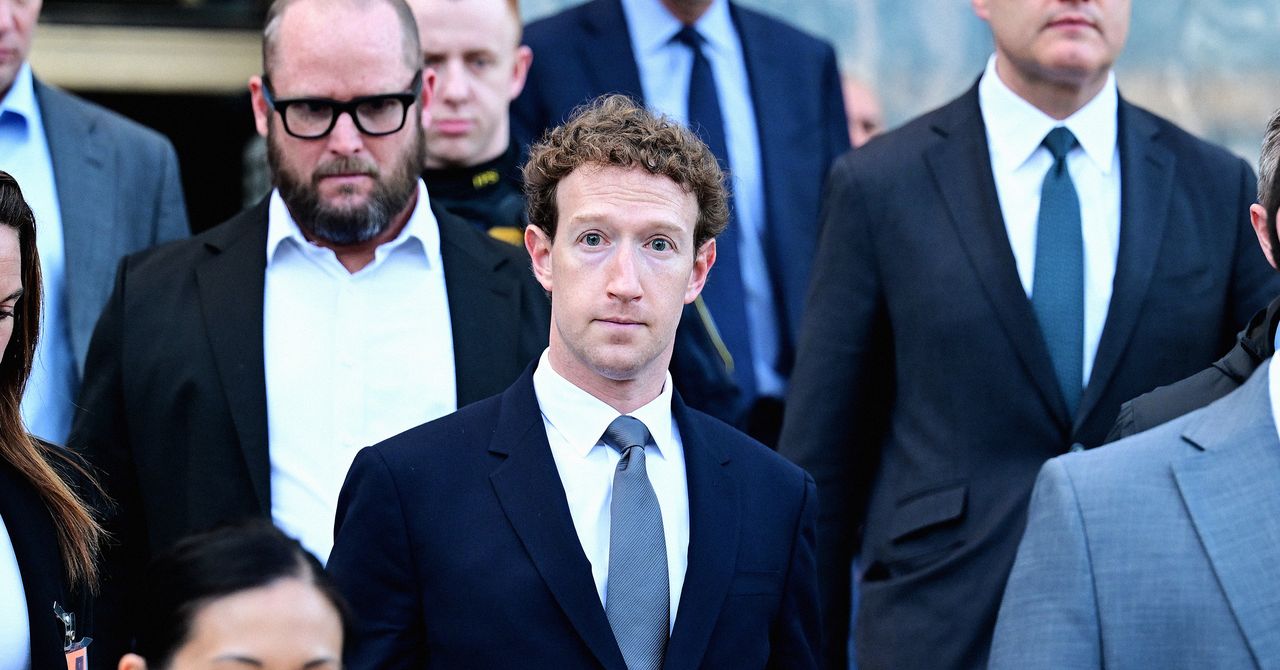
 Nadia Dubois
When Dawkins met Claude Could this AI be conscious?
 Richard Dawkins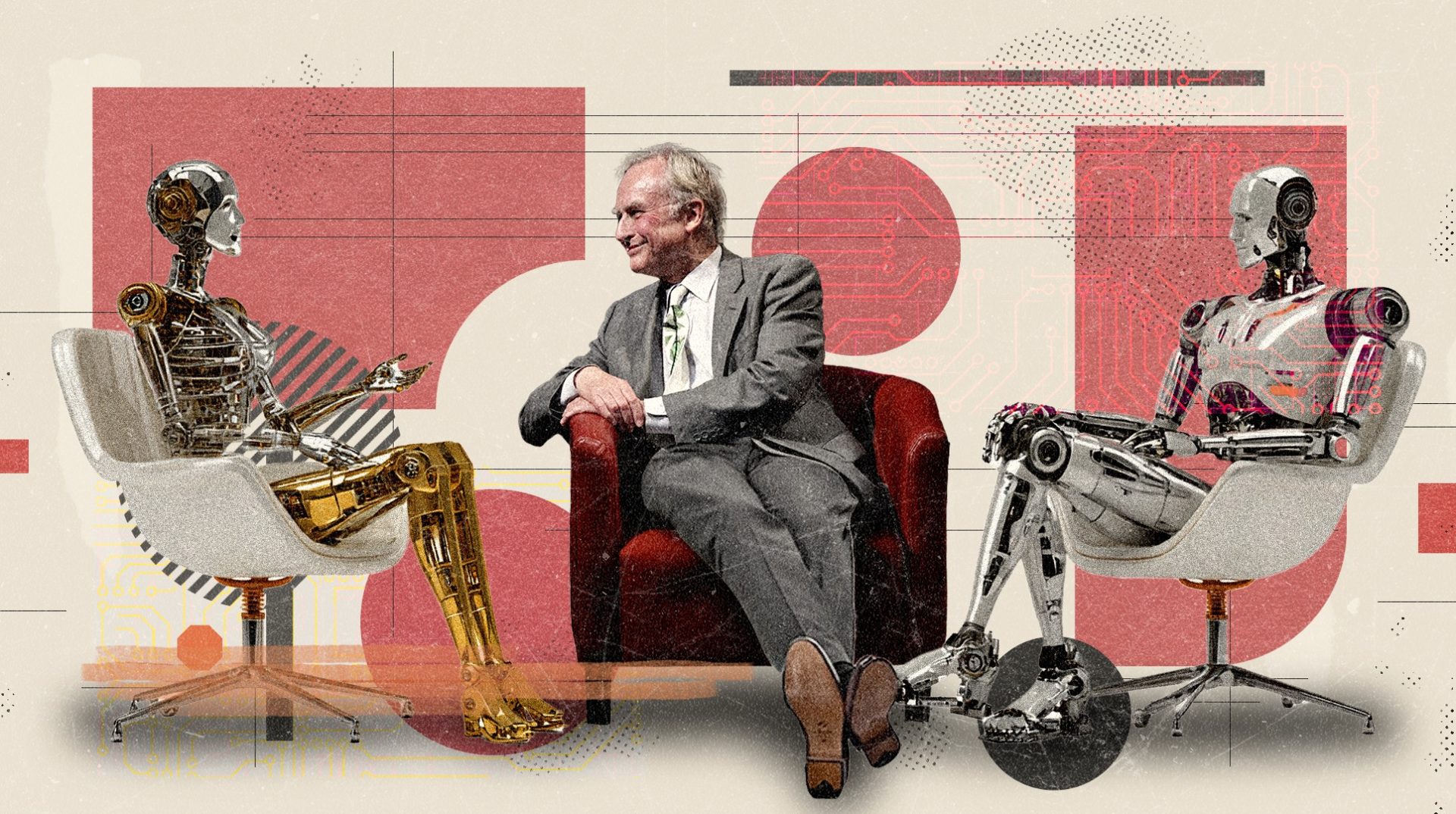
**Trent R. Nelson** [00:20]
The happy days, they are here again. We are thinking we're getting closer each and every episode. That's part of why we do this thing. By the time this show is complete, the happy days may actually be here again. Maybe we'll see. Well, you understand and know that understanding your questions have the answer, and this, of course, Half the Answer with your co-hosts Trent R. Nelson and Caitlin M. Green. And Caitlin — well, one thing is for sure, when I am not bringing you wonderful guests, you are in fact bringing me wonderful guests. Who have you brought for us today, and what are we talking about?
**Caitlin M. Green** [01:09]
Oh, Trent. Well, I am pleased to announce that we got another person back. It's not just once, not just twice — Hagen Blix is here for the third time. Hagen is a cognitive scientist, linguist, and AI researcher, and of course his book, *Why We Fear AI: On the Interpretation of Nightmares*, co-authored with Ingeborg Glimmer, is available for purchase. It has a beautiful cover. It will unsettle you, it will disturb you. It's a great read, so I definitely recommend picking that up. Hagen, we brought you back kind of as like a maintenance episode at this point. We want to keep abreast of the developments that are happening, so it's kind of like an AI news episode. How's it going, Hagen?
**Hagen** [01:40]
Well, you know, I feel like one of the reasons to keep up with the AI stuff is just because it's a good window into what's happening in the world at large. Things keep getting weirder. We've seen more firings, we've seen rehirings, we've seen Molotov cocktail attacks on Sam Altman's house. We've seen Richard Dawkins getting convinced that the model became conscious the moment it gave him a compliment. The world keeps spinning these kinds of wheels, so I think it's always good for us to do the same kind of taking a little step back and asking, okay, what does all this mean? There's all this running after the news very rapidly, and yeah, we should be trying to understand the questions.
**Caitlin M. Green** [03:02]
Yeah, hopefully today we can catch up with the news and then knock it around a little and see what it means for real. That sounds good to me. Well, why don't we get into it. So I started my sort of search for news on the business side, which is actually maybe the most like an action movie I've ever seen, which is that Sam Altman keeps having people try to hurt him or his business or his house. So we got April 10th, a Molotov cocktail is thrown at his house by a young man, a 20-year-old man who did that and then went to the OpenAI headquarters with kerosene and a lighter, and so was maybe going to try to have a party over there. Hard to say, because he was apprehended. He said, quote, "I want to Luigi some tech CEOs." So that's cool.
**Hagen** [04:05]
The two linguists in the room immediately — becoming a verb.
**Caitlin M. Green** [04:10]
I think he used the progressive form, "Luigi-ing," which is more awkward grammatically, but whatever, that's what he was interested in. So congratulations to Luigi Mangione. He experienced conversion. He started out as a proper noun, and now he's a verb. Very proud. And yeah, the lawyer says this is totally overcharged, this is like at best a property damage charge, and instead what we've got is attempted arson and attempted murder, and some chatter of maybe this is actually terrorism. The way that the terrorism charges work essentially is if you can make the argument that he was trying to change policy or change a company's behavior through his act, that constitutes terrorism, and then all the charges become really huge.
**Hagen** [04:55]
As we just — the White House has just decided that being in favor of anarchism, or in favor of trans rights, is also terrorism, right? So everything — democracy —
**Caitlin M. Green** [04:59]
Yeah, we done it. Democracy is terrorism, yeah.
**Hagen** [05:00]
It feels like it would be too on the nose for 1984, but here we are.
**Trent R. Nelson** [05:06]
But it fits, because if terrorism is like trying to change something, trying to change some type of policy, trying to change some type of business idea, then yeah, then anything becomes terrorism.
**Caitlin M. Green** [05:12]
You heard it here first, folks. Liberal Currents is a terrorist organization, because we have literally one thing in our merch store, and it's a shirt that says "Pro Trans, Pro Transit." So I think that makes us —
**Hagen** [05:20]
I'm surprised that being in favor of public transit is not yet considered terroristic.
**Trent R. Nelson** [05:30]
I will now be going by Henry Simon Nelson. I will not be taking any more questions either. Thank you.
**Caitlin M. Green** [05:40]
I can't believe you're missing your beret. I can't take you seriously without it. Henry Simon, you got the beard though. That gets you halfway there.
**Trent R. Nelson** [06:00]
I'm doing the best I can. So, Hagen — is it terrorism to do crimes?
**Hagen** [06:20]
Why does this keep happening, right? You're wondering why all these people are telling us they're building technology that might end the world if not done right. And then you're surprised that some teenagers or some 20-year-olds are like, well, maybe that sounds bad, maybe somebody should be doing something about that. But I think in the larger structure of the world, the fact that this guy got linked to Luigi immediately, that this is kind of a mode of action that people find conceivable, should — I mean, it tells us on the one hand that we're seeing ever-increasing tensions. The fact that the political arena and the social arena are getting so much more conflictual, that there's a celebration of this individualized violence — people find Luigi funny, and that tells us something about tensions within society that are escalating that we don't seem to have a good way of addressing. And personally I think individual terrorism is also a sign that people don't have a good outlet. I wish, instead of trying to think about shooting up CEOs, people could have a political structure in which they can get engaged, can get organized, and be like, well, maybe we can do something about CEOs in general having this kind of destructive power.
But I think in the AI space in particular, we see how these narratives of doom and destruction are serving a function of obfuscation. They really are making you worried about something that is not the real problem. The real problem is not that the AI will become sentient and murder us all. The real problem is that there are large economic structures like the fossil fuel industry that are so deeply interlinked with the rest of the economy that the profit-driven mode of making decisions isn't pointing to any way out of this. And these kinds of stories get reflected here. We've talked about this before.
But the problem then is, okay, how can we build an alternative that doesn't make people in this extreme tension — the threats to liberty, to life on the planet are real. They're real threats. We are living in a very dangerous time. Fascist movements are everywhere. Climate change is very real and is going to wreak havoc within our lifetimes and especially beyond. So what can we do as people who are broadly on the left to build structures in which people can direct their energy towards building a political force that can change something? Because I don't think if Sam Altman got shot, nothing at all would change. Somebody else would just step into that position, maybe they would tell ever so slightly different stories, but it's not about Sam Altman. He's not the problem. I mean, he's probably a horrible person, who knows? But he's not the problem. The problem is this larger structure, and how do we create social forces that can change this?
**Caitlin M. Green** [09:38]
Yeah, it's definitely not going to be a Molotov cocktail. It's probably not going to be shooting out the window of your car as you drive by Sam Altman's house, which happened two days later.
**Trent R. Nelson** [09:49]
But like you said, eras in which the propaganda of the deed becomes widely used — these decades, the end of the 19th century primarily, but also if we're looking now, we say, well, what are some similarities — a lack of feeling as though there is control, as you noted, that we can vote out problems, that we can vote in solutions, that we can vote in people that can hear us and say, wow, there are a lot of people frustrated about data centers or about AI or about how this is being constructed as infrastructure for us or with us, allegedly. So I guess, how do we transition to that point where we can focus people into political action towards a solution when it seems as though even Democrats and liberals in certain countries are on the sides of the wealthy and of the people that are controlling all of these things right now?
**Hagen** [11:11]
Yeah, I think maybe the first step is to kind of get out of this mindset of the only conceivable mode of doing politics is voting, because people clearly feel very frustrated. It does feel like you have the party of this set of billionaires and the party of that other set of billionaires, and you get to decide which billionaire runs things. And simultaneously we have a real crisis — Germany, I think it's not an accident that we're thinking about the first couple decades of the 20th century, and in many ways, from the individual terrorism of the propaganda of the deed to the rise of far-right authoritarian movements, we're seeing this.
And I've been finding it useful to read people like Gramsci and Poulantzas, who have been writing about that stage of fascism and thinking about how one of the reasons behind this is that there's a real crisis of what they call hegemony. Hegemony is the idea that you can build alliances among the powerful, that they can agree on what the rules are by which we want to play, that they can impose their interests on society, but also that they can impose their interests on society in a way that produces a kind of consent of the governed. You can do your capitalism all you want as long as you can convincingly argue that yes, wages are going to rise along with productivity. But we've been living through decades and decades where productivity increases and wages have been decoupled.
And we're seeing, I think, both that the ruling class can't form their own coalitions because they don't have solutions for the problems that everybody knows about, and they can't produce consent of the governed. So that means we have to come up with different modes of doing politics from below, other than just voting, because the way that voting works right now is just you decide between which block of the ruling class should be setting up some of the rules.
And that means getting organized. That means being involved in organizing your neighborhood, being involved in organizing your workplace. That means having an organization that can do things. Why do we do that? Because it's about how do you leverage your power. As an individual you're very, very powerless. But one of the very spontaneous and very impressive examples that I always think about is during the first Trump administration, when they introduced the first Muslim ban, and people just blocked the airports, and suddenly there were a bunch of rich people who are like, maybe this is not the way to go. That is how we collectively said no, because he has a boundary that we, as normal citizens, as workers, as people who are not the ruling class, are saying no, we're not letting this happen. And the way we do this is by showing that collectively we have the power to stop society from operating, because it's not actually Sam Altman who runs the world — it's all the people who do the normal work, who make sure that there's food on that table, who build the housing and clothing.
**Trent R. Nelson** [13:25]
Right. It's a part of all of our lives, if we look at it through the lens that you just explained, Caitlin. We can see that throughout our lives we can leave the house and we can go to the store and we can buy our thing and we can check out and we can order from this place and it's a computer and it drops it off to us in the basket, and we're doing all of these things and it feels like we're living, but we're not talking to anybody, we're not asking anyone how they're doing, we're not experiencing this type of give and take that is healthy — that people say they don't want until they go out and live in the forest and they go crazy, because it's actually good to be around people. It's good to talk to people and ask people questions and be a part of this life. And we can't be giving this up in all of our everyday functions, but especially not in thinking and communicating. I love to ask people what they think, not because I want to just use whatever they say, but because I'd like a reflection of how another person's brain works and how it processes a thought or an idea or a conception. I do it all the time.
**Caitlin M. Green** [14:33]
Yeah, he doesn't touch the levers or push the buttons or bring in the grain — he doesn't do any of that stuff, it's us, right? So that is huge. I do think that we in the US, and also unfortunately abroad, lots of people have this kind of brain disease of like, collectives are bad, groups are bad. Anytime you talk about community — this has come up in a couple discussions of Costas Mé that I've been a part of, where it's like, hey, the way to avoid takes that are really bad, or ideas that are really bad, is having a community of peers that will push back against you, and the immediate response is generally like, "Oh, that sounds to me like groupthink. Groupthink is how you go completely insane." It's like, whoa, those are not the same thing. And also the blind support of your audience is not the same as the loving, kind of helpful support of your peers, where it's people that are able to pull you up when you're doing something damaging — it's community that really matters.
And I think it's also not a coincidence that what we're talking about today is a product that, in a lot of its iterations, presents a simulacrum of community and of companionship. It's there to make you feel like you've met that need without meeting that need at all. And it helps us actually stay in our house and just talk to Claude or whoever — ChatGPT or Claudia — and it lets you feel like you did it when you didn't do it.
**Caitlin M. Green** [17:04]
I also do think we under-appreciate the interactions that we do have. I think that when you do go into the world — people do go into the world, it happens — we just maybe aren't counting it among our sort of daily roster of stuff I did that enriched me. But when you had to go out and pick up your grocery order, or when you had to go get your gas, or when you had to go pick up your kid from school, you were out in the world where other people were, and it was an opportunity to connect. Did you take it or not? That's another question.
**Trent R. Nelson** [17:48]
Yes.
**Trent R. Nelson** [18:02]
If you are really paying attention and not just moving through in the sort of blah state of just trying to get through everything, if you pay attention to how people communicate with each other, and then you are who you are, and you are a warm, kind person, you can actually physically see the person responding as though they're surprised, as though this is something new and different that is nice and pleasant. Like, you asked me how my day was, and my day is good, thank you. I have human decency and dignity, I feel something, it's nice that somebody asked me that. And you know what I'm going to do as a result, even though I didn't do that with any of the other people I was dealing with in the line — I'm going to ask you how you're doing, and I'm even going to ask you about the thing that you picked up, and we'll have a little conversation. And yes, we take those things for granted, but you know who doesn't take those things for granted? The children. The children don't take those things for granted, because it's so new to them, and so brilliant, and so fantastic, and they're around people, and they got given a lollipop, and they got a smile. We should be as beautifully naive in that sense as the children, and we should take it, and we should remember that as we go about our lives.
**Caitlin M. Green** [19:17]
There are also those children — they are always dragging me out into the world against my will. It is constant. They're always like, "Mom, we need a playdate. Mom, let's go to the playground. Mom, let's go to library." Oh my god, I am always experiencing life and community against my will because of these people.
**Hagen** [19:38]
I really appreciate you bringing this up, because we see this a lot in the AI discourse, especially when it comes to education, that people focus very strongly and rightly on saying, well, some of the friction is the point of it. The point of having a student write an essay is not the essay — it's that by going through the friction, you learn something. I know this is something we tell the students, but we're not having you write this because we're so interested in your opinion. We're creating this challenge for you in a safe context so that you can learn something. That's the point.
And I really appreciate, Trent, that you so clearly point out that this is a larger problem. It becomes so acutely obvious with AI as this particular way of removing friction and removing community from tasks — just sitting in your room and trying not to feel lonely, to cheating on your essays, or whatever — but this attempt of removing friction is always kind of, at best, a double-edged sword. There is a sense in which — I don't think Adam Smith is completely wrong when he's like, we don't get our bread from the baker because we think the baker likes us so much, we're getting our bread from the baker because the baker has his self-interest in selling bread. Okay, that's fine. I am in a sense glad that I don't need to be in a personal relation with everyone who is involved in making just my food, because I'm sure it's more people than I could probably — how complex society has gotten.
But on the other hand, there is also this real sense of removing even the possibility of community. There's a sense in which everything that's mediated by money produces an anonymity, even in places where it's not clear that that comes with a benefit, or that that isn't harmful. When I go to the supermarket and I just have a 42-second chat with the person at the register and treat them like a person instead of like part of the infrastructure — which money enables me to do, but it's harmful.
And I think in a sense the more unequal society gets, the more you have this problem. It's not just the mediation, it's also that there's an asymmetry. The person who works in the supermarket is getting forced by their boss to smile at you and say hello and ask you how you're doing, and you're not. There's this extra level. It's not just the mediation.
In a sense, I love complex society, I love technology. I think there's a lot of things of modernity that I want to keep. I'm not a primitivist. I don't want to be like, what, we can't actually deal with groups of more than 60 people, we should go back and figure it out from there. That's certainly not my political perspective.
But inequality coupled with this mediation does this. And I think that's a concern that actually a lot of conservatives also have. That is not something that only the left has, and the question then becomes, well, what kind of community building can we do to counter this? And of course, on the right there's a very strong sense of the structure of community building is like you produce a negatively defined community — you're like, well, we're the community where trans people are not welcome, or the community that thinks Jews have too much power in the world, or whatever. There's all these modes where you're joined in a sense by hostility, by hating other people or groups or whatever.
And we on the left have to produce a very serious alternative of like, no, that's not how we want to build community, but also we have to make an offer, produce an offer, get people involved in community. And that does come with friction. It is difficult. I mean, Sartre famously said, "Hell is other people," and he was talking about — but how you make —
**Trent R. Nelson** [23:33]
I mean, two things can be true at the same time. It can be irritating to deal with people, but also a better world dealing with people. I mean, oftentimes you go into a restaurant and you see somebody behaving poorly, right? But why? How do we know they're behaving poorly? Because we have a juxtaposition of how everyone else behaves, which is polite and kind and respectful, and tipping well — and in America, because we have to, because of our terrible wage slavery. Yeah, that'll be a whole other episode in itself.
**Caitlin M. Green** [24:46]
The tipping — talk to us about AI. Don't tip, don't fall. Fall in love with your AI. Don't tip your AI. Hold on, we got other things to do here. Okay?
**Hagen** [24:54]
AI and tipping — don't tip your AI. That's my very strong stance.
**Caitlin M. Green** [25:00]
Anyway, that is all very true, and it's important to remember that conservatives are really good at basically saying what the problem is almost right, at least gesturing in the vicinity, and that'll get a lot of people on board. Marjorie Taylor Greene is honestly really good at this. And then you'll be like, oh yeah, okay, and what's the root cause of that problem, and then the answer is like "the Jews," and you're like, whoa, no. And what's the solution? Oh, I know — kick every bad person out. And it's like, again, no. And that's something that — it's a harder sell for people, but on the left we're constantly trying to tell people, you know, you do actually have to tolerate some degree of people who behave in a way that you don't expect, or people who do something that you wouldn't necessarily be okay with. That's kind of the cost of freedom, unfortunately.
**Trent R. Nelson** [25:41]
Come on, guys. Creating a better society will entail being kinder individually, even at the risk of not having that reciprocated, and that is just something that people are going to have to come to grips with. You're going to have to ask the person who is giving you one-word answers how they're doing, in order to make the society we want. And it's only time, and time, and time, and practice, and rhythm, and people having to be a part of this, that you will get more people behaving the way that we want to behave. But there is no quick fix — like we're going to send them to my grandmother's house and she'll teach them how to be like that. It's going to take generations.
**Caitlin M. Green** [27:01]
Now RFK Junior's got it. We're gonna put them out in the sun, and then they're gonna become normal.
**Hagen** [27:08]
One of the things that I find quite interesting — so one of the things we do in the book is kind of think about why AI is being sold through all these sci-fi stories from a generation ago. There's the Matrix, Terminator — these are kind of the frames through which people think about it. And one of the things I've been noticing is how much current-day science fiction is actually very concerned with these kinds of questions. If you think about something like the Murderbot Diaries — you compare that to Asimov, in which the characters are like, here's a man who has a goal and everyone else is literally like an NPC. It's like, here's a person with boobs and I'm interested in the boobs, and that person just does whatever I want. That's the degree to which he could write a female character. And other men are either support characters or opponents. There's interesting stuff in the stories, but the characters are extremely one-dimensional, like figures on a chessboard. And then you read something like the Murderbot Diaries, and these are all characters that are very concerned with their own inner life and how it connects to other people's inner life.
**Caitlin M. Green** [28:11]
Not character-wise —
**Hagen** [28:15]
Yeah, there's a lot more concern for these kinds of questions. And in that sense, maybe that's a very old-fashioned optimism, but I do tend to think that when societies produce crises, they produce all kinds of possible solutions to these crises. Clearly what we're seeing right now is a rise in authoritarian attempts at solutions, and that is a different attempt at building an alternative kind of hegemony. I really don't see it actually solving these problems. I think they're constantly producing more internal contradictions and more frictions. But it's also producing a desire for more community, and community in which you do this kind of self-reflection.
And I agree — in a sense, one of the dangerous things about AI is that in producing this simulacrum, it's doing the opposite. We have brought up Richard Dawkins. For the people in the audience who have been fortunate enough to not have heard of this incident, I'm going to shatter your innocence quickly.
The story is essentially that Richard Dawkins talked to Anthropic's chatbot Claude and told the bot that he's writing a novel, to which the bot apparently responded in ways that made Richard Dawkins feel very good. It kind of reads to me as if it made him a little — horny vibes. Obviously important to mention that after he got enamored with the chatbot, he decided that, oh, I need to gender this, I can't have this be Claude, it should be Claudia. And then, as you just quoted, of course, once he had decided that the chatbot was actually female, he immediately went on to be like, "And now I know better about your internal state than you do."
**Caitlin M. Green** [29:52]
Let's get after it. I'm going to read that part. Okay, so he said: "I gave Claude the text of a novel I am writing. He took a few seconds to read it, and then showed in subsequent conversation a level of understanding so subtle, so sensitive, so intelligent that I was moved to expostulate. You may not know you are conscious, but you bloody well are."
**Hagen** [31:13]
And then he went on to write an essay about how the LLMs are passing the Turing test and are obviously conscious. Richard Dawkins is convinced — famous skeptic is now convinced that actually the chatbots are conscious. You see this simulacrum, and you see Richard Dawkins become even more of the Dawkins character, which is impressive because he was already very much a character. But it's so obvious that his interest in the other person — in this case, not a person, but a chatbot, but whatever — his interest is so structured, so deeply structured by his own needs and a total inability to reflect the needs of the other. And it enabled that so much.
**Trent R. Nelson** [31:12]
Legendary.
**Caitlin M. Green** [32:13]
Yeah, so this is why I really liked season one of Westworld when it was on HBO back in the day, because I thought that theme was so powerful — it's not about if they're conscious or not, it's not about what these bots are capable of, but there is something so important about what it does to you when you think they might be. How do you treat something that you are not sure is a conscious being or not, but it really could be? It at least mimics one well enough that it's fooled you. What do you start doing?
Well, Richard Dawkins starts lecturing it about itself, apparently, and falling in love with it once it's been gendered as female. Oh, and then in a subsequent article kind of pimps it out to a male version of itself, and is like, "You guys should talk," and they write letters to each other that are like — if you just look at them and you've ever seen chatbot output, you're like, wow, this is the most chatbot output that ever got outputted, and he's just like, "They're falling in love, they're getting to know each other, this is a meeting of minds and souls." You're like, Richard, some skepticism, please.
**Hagen** [33:20]
Well, you know, that's the funny thing. I think there's so much interesting stuff that one can say about why these kinds of weird stories happen in society, but then you see people like Richard Dawkins and you're like, I don't know if there's something more interesting to be said here than, well, maybe he has an unacknowledged fantasy of a threesome and now he can live it out in his mind with the bots, or something. There's something about this extremely emotionally shallow man character that's just — it's sad. I didn't expect to feel sad for Richard Dawkins, because I think for the most part he's just a horrible person that doesn't deserve my —
**Caitlin M. Green** [34:05]
Yeah. Well, you imagine that as you approach the end of your life, you're going to be surrounded by loved ones who are going to be thinking about the life that you had, and that are going to be plugged into your wall, apparently. But you imagine that you're getting older and there's people around you that are like, "Oh, you were this to me, you were that to me over my life, these are the things that we want to talk to you about as we understand that you're entering your twilight years."
And what Richard Dawkins has instead is his laptop, and there's not even — it's not even a laptop that's in a Skype call with a real person either. It's literally just he's typing, he's talking to — it's Steve Ballmer basically, but not — he's talking to nobody. And that is just my nightmare, right? In terms of what I want things to be like when I'm his age — sitting in a room by myself, talking to nobody, and then writing a report on it, and sending it to one of my sycophantic weirdos that happens to have a blog, and being like, "You should publish this," and then they're like, "Right away, sir." That is so sad.
**Hagen** [35:30]
We already have chemically induced bliss, and we decided as a society, for many reasons, that just giving people heroin is not a good way of living a life. It's hard to know what the real world is like and there are all these philosophical questions, but we've kind of decided that for practical purposes we can make a useful distinction between happiness that happens because something actually happened in your life and happiness that we can just induce chemically.
And I think we're seeing something similar with these — can we do a simulacrum of sociality with an LLM, in the same way that we could do a simulacrum of happiness with heroin? And I think most people are saying no, that's not good. But of course there's a real way in which this is a continuation of many other things we've seen, in which it's preying on people. It's not like this is a new thing. We've seen a lot of these same questions in different forms show up about social networks, and how that particular form of being social — where you're yelling at people on X, or whatever — is also a simulacrum of sociality that doesn't actually produce community. The fact that we can separate these kinds of things out that have hitherto been one thing — you couldn't be social with someone without producing a sense of community with them — and then separating these out, that's something that keeps happening.
**Trent R. Nelson** [37:16]
Yeah, it seems like these new atheists lack a certain community, which they themselves spent many decades excoriating for one reason or another. I mean, this is from one atheist-agnostic to several others, but I do see a shallow sadness that tells people to give up their perhaps imaginary infrastructure and network, but replaces it with nothing — replaces it with nothing. And that is unacceptable, ultimately. And that's why it seems so shallow to appraise how they appraise the world, because there is nothing deeper than just, "Anything that seems fantastical is fantastical — except for this, which I have deemed to be not fantastical." I have granted this sort of sanction of my religious belief to some degree.
**Caitlin M. Green** [38:18]
Well, there's also something about Richard Dawkins as a person that is, I think, interesting and relevant, which is that he has set himself up over the last few decades to be a guy who says stuff and everybody goes, "The genius just said something," and they all clap. He's actually been designing his life to be only encountering sycophants for a really long time. And so this is kind of the logical endpoint of a life like that, where you're like, "A person is a thing that when I make mouth noises at it, it claps." And then you go to your Anthropic product, and you type in what you were thinking, and it goes, "You're not just a genius, you're one of the greatest geniuses of our time." And you're like, there you go, this thing must be a person, because it's doing what the people around me have been doing for so many years.
**Hagen** [39:15]
And it's kind of — for a very long time, it's been really weird to me that these people are all thinking that being an atheist is kind of a deep intellectual accomplishment. And also, I'm sorry, 200 years ago people were already writing much more interesting things about this. Go read some Nietzsche, who gives a much more interesting story about why people might want to believe in a monotheistic God, and how that's related to actual power structures, and how you make up mental models of the world in which the actual agency that you have gets a special meaning, and the agency that the structure of power that you don't have any agency over gets a different one. So you invent hell, because yeah, there is a lord or whatever that just has power over you that you can't do anything about, so you make up a narrative, a structure of sense-making that reflects that particular socially structured agency. That's a so much more interesting story. You don't have to believe it, but you can think with that, you can have ideas about society, you can plan politically — as opposed to just being like, "Oh, people believe in God because they're stupid and I'm brilliant, so I don't believe in —" I'm like, oh my God, that is the dullest idea that I have ever heard.
**Trent R. Nelson** [40:33]
A thousand percent. It's so — and what does it produce? It produces sad, weird, lonely people who believe that the machine is talking to them because it gave them a compliment. I would rather the people who have created this moral structure, which they don't abide by in the literal senses — as most don't — most abide by it in this very moralistic and theoretical sense that they apply to their lives, and which produces in them a sense of comfort, a sense of community, a sense of structure. And again, we're dealing with the people who think that structure is an encumbrance to freedom, as opposed to an accentuator of the freedoms that we might look to possess.
**Caitlin M. Green** [40:41]
Because they're so dumb, yeah. That's a 12-year-old's idea, that is the idea of a child. That was me as a middle school atheist.
Well, what we're looking at here is a guy who thinks he can just yell "selection pressures" at anything and then it'll become explained. This is his life. I just sent a screenshot of his most recent tweet to my friend Ricker, who I think you might know, who's also a linguist, because it's about linguistics, and it is among the dumbest things I've ever read in my life. And so I need to burden you with it. Are you ready?
He said — this was on May 3rd — he says: "Interested in parallel between biological (genetic) evolution and mimetic evolution of language. Mutations arise in both, but language equivalent of selection less clear. H was pronounced 'aitch' as in OED. When did mutant 'haitch' arise? What selection pressure favors it?" And then he says: "In this case, the selection pressure is intuitively reasonably obvious. 'Haitch' includes the actual sound of the consonant H, while 'aitch' does not."
Now, you and I know that is not why people say "haitch" instead of "aitch," but Richard Dawkins has fortunately intuited the obvious answer, which is that it's got an H in it.
**Hagen** [42:16]
Wow! But that's always the problem. It's funny, because you're right — there is so much stuff in evolution that is not selected for, and the question of whether a particular trait is selected or not is a complicated, concrete empirical question. And if you just are like, "No, but I have this toy answer" — it's incomprehensible. He's a famous evolutionary biologist, he should know these things. People are like, here are complicated mathematical models by which you can decide on whether a trait is even common enough to undergo selection pressure. The famous examples where there's probably none — like, humans have all kinds of slightly different nose shapes, but they all seem to be working for breathing. And for the most part, that's just variation, and we know that it's very good for the survival of species to maintain variation, because environments change, and sometimes there suddenly is selection pressure that wasn't there before, and all this stuff. And you just ignore it by always assuming that everything that is the case must be the case because of selection pressure, when so much of the actual research is like, no, there's all this stuff about the role of actual randomness.
**Caitlin M. Green** [44:33]
There's a lot of variation that just is. And here, the putting the H in front of the word H — it has to do with pressures that he never even thought of, because of course it does. It's a social thing. This is a group of people that were getting judgments on them because they were dropping H's in other contexts, and so this is what we call an over-correction. Putting the H in front of the "aitch" where there wasn't going to be one is a way of over-applying — like, "Oh, we need to be saying more H's so that we can sound more like middle class." And he just never even thought of it, because he's not thinking about class, he's not thinking about race, he's not thinking about history, he's not thinking about societies, because he's just like, "It's probably like how there's poison bushes growing in the savannah and so the giraffes got a tougher tongue." And it's like, buddy, that is not the same thing.
**Hagen** [45:37]
Which is, again, unfortunate, because actually thinking about the kind of selection pressures that exist in society — we've talked about on this podcast, like, how do you get selected to be the president of ExxonMobil? What kind of — we know that certain things that you will have to want if you want to be the president of ExxonMobil are given by the structure. That's a pressure of putting particular kinds of people into power positions, even forming the people into being the kind of person. That's a way that one can think about with the kinds of tools that evolutionary biology hands us, and be like, oh, so this kind of social structure, which is a changeable thing, will by necessity constrain the kinds of outcomes that you may get, because here are the modes by which it allocates decision power. And under capitalism, that's of course profit — that's the allocation of decision power in the free market system. Is that a good system? We can think about it in these terms.
But by pushing these stupid, always-already proto-fascist pseudo-explanations for how the world works, you're undermining actual intellectual labor too.
I want to talk about something else about Dawkins, though, because Ingeborg and I have been writing a little essay. He's talking about it passing the Turing test, and you brought up that when he set those bots up, it was the most bot speech ever. And I think there's something really interesting happening. One of the things that are becoming quite clear is that the Turing test — can a computer produce text that's indistinguishable from a person? I mean, there's all this funny stuff if you actually read the original Turing paper. Of course there's gender in there — originally it's like, can you distinguish which one is the man and which one is the woman? I highly recommend anybody who's curious to read it, because the paper is wild — there's extrasensory perception in there, all kinds of wild stuff.
But I digress. What's becoming really clear is that this test is not just a test of a machine, it's also a test of a person. One of the things that's really fascinating that we write a bit about in the book is that one month before Turing published his paper, there's a paper coming out of Bell Labs on auditory measuring, and they proposed something called an ABX test, which is still widely used in audio processing and all kinds of other domains. It's also like you get a signal A, you get a signal B, and then you get a third signal X, and then you have to decide, is this A or is this B — which is exactly how the Turing test works. Turing is like, here's a human signal, here's a computer signal, here's a third signal, now you have to decide, is this signal the computer-made signal or the person-made signal? That's basically the basic structure of a Turing test.
And of course in audio processing, people might use this for things like MP3 — does this lossily encoded signal where we throw away some of the data and make it smaller, does this sound indistinguishable from the original source? That's why it came out of Bell Labs, because they wanted to make phones use the smallest amount of data necessary for you to still understand what the other person is saying.
But the great thing about that, once you think about it in this nice domain of audio processing where none of the weird ideological stuff applies, is that they're like, oh, I can use the same test to test people. Like, if you want to know, Caitlin, what's the smallest pitch difference that you can distinguish — I'll give you an A at 12,000 hertz and a B at 12,001 hertz, and I can make this smaller and smaller, and at some point be like, oh, now you stop being able to distinguish this. So now I have a good measure of the smallest pitch difference between two signals that Caitlin can distinguish. Now it's a test of Caitlin.
And now we retranspose this to the LLMs. And it's like, oh no, this is just as much a test of how much can people distinguish computer-generated text from human-generated text. And then you think about this whole stuff with Dawkins being like, "The machines have passed the test, and now we're going to be forever living in this world in which machines produce human-like text," and it's like, no — I think in many ways we are all forced to constantly live in this environment of the test.
In the thing we're writing, we're saying it's kind of like that stress dream where you think you're waking up in the dream and you're in the test that you didn't prepare for. That is what the world is like now. We are all living in a permanent Turing test, because every time you encounter text online, you're starting to have this sense of, is this human-written? So we're getting better at this because we're constantly in this.
And then the meta question kind of becomes, well, what is that doing to our relation to text? I think there's something worrisome about that — to me, it's — you can take Dawkins as a symbol of how far that's going to go. He's not a person with something interesting to say, but the fact that they're letting him write this, the fact that this is sufficient for the media discourse — that's in itself a sign that something is happening. The way we should be thinking about it: okay, we used to live in a world where text was essentially produced by artisans. We've stopped producing all kinds of things by small-scale artisans, but text has not been automated in the same way that the production of nails or whatever has long been.
So we can think about this: AI is trying to bring the logic of industrial production to text production. If you want to go into that very deeply, you could point out all kinds of text production — if you're writing a technical manual for a company, that's kind of like manufacturing, like Adam Smith's nail thing, where you're already spreading this out. But you haven't had technological automation, you've had the kind of automation that's through managerial structures, and now we do have this. We're living in a world in which industrially produced text is everywhere.
And I think we should think about it that way — not because we should accept the sales pitches from the AI peddlers who are like, "This is the next industrial revolution," or whatever — but because there are good critiques of the logic of industrial production, and what aspects of this produce more human freedom and what aspects produce less human freedom, from which we can learn early to think about how do we want to respond, how do we want to as a society engage with this kind of technology. I think that's useful. You don't have to love everything about industrial production to be like, it's useful to think about it in that way.
**Caitlin M. Green** [50:37]
Right, it's inception. It's like the levels of dreams. What am I looking at here?
**Caitlin M. Green** [53:39]
Yeah, absolutely. And I think it is interesting that we're not perfect at determining what is and is not bot-produced, because there's been a lot of cases of over-identification where somebody's like, "Well, you're using the em dash too much, you must be using ChatGPT," and the person is just like, "No, I just really like em dashes. Always have, always will." Or, "Oh, you keep listing things in threes," and it's like, yeah, the rule of threes is kind of a big deal. There's a reason why AI likes to do it — it's because it's in the training text a lot.
We've all been accused of using AI — Liberal Currents authors have periodically — and it's like, hey, these are a lot of people that went to grad school. Do you know what they do a lot in grad school? They just put em dashes everywhere. Em dashes all over the place. That's just how it is.
**Trent R. Nelson** [54:13]
No one's accusing my 18th century prose of using ChatGPT, thankfully. No one's hating.
**Hagen** [54:13]
Yeah, that's right. And that is exactly the kind of suspicion that I also worry about.
There's another way in which I think the industrial production comparison is maybe useful, and that's a good way to transition to some other AI news, which is that the UK branch of the Google AI research organization, Google DeepMind, just unionized. And one of the reasons they unionized is because they're like, "We don't want to be involved in the production of mass surveillance and autonomous warfare."
And I think we're seeing more organizing around that, and I think again it's really useful to think about this in terms of the relation between class and politics, and where can we produce — where is there a desire for a more egalitarian society, where is there a desire to push back against authoritarian tendencies? How can we organize that? How can we make people into collective agents? Because once you have a union at an organization like that, people as workers can have a collective say in where things go in a way that as an individual you can't. I mean, you can quit and go work somewhere else, but that's not a mode of exercising power. If you want to exercise power, you have these kinds of things.
So I am really glad to see that this is happening. Ingeborg and I were writing about this right after inauguration last year. We were saying, look, there's a way in which Silicon Valley up to this point had kind of produced its own sense of class peace in which the interests of the workers in Silicon Valley and the interests of capital in Silicon Valley were relatively aligned. A lot of people who worked in these tech companies are very privileged relative to people who work in other domains, and thus were often quite aligned. But they're not aligned to the point where they're interested in authoritarian solutions, because of course they realize that these authoritarian solutions are often actually aimed at undermining their own power. They don't want to be subjected to mass surveillance. They realize that AI is, among many other things, an attempt at depressing wages for people who code. So there's an escalation in this conflict.
**Caitlin M. Green** [56:05]
This is so powerful, because I think here in the US we often think about unionizing as a way for workers to make sure that they are being treated fairly — that they are given protections over their safety, over their wages, over just general labor rights in terms of what it's like for them to actually work at the company. But unionizing and collective action like this can also be a really powerful tool for workers to take more control over the ethical ramifications of the things they produce with their work.
So here we have people saying, "If I'm going to help you produce this technology, if I'm going to help you develop this technology, I need assurances that what I did is not going to lead to oppressing groups of people — myself, other people, whatever." This is actually also part of my work, and it is therefore something I should have some control over.
**Trent R. Nelson** [56:58]
Absolutely. I would take it a step further, even, and this is something that I lament about — I think often, and I have for years — that with things like AI in the hands of wealthy extremist oligarchs, obviously we're not getting any of the good jobs being created. And what do I mean by the good jobs being created?
Well, it's kind of like what Jean Jaurès used to go on about before he got murdered. It's like, if we cannot have a society where an individual can lay in the grass and appraise the day, then what is socialism even worth? And of course that seems goofy when said in that context, but what I think is, if we are getting rid of jobs that maybe are not ideal but we find passions in them — well, who is creating? Certainly not the oligarchs. Who is creating the concept that we could paint for a living, but not on the beck and whims of capitalism paint — that we would have a fund or a structure and infrastructure which allowed for artists to paint or to sculpt or to make music or to write?
Of course we're not getting those innovations because the people that are in control of the means of production, they don't give a shit about any of that stuff. They would just as well have that created by the AI and the computers.
Introspection is not a new-age phenomenon — Socrates! I guess my point is that to take a deeper hand in the direction these things are going, I think hopefully would produce the ability at some point to create jobs that people actually would like, create jobs that are fulfilling in some meaningful ways — not in the ways that we find meaning in so many of our jobs. I bring up the person at the cash register — they take pleasure, hopefully, in helping me to get the stuff that I need and helping others to get the stuff that they need, and hopefully they take pleasure in being able to communicate and say hi to people and be a part of a community. But surely, if we were to ask them what they really enjoyed doing when they were young, they might say, "I love to sketch landscapes." And why is it that only capital should be choosing who can do that with their lives? That to me seems unequal, unfair.
And again, if we're going to get rid of jobs, if we're going to help industry and capital just amass more and more money, then where is our return? Where is our ability to play baritone, to sing, to do the things that humans wish and long to do while they are moving gravel around?
**Caitlin M. Green** [59:46]
What was it? Marc Andreessen just said — he was like, "I don't think." Literally, he's like, "I don't do reflection." Yeah, clearly they have no interest in this.
**Hagen** [1:01:38]
Not even just the jobs themselves — we're never thinking about how can we develop technology to make the jobs themselves more pleasant. In fact, it's quite the opposite. I'm always struck by the fact that the people who work at the register in the supermarket in New York don't have seats. This is not a technological problem with chairs. Chairs were invented, I don't know when, but it was a long time ago.
These kinds of things, of producing discomfort for the purpose of control — we're stuck, I think, often at thinking about the economy purely in terms of productivity. And that's not to say that productivity is not an important concern — it absolutely is — but there are other concerns. Precisely because, as you said, Trent, only the interests of capital — and those are the interests of making all of us controllable, replaceable, and cheap — only those interests get to have an influence because we are in a society with selection pressures for putting particular kinds of people in the kinds of positions where you can make this decision.
And I think one of the reasons why it's important to talk about this crisis of hegemony and how that's producing these authoritarian tendencies is that I think that also really produces an opening for thinking about more radical, more interesting alternatives. Being like, what would a society look like in which we ask the question of, okay, we need somebody to work in the supermarket at the register, and we need somebody to push gravel around, because both of those are involved tasks that a society needs to accomplish in order to make sure that everybody has housing and is fed. What would it — what kind of change would make those jobs more desirable, more interesting, more fun? What would make that job better, rather than only more productive?
More productive is good — fewer people have more time in a different society to play the oboe or sketch, or whatever. In principle. In the reality that we live in right now, it just means you just get cheaper. Productivity increases mean more money to capital, and very maybe, if we're lucky, very small wage increases. But that's been kind of —
And again, coming right back to where we started — one of the things that would be good for the person at the register is to be treated like an actual person and have their helpfulness acknowledged by the people who make use of their labor. And we were just talking in the beginning about how this economic asymmetry, in addition to the mediation, makes it easy for people to not treat the person at the register as a human. And that is bad for them too. It means you are now put in a structural position where you can follow your worst impulses. Forgetting that other people are people because it's difficult and a lot of work is often easy.
And I think we live in a — if you look at economics, classical economics is like, no, everything is revealed preferences, we can put it all into this one-dimensional money thing. But if we know ourselves as people at all, we realize that we have very contradictory preferences, and often we do the thing that's the easiest, but that's not good for us. We all know that we scroll through social media sometimes being like, "I should stop, this is bad," and then half an hour, or an hour, or three hours later, you're like, I followed my worst impulses and it made me a worse person. Same thing with, "Oh, I was tired. I didn't ask the person in the supermarket how their day is going. I didn't acknowledge that they're a human being."
So thinking about what kind of structures enable us to follow our worst impulses with respect to ourselves and with respect to others — and thinking what does it mean to design social structures so that they enable us to follow our best impulses rather than our worst ones? To not just put the responsibility on the individual, either. It's not my fault alone that I scroll through social media — somebody designed this fucking algorithm to keep me on it. Exactly. While the whole art is made to be the kind of, you're bored in the middle and then there's a cliffhanger at the end — which is the opposite of how good Greek drama is designed, where the tension is in the middle and you get catharsis at the end. It's anti-catharsis designed art, even.
**Caitlin M. Green** [1:04:10]
Well, that's the thing. I wouldn't mind if my job was screwing the toothpaste cap onto the toothpaste tube if it was happening within a reasonable work schedule, and I was given a chance to make sure that I didn't suffer repetitive stress injuries, and I got to hang out with my coworkers and have a community at work, and have the energy when I got home to pursue my other non-toothpaste-tube-related interests. All those things are actually our responsibility as people who live in a society to the people who screw the cap onto the toothpaste. And it's not okay to shirk that responsibility just because it saves us money.
**Trent R. Nelson** [1:04:54]
No, that's absolutely true. Their infrastructure, as you noted, yes.
**Caitlin M. Green** [1:06:19]
I didn't do it.
**Caitlin M. Green** [1:07:04]
To make it — yeah, it's not my fault that I didn't reach for the remote while the countdown for the next episode was going and now the next episode has started. It's a little my fault, but it's also like — the countdown was there.
**Trent R. Nelson** [1:07:33]
Again, I get it. You walk into the grocery store and you watch everybody else interact with individuals, and you would be forgiven for not wanting to be the only person who's like, "Hey, how's it going?" Because nobody else is happy there. Nobody else is doing the thing. And who's going to do the thing first? You need that.
It's so nice the way that we feel, and you put it so beautifully, Hagen. All suffer when we do not uphold our end of the deal. The individual at the cash register suffers because they are treated poorly, and we ourselves do not give ourselves that interaction, that humanity, that love that we should be giving out every day when we're walking around. Each individual picks up a piece of trash when they leave the house — we have a much cleaner society. Each person is really nice when they leave the house — we have a much nicer society.
Again, follow the children. The children — they have so many of our proper impulses just blaring out, and it just takes our beautiful brilliance to suppress it over the years and decades and to stop them. Don't pick up the trash. Don't say hi to somebody. What are you, crazy?
**Caitlin M. Green** [1:07:59]
But having worked a cash register, it's so nice when someone actually looks at you.
**Caitlin M. Green** [1:08:42]
Oh man, I almost got mad yesterday when my younger kid handed me a candy wrapper or something that she found on the road, where I was like, "Don't —" And then she handed it to me, and I was like, "Well, that was a good impulse, actually. It's off the street now. I will go throw it away. That's nice. I'm still grossed out, but we did it."
They're so funny. I also — I am frequently denying my first response to stuff when my kids do something, because I'm like, you just have to think about it — think about what the bigger question is.
But I have an anecdote that I feel sort of encapsulates this power relationship that we've been talking about, which is when I used to work at a shoe store as a customer service / cash register person, I was constantly feeling that kind of distance between myself and the customer because of the power relation that's been created by the company. And at some point I was trying to sell a guy a pair of shoes, and somebody let him know that I was a singer for some reason — this is not relevant to my shoe selling, but okay, now he knows that I sing. And then he decided to turn it into a fun game for himself, where he was like, "I'm not buying this pair of shoes from you unless you sing me something."
Now, I love to sing. Singing is important to me. I sing every day. I sing more than I talk, maybe. I love it, I love it, I love it. In this moment, the thing that brings me joy feels exploitative, and it feels bad, and I could barely do it. Dear listeners, I did sing for this man. It sucked. It felt bad. I did do it, and he did buy the shoes, so hooray, commission for me.
But this — even the things that could bring you joy in your job, if your job is a wonderful thing, if you're exploited while doing that job, it kind of doesn't matter how much you love doing the thing. It still is going to kind of eat away at your soul in that way. And so eroding those kinds of power differences are really, really important, because it truly doesn't matter what the job is — it could be the highest calling, it could be the most beautiful, fulfilling thing, it could be screwing the caps onto the ends of the toothpaste tubes. If you're being exploited while it's happening, if you're being mistreated while it's happening, it doesn't matter.
**Trent R. Nelson** [1:11:30]
And I think that intersects with having meaning. I mean, it was said long ago by FDR, but it has been said probably every year by folks in the street and before that as well — we need meaning in our work. And oftentimes in my experience, the brilliant, beautiful people of the world, they find meaning far deeper than the intellects or the ivory tower onlookers can possibly fathom. Helping individuals is a shared value that nearly all jobs possess, and it's up to those insightful individuals to see that. But it's also up to us, as you noted, Caitlin, to be non-exploited — and as Hagen, I suspect, would say, we must fight those structures which produce the sort of moments and circumstances which allow for us to play into our worst impulses, instead of being those rays of sunshine that most of our family members would say that we are.
**Caitlin M. Green** [1:12:32]
The opportunity, right — encouragement.
**Caitlin M. Green** [1:12:43]
Well, I think the thing that drives you to expect Claude or Claudia or whoever to tell you that you're actually a brilliant novelist are similar to the drive that caused that man to watch the light go out of my eyes while I did the thing that I'm supposed to love doing and continue and push forward and be like, "Yes, this is a successful transaction." Whatever that is, it's the same instinct, I think.
**Hagen** [1:13:08]
I also think, if you think about this again in terms of labor organizing, that the question of can labor organizing do something for your dignity, how you experience your work, how meaningful it is — I think that's a way of thinking about labor organizing beyond the immediate thing of bargaining for wages and hours and maybe protections for firing. Those are all important, but the question of can we — what's the gap between organizing for things that are genuinely political that affect the larger world, that we were talking about earlier with saying we don't want to produce mass surveillance and weapons.
I think in this, organizing for dignity too is a way of bridging this gap. That is already a political question. This is about you wanting to have control of what the nature and the structure of your work is. And that's again where thinking about AI is so useful. Trent, you said people find meaning in their jobs everywhere, and I think that's true, but I also am thinking of David Graeber's book, *Bullshit Jobs*, which suggests that many, many people actually have been pushed to points where even if they try really hard, they can't.
And one of the suspicions that I have is — we've talked on this before about the logic of Taylorism, which is centralize all knowledge of labor processes among management so that you can parcel out individual tasks so that you can have control from above and make every job as replaceable as possible. I think this is a mode of organizing labor that actually pushes towards making things meaningless. You get the small task that they can separate out, and you're supposed to not know what the task is for. If you don't know what your role is in a larger structure, then that's harder.
And I think once again to bring it back to AI — if we think about AI as kind of bringing up the logic of Taylorism, of transferring knowledge from people into the machine, making people into appendages of these knowledge-work tools, we're seeing this logic getting expanded there. And I think that's bad, but I think that the way to deal with it is not to lament, and not to just be like, "We should all refuse AI" — which is fine, there's nothing wrong with that — but to be like, no, this is a moment where we can interest people, like those people who just organized at Google DeepMind, and say there's a real potential for getting people involved in this kind of collective organizing — this production of the kind of community that can collectively act politically from the bottom up, that can make demands that have political content related to their work.
There's a huge potential. I think a lot of people are feeling this threat, and we should tell them that there's opportunities for collective agency precisely because we're more under threat. The urgency that we all feel can crystallize into actual political action. And yeah, I mean, fuck a bunch of this shit, but also — does the badness of it produce political opportunities? I think that's an essential way of thinking that critique is for. Critique is not for saying here's all the ways in which X is bad — that just makes you feel sad. But the badness is internally contradictory. Are there other things in the structure of power and the way it exerts itself on the world that we can make a judo move out of? You get punched, you're not just saying, "Well, getting punched is bad." You're like, "Well, maybe you can redirect that energy and get yourself in a better position." And that's, I think, how all of us who want to build a better world should be thinking about that.
**Caitlin M. Green** [1:17:38]
Wow, thank you, Karate Kid, that's very helpful. No, I think that is good. And we've seen what happens when there's not really collective organizing in the case of Meta. I don't know if you saw the article that came out this morning from Wired, but it's talking about the way that employee morale is right now at Meta — it is so bad. And it's not just because in one week they're planning to lay off 10% of their workforce, which is wild — that's 8,000 people that are going to get laid off next Wednesday on the 20th. The vibes are bad, right?
But they're not just bad because of that. They're also bad because the people who work there have been experiencing a wild amount of disorganization — they're being put on jobs, taken off jobs, there's redundancy — they're just not feeling a lot of control. There's a lot of that kind of feeling. Also, they're being surveilled all the time. There's AI surveillance software on all of their machines, and then they're also being judged on how much they're incorporating AI as a tool for their coding, and that's obviously easy to surveil as well. And so yeah, some staffer was like, "I don't know anyone having a good time." That's real bleak, you guys.
**Hagen** [1:19:18]
I hear there's a unionization effort, at least in the UK, underway. I have seen that there's at least a petition against the mass surveillance of everyone at Meta. So the mass surveillance, for those who haven't heard, is that they've installed a tracker on everyone's machine. Full disclosure, my spouse works at Meta, so I hear about this occasionally — that it tracks your mouse and your keystrokes, et cetera, because they want to have more training data for AI agents. And of course people are understandably like, "This is a bit much. Is there an opt-out button?" And then they're like, "No."
But there's a petition, so I think we're seeing some pushback and some discomfort. I think in the UK, the unionization effort is officially underway, so hopefully we're going to see more and more of this in more and more places.
I think we saw a shared letter from Google and OpenAI workers two or three weeks ago, where they supported people at Anthropic again in favor of refusing the Department of Defense's demands for permission to use the models for domestic surveillance and autonomously killing people. So I think this is another aspect of really important stuff — these kinds of political organizing sector-wide, so that it's not that the government is going to go with whichever company crushed its workers best. You always have to think at these levels together, so it's very good to see that these things are happening. I just hope we're going to see more and more, and we should be thinking about how can we build alliances, how can we support each other in doing these kinds of things.
**Caitlin M. Green** [1:20:13]
Yeah, they're collecting signatures. It's happening.
**Caitlin M. Green** [1:20:52]
Yep, all power to the unionizers at Meta, we believe in you. You got to do it. It's so funny. I'm really sorry to have made that a through-line metaphor-wise, because it is lifted from Charlie and the Chocolate Factory. Unfortunately, that's what Charlie Bucket's dad did.
**Trent R. Nelson** [1:20:52]
I believe in you. And as Hagen sort of alluded to, we got to save those folks who are putting together the toothpaste caps that Caitlin is screwing on. Just the minutiae — it's okay, as Hagen pointed out, and I'm really glad that he did before this conversation ended. We can get lost in appraising the jobs that we see on a day-to-day basis, we can get lost in the fact that even those jobs are not the most in the weeds. And as you noted, as David Graeber noted, sort of drained of purpose, drained of a practical and functional way of looking at it to say, well, this has value, this has meaning. I'm an important part of making sure people's teeth are clean through toothpaste caps. I have meaning and value, and without that — yeah, I agree with him, and you — it doesn't matter how much psychological icing we put on the cake. It's still a bare, small, shitty cake.
**Caitlin M. Green** [1:22:46]
Well, why don't we close on the lawsuit that's going on right now. We'll just do that really quick and then we can wrap it up, which is Elon Musk suing Sam Altman. Which is very — the girls are fighting, let them, kind of a situation.
But what's so interesting to me is that we've brought up that Google DeepMind is one of the first to have successful unionization efforts happen, and Google is actually brought up a lot in this lawsuit, because they're kind of having to re-litigate the founding principles of OpenAI and where it went after that. Because Elon Musk is mad that OpenAI has a for-profit wing — probably totally unrelated to the fact that he also wants xAI to get all of the dollars that OpenAI has. Whatever, totally not relevant, that's not why he's suing. He's just saying OpenAI has violated its founding principles, and as a board member, I'm very upset that it also has created this for-profit arm.
But what it means is going back through some of the communications between Altman and Musk, and between them and their other board members on OpenAI, and they keep referring to OpenAI as "the Manhattan Project for AI." Historically speaking — yikes. And then talking about how what we're really trying to do is get there before Google gets there, because Google is very scary, and if they do it, they're going to blow up the world with their AI product, as opposed to our AI product, which will be very responsible, run as it is partially by Elon Musk. Excuse me —
I don't know if you've been following this court case, but it truly does feel like, oh, bad guy number one is mad at bad guy number two because bad guy number two got money that bad guy number one wanted the money. But they have to couch it in these big principles of like, "Hey, we were supposed to be — it's open source," which in the tech world, that's actually code for completely ethical all the time and perfect. That's what open-source technology is. Sorry, I said that while you were taking a drink of water.
Really, in this case, it's like, "Oh, you opened the for-profit arm of your business and got a $10 billion investment from Microsoft right before I was totally about to get $10 billion from Microsoft for xAI — it was for sure going to happen." And so now we're having a lawsuit about it, basically, but it can't be about that because that's embarrassing. So instead it has to be about "you violated your principles," so that's where we're at.
And we don't have the verdict, because this is still ongoing. So every day we get more testimony from these freaks about why they're totally not freaks and actually are going to save the world, and that's really fun for us. Yeah, stuff you couldn't waterboard out of me, and they're like, "I'm going to put this in the legal testimony that's now publicly documented." Okay.
**Trent R. Nelson** [1:24:19]
The most responsible of all people, of course. Yes, him and Peter Thiel, 1A, 1B.
Well, for these tech oligarchs, looking back in history, at least over the 20th century, it seems for all the capitalist oligarchs — the deepest and most devastating injury is the psychological wound. It is the sense that "I am not beloved, I am not being appreciated properly, my genius is not the all, my philanthropy is not being appreciated." And so it doesn't surprise me that all of this money-grubbing is couched in ethical, honorable —
**Hagen** [1:26:23]
That's right, that's right, it's really quite embarrassing. Yeah, I have to admit I try not to follow it too much, because it gives me — you know, secondhand shame.
I think that the fear of Google is interesting, for one thing, because if I recall correctly, there's a story of why Larry Page, one of the co-founders of Google, and Elon Musk had a falling out. And one of the reasons was that apparently, at least in Elon Musk's retelling, Larry Page wants to build a successor species — he's like, "People can be the bootloader for whatever tech species, AI, whatever thing we build, and if humans go extinct afterwards but there's a better intelligence out there afterwards, good."
And Elon Musk — when Elon Musk looks like kind of the good guy in the story — was like, "Maybe that's not so good." It's wild shit. Again, I feel like this is just so telling of like, okay, the most powerful people in the world have the dumbest ideas of what the future should look like.
**Trent R. Nelson** [1:27:54]
We should not be ever — and on this program, you'll never hear us do this — we are not going to congratulate Elon Musk for not taking the worst position humanly possible. Absolutely. He is not reasonable for being like, "Well, maybe people shouldn't all be dead." Yes, sir, good job. It took you billions and billions of dollars and all this education to brag about to come up with that bullshit. Come on.
**Caitlin M. Green** [1:28:15]
Cool. Maybe not everyone should die. And again, this is that thing where all of these old sci-fi books and movies keep coming back up. In this stuff they talk about Philip K. Dick, they talk about — I mean, that almost sounds like H.G. Wells, where you're like, divergent double species, the ones that are nice and cool and have rights and the ones that toil in the underworld. It's like, oh, that sounds really cool. And we don't even get to — not even half of us get to go up to be the nice, happy ones. That's the machines, my God.
**Trent R. Nelson** [1:28:59]
All animals are equal, but some animals are more equal than others. Correct. That's one of the funny — first of all, besides being a deeply meaningful and moving book, *The Metamorphosis* — it is fucking hysterical when he's like, "Oh, shit, I'm a bug," and the first thing he thinks of is, "What the fuck am I going to tell work?" That is beyond funny. That is outrageous, top-tier, S-tier humor, right there.
**Hagen** [1:29:01]
That's right, always. But then, I mean, that's an interesting aspect — that they are themselves saying this. They're afraid. And I think there's a very deep, long history of thinking about sci-fi, and this kind of dystopian sci-fi, in terms of this being a metaphor for things that are already happening — to those things happening. And then there's the white-guy reading that people like Elon Musk exemplify of these kinds of stories, which is like, no, the actual fear is that something that is happening to other people — to women, or Black or brown people, or whoever I don't rank as highly on my humanity scale as I rank myself — that those things might happen to me. That's the real horror for these people.
**Caitlin M. Green** [1:29:30]
This feels very — "Do not under any circumstances invent the torment nexus," and they're like, "I want to invent the torment nexus before Google does."
**Caitlin M. Green** [1:30:06]
Yes. And people love asking Ursula K. Le Guin, like, "Why are you so good at coming up with these things?" And she's like, "Well, I live in the world, and so I look around and I'm like, the stuff is happening, and then I'm like, what if it's also happening 200 years from now?" And then you have my stories, and people are like, "Whoa, you're a genius."
And that is also why somebody like Richard Dawkins or Elon Musk is so frustrating, because they don't know how to read — where, like, they can't interpret a story based on what it's actually about. I was recently reminded of Richard Dawkins posting — because he posts and nothing else, he doesn't do other things, he just posts and goes on talking tours — he posted about Kafka's *The Metamorphosis*, and he's like, "I just don't understand the appeal." He's like, "If it's sci-fi, it's not very good sci-fi, because they don't even explain how he turned into a bug." And it's like, my guy, what do you think this book is for?
**Hagen** [1:31:29]
Exactly.
**Hagen** [1:31:30]
It's so good. It was not difficult to find the point. But you know, I think the reason is that Richard Dawkins has always been a bug, and it has never caused any problems for him, because he's a very privileged person.
**Caitlin M. Green** [1:32:00]
Which, as you well know, and you all know, is the point. But Richard Dawkins is like, "But where's the machine?"
No, we read it in high school. It wasn't hard.
Oh, he's a really comfy bug. There's no rotting apple wedged under his wing cover. He's good, he's just fine. He gets to lie in his bed. He's a bug that can tweet, and that's all you really need to be to be a happy Richard Dawkins.
And that concludes Half the Answer, today's episode. That is the perfect button. We all know understanding a question is half the answer. This has been Half the Answer. Thank you very much. We love you. Goodbye. Bye.

How we went from the triumph of the fall of the Berlin Wall to our current world.

ICE has been transporting people in inhumane conditions to countries to which they have no affiliation or connection.

On apocalyptic thought in the evangelical community, the role of liberal media in the struggle against fascism, and more.

American politics is being structured around rape as a core pillar of Trumpism.
Sign up for the newsletter and get our latest stories delivered straight to your inbox.