
Nuclear Arms and the New Free World
The free world no longer has the luxury of regarding nuclear deterrence like a snow globe on a shelf.

Apartheid and incursions into Palestinian territory are accomplished by a specific set of tactics. Oren Ziv, an Israeli photojournalist, joins Trent and Caitlin to describe some examples of the strategies he has seen in person and learned of in his reporting.


Half the Answer can be heard on Spotify, on Apple, on YouTube, on Amazon, and elsewhere via its RSS feed.


Oren Ziv's articles in +972 Magazine
Israeli leaders are condemning settler attacks. It’s a smokescreen
‘Erasing the lines’: How settler outposts are seizing new regions of the West Bank
Fawaz Turki © UNRWA/Kazem Abu Khalaf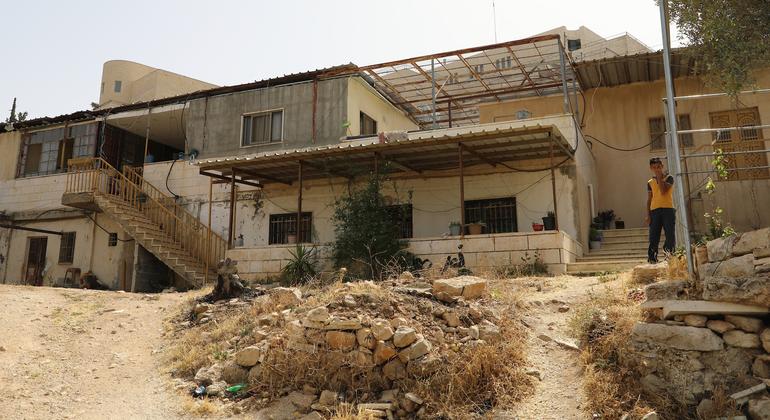
 Bethan McKernan
 Yossi Verter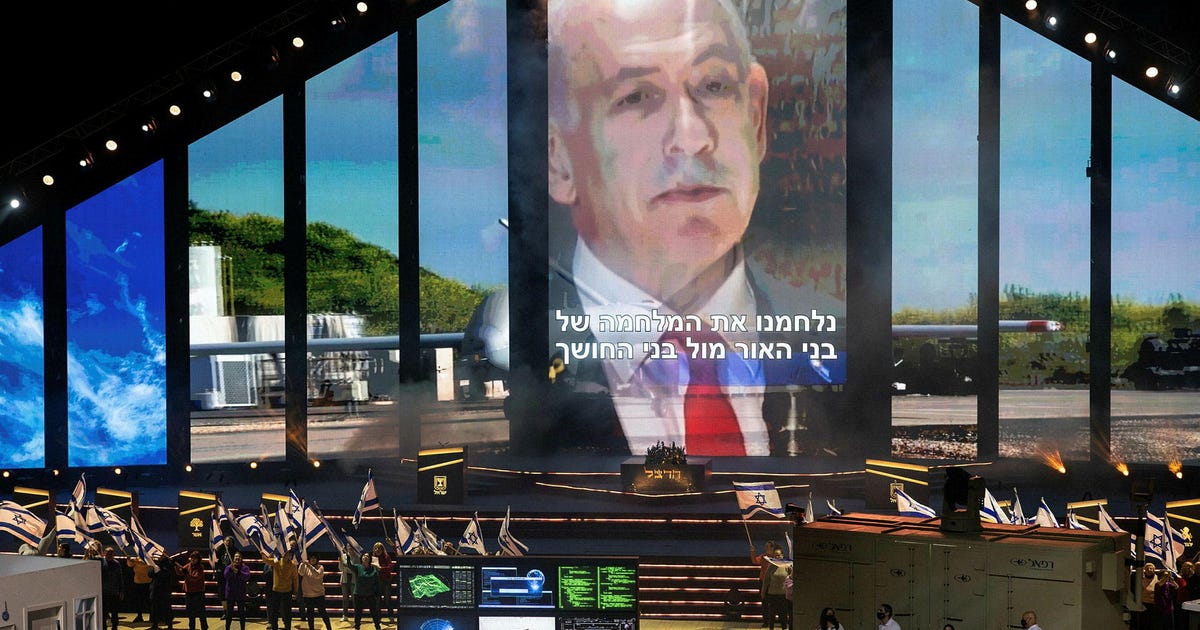
‘Mr Security’: Hamas war tarnishes Netanyahu’s image as Israel’s defender
Israel blocked the March of Return. Palestinians marked the Nakba anyway
**Caitlin M. Green** [0:20]
The days they are happening, sometimes they're happy, and sometimes we have to turn our face towards the darkness and really get a good look at it, let your pupils get really small, so you can make out the details, so we can do something about it. And that's kind of one of those days. Today, this is Half the Answer. I'm one of your co-hosts, Caitlin Green. With me is Trent Nelson. We often are the podcast that giggles through the horrors. Today, we might just be being horrified by the horrors, we're gonna see. Trent, how are you today?
**Trent R. Nelson** [1:04]
Well, that's a caveat toward a question, isn't it? We're doing as best as we can do through the horrors, we persevere to be sure. Well, in this terrible world of Polymarket, I would wager that this will be a crier, to be sure, because we are speaking with the great and marvelous Oren Ziv. He's a staff reporter and a photographer at Local Call and +972 Magazine, and he's also the co-founder of ActiveStills Collective. Really brilliant work being done by Oren Ziv. And today, well, we are talking about some real horror. We're talking about settlements in Palestine and villages in Palestine, and what Israel is seeking to do in all those places where folks live that they perhaps do not want to live there. And Oren has done some really meaningful, powerful work. We suggest all of our listeners and viewers find it — just type in Oren Ziv, and you will be on your way to crying, just like Caitlin will be later.
**Caitlin M. Green** [1:52]
Yep, we're gonna have to be playing the game of, oh, is Caitlin gonna cry today? Are we gonna make Caitlin cry? Because sometimes the answer is yes. Put your bets in now.
**Trent R. Nelson** [2:05]
Oren, sir, how are you today? We are so grateful for you to find some time for us, to be sure.
**Oren Ziv** [2:37]
Hey, I'm good. Thank you so much for having me. It's a pleasure to be here with you today, and I hope we can speak about the issue, jump into the details, as you said, from the bigger picture to the small details that in the end also create the reality we live in. Many of us know the bigger picture — the ethnic cleansing, the genocide, the situation in Palestine, in Gaza, in the West Bank. In this research, we try to show the mechanism, how it's happening on the ground, the small actions that, in the end of the day, of course with the support of the Israeli government and the American administration, create the bigger picture and the processes that we see every day.
**Trent R. Nelson** [3:22]
Right, right. And Oren, before we jump into — of course, we'd like to start perhaps with the macro for our listeners and viewers who are not as full of knowledge on this topic as you are, as some of our other listeners and viewers are. But first, if you would, could you improve upon my biography, sir? Can you tell the people more about Oren Ziv, about how you came to this moment, before we jump into all of that?
**Oren Ziv** [3:48]
Sure, of course. So my name is Oren Ziv. I'm 40 years old. I grew up in the northern city of Haifa. When I was 18, I was lucky enough to have the support and meet activists and refuse to serve in the Israeli army — again, a privilege that many people don't have, because it's mandatory, and if you don't have the support, the family, the friends, you don't have to do much to find yourself in the Israeli army. The opposite — not to go to the army, you have to do some effort and thinking and some process. So I was lucky enough not to serve in the Israeli military.
Later, I did two years of community volunteering in Jaffa, near Tel Aviv, and at that time in the early 2000s — 2004, 2005 — it was the peak of the protest against the wall, against the apartheid wall, the separation wall that Israel was building, not on the border between Israel and the West Bank, but deep inside the West Bank to cut Palestinian land and to annex it. And I started going to protest, but also to photograph. I got to the West Bank village of Bil'in, that later became a symbol of those protests, and I was photographing there, and there were many journalists there, many activists.
While being there, I met a few other people that were there both as activists but also as professional photographers. It's important to say this was before social media. We photographed there for a few months, and we were really frustrated with the way the Israeli mainstream media presented those protests. Many times — this is only a few dozen miles from Jerusalem or Tel Aviv, the West Bank — but the psychological barrier is very, very big. And every time we would drive back from the demos, we'd hear on the Israeli radio reporting about clashes or riots, or if soldiers were injured, and they wouldn't even mention the fact that this was a protest against the wall. They didn't even say the word "wall" or "fence," not to mention the fact that this is built deep inside the West Bank in order to siege and annex Palestinian land.
So after a few months there, we decided to do a street exhibition in the Israeli cities to bring knowledge. We can discuss this later, but back then we still had the hope that if you bring the information from here to there, from there to here, you can make people change their mind. Of course, 20 years later the Israeli narrative, the Israeli society shifted a lot, as we've seen during the genocide, but we can discuss it later.
So we organized the street exhibition. We didn't want to put our names, not to get fines from the municipality, so we signed "ActiveStills," and we opened a website. Again, this was before social media, so we put up maps and some information. We presented in the street because we wanted — we didn't have many connections in galleries or museums as young photographers, but also we wanted to approach everyone. We didn't want only the people already convinced — our friends, artists, leftists, whatever.
So we did this street exhibition and then we continued as a collective that has operated for the last 20 years. Today we have international photographers, we have Palestinian photographers, and we cover all the area between the river and the sea — the West Bank, Gaza, East Jerusalem, inside Israel '48. And we do political work through photography, and this is what I've been doing. Many of the communities and the struggles we document, we go back again and again, so it's not only classic journalism of going twice or a few times and going back. We also thought that the photos belong not only to us but also to the people we document, especially before cell phone photography, when not everybody had a camera like today.
And in addition, in the last decade I'm working with +972, which is also a collective independent media outlet, both in English — +972 Magazine — and in Hebrew — Local Call — that does political work, just more in writing. We try to counter the mainstream narrative, both inside Israel and abroad, and to do reporting from the ground and investigations and to bring voices from the ground. So I do both photography and writing. I started as a photographer, but with time I started to write myself.
**Trent R. Nelson** [8:15]
Sure. Well, we are just so grateful for all of that hard work. It's absolutely brilliant, and it's the sort of work that, despite how we sometimes can appraise the world, it does change people. It does make a difference. If even one person is changed by any of the work that is done, it is one more person than before, and that is really special.
So, Oren, well, we've just got to jump in now. For our listeners and viewers who again may not know the situation as well as we do, as some of our others do — what goes on in the land that Palestinians have lived on for decades, for centuries? What goes on there? What is Israel doing? Why? And what is the process for this sort of ethnic cleansing, this genocide, this pushing of people out from where they live to settle new people there? Can you give us the macro, and then we'll get into, as you noted, more of the micro and how it's being done from a strategic and practical standpoint?
**Oren Ziv** [9:24]
Yeah, definitely. I think, as you mentioned, the policy — especially for decades, but especially it escalated under the current extreme right-wing government with Ben Gvir and Smotrich, and of course led by Benjamin Netanyahu — it's really a policy to attack any Palestinian existence, and we see it on all levels. We've seen it in Gaza, of course, with the genocide. We've seen it in the West Bank with ethnic cleansing, trying to push Palestinians from the lands. And we see it inside Israel '48 with the policy against Palestinians who are citizens of Israel, but of course don't enjoy equal rights or any kind of equality.
One example I can give — after October 7, in the first days afterwards, when the attack against Gaza started, the chief of staff of the police made it very clear on the official TikTok of the police that he won't allow any solidarity protest with Gaza, as we've seen all around the world — just calling for a ceasefire and calling not to harm civilians, very basic and humanistic things. And on the official TikTok of the Israeli police, the chief of staff said to Palestinian citizens of Israel — that are citizens, not like in the West Bank or Gaza or East Jerusalem — he said, "Whoever wants to protest in Gaza, we can organize buses and send them to Gaza." And again, of course, these are people who don't enjoy equality, but officially they are citizens of Israel.
In the weeks later, we've seen a campaign by the police, by the authorities, arresting influencers, arresting artists, lawyers — anyone. They really chose one from each category, one or more, to make sure that nobody showed any objection or opposition to the war. What later became the genocide, they really wanted to silence from the beginning. We've seen it from day one. There was a protest on the 19th of October 2023, a small vigil in the city of Umm al-Fahm, inside Israel, and the police attacked it, arrested one lawyer, Ahmad Khalifa, who spent eight months in prison — same as prisoners from Gaza and the West Bank later — was in house arrest. And it was really to make it clear.
I'm bringing this example to show that the policy is one in all the territory. It doesn't matter if the Palestinians are citizens of Israel, if they're residents of the West Bank or Gaza. The idea — of course there are different levels of violence, but the policy is one. And of course, in a different way, we've seen it also against radical anti-Zionist left-wing activists who tried to protest. The police didn't allow it, arrested people, oppressed them. Although these protests, many of them are very, very small, and of course don't get a lot of media attention inside Israel, it was very important for the police and the authorities to have zero solidarity — to have the people not see any voices opposing the war, the genocide.
It's important to say, because a lot of our work, especially in Hebrew, is very hard. The mainstream media doesn't show anything from the other side. It started much before October 7 — just not showing Palestinian daily life, life under occupation, anything. I'm not even talking about something too complicated, even really daily life stories.
Now, as journalists, we're not allowed to Gaza. As Israeli journalists, we're not allowed into Gaza by the Israeli authorities — from 2005, international journalists could enter with restrictions, but could enter Gaza. And since October 7, 2023, they're not allowed in. So of course we rely on our Palestinian colleagues that are there — over 200 of them were killed and targeted by Israel, as different organizations have published. And the Israeli media doesn't — I would say that even some conservative outlets in the US would show more from Gaza than the Israeli outlets. I'm meaning a story about how people get water, education. I'm not talking about the big things, even things you can take from AP or Reuters, daily life stories about the horrific reality there. The Israeli media doesn't show it.
And this is why people in Israel, the public, were caught in surprise when the wave of protests started in the US a year and a half ago, two years ago, when the International Court opened an investigation, because the Israeli media really doesn't show it. Now people can read it on our website, people can see it on social media. If you want to know, you can know, but the Israeli mainstream media does a really good job of ignoring the situation. This is why many of the small protests and symbolic protests were very important. In some of them, people were holding photos of Palestinian kids who were murdered by the Israeli army, killed by the Israeli army. And from the reaction of the people walking on the street, you could see it's the first time they're looking in the eyes of Palestinian children — things that around the world everybody saw. You didn't have to go to a protest; it was on media, on social media, everywhere.
**Trent R. Nelson** [14:30]
Right, right. And again, it's really interesting that you bring that up, because outside of Israel, of course, social media and people taking pictures and having videos, and even the IDF taking videos themselves to show off some of the horrors that they've perpetrated — the world has seen that. And I think that in many instances it has backfired against Israel, because certainly, inside Israel there is a sort of silence, a sort of censorship, as you noted. But the rest of the world is seeing this and really reflecting hard on something that has been going on for decades and yet was easily ignored by even our media, to be sure. As you noted, the conservative media here does sometimes actually do a reasonable job of highlighting terrors across the seas, but so often there are excuses for why we should accept that. How have you noticed that sort of acceptance changing since October 7, 2023?
**Oren Ziv** [17:00]
It's a complicated question, has different answers. Internally in Israel, if I go back — I can connect it to when I started my photography and activism in the protest against the wall. This wall was not only physical but also a psychological wall. And the project of Netanyahu till October 7 — the biggest project of his, more than the so-called normalization or peace, so-called peace agreements with other countries, trying to make peace without talking to Palestinians — his biggest project was normalizing the conflict and managing the conflict and creating a status quo in which Palestinians just don't exist.
Even in the recent elections, in the end of 2022, beginning of 2023, the Palestinian issue was not in discussions. You had Ben Gvir and Smotrich speaking about annexation, you had the Palestinian parties inside Israel speaking about it, but in all the mainstream parties, this was not an issue. It was Netanyahu, not Netanyahu, corruption, some of the legal changes he was promoting. But two states, annexation — I'm not talking even about opinions, but the variety of options was not on the table. Netanyahu really managed over 20 years to make it a non-issue, because relatively it was quiet. From time to time there were attacks on Gaza, from time to time there were waves of violence against Israeli settlers in the West Bank, against Israelis inside Israel, but in general it was calm. Palestinian workers were entering regularly to work in Israel. And Netanyahu — and not only Netanyahu, the media, the whole society — managed to ignore this issue entirely.
If we're talking about the '90s and the Second Intifada, this was something that was on the table, was in the discussion. In the last 20-something years, Netanyahu really made it a non-story. And this, of course, changed after October 7 with the horrific attack of Hamas. But later, even inside this horrific situation with the attack of Hamas, with the genocide, Netanyahu managed to create this short-term status quo, normalizing the situation — for example, having a ceasefire with Gaza, or so-called ceasefire, and then breaking it, and maintaining the life in Israel back to normality. Even while there were hostages, even with a lot of casualties, with the situation happening a few miles away — you could see it from the borders, you could see Gaza burning, literally. It's not far; it's a very small place.
So Netanyahu is great at that. And even now, we're facing new internal elections in Israel in a few months. You'd think that after October 7 — even people who supported the war in the beginning — you'd think that people would realize that after all these violent and horrific events, the idea would be some kind of political or diplomatic solution. I'm not even getting into which kind of solution. We opposed this war and genocide from day one. We said from day one — and I was there on October 7 itself — we said there's no solution to violence with violence. What happened on October 7 is not solved with a massacre and revenge and genocide in Gaza. But even people who in the beginning supported the war and then understood where it's going and that it would not bring any solution — you could expect that in Israel, largely, there would be a discussion about what's the next step, how can we have some kind of life with justice and equality and freedom for all. But this is not the case, unfortunately.
I think one of the reasons the Israeli government and the army, and basically also the society, went to this revenge war was also to erase, or to merge it into, the failure of October 7 — the Israeli security failure of October 7 — to put it aside or merge it with the war, to make it as one. And by the way, you've seen Netanyahu just a few days ago in the celebration of the Independence Day of Israel, saying "we brought back all the hostages," although many of them died in captivity, and many of them from Israeli bombing. So it's really shifting the narrative of what happened, really trying to shift it. Even internally in Israel, people call it "the seventh of October massacre." The government doesn't call it like that. They want to connect it to the war and the revenge and everything.
**Caitlin M. Green** [19:47]
So was the attitude something like, "Oh my gosh, that was such a horrific event. Good thing we're handling things, and we're taking care of you, don't worry. It might look kind of scary over there for us, but that's just us handling things for you"?
**Oren Ziv** [20:05]
Yes, definitely.
**Trent R. Nelson** [21:08]
And that's because — correct me if I'm incorrect here, Oren — but this is because Benjamin Netanyahu often runs on this "protector of Israel" sentiment, right? He often pushes himself as the sort of person who keeps Israel out of greater trauma, and so the seventh of October cannot be seen as a massacre, because it would only be seen as his weakness. No?
**Oren Ziv** [21:21]
Yes, definitely. Netanyahu was called "Mr. Security." That was his whole project for the years — making peace, or so-called peace, with friendly Arab countries, without dealing with the Palestinian issue at all. And I think after October 7, his legacy really changed. So I think this is why it was important for him to go to the attack against Iran twice — he's been talking about that for 30 years, and he wanted to do that.
And the second thing is, before October 7 we were arguing — does Netanyahu really think like Ben Gvir and Smotrich and the extremists, or is he just being dragged by them to survive politically? He made Ben Gvir minister and Smotrich minister, he had them unite before the election. He really brought the Kahanists, the most racist people. We're talking about Ben Gvir, who was convicted of supporting terror in the Israeli court system, which is not that strict on right-wing activists. A person from the edge of the edge of society — a right-wing thug from the street, really, no other words. And he becomes responsible for the police, that was not great before — not that it was not racist against Palestinians, against other groups inside Israel — but really giving him the police to become even more of a political police.
And I think after October 7, with the decision to go to this genocide, to this revenge war in Gaza, it's really clear that Netanyahu adopted this as his only legacy — to prevent a Palestinian state. And we published it on +972 early in the war — they had a governmental plan to push Palestinians into Egypt. They really hoped to use the October 7 attack, and later the genocide, to force Egypt, to force Jordan, to force Europeans or Americans to take Palestinians out of Gaza. Even Trump spoke about it for quite a while. He changed his mind as always, but for some months with the pushing of Palestinians from north Gaza to south, the hunger, the starvation, the siege, the bombing — it was really looking like it was going in that direction, to completely emptying the Gaza Strip.
And it's important to say, if we want to connect it to the bigger picture, it's part of the war of Israel against not only the Palestinian issue but the refugee issue, because 80% of Gaza's population are refugees from what is Israel today, from '48, from the Nakba, from the catastrophe of '48. Also in the West Bank, we've seen Israel banning UNRWA, the UN organization that deals with refugees. We've seen in the West Bank — and it's connected to the story we did — of course in smaller scale, but Israel has been raiding the Palestinian refugee camps: Jenin, Tulkarm, and Nur Shams, three major refugee camps in the northern West Bank, evicting the population completely, and doing the same tactics as Gaza — bringing bulldozers, flattening houses, opening new roads to make the place unlivable. Of course in a much smaller scale than we've seen in Gaza, but the same idea, the same ideology.
Now, just a few days ago it was Israeli Independence Day, that is also Nakba Day. It's not on the same date because they celebrate it on the Hebrew date, but traditionally there's a march of Palestinian citizens of Israel that are internally displaced — they have Israeli citizenship, and despite that, they live in Israel but they're not allowed to go back to their villages that are inside Israel. Some of these villages are abandoned now, they're forests or national parks, but they could live there if they were allowed. So they have a march every year of thousands of people, tens of thousands of people. And since the beginning of the genocide in Gaza, the police have been using this to block it, not to allow it. So people had to go in small groups to different villages, but there was no one march.
So, all just to conclude — Israel is really trying to erase not only the Palestinian question, but also the fact that so many Palestinians are refugees.
**Trent R. Nelson** [26:03]
Right, right. And again, I've referenced this book before, but for our listeners or viewers who are interested in learning more about the Nakba, *The Disinherited: Journal of a Palestinian Exile* by Fawaz Turki is one of certainly my favorites. It helped me to learn as a youth the struggle and the trauma that so many millions have gone through and are still going through.
Oren, well, thank you for all of that. And we are going to, of course, get into the absolute destruction of Gaza — possibly also Lebanon, because that country is also being blown to bits currently, as we just spoke with our good friend Layla al-Sheikh regarding. But we did bring you here to get into a very specific part of all of this, and that part is Israeli settlement, Israeli settlers, and how they are pushing Palestinians out of the West Bank, out of villages, out of places that they've lived, out of places that they could be living. Can you give us that? And can you also — I guess then we'll get into some of the details regarding strategy and how the government's machinations are playing a part in all of this.
**Oren Ziv** [27:30]
Yes, definitely. I'll do my best to explain it in short time, but also in details. So from October 7, really the day after, the Israeli settlers were really good at understanding that the world's attention, the Israeli attention, everybody's attention is to southern Israel, to Gaza, to Lebanon. And they really took advantage of that moment to increase and escalate a process that was happening before — pushing out Palestinian communities, in the beginning in Area C, that is according to the Oslo Accords from the mid-'90s, the area in the West Bank that is under full Israeli control: the open areas, the settlements, the area around settlements. It's more than half of the West Bank.
And they really used this moment to push Palestinians. Sometimes it happens slowly. They put an outpost that is even illegal according to Israeli law. They invade Palestinian homes, they prevent them from grazing. We're talking about farming communities that have been living there for dozens of years, many of them refugees from inside Israel, from '48, that were pushed to the West Bank and then found a place to live. So they managed in the first year after October 7 to push dozens of Palestinian communities. Of course, this happens with the support of the army and the police, all the authorities. We can discuss it later.
Now, after finishing this process — that was very violent, but also very comfortable for the Israeli authorities, because it's not the Israeli army coming, putting people on buses, demolishing — it's kind of a sometimes slow process or invisible process, because there's harassment, and then at some point people are forced to leave, and they leave "by themselves," so-called. They pack their stuff and move somewhere else. So it's very easy. We contact the Israeli authorities many times to ask for a comment when we write about these things, and they would always say, "No, people just left." They denied the whole process.
So, after dozens of communities were pushed out, the Israeli settlers — who work according to a plan and a map in a strategic way — moved on to focus on bigger towns and villages that are not these rural farming communities that many times have shacks, have tents. They're much more vulnerable, the poorest communities many times. They don't own the land, they lease the land from other Palestinians who own the land, so it's much easier to push them out.
They moved to actual villages that are built villages, sometimes of thousands of people. And of course, also there they start from the outskirts of the village, from the farms, from the houses on the edge, from invading, from placing outposts.
So the process we've seen since the beginning of the genocide is that settlers also create these outposts, these settlements in Area B. And it's important to say that Area B, according to the Oslo Accords, is an area in the West Bank that is under Israeli security control, but planning-wise, civil-wise, it's under the Palestinian Authority, which means if you want to build a house, a tent, anything, you don't need permission from Israel. And it's very important because in Area C, Israel has a longstanding policy of demolishing houses, not allowing any new building or expansion for Palestinians, while they don't enforce it, of course, on Israeli settlers.
So, for example, I'll give an example. Even before the genocide, in May 2023, there was a small community east of a village, in the area between the city of Ramallah and the Jordan Valley, that lived there for dozens of years. Really small community, 10 families. They are also refugees from the Negev/Naqab. And following harassment from settlers — blocking their grazing lands, entering the village, harassing, attacks — they decided, or were forced to decide, to leave. And they chose the outskirts of the village of al-Mughayyir, a village not far from there, and they chose specifically Area B. They leased or bought land, and they could build there with no problems from Israel. At the time, there were no outposts there, there were no problems. They built buildings from concrete, they built structures for the animals, they brought water tanks, they had solar panels — of course they were not connected to the electricity grid — and they lived there for two years, till new outposts arrived near their community.
Al-Mughayyir in general was surrounded in the last two years by eight outposts. Just a few days ago, an Israeli settler went into the village and shot a 13-year-old boy near the school, and another adult. So this village is really, really targeted. It's one of the first villages the settlers are trying to displace. And of course, they're starting from the edge of the village, and they harassed these families till two months ago they were forced to leave. After two years they were refugees again, and they had to go deeper inside the West Bank. Their story is not unique.
This is the idea, and this also — maybe jumping to your next question — is correlated with the plan of Smotrich and other ministers. They maybe understand they cannot push all the Palestinians out of the West Bank, but they don't want any future Palestinian state — not even Palestinian Authority, even something autonomous, anything. And they want to concentrate all the Palestinians in blocks, in the big cities. So the big cities in the West Bank, just for background, are Area A: Ramallah, Hebron, Nablus, Jenin, Tulkarm, Jericho. These are the big cities, according to the Oslo Accords. They're controlled both civil-wise and security-wise by the Palestinian Authority. Of course the army goes there, arrests people, shoots people, but officially it should be the base for the Palestinian state, the Palestinian economy, the Palestinian institutions are there. And the idea on the ground correlates with the government's plan to push the Palestinians into those areas.
We heard more than once from Palestinians that they heard from soldiers — settler-soldiers that are settlers. Since October 7, many settlers were recruited to reserve duty in the Israeli army. So we hear from Palestinians that if before, a settler would come in civilian clothes and harass them, attack them — now the same exact settler comes with much more authority, and with a weapon and backup, and can tell them in a stronger way what to do or not to do. So we heard from Palestinians that soldiers told them, "You have to displace from this community, but don't go to Area C — go to Area A, go deep into the West Bank to the Palestinian towns."
And when we're talking about the actions on the ground with these small outposts that sometimes are illegal officially under Israeli law — this connects to the bigger picture, to the fact that the Israeli army has been setting hundreds of checkpoints, metal gates, roadblocks, making the movement in the West Bank really hard. The army is operating in the Palestinian cities conducting arrests and raids, and also sometimes shooting people when there's some kind of resistance to those raids. And in the end, it comes out to one policy — to make Palestinians feel on every level that there's no safe place in the West Bank, that life is very hard, and to try to push Palestinians out.
How do we know it? During the last two years, settlers have been placing billboards across the West Bank with that famous photo from Gaza — a photo that we saw many of — of Palestinians being forced out from north Gaza to south Gaza with their belongings, a photo that reminded many people of the '48 Nakba. And this photo with the slogan in Arabic: "There's no future in Palestine." So you can really see from what they're saying that they had the same plan from Gaza to the West Bank. And settlers have been saying that a lot — the same action that has been done in Gaza has to be taken in the West Bank against the Palestinians living there.
So on the ground level, you see it really starts with a tent, a few sheep, and 10 settlers, many of them minors. Sometimes it's not even — it doesn't visually — it's not violent. They don't always come violently — sometimes it's very violent, they shoot and kill people and beat them — but sometimes they just put an outpost, a tent inside the village, on the edge of the village, start grazing the sheep inside the village, try to mix their sheep with the Palestinian sheep and steal them, harassing people, going into their homes, filming them, filming the children, just no privacy for people. And by that, sometimes in the course of a few days, people are forced to leave.
So these actions on the ground that sometimes are led by minor troubled youth that the settlers bring on purpose to those places, because of course the Palestinian human rights defenders, the activists there, they cannot even confront a minor, an underage person. They cannot even film them and publish their photo on social media — you can get sued for that. So on purpose, they bring these people.
But these small groups really are connected to the bigger policy, because we're talking about more than 100 outpost farms that were erected in recent years. So it's really part of a bigger policy. And we, in our investigation about how settlers are expanding into Area A and B and trying to push Palestinians into the bigger cities, we also talked to Israeli soldiers who've been serving in the West Bank during the war, and they say the same. They say that the official policy is not to intervene when Palestinians are attacked, but of course if settlers are attacked, they will be there in a minute. They say that in general, they support and train together with these illegal outposts, even according to Israeli law. They say that the same atmosphere, like in Gaza, is also present in the West Bank — of not seeing Palestinians as human beings. And all this together, all this mechanism, has a lot of effect on the daily life there.
**Caitlin M. Green** [38:19]
I have to say, this use of young people as kind of the forward guard of this harassment campaign also feels like they're not really treating their troubled youth as if they're real people, either. That seems like you're using them as a tool to enact violence, or as the forward guard of the violence, and that to me in itself is also really despicable.
**Trent R. Nelson** [38:50]
Oh my gosh, yeah. I mean, time — boy, the way time goes — was it two weeks ago, two months ago, two years ago? I don't know.
**Caitlin M. Green** [39:00]
That's right.
**Trent R. Nelson** [39:05]
Right? We just have nothing. But it seems to me that a part of this trend — the horror persists, and so do we. As it concerns America, the first thing that I'm brought to is the Jim Crow South. There's always an excuse for violence against the people that we don't particularly like, right? In that instance, Black people. And there's always some extenuating circumstance. There's always, "Well, he said something to this person, and that's why," or, "We don't have the evidence to bring this person to trial," even though the whole town saw it. They did it right in front of everyone, and yet somehow there's no evidence.
The strategy is allowing for individuals to do the work of the government, sometimes with the help of the government, sometimes with the eye being averted from the scene. But as you alluded to — very outwardly — if you just focus on one individual, one group of individuals doing it in one place, it seems perhaps like an individual circumstance. But if you look at the whole thing and you see that this is happening hundreds of places all the time, then it is absolutely a conceived-of strategy to push people into, as you noted, Area A, into the bigger cities, into the bigger towns. What is to be left of Palestine? What is to be left of any of these places? We've already seen what they've done to Gaza. It's rubble and destruction. It breaks my heart, to be sure. And I think that as more people have seen this through social media, through reporting like you've done, Oren, it has become more difficult for the world to avert their eyes from what is simply bloodlust in so many ways.
**Oren Ziv** [42:50]
Yeah, definitely. Many times, settlers' leaders — sometimes the violence crosses some line or some bar that even inside the right wing and the settler movement they will speak about it. Just since the beginning of the attack against Iran, 13 Palestinians were killed in the West Bank during raids led by settlers. Sometimes it's settlers who shot them, sometimes it's settlers that are also soldiers. It's all very confusing because you have settlers that live in a settlement, but they're officially soldiers, and when they shoot, the army would say, "This was an off-duty soldier, soldier on vacation," because they were not on an official mission by the army. But they have a uniform, they have weapons. And it's very convenient for everyone — it's a soldier, so the police doesn't investigate it, the army has to investigate it, but maybe the soldier was off duty. We've seen it also in the recent cases, in the last 48 hours.
And as you said, they use those youth, they bring them there, they give them many times these ATVs that are given by the Israeli government. And it's very young people. Just a month ago, an Israeli settler — I think 18 years old — and his brother were driving in the northern West Bank in Area A, an area that officially is not allowed for Israelis, and then they either had a car crash or what the settlers claimed — that somebody purposely attacked them and caused this accident — and this settler died. Following that, settlers erected five outposts in Area A. This was a bit too much for Israeli authorities, so they evicted them, but of course they moved the outposts just nearby. And following that, you've seen a change in the discourse in the leadership, even from some Israeli politicians and ministers, because the father at the funeral said, "There's no Area B, C, or A — it's all Israel, it's all ours, we should settle everywhere." And since then we've seen this discourse continue.
It's important to say that this violence also doesn't stop just at Palestinians. Many human rights activists, both internationals who come to the West Bank and Israeli radical left activists, are also being attacked. If a few years ago there was a feeling that the fact that foreign or Israeli activists are there — they have some kind of privilege, that settlers are afraid to attack them because they know there might be more reaction from the Israeli authorities — today it's not the case.
Just one day before the attack against Iran, on the 27th of February — two Israeli activists, a 51-year-old and a 72-year-old, were attacked in the village of Qusra near Nablus. They came there to allow Palestinians to go back to a house they were forced out of, just to clean the house, take some belongings. Four settlers, masked, with clubs, on an ATV, came, attacked them, and ran away. They were so severely injured that the Israeli medics had to bring a helicopter to take them into Israel. In the beginning, when we saw the videos, we thought they were dead. They were severely injured. One of them is still in the hospital, the 72-year-old.
This did get into Israeli mainstream media. We're talking about older Israeli people, and it got coverage. The police arrested a few of these attackers, but after a few days released them and said they didn't find any evidence. Of course, if it was the opposite — if a Palestinian attacks, in a few hours they find them. We know Israel has the tools, the technological tools, the cyber tools to find anyone everywhere. And they just don't want to.
And the West Bank police — not that it was great before, but really under Ben Gvir, it came to zero functioning. Not even pretending they're functioning when it comes to violence against Palestinians, against human rights defenders. The opposite — they have a whole unit in the West Bank police that focuses on locating, arresting, and deporting international activists. They claim — the police and also the right-wing politicians and activists — that the problem is the fact that international activists come and document and spread it around the world, and not the violence itself. And they're working so hard to deport activists, while Israeli settlers are literally going in daylight attacking Palestinians, attacking activists, many times with the escort of the army. The police arrives afterwards, if they arrive, and arrests no one. And yeah, it's part of the same policy, unfortunately.
**Caitlin M. Green** [43:51]
Yeah, it's interesting, the parallels that you can see if you live in America and you're dealing with the discourse about law enforcement or violence here, right? Where you can hear these same echoes of, "Oh, well, it's a bad apple," or, "He was an off-duty cop," or whatever. When we do something bad, it's a bad apple. When they do something bad, it's outside agitators and people with nefarious agendas and networks making things happen.
**Oren Ziv** [44:59]
Yeah, I really connect to what you both said. Many times in Israeli mainstream media, politicians, even right-wing politicians, settler leaders, would say, "Yeah, it's a small group." They would say they're not even registered in the West Bank, because many of them — the few that get arrested, you'd see the address is inside Israel or Jerusalem, because they don't register these illegal outposts, obviously.
And Netanyahu even said to Fox News only three months ago, "It's only 770 troubled youth." Of course it's not the case. We're talking about hundreds of people on the front line. But again, they get the support, first of all, of the people near them, of the other settlements. Every outpost is kind of a front base, but they have behind them the bigger and more established settlements, who give them water, food, electricity, security, patrols. Most of the outposts — they go out from existing settlements and try to create a chain of settlements.
First of all, as a society, you see the settlers in the West Bank supporting them. This would not work — they couldn't go and attack and go back — if there was no support or silent support. People don't oppose it, people allow it to happen. And again, you see the army and the police arriving late to the scene — in the good case standing on the side, in the bad case participating and shooting as well — and then later arresting the Palestinians and accusing them, if some of them went out and tried to protect themselves with stones or without stones, just to try to block the settlers. Many times they've been arrested. And of course, Palestinians in the West Bank face military trials and much, much harder conditions than the criminal law inside Israel.
And as you said, it's easy for them to say it's a small group, it's an extreme group. But they serve this bigger cause — to push Palestinians out, to make sure they don't have any land left, and to create facts on the ground. Even though this can be changed — even if there's elections and a less extreme government is elected, I don't say a good government, but if they take their ATVs, take their weapons, take the ability to serve as a soldier — even a few minor changes could make some change on the ground. Even if the administration in the US changes and pushes for that.
Many of these villages that are being attacked have Palestinian residents who have American passports, who have family in the US, or used to live in the US. Some of them who have been killed were American citizens — in Turmus Ayya, in other villages around Ramallah, it's a big community that has families in the US, and many of them have American passports. Of course, they don't get any support, or barely any support, from the American embassy, from the American administration. But the situation is so extreme that even if some small things change on the ground, it could have some effect to stop this horrific process.
**Caitlin M. Green** [46:42]
Right, if this outpost practice in the small-group beginning is the thin end of the wedge, taking that away lessens the ease with which they can do this kind of stuff. So that makes sense.
**Oren Ziv** [47:00]
Yeah. And there have been communities who were displaced and tried to come back. Even some of them got rulings from the Israeli Court of Justice, that of course is very hard on this issue and barely ever rules in favor of Palestinians. Sometimes they managed to get decisions, but on the ground the army, the authorities, didn't really secure them in a proper way. So people came back for a few days, and then they were attacked again or arrested again. And so they don't want to bring all their families back and their equipment and their animals, and then run again. But if the conditions change, people do want to go back.
And today it's really literally just a few hundred activists — Israeli radical left-wing activists, international activists — standing with them. And even that doesn't really stop the process; it can delay it. We know the army and the authorities care about it, not only with the deportation. In many cases, the army issues closed military areas on some communities, so only residents can stay there. And theoretically this should affect both the activists and the settlers, but of course on the ground, activists are prevented, and settlers do what they want. And in this method they already caused some communities to leave, because they're really left with no protection, nobody to document, nobody to call the police and try to speak in Hebrew. Of course, even with the presence of activists it doesn't always help, but it does give some sense to the communities that people are standing with them.
**Trent R. Nelson** [49:00]
Right. And I'm struck, of course, as you noted, sir — small changes from who is running Israel, from what the United States' position regarding Palestinians and regarding Israel is — all of these things could superficially, on the surface, change a lot of this. But I'm gonna read one of my favorite quotes, and then I think we'll jump from there:
"Therefore, we need not expect to have better states until we have better men. Until then, all changes will leave every essential thing unchanged."
So I guess my question, sir, and it's a broad one — as we end a program, we do try to get some type of sunlight in through the clouds. What sort of innovation, what sort of change, what sort of progress would it take to create a circumstance where it is more clearly understood that what we, as Israeli individuals, might be supporting has actually been some of the most grotesque horrors seen in the 21st century? How do we move to a point where — and I think that many in America, many across the world are moving to this point — but how do we get it in Israel to where the left, the humanitarian side is more obvious, such that we can really push back against these horrors internally?
**Oren Ziv** [53:01]
Here there are many aspects to the question, and of course it's not an easy one. I think it would take dozens of years for the Israeli public, the mainstream public, to understand. It's absurd to say, because it happened so close, and tens of thousands or hundreds of thousands of soldiers took part in these horrific things. We interviewed soldiers, but you really feel when you speak to soldiers who've been there that — on the extreme right in the media, you see people brag about it — but it's not something you hear on mainstream media. Soldiers, even from a patriotic angle — you don't see soldiers really coming and talking about what they did in Gaza or Lebanon, unless it's a specific story of saving some soldier or something here and there.
So I think, unfortunately, it would take dozens of years to be able to understand what really happened, what Israel has committed, and how it's being seen outside. You really have to — and this is part of our work — in Hebrew, we are the only website that brings Palestinian voices, firsthand Palestinian voices. People who write for us and agree, and it's important for them, despite the horrific situation, that they will be heard and read also in Hebrew. So we have writers in Gaza and from the West Bank that write not only in English — it's translated to Hebrew with their consent, of course. And it's important for them that the people who want to can get this information and knowledge. So this is first of all a very long process. We're trying to do this part.
If you wanted to end with some hope — for me personally, I don't know if it answers your question exactly, but for me, actually, the things that get me going and continue documenting is when I come every week, or sometimes a few times a week, to those Palestinian communities, and I see people insisting on staying. Even if they were displaced, or they have to survive in a new place that is also — many times settlers follow them, they're displaced and then the settlers go to the next point. The fact that with very little means, they're struggling to stay on the land and to have a daily life, with the good things and the bad things.
And also to see the activists that are standing with them and present 24/7. And really, when you're there 24/7 for days, for weeks, for months — or coming — it's really a matter, unfortunately, of statistics till you will get attacked, maybe more badly, maybe less. Because the attacks became so often — if you stay in a community that the settlers are targeting, it's just a matter of time that the attack will happen while you're there. And it does give me hope to see those people who are insisting to stay on the ground, to resist in this way. And it does give me some hope.
And in the end of the day, despite the genocide, despite the horrific attack Israel did — also in Gaza, people didn't leave. The plan, Netanyahu's plan, didn't work. People didn't leave to Egypt, people were not forced out. And also in the West Bank, most people are not leaving. They're living in unbelievable conditions and under a very harsh and horrific policy. But on the large scale, you could say the policy is not working 100% as they planned.
**Trent R. Nelson** [56:24]
Sooner rather than later, and we hope that you'll find some time to come back with us. And that is, as you noted, really important. It is not business as usual. We are not allowing for them to dictate how we go about our lives. And even further still, some of the pictures that you see out of Gaza — the horrendous living conditions that people are persevering through — I think that this inspires in many folks a question of "How did it get like that?" And that might be the door that opens up for many — the intellectual quandary regarding, "Are we supporting something that is destroying lives, destroying infrastructure, destroying communities, making it impossible for people to do the things that we know people do across the entire world?" — the things that we can really identify with.
**Caitlin M. Green** [57:19]
I think it's good. It's a good mental exercise for people who are not affected by things like this to really look at some of these photos and think, what would it — what would have to happen in my life for that to be me, loading my child's mattress onto the back of a truck while soldiers watch? What would really have to go wrong around me? What would people have to be doing to me and my neighbors in order for that to be the next step in my life? It would have to be so much.
And to really think about what this person is in relation to you — that they're a person with a family, with maybe a farm or a business or something, that they're living their life. And then things have gotten so bad that either the fact of staying is a radical act, and that puts them in a whole lot of danger, or staying is so dangerous that they now have to go find somewhere else to try to restart their life under this kind of oppressive force. What would really have to happen to you to make that be your life?
That kind of exercise in empathy is really important to do and helps shock the system, I think, into recognizing that that's not normal, that's not the way a person is supposed to be forced to live their life, and those are people. They are people just like you are, and that's important to remember, because we do get desensitized and we get really good at ignoring or justifying stuff that happens to other people.
I'm so strong. Everyone, please clap for me. I'm a mom of young kids — I still haven't quite gotten control of my tear ducts. I'm really good at crying. I cry really easily, so I'm so proud of myself right now, and I really do need that admiration and accolades. Thank you, Trent, really.
**Trent R. Nelson** [59:30]
1,000%. 1,000%. Oren — well, we're all crying inside. We didn't make Caitlin visually cry today, though, so that is a victory. Well, of course, that will be most likely the only giggling of the episode, so take it in as you got it.
Oren Ziv, what a remarkable discussion. What remarkable work you and all of your colleagues get into. We appreciate it sincerely, as do our listeners and our viewers. We know — not "me thinks," me *knows* — we know that we've got to let you go. But we'd love to have you back to discuss further, not only settlements, but also the rank devastation that is occurring across that region. Certainly, Iran and Lebanon are topics that we'd like to get back to, as well as what's going on in Palestine further, of course. But again, we've got to let you go. Will you remind our listeners and our viewers where they can find all of your work, where they can keep track of what you are taking pictures of, of what folks are writing about, what you're writing about? Please, if you could give us the info, sir.
**Oren Ziv** [1:00:48]
Yes, definitely. On +972 Magazine in English, on Local Call — *Sicha Mekomit* — in Hebrew. If you have any relatives in Israel you want to send more radical coverage to. And of course, on ActiveStills Collective, on all social media and on our website.
**Caitlin M. Green** [1:01:00]
Look at some pictures.
**Trent R. Nelson** [1:01:05]
Well, sir, you are supreme. Again, Oren, we appreciate the work so much. We look forward to having you back when you have some time. And well, you know that understanding a question is half of an answer, and this is, of course, Half the Answer, with your hosts Trent R. Nelson and Caitlin M. Green. And until we do this thing all over again — well, why don't you do some reading, do some thinking, care about other people, look at some pictures, and conceive of yourself in that circumstance, and then be better afterwards, dammit.
**Caitlin M. Green** [1:01:22]
Thank you.
**Oren Ziv** [1:01:25]
Thank you.

How elites got hoodwinked by the vibe shift.

The Texas drag ban and more.

Liberal democracy's fight to survive the fascist night.

What is the current state of affairs in Israel, Palestine, and the surrounding nations?
Sign up for the newsletter and get our latest stories delivered straight to your inbox.