
Headwaters: September 21–27, 2026
Looking at what’s just behind us in preparation for the week ahead.

Why is Albania having anti-Jared Kushner protests? What did he do to them? And what on Earth is going on in the UK? We asked our resident Europe expert to explain it all to us.
Half the Answer can be heard on Spotify, on Apple, on YouTube, on Amazon, and elsewhere via its RSS feed.
Get The Reconstruction Papers now!
 Jill Lawless, Associated Press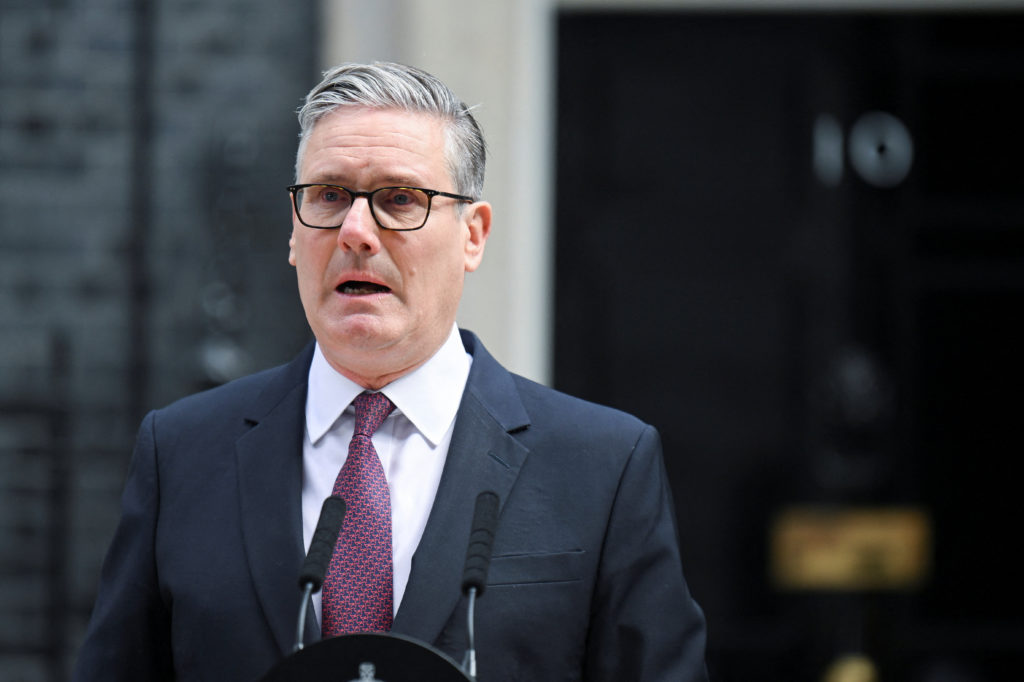
 Mei Seva
 Arbjona Çibuku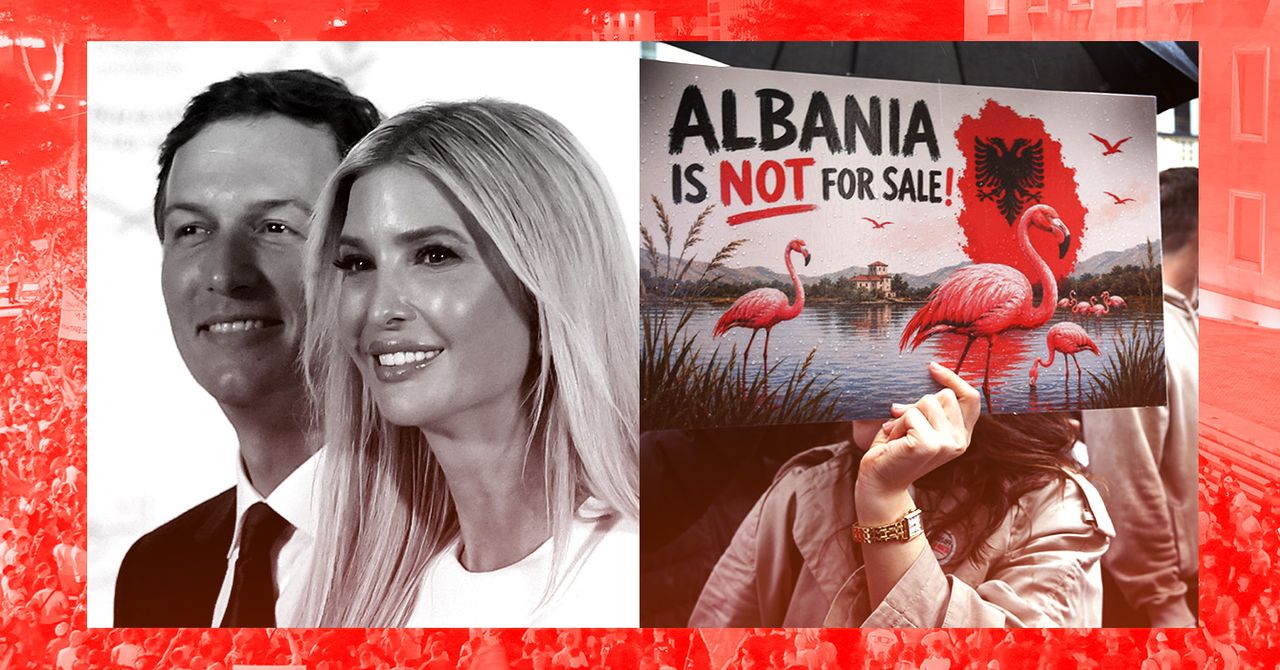
**Trent R. Nelson [00:00:30]**
Well, you know that understanding a question is half of an answer, and this is, of course, Half the Answer, with your co-hosts Trent R. Nelson and Caitlin M. Green. You know, I'm the historian — and a philosopher, and I write, and I'm mostly talking to the camera nowadays. And Caitlin, look, she is a linguist, and she is a mom, and she is a sweater maker, and she does a lot of other stuff too — but that's another episode for another time.
Well, Caitlin, you know that most of our episodes deal with stuff that is United States adjacent — be it within the United States or, well, in this very instance, in Europe. We talk Albania today. It's another Eurosode. And to do a Eurosode, Caitlin — who did we bring? Perishing death, here, rolling in the deep indeed. Hunter, this is the Eurozone. Tell us all about it, as though the media in the United States has not been reporting it properly — because, can you imagine that? Tell us as though we are completely insulated from other things in the world, unless they get reported on, which, spoiler alert, they do not.
**Caitlin M. Green [00:00:53]**
Yeah, it's true. Not this one — I didn't make this one, to be clear. I was wondering if you were gonna just do it. Everyone can tell, right, by that, it's a cue that it's Albania. That was an easy guess.
Well, let's all give a friendly hello to Hunter CG — we learned one single word in Albanian for this. Hunter is, of course, of Rota Rota Media on TikTok and all the Meta things — or maybe just Instagram, I don't know if you're on Facebook — but also Council for Dems Abroad in Belgium, and author of the forthcoming book We Could Have Had It All, subtitle colon, Rolling in the Deep, of course. Hunter, how's it going? Just imagine a world in which that's what it's like — sort of like Mamma Mia type stuff, yeah.
**Hunter CG [00:00:59]**
Well — oh, thank you, thank you, thank you.
**Hunter CG [00:02:49]**
Patent pending. It is going well. Things are a bit chaotic in Europe, in particular, because of these incredible protests that have been ongoing in Albania against the horrible corruption that Mr. Jared Kushner, and the Saudi royal family, and the government of Albania have embroiled themselves in.
So if you don't know where Albania is, or anything about Albania — it is a country in the Balkans that is right across the sea from Italy. It is a country of 2.7 million people. It is one of the most beautiful places on earth — I went there for my honeymoon. And this revolves around an island that is a nature preserve off the coast of Albania. Albania basically runs inland to big, big mountains, and has a whole mountain culture up there that's very different. The middle of Albania is these big sweeping plains that look like something out in the Midwest. And then along the coast you have just the most perfect — like in your imagination, from a movie — Mediterranean Sea kind of experience that you can summon.
Albania is just a country that has beautiful architecture, culture, multicultural — it was controlled by the Ottomans for a very long time, so there's a big mix of Christians and Muslims and Jewish people and other religions there. And it has also had a really, really rough shake of the last 150 years. Not only has it been conquered by several empires, it had a period where it was colonized by fascist Italy, and then had many, many decades under a very, very bizarre communist dictator named Enver Hoxha — and he's a character you could speak about for several hours.
He is also why, if you search Albania, one of the first facts that come up is that there are tons of little fallout shelters across the entire country. And I don't mean near buildings — I mean in the middle of fields, in the middle of nowhere, you'll see these weird, literally Fallout-the-video-game type little mini fallout shelters. They quite clearly would not protect you in a war, but he, in his dictator brilliance, believed that the only people who would survive in the nuclear war he was sure was coming would be Albanians, so he impulsively built them across the whole country. So that's a very side fact, but I think it's important to understand the world they came out of.
After their dictator died, they transitioned into democracy. For most of the independence and post-communist period of Albania, over the last few decades, they've been controlled by the Socialist Party of Albania — and in particular their current Prime Minister, Mr. Edi Rama, who is an ex-basketball player. He is one of the biggest people I have ever met in my entire life — he's a giant, like, pick up Trent and me and lift us off the ground kind of large. And he is a very savvy politician, and has been able to embed his party into every structure. He's been there for almost two decades now, and Albania really is his everything. For the most part they've had incredibly good election results for many, many years.
So when you're kind of uncontested, in a country where democratic norms are not the best and corruption is rampant — because you have all the same problems of every post-communist country, rapid privatization — and now, with the last several years, an intense push to bring foreign money into Albania, that has made it a real playground for billionaires. When I was there, I was at a conference in a place called Vlora. Amazing, really cool.
**Hunter CG [00:07:11]**
Definitely go visit. But even at the time, people from the Emirates were down there building mega-yacht docks, and we were just seeing, in front of us, little Dubai springing up. For the most part it just looked like a property scheme for them to dump a bunch of money in. You see these really absurd Dubai buildings going up, and then right behind them you'd have some post-communist architecture, but also a lot of the older Albanian stuff from even before the communist times. You'd see this disparity occurring — literal billionaire playground, and then a normal town right behind it, in the shadow.
This has obviously made Albanians not so happy, because they're seeing a lot of their political elites, the mafia, and foreign billionaires coming in making a whole lot of money, while Albania maintains itself as one of the poorest places in the entirety of Europe. And I mean incredibly poor — I think Americans have trouble conceptualizing European countries being places with extreme poverty, but there is no place in the US that compares with this level of poverty. You've got to wrap your head around this. Yes, they still have a good health care system and a few other things, but Albania does not have that much money to do things, and the income disparity continues to stretch.
Because of the legacy of the communist period — being run by a literal madman for several decades who had not very good infrastructure and production policy — they've remained behind on a lot of things, and this creates a persistent problem where literally millions of Albanians have left the country. So depopulation is occurring, brain drain. And when you have the money coming in from foreign investment, but it's only being pulled into stuff for other foreign investors to enjoy when they're vacationing or trying to hide cash from their domestic taxers — this creates a lot of tension. And this has erupted with this Jared Kushner scandal.
Sorry, that was a long rant. So there's this place called Narta, north of a village named — and I'm gonna butcher this name, so I'm sorry, Albanians — Zvërnec. This is actually about, I don't know, five kilometers, like three and a half-ish miles, from where I was at in Vlora. And this is a pristine wildlife reserve. It used to be an old military base that they turned away from being a military base — another legacy of the communist period. But this place has become a touch point, because two years ago, a little over two years ago, Jared Kushner's company purchased this land to redevelop into a resort.
This is a place where — and this sounds like super-villain-level evil shit — it's a flamingo area, it's for seals, Mediterranean seals that have just started living there again because their habitats had been destroyed, and for nesting sea turtles. You can't make this up, people. It's really absurd. But this kicked off. So this was sitting for a little while — there wasn't any construction going up — and then barbed wire fences appeared, and security guards, and they started bulldozing stuff, and people were like, "What the actual fuck?" And then people went out there from the village and they're like, "Yo, man, what is going on?" They hear all this stuff is going down that they haven't been privy to.
And keep in mind, Albania is trying to join the EU. And in the EU — at least according to EU law, which is what they have to slowly implement to become a full member — protected land is protected land. You can't sell it off to become a resort. It has to go through the process that you've even established within your own domestic law, right? So they didn't do this.
**Trent R. Nelson [00:08:04]**
Right. So — what is Jared Kushner? Well, we needed the prelude, we needed to get there to get here — what does Jared Kushner have to do with everything you just said?
**Caitlin M. Green [00:09:18]**
No — that was so useful, though. Yeah.
**Hunter CG [00:11:17]**
This immediately kicked off, because there was so much noise around this deal — now that a couple hundred million of it was directly tied to organized crime in Albania. And then people just started looking, and they started peeling back, and they were like, "Oh look, the permitting was done. Oh look, a lot of this money's coming from literal criminals." And it starts to add up. And then you start seeing this as the release of all that tension that's been built up — that all this money is coming into Albania, and none of it comes to us, and we're literally expected to accept, "Oh, but you could work at the resorts for the rich people." Like, that's the deal.
And this is not too dissimilar to any of the big protest movements and revolutions that have kicked off over the last few years. If you look at Nepal, if you look at Madagascar — it's experiences of the ultra-wealthy doing some nonsense, just breaking the moral core of a certain amount of the population, and it starts to become viral at one point, because you're like, "You know what, these rich assholes — why are we living like this? This can't be it." And now we're at 23 days, 24 days of this — whenever this airs, some number of days — but this isn't people going out once. This isn't, and not to put shade on it, like No Kings every few months. This is every day. A huge amount of the country is kicking off in multiple places. This isn't a huge country — we're talking tens of thousands of people showing up day after day after day in a small country. And this is something Albania hasn't seen since the fall of communism. This is the biggest political thing that's kicked off in that country since they've become a democracy again.
Well, the government, and Edi Rama in particular, is — oh man, I wish I could pull up this quote, but something along the lines of, "As long as I'm here, this deal will go through." And he has been unequivocal that 100% any development money coming from the outside is good, objectively good, and we need it. So he is trying to continue the deal, he's trying to foster this money through with Jared Kushner. And this isn't a new thing — Edi Rama has been doing a lot of very, what I would say, quite immoral deals. The other famous one that's been going on for several years now is him getting paid by the Italian government to set up Italy-style concentration camps in Albania, so that they can be third-country deportation hubs. So when he's saying he's down with any kind of foreign investment, it's a very ultra-libertarian, Ayn Rand level of, like, anything goes.
**Caitlin M. Green [00:12:27]**
Right. So what's been the response, then, to this huge showing of people? Bring on the human misery — all I see is dollar signs. It sounds like what he wants is a White Lotus: Albania edition — like season four is going to be Albania. It's Mark Zuckerberg in Hawaii. It's like, you know, we've seen it. I understood the story.
Well, it's really nice that the face of this corporate incursion into the natural splendor of Albania has, at the front of it, just the most charming man in history — that everyone's super excited to see and hear from. So that's lucky.
**Hunter CG [00:14:59]**
Yeah, well, I think the problem is — and this is kind of an issue of how you think about development in general. In countries that are looking at their neighbors who've already joined the European Union, who are modernizing and becoming very wealthy very fast, even if it's slower than other countries, you start creating this sense of inadequacy, and that seeps into the elite political mind. So this idea that your country could attract this ultra-elite crowd kind of placates you, right? Like, "I'm a leader in my country. Other countries' leaders, who in my mind I think of as higher — they come here, so I've achieved what they've done," even if all this other stuff is still occurring.
And then you've got to think — the trickle-down economics idea isn't just stuck in the US. This neoliberal way of thinking is super common in the EU and all of Europe. It's even probably more common, because it kicked off there a little bit later than it did in the UK and the US, so the ideas of, say, the early 2000s or the early 2010s are still in people's minds. No one in the US, on either side of the party, thinks any kind of austerity economics actually makes any fucking sense. Both governments are just like, "Let's spend a bunch of money, that solves the economy," because we've internalized the idea that if you turn off the tap, it crashes everything. That's very simple. We see that every few months with a government shutdown — you turn off the tap, the tap stops going, guys, it's not good.
But a bunch of European governments are very stuck on this kind of German or Dutch way of thinking about economics, where everything is locked into hard limits, and they effectively treat their economies like they're still on the gold standard — like deficit spending and any kind of general stimulus is scary and dangerous and could lead to any sort of problem. When we know that if you have targeted spending on things, and it stays basically in the public sector, it has minimal effect or no effect on inflation. But unfortunately, the logic of austerity is really locked in. And right now, most of the governments in Europe — except for Spain and a couple other places — are really, really dedicated and tied to this idea. This is also the general EU policy, and then the countries wanting to join the EU start to emulate those policies, because they have to copy the policies of the EU. So it creates this radiative effect.
This is why it's very unfortunate that you basically have a conservative far-right minority government running the whole union right now. You get politics and silliness like this that really just caters to the elite of most countries, and you end up with a development policy that's not based around solidarity or making sure it works out for the common person, but one that caters to an ultra-wealthy class — because if the numbers look better, then it feels better, right? At least for me, because I'm the Prime Minister, or a mafia boss, or some other official or rich person.
But again, the average Albanian sees themselves as moving somewhere, but also stagnant in the same way. And when you're faced with opulent wealth and the destruction of your literal home — your land, that you had to deal with some of the worst horrors of the last 100 years to get some sense of normality, to get this sense of progress and moving toward a better tomorrow — and then you look at it and go, "Oh wait, maybe our future is just more extravagant versions of the same corruption we've been living with for so long." Unfortunately, this is a dangerous thing for the Prime Minister and his party to be tying themselves to, because as we know, everything Donald Trump touches turns to shit. That's a very bad thing to tie yourself to.
And I think the thing that's also kind of interesting is that, because Trump is such an international thing — because everyone's watching this Trump-like grift across the world — it is getting way more attention internationally in the press, at least across Europe, than it would otherwise.
**Hunter CG [00:18:47]**
You know, most of the time it is very hard to get the big continental-wide press organizations to cover Central and Eastern Europe and Southern Europe, because they're small, poor countries that people don't want to put time into. It's not Germany, it's not someone important, or someone kind of extra crazy that you have to pay attention to — like, that's why everyone had to pay attention to Hungary for many years. That was the theory: Viktor Orbán's good TV. So the focus now is just so much more intense. And also the story is very simple, right? Like, I had to give you a little background on Albania, but we understand what it's like: a rich person buys a bunch of land in a place that they should have no right owning, to turn into some nonsense, and that's not cool. Especially if — yeah, exactly. Mark Zuckerberg in Hawaii. No, no, it's exactly the Hawaii Mark Zuckerberg thing — that's the perfect example right there.
And also it's kind of like the everything crisis, right? If you care about the environment — which a lot of Albanians do, they care about their country and the land — if you care about anti-corruption, if you care about democracy, if you're against Trump or the billionaire or whatever, this is the moment to talk about all these things and think about things in a different way. And at the same time, contextually, there's lots of discussion around Albania and a more accelerated accession to the EU, so there's this idea that things are going to change in our immediate future. So what does that mean? It creates a revolutionary level of possibility within the mind of people. If you think the status quo is going to be in flux — but not only in flux, it is actually approaching you, there will be a defined change — it prompts these kinds of conversations. It just takes the right spark. And, well, Jared created a very large fire.
And it's visceral too. I mean, when I think of Jared Kushner, I think of this comedy skit where they replaced anytime he talked with birds making noises — like eagles — and that's how I imagine him in my head all the time. Yes. Thank you, that was worth the entire experience. I wasn't even sure who did it, and I didn't want to put anyone on the spot, because your bird life is your bird life. But I think, very seriously, he has a multi-monitor setup. He strikes me as a man with, like, six —
**Trent R. Nelson [00:19:36]**
Yeah, it's the same thing over and over again. Yeah.
**Trent R. Nelson [00:21:32]**
That was not even a sound effect — that was Caitlin. A lot of people don't know Caitlin also dabbles in bird law, so there you go, that's what happened.
Now, Hunter, my question — I've got a quick question here, because I have to say: how does Jared Kushner have the time to be doing this, when I was informed by the President that he was actually taking care of Gaza, as well as Iran, and I think he had him on the case for Ukraine as well? Where does Jared Kushner get the time to invest in killing baby seals? I'm not grinding hard enough. But yeah, no, that tracks, that tracks. He's got a really cool game room. Yeah, absolutely — like a fly, everywhere.
**Caitlin M. Green [00:21:35]**
It was my first attempt, and I'm glad it went well. I took a real swing for the fences.
You know, Trent, I think you're just jealous, and I just need you to remember that Jared Kushner has the same 24 hours in a day that you have. Okay? So if you wanted to be bulldozing Gaza, fixing Iran, and building a mega-yacht complex in Albania, you could too. Okay? You just have to grind harder. That solves all your productivity issues — just more monitors. Those pale, watery eyes are taking in multiple data streams at a time. It's my fun hobby — just enjoy your money. God.
I just love when one of my little phrases gets used, it makes me really happy. Wrong-dinner-party syndrome strikes again. Why is Kid Rock at my dinner party? That's not what I wanted, I wanted someone fancy. Oh yeah, you can't keep him away now — he's saluting your helicopters. An infestation, right? Once they get in, you really have to spray everywhere, you cannot miss a spot, or the Kid Rocks start sprouting up again. So it's tough. And what's crazy is, once it gets in your house, then it builds another house that looks like your house, but worse. I've never seen an invasive animal do that before. It's no good.
It's so fun, too, that the idea of the alpha-male grindset is so epitomized by this wet, pale, squishy, haunted puppet man that is Jared Kushner — like he's living the life that Andrew Tate thinks he's living. At least his wife is sort of an Aryan goddess type, at least he's got the one thing going for him. Which one is the woke one?
I'd like it, Trent — I would like it if you could add in some more basketball references, because I'm not going to be able to do it. So if you could do, like, "is this a slam dunk," something about a three-pointer, I don't know — there you go, thank you. Oh my god.
**Hunter CG [00:23:07]**
He's a very pale guy — that's a lot of monitors. But honestly, I think that's one of the more grotesque things, right? Jared has all this power input into him from our government, but is also freelancing all the time, and it really is this perfect encapsulation of the corruption of the moment. There's no separation anymore, there's no illusion, there's no pretending it isn't what it literally is.
And there's also this — I mean, the other thing that really kicked us off is because Ivanka made a video talking about her setting up the resort on the protected nature reserve, and she did her most Ivanka. It was this very fluffy "and my husband and I, we have just a little wonderful project in a little place called Albania," and everyone was just like, oh my god, this is the worst person of all time. You're sitting there like, you're destroying nature, and she's just like — yeah, "I've been talking about quinoa for the last couple of weeks." It's so blasé, it's nothing to her, it's a weekend project. And you just get insulted, right? It hurts you on some moral level, because you're like, dude, you don't need to have this place. Come on, you've got a ton, you've got all the money, your dad's grifted so much money — how much more do you need?
I thought Kid Rock was at every dinner party. I see you've got a problem with Kid Rocks in the house — I got a guy that deals with Kid Rock. Well, it's an invasive species. You need to write this down as an SCP entry, it's like the Kid Rock. And, you know, syphilis — it's not the woke STD, you know.
**Trent R. Nelson [00:24:30]**
Yeah, but they get invited to the wrong dinner parties. They wish to be invited to the good ones, with the nice fun people who know a lot of things — but they don't, they get invited to the awful ones, and so they love to pretend they get into the good ones. I know this is Caitlin's wheelhouse, but I'm swinging in for right now. It's a clear example — wrong dinner party, just a little project in Albania, no big deal.
When you're in that world — yeah, you let him in the house, he's got keys, he's got everyone's pager, it's a real problem. I don't even know how it got in the house. Who let it in the house? We have a mat outside the door. Horrendous nightmare fuel. It has some type of sentient intelligence, it's terrifying. No good.
Oh my god, that's a quote. Yes, it is strange that this man is the — but isn't that always the irony of these things? Like, isn't Steve Bannon the one who's always talking about the beautiful white ethnic race, and it's just like, you look like you're dying of syphilis? This is a real problem. So what are you talking about? Right. Oh, no — I think I do, actually. Yeah, I do think I know what he's referring to.
Well, Curveball Hunter CG. CG stands for "completely great," and that's true. Not a lot of people know that. Hunter, Albania sounds like a pressure cooker. The Prime Minister would like to keep it as he said, but do you think public opinion will eventually push this deal to death? And then, secondly — who's the ally to the proletariat, Hunter? Who's on the assist end of the slam dunk? Caitlin again. Her name stands for "marvelous," not a lot of people know that.
**Hunter CG [00:27:36]**
It was gonorrhea. Well, I think the real three-point shot will be that the European Union has announced they're looking at the deal now. If it violates the accession terms, that would be one of the biggest touching-the-stove kind of situations, because EU accession — meaning joining the EU — is sacrosanct. It's universal, everyone wants to do it. They've been trying to do that for over 10 years, this has to occur. So that would be one thing.
Another thing: there are going to be legal cases and challenges against this now, because everyone is very locked into this. And because, like in any big protest movement, there have been tussles with the police, people are yet more invested. And it's not like Jared or Ivanka has made it any better. This will continue to flood its way through — whether this ends up in victory for the protest movement, victory for the Albanians who don't want their country turned into a resort and have the literal nesting ground of sea turtles destroyed, I'm not sure. It's very hard to see. But I do think the desire to fight corruption and make Albania a place where laws matter and nature matters is very strong, and I think the institutions are on their side, at least the EU ones and EU law. So I believe if they push it long enough and hard enough, they can do it — all the things could work out.
But Edi Rama is a very stubborn man, and he has weathered a lot of controversies, as I mentioned earlier, with the Albania concentration-camp project. So it's very much going to be a situation that could drag on for a very long time, and potentially even into elections. And then I don't know if Albania is really ready for that level of wild election — where, say, the Socialist Party doesn't get its crazy big majorities. What does that mean? Does the opposition figure out a way to harness this energy? Does the protest movement merge into some sort of political operation? These are all way-up-in-the-air questions right now. We're still in the first month of this.
But we've seen protests in Serbia stop a similar development that Jared Kushner was involved in. We've also seen, in Serbia, more than a year's worth of nonstop student protests that have caused resignations of the entire government — and that government's way more extreme than the Albanian one. So there are local examples, very recently, of all this working out in favor of the big protest movement.
You know, I don't like to say this, because it's a bummer, but I think it's a bit true for countries that have more recently experienced democracy for the first time — even messed-up versions of it, or ones where it was very brief and they fell into some sort of strongman. The desire to have democracy is incredibly strong, to hold on to the freedoms that they just earned within, literally, everyone's lifetime — except for very young people, obviously. But these things aren't ephemeral to people.
**Hunter CG [00:32:00]**
It's not an idea, it is an actual reality that they've seen the before and after of. And contextually this is good to know: Albania used to be described as the North Korea of Europe — there was no one in, no one out, it was a little hermit dictatorship where people were isolated for decades. So they want to be in the world and know the world. And because so many Albanians have left and can tell them about the rest of the world and explain that it doesn't have to be like this — there is more, you can strive for more, and it's not a fantasy — these desires can't be stopped, they can't be held down, because the reality is right there in front of them.
So I have a lot of belief in the Albanians. I have a lot of belief in their ability to stand incredibly strong. They're real tough people, and some of the nicest people on earth. And if anyone deserves to have a better shake at a future, it's them, because the last century has not been the best for them.
**Caitlin M. Green [00:32:58]**
They've been through it, yeah, they've been through it. But also, there's a lot to be said for the fact that they can see the status quo is already fucked, it's already gone. So what's stopping them from taking the actions that need to be taken? There's no scenario in which they go back to anything resembling normal, or that that's even desirable — and so here they are, just fighting the good fight. Wow, that's so great.
**Hunter CG [00:33:30]**
To quote, to be that cool Marxist guy: all you have to lose is your chains, we have the world to win. They could lose it, it could suck, they don't achieve victory — but even in the attempt, new formations of civil society are mixing, new people are getting involved in a nationwide political movement. This is something you see right now with the resistance movements in the US — all of these big protests, all of these big actions, all this anti-ICE stuff — it builds together a web of civil society where it wasn't before. So whether or not they get their ultimate victory, whether or not this unseats the government or whatever long-term stuff, this is a gradual process, but it also has moments of intense activity, and that's one of these moments right now. It's up to the organizers on the ground and their supporters to push this into something more solid.
But once these kinds of things kick off, they have this sense of possibility. And there's this strong memory, at least for me and a lot of people in Europe, of watching, for example, the Maidan in Ukraine — which in Ukraine is described as the Revolution of Dignity. It was this similar protest movement: incredibly corrupt politicians, incredibly corrupt system, people doing wild nonsense, and then the politicians decided to touch one of the do-not-touch things on the stove, which was, "Maybe we don't do EU accession." Another parallel, right? And that led to him eventually fleeing on a helicopter to Moscow, because after he started shooting the protesters, they were like, "Nah, we're staying out here," and they kept going.
And this is the thing — there is potential for dramatic change. Revolutionary change can still occur, and it does still occur, and it happens quite frequently. Even just because it's not happening in the US to the level that we'd all like, doesn't mean it is not occurring, or it can't be successful. You can't just look at countries stuck in their ruts, like a lot of the Western European democracies, as the only examples of possibility — because there are other countries, small and large, doing the thing. And it's not just the right that can do their reactionary rebellions, it's also the forces of liberalism, of the left, of the ecological movement that can achieve these things as well. And that's the true lesson, I think, you can take out of these beautiful movements happening in Central and Eastern Europe. These are the things that really inspire me — watching people fight desperately for things that people in the rest of Europe take for granted inside the European Union. That is why possibility is endless, and that's why I have hope, to be totally honest.
Oh my god, I hope so, because they're still doing construction right now. That's the scary part. I pulled a bunch of videos and photos for a TikTok I made about this, and I was watching them like, oh my god, this place looks like fucking Disney World — like the most beautiful nature reserve I could have imagined in my head. And then you're thinking, Jared's gonna destroy it. Because they're bad people.
**Caitlin M. Green [00:33:50]**
Yeah — so do you think the sea turtles are going to make it? I'm so fucking stressed, really stressed out about these turtles. Yeah. No, that's right. Also — Albania has a sacred right to have all of its rocky beaches populated by Meryl Streep getting her scarf blown all over the place, singing "The Winner Takes It All." That's how it's supposed to go. It's not supposed to be Jared Kushner with a resort. Disgusting.
**Trent R. Nelson [00:36:45]**
This is — yeah, absolutely. Put another one on the board of horrors. I mean, just add it next to the fascism, and the racism, and the bigotry, and the data centers, and the oligarchs. Now we've got to worry about baby turtles. Well — please, because then we're going around Europe afterwards, we've got more Europe to go. This Eurozone is not over. We've got more to do — we're Eurozone.
**Hunter CG [00:37:19]**
One last thing, though, to just add, as a positive potential option. One thing that could really change this — and not just for Albania, but for all the other countries trying to join the EU — is that the European Union needs to spend a lot more money on direct stimulus and aid for these countries, so they're not entirely dependent upon the largesse of billionaires from around the world to throw money at them. This happens still in all the normal ways — normal companies still invest and do all the other shit — but we need large amounts of public investment at the EU level, and also bilaterally from other EU member states, because this is how you're going to supercharge all the development in all of these countries that desperately want to join the political project, but don't have the means currently to achieve it within a swift amount of time.
So if the EU wants to actually achieve its strategic goals of having accession for all these countries that have already been working to join — for most of them, approaching 20 years — you have to actually put money down, and you can't just depend upon the very wealthy. The amount of benefit this will cause will be magnificently magnified by the actual investment put in, because once these countries are more developed, they will start to have their own generated prosperity. It's very simple, and we've seen this again and again, country after country. It's just that this logic of not spending money to achieve things is hardwired into the governing coalitions of most governments on this continent, and that is the big tragedy. At the end of the day, if they chose to spend, and spend wisely and in a big way, we would have prosperity like nowhere else. But they choose the opposite, and so it just becomes a playground for the wealthy, and everyone else has to scrabble.
And we know this, because — I'm from New Orleans, right, super tourist mecca. If your idea is to do a tourist economy, you have to heavily, heavily regulate it for it to have any benefit to the local area. If you're just free-reining it, it's just gonna be a parasite on the area, and, like you said, a servant class. It's very frustrating, because it's like, guys, it doesn't work in very rich countries and super-mega-touristy places — why do you think it'll be different? Like, "I'll figure out how to do it in a more free-market way this time, for us we're special." No — we're free.
**Caitlin M. Green [00:37:29]**
So much. Did you know that there are lots of countries in Europe? I don't know if you knew.
**Caitlin M. Green [00:39:24]**
Right — they think they're just going to attract these businesses, these property developers, and that somehow the Albanian people are going to benefit financially from that, even though we've seen that that is not what happens. What happens is they use the local population as a servant class, and they keep them in poverty. So yeah, I think you're absolutely right. And it's the same billionaires, too, but they're like, "No, no, it's gonna be different this time. It's never worked for anyone before us, but it might work for us."
**Trent R. Nelson [00:40:24]**
Very David Cross, right there we go. Well, you know what's been special — our Eurozone. We're not done, we're not done, we've got more to do now. We spoke about Serbia in passing, but there's stuff happening in France. Let's go across the channel to a little place called the United Kingdom — and well, they are dealing with some real unfun stuff, and by that I mean a Labour Party, which seems kind of dull and unfortunate and Blairite. Even though he's given them some advice — he thinks they should be participating in some of the bad things the United States is participating in. Not good advice, should not take it. Well, Hunter, what is cooking over in Labour Land?
**Caitlin M. Green [00:41:00]**
Now we're just done with Albania, yeah. Across the pond, that nobody likes. I mean, what is he supposed to do, go naked? Is he supposed to not enjoy music? I cannot believe we're coming at this man for liking music. Well, that's so cool. Can you just help me understand where the left is in that equation — like, what left? What's the lefty thing that he does?
So you have to vote for us again if you want stuff, because we're going to be saving all the money now, and then we'll spend it all on you later. Wow, that's a great con. So you just have to stretch your two children's worth of benefits over however many kids you have. Congratulations on your beautiful twins, Trent — and the other one. Your twins, and then the one that doesn't get healthcare. And his snappy new suit. They were doing politics, and we've made it very clear that Keir Starmer does not want any politics happening in his government, so that was really wrong of them. Right, you're good for it. Yeah, listen to my posh-ass accent. Right — he gets buildings burned down, for God's sake.
**Trent R. Nelson [00:42:29]**
Very good, I think.
<!– Hunter's UK intro ("things aren't good in Britain... Blair") is appended to the tail of his 0:37:19 solo block in the source; moved here into the 43:21 turn so it reads chronologically AFTER the hosts' UK transition and Trent's "what is cooking in Labour Land?" question. -->
**Hunter CG [00:43:21]**
So, things aren't good in Britain, unfortunately — but that's been the story for most of the last 16 years. To catch the viewers up on this season of Britain — which, thankfully, John Oliver did a good little bit on last week or the week before — Keir Starmer came in with a majority because of the wonky first-past-the-post system that allows you to get just over 30% but get North-Korea-style supermajorities. And he came in with the ambitious agenda of doing not very much at all, just tinkering around the edges — which is not the best idea after you've had a stagnation for 14 years of chaotic Tory rule, and you're continuing to deal with the ramifications of Brexit that are literally making every single person in the country poorer every day.
So the problem is — and also, unfortunately — "Blair," in the general sense of the word, might make you think of Bill Clinton in the '90s. Well, the circa-2026 Tony Blair is a proper right-winger. He has spent most of his post-prime-minister experience with his Tony Blair Global Institute, going around doing consultancy work for dictators — and that's not just me saying so, that's their thing. This isn't obviously good.
Tony's involved with Trump's Board of Peace, and a whole bunch of other sketchy nonsense, and has really been one of these anti-woke, pro-AI, vaguely Peter-Thiel-sounding stuff, often — but still tries to make it acceptable and smarmy enough, so you feel like, "Oh, don't you remember things were kind of cool in '97?" And you're like, "But Tony, all those things you're doing." And he's like, "Oh, but don't you remember? Nostalgia." So he's this kind of strange figure.
And the thing that's really hard to wrap your head around if you're American: if you're a Democrat — while Democrats did, at the beginning, support the War on Terror, quite quickly they realized it was a toxic thing to get behind, and also very prudent to throw George Bush and all that under the bus at some point. The Labour Party never went through that phase of realizing, "Maybe we should denounce all the bad things that our Prime Minister did." So not only did he do all that stuff people were very frustrated about — Afghanistan, Iraq, war crimes, blah blah blah — but he also then spent most of his last few years cutting away at and undoing a lot of the stuff he did at the beginning of his term, and the financial crisis occurring. All of this was encapsulated into a particular faction of the Labour Party: the Blairites, or the Labour Right.
And this has sat as a kind of weird albatross, where it's not really kosher for a lot of people in the Labour Party to just actively disavow Tony Blair, because he's still treated like Democrats kind of treat Bill Clinton — where it's like, he's problematic, but he's okay, we'll bring him out for stuff. But they still view Blair as this great Prime Minister, and because of the fact that he comes in after many years of Tory rule, there's still a weird mythology around him. He's also very popular amongst the columnists and the hoi polloi people in the UK. So this is all important to understand: Keir Starmer is way to the right of where Tony Blair is right now, in his governing and his governing coalition.
Traditionally, Labour's been very similar to the Democratic Party, where it's a very large tent — the tent's a little bit smaller than the Democratic Party, because there's the Lib Dems that pull off some liberals, and there's a Green Party that's a serious party that runs in elections, so they pull in certain amounts of people who, in a US context, would just be in the big blob of the Democratic Party. But there's also always been a bunch of factions in it, and for the most part, for the last several decades, the Labour Right has been in control — except for a very short amount of time during the Jeremy Corbyn years. And this tension of the right not wanting the left to be in their literal Labour Party has been a persistent, ever-eternal factional battle within the party.
Keir Starmer came in and he was like, "We're going to start expelling all of the progressive people in the party," and went on intense purges of every single left-wing person in the party. And this continued to erupt, where his theory was, "Well, if they're just not in the party, we don't ever have to deal with them." And Labour is a European party, so being a member actually means something — it means you can stand for higher positions, it means you can vote on all these party structures and have governance control. Well, if you kick out a bunch of people that are in the other faction, effectively dissolving them, then you basically run over it as, you know, one faction, one party. And this becomes quite a problem, because you need members to campaign for you and to do all the calling and everything. And if you're actively telling people who are more progressive than Margaret Thatcher, "You've got to get out of here" — what do you think that does to your governing coalition that put you into power in the first place?
**Hunter CG [00:47:19]**
You know, people did not give Labour its victory because they love Labour magically. They gave it because they hated the Tory Party for destroying and car-crashing the country for 14 years. The term that floats around in UK politics is "managed decline." So the entire way government works — not just in the current Keir Starmer government, but the 14 years of Toryism before that — was, "We're just existing through managed decline." There is no aspiration to make things better, there's no future that we're going towards, we're just falling like the Hindenburg, but we're trying to keep it together a little longer. And this creates just an intense frustration and depression, mind you, across the UK.
And the potential of a future — people put a lot of hope into Keir Starmer. He presented himself like, "I'm the sensible adult. If you pick me, I will not do all the things the Tories are doing." And what did he do when he got in office? Continued a lot of the things the Tories did, and fundamentally went way further to the right than even the Tories would have dreamed of doing — especially on things like trans rights, migration, and all sorts of stuff. Now, there's all that. Not great.
The other big problem: Keir Starmer is really bad at politics. Like, objectively really bad. He doesn't understand how they work, because he comes out of the civil service. He's kind of floated his way through high society and all these key positions. He came in as an MP, and only a couple of years later he was the party leader. He didn't grow up in the party, he doesn't have this long background of going through the trenches or doing it for a while, so he doesn't understand how he comes across, or the importance of doing retail politics, or explaining himself. He fundamentally thinks, "I'm the Prime Minister now, and as long as I keep my head down and look like I'm working, just like every other job I've had, it'll be okay." But that's not how politics works, because if people don't see you doing shit, you're not doing shit, and if you're not good at explaining things, then people think you're not good at doing those things.
So that's all that. But then he's also managed to have a conga line of completely self-inflicted scandals. This kicked off immediately, with what was called the freebies scandal, where he was getting party donors and other rich people to buy him new suits and glasses, get free tickets to go see Taylor Swift, and all sorts of nonsense — and not just him, but basically every single minister who was sitting in the government at that point in time. And they doubled down that this was super cool and awesome, because it wasn't technically illegal. This went on for several weeks of people finding new wild things they were given, and then being like, "This is totally cool that the Prime Minister is getting free stuff from rich people. How dare you tell Keir Starmer that his rich friends can't buy him nice suits?" So you imagine, while you're going through a cost-of-living crisis. You joke, but I have read exact statements like that.
So, going back to the factional setup: this government's been a coalition between two remaining groups, basically, in the Labour Party — the Labour Right, this kind of zombie Blairite crew, and then also another group called Blue Labour. And to just encapsulate that in your mind: MAGA, but in the Labour Party. And I don't mean that in a fanciful way — I mean the leader of Blue Labour, Lord Maurice Glasman, was the only Labour official invited to Trump's inauguration. He was brought there specifically by JD Vance, who views him as his ideological father, and sent him a signed copy of Hillbilly Elegy. I'm not joking. He described Trump, in an interview with Steve Bannon immediately after the inauguration, as the "left side of MAGA Square," with JD Vance and Steve Bannon as his allies. So that's the brain trust inside of the Keir Starmer government.
**Trent R. Nelson [00:49:43]**
Not great.
**Trent R. Nelson [00:50:10]**
Right, yeah. Well, I mean, again, it's poor Keir Starmer — small-bean Prime Minister of the existing space. Pretty brave. It's an ambitious, ambitious strategy. Yeah, really good. That's just inefficient. It's not good policy. It's —
**Hunter CG [00:51:25]**
So, if you're wondering — well, he did some minor stuff, some minor and some big stuff around workers' rights, what people liked — but it's been really hopscotch, and there's not that much. A lot of it has been, "I'm making a commission, I'm making a coordination group, I'm getting something started," but there's no delivery.
And also, at the beginning of his term — okay, so there's this lady called the Chancellor of the Exchequer, who's basically kind of like the Treasury Secretary. There's not really a good US exact comparison, but basically she's the finance lady — lady named Rachel Reeves. She looks like an accountant, is the best way to describe her, if you want her in your head. And her whole thing was, she's one of these austerity hawks, and was like, "We can't have that much spending, the Tories have destroyed finance, so we need to cut, cut, cut, and then, many years at the end of our government —" and she's literally saying this at the beginning of the government — "then we can start doing things. Things will be tough now, but we'll do things better, and then maybe in a second Keir Starmer term." So they kick the bucket over to a potential second administration. Like, can you imagine?
**Hunter CG [00:52:54]**
And so this became encapsulated in one of the other early scandals. So, there was this thing in the UK called the two-child benefit cap. This is the UK's weird and very petty version of China's two-child law, effectively. So the two-child benefit cap basically works in that the government does not recognize you have more than two children for the terms of any government benefit. They don't exist. They just don't exist.
**Hunter CG [00:53:29]**
Exactly. And this is obviously a problem. It's also very silly, and it's a very absurd kind of means test. "Well, you only like two of those kids, right? How many kids?" Yeah. So there's this —
**Trent R. Nelson [00:53:37]**
What if you have triplets? Right — and the other one, the one that isn't covered on the — okay, so that's psychotic. Okay, so tell us more about how that is obviously hurting, but also, we need to know more about Reform before we let you go. We know we're getting close to our time limit. We need to know more about Nigel Farage. And you don't even know what they are — he's very confused about politics, indeed. UK. Delicious.
**Hunter CG [00:54:10]**
Let's speed through this, okay, let's speed through this. So the two-child benefit story encapsulates kind of Keir-Starmerism, in that this is a policy that's been known for a while to harm people. It would immediately lift people out of poverty in a very profound way, and it didn't actually cost that much money. And him and his whole government went out on television every single day and were like, "No, the finances are not good enough for us to stop children from starving." And at the same time, you have the freebies scandal going on. And Keir Starmer, with his supermajority, could literally just do this on any day, because that's just how the British Parliament works. There were some rebels in the Labour Party that were like, "Let's try to force the issue, let's put a bill down and make them vote on it." They all got expelled from the Labour Party. And so that was the start of Keir Starmer's government: if you disagree with me about children needing to starve for the finances of the government — goodbye. And so this is the authoritarian mind of Keir Starmer, and the pettiness.
**Hunter CG [00:55:25]**
He is the manager archetype of a politician. He doesn't have a vision for the future, there's no ideology around him, like him personally — so there's just nothing more than skin-deep.
Now, outside of Keir Starmer's Labour drama — and him becoming the most unpopular Prime Minister in recorded Prime Minister polling — is Nigel Farage, who has set up his most recent version of a political party. You might know him from his earlier bands, known as the Brexit Party and UKIP. But Nigel Farage's new party, which is also not legally a political party — it's a corporation that he owns. Yep. Welcome to Britain.
So he is this perennial figure that I think everyone, unfortunately, now knows in the US, and he has managed to latch on to this anti-immigration sentiment and this anti-woke politics. He has a ton of money flooding into his party and all of their operations — we're talking millions and millions from sketchy donors around the world. And he has also tapped into a lot of the far-right, paramilitary-adjacent groups. Now, I will say, not to give credit to Nigel, but he personally has some limits on who he's willing to work with. So he won't work with overt Nazis, but he will work with extreme far-right people — he has lines where he won't cross. Some of this is weird British classism, where he views them as too thuggy, and other stuff is his personal quibbles on things. This is causing a bit of a problem for Nigel, because the tenor of all the shit has gotten to such a height that open displays of, you know, great replacement theory, of Nazism — all this stuff is now just fair game and out in the open.
So while he was able to ride on the discontent and the collapse of the Tory Party — which he effectively absorbed most of their vote share, so they went from having around 30-something percent, and now they've been floating around in the teens; he pulled almost all that vote into his Reform group — in recent local elections across the country, he did incredibly well, decimating Labour, picking up almost all the remaining Tory seats, pulling in a lot of councils across the country. And you don't have a state level in the UK system, it's just local governments and national government, so this is a really big deal across both Wales and England, and even in bits of Scotland he did incredibly well. And this is all coming off the back of the fact that, once all the major parties are basically within one or two percentage points of each other — whether it's Labour or the Tories or Reform — any seat is up for grabs in a first-past-the-post system, and you can win with like 20 or 21% in areas, and this is enough for you.
**Hunter CG [00:58:21]**
Make huge sweeping gains. And so, not only does first-past-the-post have innate problems in how it's structured — at some percentages, where everyone gets even, it basically breaks down in your ability to figure out what's going to happen in any particular thing — and, as we know, the weather contains of one or 2% vote share, so it creates a very ripe situation for not just Nigel Farage to benefit, but also one of the other, I would say, winners of Keir Starmer's drama, the UK Green Party, which has its own kind of energized young leader that's picking up some seats too.
But for Nigel Farage, he's been able to ride this for several years, and because the UK media, in the same way that they're obsessed with Donald Trump, they're obsessed with Nigel Farage, because he gets the clicks. They'll put him on every single show. He's been on every single news channel, and all the random things, for my entire life — even when he had no elected political positions and was the leader of a party that had no seats in the Parliament. He was constantly there, because they wanted to continue pushing him, pushing him, pushing him. Because while he is this wild far-right person, he's also acceptable, right? He's acceptable to go on TV. He does this kind of smarmy David Duke thing, like, "I wear a nice suit, I'm obviously cultured, look at me with a pint, I'm just a regular guy."
And at the same time, you also have the advent of far-right media in the UK, one of the channels being GB News, but it's continued to grow from there. So this kind of Fox News revolution stuff is now occurring in the UK, but in the world of social media, where, for example, the first trillionaire in the world is highly invested in UK politics, and has, for the entirety of Keir Starmer's government, basically been pushing for race riots and a civil war.
Just this year, two dangerous, violent race riots have kicked off in the UK that have caused rioting across the country — most recently in Belfast, before that in Southampton. And this has been the third summer in a row. So every summer of Keir Starmer's government, there have been violent fascist race riots. They're organized. In Belfast, they were literally going door to door with lists and addresses of migrants and people from minority backgrounds, to pull them out. They were setting up roadblocks, they were burning people's homes down. I mean, they're quite literally pogroms in Belfast. It's also very bad, because you have the homegrown loyalist paramilitary movement — this is the hyper-nationalist Protestants who have a dedication to being British, so they're Irish people who do not believe they're Irish, and are British nationalists in Northern Ireland. It's a very Northern Irish thing, we're just going to move past that — but this is very dangerous, and paramilitary action has become very common.
And Keir Starmer, because he is dedicated to trying to still appeal to this right-wing vote, has continued to basically move the immigration policy in the direction of Nigel Farage, and even further — and it's emboldened them even more and more and more. Recently the Starmer government announced that they were going to double the time it takes for you to apply for citizenship, they were going to make it effectively impossible for a refugee to get settled status. These are things they're doing and pushing for. There is literally a British ICE — with the initials ICE — that are doing masquerades now. It is him trying to do the diet version of the thing — you know, when everyone was critiquing it, like, "Oh, you can't just do the diet version, it'll just embolden the far right," Keir Starmer was like, "All right, let's just do that, then." This is his entire theory. I know — it's a tragedy.
So, going back to what I was saying about Nigel's limits: until very recently, there was a nice guy, who's an awful human being, named Rupert Lowe.
**Trent R. Nelson [01:00:16]**
He's so annoying, he's so annoying. And the worst part about how annoying he is, is that he causes real, tangible harm where he goes. It's just a trail — a snail trail of horrors. Yeah, just a bad fella, right? They'd been called pogroms.
**Caitlin M. Green [01:02:24]**
Sounds good to me. Yeah, I mean, the British don't even put ice in their beverages. What are they thinking? It's an unfamiliar concept to them. I say "them" as if I'm not one — I also drink my beverages with no ice, because of my upbringing. Thank you. Bye. Oh my god, of course. Restore Britain. He might as well have just called it "Return," with a V — like, that's what we're doing. But you don't have to be — that's the thing, there's no selection pressure for being creative. Right, okay.
**Trent R. Nelson [01:02:25]**
British ICE — terrible cover band, terrible cover institution. Shouldn't they know better? Shouldn't they? I just don't like that it takes up space in my drink. I'm trying to drink my drink, not chew my drink. This is the gospel. Yeah, there we are. Great.
**Hunter CG [01:03:08]**
He was elected as an MP for the Reform Party in the last election, and him and Nigel had a very public falling out. He's another rich asshole, and he decided to go and form his own party, Restore Britain. And his thing was basically, "We're Nazis, we want to deport literally every person with a minority background in the country." He posts stuff like "millions and millions, it must happen now." And he is the love of Elon Musk right now — there's massive amounts of money. And, I know, we're not very creative on the far right in the UK.
So he is tied into the overt, full-on paramilitary movement, the overt neo-Nazi movement, and particularly the kind of Nick Fuentes / Charlie Kirk love-child of Britain, Mr. Tommy Robinson — or Stephen Yaxley-Lennon, which is his government name, but he doesn't use it because it sounds too posh, because it has a hyphen in it. So he is a paramilitary movement leader, love of Elon Musk, and one of the main people leading these massive race riots that constantly go on. He is also constantly getting arrested — sometimes for his dangerous far-right activity, other times for very stupid petty crime — and he is at the center of a lot of crypto money coming in and out of the UK, and this is a big, big, big problem.
He also is very well-loved by both the Israeli government and the Russian government, and during the most recent riots, he was literally in Moscow at a conference with Elon Musk. And they posted online, "Let's make some trouble this weekend," and then spent several hours basically fueling a pogrom going on in Belfast, in Northern Ireland. So it's this kind of deadly cocktail of homegrown problems, shit-tons of foreign money coming in, foreign governments wanting to fuel this because they have one or other bones to pick. And this is creating a dangerous cocktail.
And now, what has happened with the advent of Restore Britain is that the forbidden part of the far right — for at least the electoral side of the world, or the more extreme ends of the many parties Nigel Farage has done — has an actual parliamentary party that has an MP in the Parliament for them to use. This is like, if an American Nazi party got an elected senator. It is a very wild and crazy thing that is completely uncharted in UK history. I mean, you have to go back to the British movement of fascists in the '30s and '40s to find anything close to this being within the acceptable world. But that's the Rubicon that's been crossed now.
And because the government is basically constantly appeasing the right, doesn't want to do anything, because they believe in this mad way that they can somehow get these voters or something — the logic doesn't logic anymore. I don't even know if they know why they're doing it. But this is the dangerous reality going on in the UK, and it is pushing forward to mass deportations. They're constructing camps already. Keir Starmer is putting into place the legal and bureaucratic mechanisms to allow a Nigel Farage, or someone worse, to enact the policies that they dream of. And that, for me, is the scariest thing, because this is, in many ways, like if there was literally just Joe Biden instead being like, "Well, you know, I don't like all this deportation thing, but I guess I have to build all the ICE camps before he gets here — we need a peaceful transition of power for him to be able to do his crazy evil." And that's very scary.
And this doesn't just end at the British level, because Keir Starmer has been very, very active in trying to dismantle international human rights laws in Europe that actually prevent some of the most extreme actions they want to take. This is particularly with the European Convention on Human Rights, and this is the premier major human rights law in Europe.
**Caitlin M. Green [01:05:10]**
Just a little trouble, just a little mischief with the lads.
**Caitlin M. Green [01:07:13]**
Yeah, I want to make it as easy as possible, you know, so I'm going to lay down all the track for him. Yeah, I think.
**Hunter CG [01:07:46]**
It is the most important thing that has ever been done for human rights on this continent. And he, with his partners — Giorgia Meloni, and Mette Frederiksen in Denmark, along with most of the other member states in the European Union — have gotten on board in reforming it, specifically to remove sections that allow for the right to family and the protection against slavery. Because they want to remove these things, so that they can legalize their mass deportation plans and their massive concentration camp system. And this is a persistent issue that is trudging its way forward, because so many politicians have accepted the logic that "if we don't do it, then it will just happen anyway, but if we do it, maybe, maybe the people will love us again." And that's it — that's the dangerous situation.
And it's not — I think sometimes people make a very ham-fisted thing of, like, "Oh, the EU is just as bad as the US." It's like, the EU does bad things, but it's not on the scale yet, and it's not at the intensity yet. There's a lot of people trying to make that happen, and make it happen quickly, and get there much faster than it took the US. Because, while a lot of this accelerated with Trump — as you and I were all growing up, we saw the Republicans putting into place all these little things for many decades. Here, they're trying to supercharge this, and this makes it much more scary, because the models are already out there. The methods to do this within a modern world have been tested in other countries, and now it's just implementation.
**Trent R. Nelson [01:09:15]**
Right. Well, Mr. Hunter CG — Rota Rota Media, our European correspondent for, well, every single year or so that we do this — that's just what it is. Well, sir, we've got to go, we've got to let you go one more time. Can you remind our listeners and viewers where they can read all your stuff and do all that before we head out?
**Hunter CG [01:09:46]**
You can find me on Bluesky, Instagram, TikTok, YouTube — and I am at Rota Rota Media on all the platforms except for Bluesky, which is at Rota Rota Bluesky, but you'll find me, the only one named differently. I post all sorts of stuff, all sorts of political things. And also I will add: if you're an American abroad, make sure you go and register to vote at VoteFromAbroad.com. We need you to vote, your votes matter. There are millions of us abroad, and we can swing basically every election, and so that is vital.
**Caitlin M. Green [01:10:19]**
Amazing. Amazing. All right. Well, you know that understanding a question is half the answer, and this is, of course, Half the Answer. We love you, we care about you, we miss you when you're gone, and we will see you next time. Bye.

Structural factors are driving us towards a more chaotic and lawless world.

We focus mainly on court reform but other topics come up as well.

Tactical and technological innovations on the battlefield, and the brutal realities of war.

Paddy Chayefsky’s take on television captured the Long 1970s—and anticipated the rise of social media.
Sign up for the newsletter and get our latest stories delivered straight to your inbox.