
Nuclear Arms and the New Free World
The free world no longer has the luxury of regarding nuclear deterrence like a snow globe on a shelf.

You can't say anything these days! Especially not on a college campus, and especially not if you're a white man. For evidence, please enjoy this loose assemblage of sixth-hand anecdotes with no detail or reporting to back it up. This is the discursive form that Caitlin and Trent brought Stanford professor Adrian Daub on to discuss, described in his 2024 book The Cancel Culture Panic: How an American Obsession Went Global.


Half the Answer can be heard on Spotify, on Apple, on YouTube, on Amazon, and elsewhere via its RSS feed.
Adrian Daub



 Anne Applebaum
 Conor Friedersdorf
 Shaun Cammack
 Daniel King
 Caitlin Green
 Michael Shermer
 Luke Winkie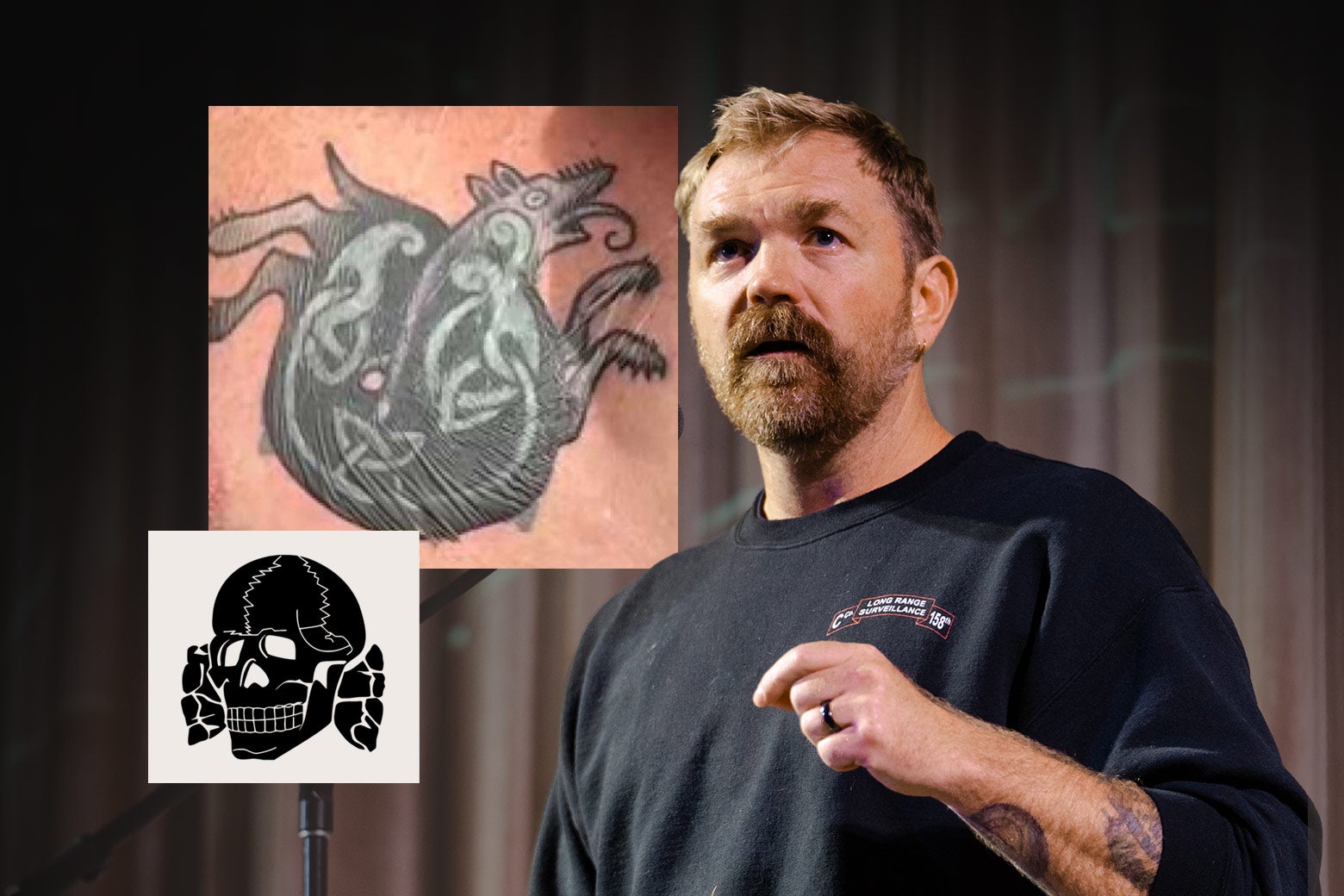
We're fixing it with the help of our wealthy donors
 Victor Ray
 James Marriott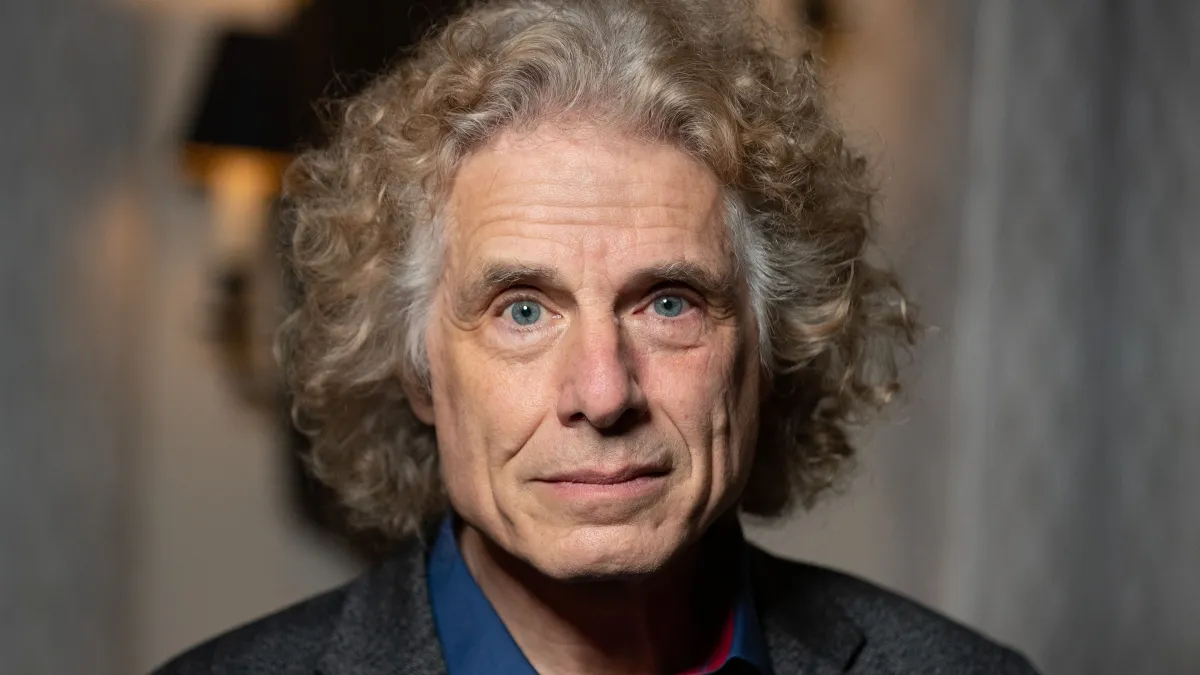
 <img src=“https://ash.harvard.edu/wp-content/uploads/2024/01/DanielleAllen-500x333.jpg” alt=”″> Danielle Allen
 Marianna Bacallao
 Ryan Quinn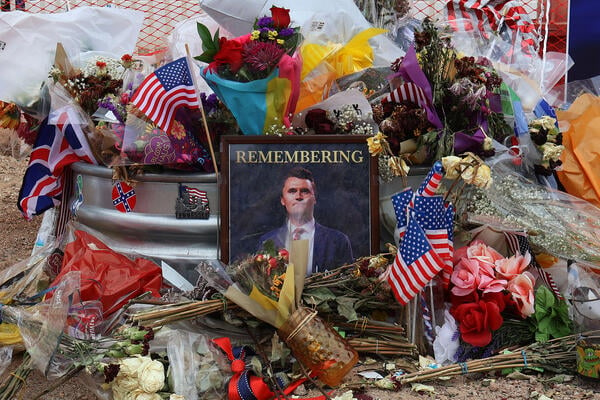
Trent R. Nelson [00:30] Well, happy days, they are here again. The skies above are clear again, but not so clear. We're still working on some of the final bits, and then you'll get to hear the whole song. Well, this is Half the Answer. Well, we'll get to the weather next time. Well, you understand that knowing a question is half the answer, and this is, of course, Half the Answer with your co-hosts Trent R. Nelson and Caitlin M. Green, and you know that we do other things than talking to a camera — we also write and we edit, and one of us is a linguist and one of us is into history and philosophy, and again, as my co-host said last week, I will let you determine which is which. Caitlin, I hope that she did ruin it. Caitlin, how have you been other than not sick for a record number of programs in a row? Well, we love to have recidivists, but we also like to have new friends. We like new friends. No new friends — we don't agree with that statement. Caitlin, who is our new friend on the program this day, and what are we talking about?
Caitlin M. Green [00:41] Yeah, and you forget — you forget I'm in Oregon. The skies are not clear, and they are very cloudy and gray. I ruined it. Honestly —
Caitlin M. Green [01:44] Yeah, I know I am approaching no-new-friends age, and I'm hoping to circumvent that. So, here we are. I have invited for us Adrian Daub, a professor in the Division of Literatures, Cultures, and Languages at Stanford University, faculty director of the Michelle R. Clayman Institute for Gender Research, co-host with Moira Donegan of In Bed with the Right, one of my personal favorite podcasts, and author of The Cancel Culture Panic, one of my favorite books. Hi, Adrian, how are you?
Adrian Daub [02:13] Hi, I'm good. I'm excited to talk cancel culture. It's been a minute.
Caitlin M. Green [02:18] Yeah, we love cancel culture here. I personally love engaging in it. I'm gonna start the episode off by regaling you with a story of my own personal foray into the practice of cancel culture. So I hope you're excited to hear a story.
Adrian Daub [02:30] Oh, please — it's anecdotes all the way down, usually. So more anecdotes are great.
Caitlin M. Green [02:35] Yeah, so here's my anecdote. It's how cancel culture discourse works, right? It's anecdotes. It doesn't really matter how old they are. It doesn't really matter how true they are. We're going to package them as evidence for a new and terrifying trend. So, here we are.
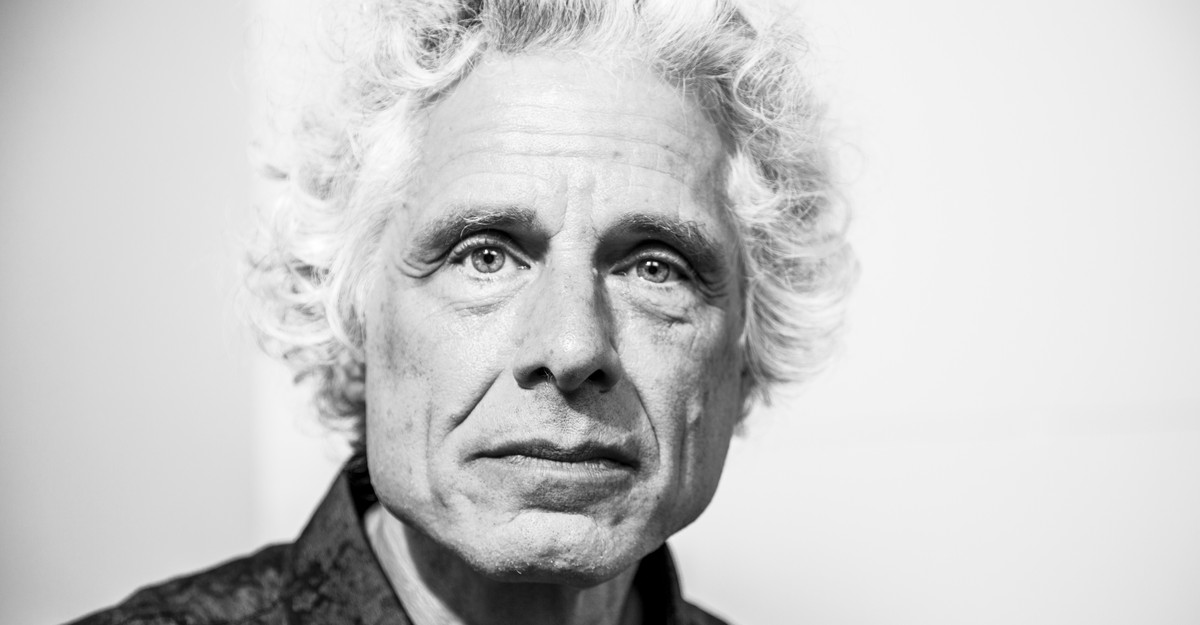
All right. Around six years ago, I canceled Steven Pinker. Why did I do it? Well, if you ask the famed Harvard cognitive science professor, it's because I was part of a mob of jealous nobodies. I had banded together with a group of other irrational, emotional, intellectually inferior zealots in order to try and topple one of the great men of academia on the basis of a few out-of-context tweets and a single passage from a book. Serious people, who are level-headed and very smart, took a look at the attempted cancelation and noticed parallels to all kinds of very dangerous, very illiberal movements: barbarians rushing the gates of a noble citadel, Maoist revolutionaries conducting struggle sessions, Soviet dictators condemning scholars to the gulag. These are all exactly like signing your name to a letter to the leadership of your own academic association, asking them to reconsider singling out for outsized celebration someone who, all things considered, is an ancillary member of our discipline, not a member of that organization, and often misrepresents and misappropriates core concepts in our field when it's convenient to score a point in popular media.
I mean, what were we thinking? Well, we weren't thinking, right? That's what Pinker and his allies attest. We were in thrall to the new orthodoxy, the modern Puritanism, the mindless moral clarity of the fashionable radicalism of our day. We're just lucky that he is important enough to the world that he will survive our cowardly attack. But just imagine what would happen if the glowing red eyes of the woke mob were to turn and focus on someone with less power. Can't you just feel the chill in the atmosphere? Can't you hear the jaws of a generation of heterodox thinkers slamming shut out of fear that they will be tarred and feathered for expressing common-sense, totally mainstream opinions that, despite being absolutely obvious and known by everybody, completely shatter every paradigm and would change the world if they were only allowed to speak it? Alas, they are not allowed because of woke, and how embarrassing for us that we went after such a staunch progressive in our mindless thirst for blood. I mean, if the mob can come after him for insufficient wokeness, truly nobody is safe.
Please don't laugh, this is serious, and Steven Pinker — as left as you get, basically Gandhi. Anyway, he did a little dance in his socks when Biden was elected. He posted it to Twitter. It was really cute. And if he were to seek allies on the right, if he were to grow somewhat reactionary, who could blame him now that he's seen the dark side of the progressive movement? But thank goodness we have a silver-haired martyr for liberalism and freedom itself, in the form of the uncancellable canceled professor. He is here to validate all our anxieties about the youths and how their culture is confusing and frightening to us. He is the sacrificial victim who will ring the alarm about the path that we are so clearly on, and thank goodness also for the fearless truth tellers at such diverse outlets as Quillette, UnHerd, The Telegraph, The New York Times, The Atlantic, and even Mother Jones, who all rehashed the same story, inaccuracies and all, in order to help spread the word about this earth-shattering story that clearly affects everyone. A letter designed to kick off a brief discussion within an academic association about how it presents itself to the world.
But now it's 2026 and cancel culture has been defeated. Or maybe the right has gone too far in addressing the totally real issues caused by cancel culture, or maybe the tactics of cancel culture are now troublingly being used by the right — trips off the tongue really well. Whatever it is, at least bankers can say the N word now, and isn't that true freedom?
Welcome, that's what happened to me. It was really fun. It was a time when I had a very small baby, and also the pandemic was keeping us all in our houses, so I had some time, and I thought I'd use it to just cancel a guy. Was it exhilarating? And now you never hear about him.
Trent R. Nelson [07:47] Well, like you said, Caitlin — now we never hear from Steven Pinker, which is fantastic, very good.
Adrian Daub [07:55] Yeah, you were like, "Where's the mob I can join?"
Caitlin M. Green [08:00] Yeah, just — I've got these pitchforks in my garage, and I don't really know what to do with them, so I think, why not? You're lucky, actually, because I was living near Stanford that I didn't come for you. I could have been anybody, really. I could have ridden my little bicycle over to your office and been like, "That's it, you're done."
Adrian Daub [08:15] Oh, yeah, it could happen to anybody. It's very important. It's what everyone's afraid of.
Caitlin M. Green [08:20] Yeah, he is no longer famous. He'd still wear the bag — the Shia LaBeouf bag that says "I am no longer famous" — because I did that to him.
Adrian Daub [08:30] Many are saying. Shia LaBeouf also probably canceled at this point. He confused his way out of his fifteen minutes of fame.
Caitlin M. Green [08:40] I don't really want to put in the effort to figure it out, because I think when I do, I'm not going to be happy about it. That was my opinion, and I was a child who loved that movie Holes that he was in. I thought that was so great.
Adrian Daub [08:55] Shia LaBeouf is like a New York Times Saturday crossword puzzle that only resolves to slurs, and you're like — first of all, it's a lot of work, but why would I put it in? He's inscrutable, but why would you scrute? Don't scrute it.
Caitlin M. Green [09:10] Well, I'm a huge fan of your book. It described a lot of the stuff that my colleagues and friends and I were kind of trying to figure out in the wake of the event with Pinker, because it was truly a storm in a teacup, right? And it felt really bad to those of us who were adjacent to it — in how the internet reacted to us, and how our target reacted to us, how Steven Pinker behaved in the aftermath. We kind of didn't expect any of that. Those of us who were talking to each other — we were not involved in creating the letter, we were simply watching it and trying to comment and make it clear what was happening, and it just got so weird and so uncomfortable. But we did kind of land on some of the things that you also land on in this book, which include the themes of cancel culture discourse. One of which that you talk about early on is that even though you maybe don't necessarily have the standing to describe any of these anecdotes as actually being an act of authoritarianism, you can certainly be "reminded" of authoritarianism, or you can draw allusions to it, or you can see us on a path to it. And so that happened to us, right, where people talked about cancel culture — and the kind of thing that we were doing — as just reminiscent... it's like, oh, it's just so very like gulags.
Adrian Daub [11:05] It's this very funny thing, right? Cancel culture discourse is, on the one hand, a reaction to the fact that online spaces and open letters and so on have sort of allowed people to react very quickly to events — like the invitation of a speaker or someone getting a prize — in ways that don't always maybe stand us in good stead, right? Where we're like, shoot, if I'd waited a week, if we'd taken one more pass at the letter, we might be prouder of it. But it reads the fact that there's some kind of immediacy in reactions — students quickly react on Facebook to a professor being accused of something — and then tries to gin up exactly that kind of reaction, while telling people that they're actually the guardians of reasonable public discourse. It's like, why on earth would you spotlight — maybe this undergraduate shouldn't have said what they said about the professor — why would you put that in the fucking Wall Street Journal and sort of hope that — what is your case for why that's necessary, and how that will help things along? How does that take the temperature down, right?
And the central irony in the book that I keep tracing is that the language game of cancel culture really allows us to assign excitement, excitation, or annoyance really different valences depending on who's doing it. The kid at Oberlin who says "that's not a bánh mì, and I think you should stop calling it that" — they just have an opinion. They're annoying. They're like, "I don't want to eat this." Maybe if they reflected on it, they'd have more things to say about it. Doesn't matter, it's an off-the-cuff reaction, but that's supposed to be bad — that's a sign of, as you say, a creeping authoritarianism. This shows us the path to new struggle sessions. Meanwhile, the people who use the kid not liking the sandwich to have maximalist fucking opinions about how we're headed towards a new McCarthyism from the left, and we really need to crack down on the youths — that person's snap judgment suddenly gets validated as, "Well, no, this person is on the good side."
So the way you can take two things that are obviously two sides of the same coin — that in an online age, our reactive speed is severely curtailed — and you can say, well, it means something not just different but actually diametrically opposed, depending on who's doing it. How old are they? How white are they? How male are they? How much power do they hold?
And that's where we get to something like the letter you're describing, where invariably it's always like, "Oh, it can happen to anyone," but it's always happening to some really powerful white guy, and the people allegedly doing it are generally not. It's usually something done by the young, by the non-white, by the non-male, by those with fewer institutional safeguards, to someone with a lot of them. And there's not just a misreading of how power structures our world — it's substituting discursive power, the fact that 2,000 people on Twitter can make a lot of noise, or could make a lot of noise before the algorithm had something to say about it, in a way that could make it sound like they were holding more cards than a Steven Pinker. It's like, well, no — yes, in that very space, you're hearing from the mob right now, but that's not the same thing as social power. There still is a social power that's distinct from what's happening on social media, and they in fact invert that very frequently.
If you look at a cancel culture anecdote of the kind you were starting with, you are looking at a thing where, if you look at how the story implies power is distributed, it'll be the exact opposite of your common-sense picture of how power might be distributed. The person who's getting an award would seem to be more powerful than the people not getting an award. The person whose name I've heard of, whose book I see at the airport, would seem to be potentially more influential than the person who signs a Google doc. The bargain that cancel culture anecdotes strike with their consumers — and there are consumers who these things really work for, I had to contend with that hugely in writing this book — for these people, at the word go, the way the world seems to normally work is placed in abeyance, or almost created and turned into its carnivalesque opposite, where those with no power have all the power. And which has the added benefit that you then have to go to the mat and defend established power structures, but you don't get to feel like an asshole or an authoritarian for it — which gets us to what's happening to these people now. You get to be liberal because you're doing it for discourse reasons, not just saying, "How dare you — I'm a big cheese here, and you're trying to mess with my stuff." No, you get to say, "I'm not upset — I'm just worried about the discourse. Y'all — chilling effect."
Caitlin M. Green [16:16] Yeah — the chilling effect. "I'm just really worried." And this was a huge element of what we saw after the Steven Pinker thing. The article that started it: "Steven Pinker will be fine, but a letter from his critics signals less powerful scholars that certain opinions, publicly stated, could result in professional sanction." It's like, oh, it's not about Pinker — he's actually really generously being the face of this as a way of helping you small people, where "I'm protecting you, actually." And "you're welcome." Also, all the photos of him are him looking very beleaguered and wide-eyed and freaked out.
Trent R. Nelson [17:00] I mean, that has to be the reason why they believe it, because otherwise it's just so disingenuous that, as you've noted, Adrian, there's really no reason why you would believe that 1,000 or 2,000 people yelling at some famous guy means anything other than that they disagree with the dumb shit that he said.
Adrian Daub [17:01] Yeah. Well, and we know they don't entirely believe it, because of course they must be aware on some level — I mean, Pinker's not stupid — that they're unleashing a torrent of exactly the kind of thing that they are critiquing on people who have a lot less institutional security to protect them from it. I have been on the receiving end of online hate. It kind of sucks. It's real nice to be tenured when that's happening, and to be like, "I'm just gonna log off and not open things up for seven days and hope it goes away." That's not an option if you're a graduate student and suddenly you're blazed all across the fucking New York Post, and you just have to hope, hope, hope that your department chair is chill or on vacation, or your dean doesn't say, "Look, cutting this person doesn't cost us shit, and I'm sick and tired of getting right-wing crank calls, so we're just gonna shit-can this person."
Not only do they not believe this trickles down — I think if they're honest, they pretend, but they don't. They must know that in fact they're visiting that upon their critics. I'm sure that more people at — well, we all know the rules of the internet: the moment you become identified in anything publicly, you're gonna get a couple of death threats, because there are truly disturbed individuals on the internet. I tend to think of it as kind of the cost of doing business, honestly, but it does mean that making someone identifiable has a certain cost attached to it, and you should think about it. And in these cases, because Pinker is the victim, putting you on blast is considered kind of a victimless crime. So great — you're giving the freaks of the internet an excuse to be awful to a person with less institutional power and to feel like defenders of freedom doing it. Wonderful recipe.
Caitlin M. Green [19:23] Right. And what happened with the letter too is that it was being shared kind of privately among linguists, and then the reason why it broke was Claire Lehmann got her hands on it from Quillette, and she posted the link to the document, and so it essentially from that point on functioned as a list of people who "we" hate, with everybody who signed. And a fun fact that you obviously know is that if you're staff at a university — if you're faculty or a grad student — even if you go look them up by the name of their university, there's a public-facing page that tells you where their office is, what their email is, maybe a phone number you can use. A lot of information you can use if you really want to bother that person.
I was unaffiliated because I was taking time to have my baby, and so nobody was able to get to me, but a lot of people that I know and love got crazy phone calls. I just got online offers for helicopter rides and cool, fun, exciting adventures like that, which I was able to cope with because they didn't know where I was. It was only when somebody who worked with Steven Pinker started to mess with me that I was like — she could reasonably find out where I live — that I started to get a little nervous. But otherwise I was pretty shielded, actually, and that's why I took on some of that risk by doing Medium posts and things about "here's what is really happening, I feel that we're being misrepresented."
Which — I don't know, probably with more distance, I now maybe feel like digging into the weeds and getting the details exactly correct was not exactly central to the issue, right? You spend some time in the book being like, "I'm not here to litigate the individual anecdotes, because that's not what it's about." It's not about how true they are, it's not about how accurate they are. It's about what they do for this larger sort of practice of cancel culture discourse. But I got every detail right, gosh darn it, and that's good for me. It's very whack-a-mole.
Adrian Daub [21:59] Well, I congratulate you, but that's the thing, right? It's also how triggering works in this discourse. "Oh, the undergraduates were triggered." Well, how would you describe the process of writing about an anecdote on a campus that none of your readers have ever been to, about something that you describe as so patently absurd? Are you not looking to trigger? Is this not what this is? Is this not clickbait? Are you not hoping that they will react in intemperate ways?
And death threats and whatever — we can set aside — it's like, you seem to think that part of being in a democratic society is hearing opinions that we disagree with and not freaking out, but I need you to freak out about the people who are freaking out. It's like, okay, you're the very thing you're describing as the problem you keep engendering.
And honestly, that was kind of the whole vibe I tried to go for with my book. I do go kind of exhaustively into these things, and I spend precious paragraphs taking these things apart to say, "Let's not get angry — let's actually see what happens if we do take the temperature down." And this soufflé just collapses right away. The lend-you-a-read is the big enemy of these things. This is where I come to the sub-titular diagnosis that this is a moral panic. If it can only work in the overheated moment, and afterwards everyone sort of walks away from it whistling, it probably was not an accurate description of events.
I would even grant that sometimes reacting to things very quickly is not a great idea. Should we not hold Steven Pinker to a higher standard than the average undergraduate? The fact that 19-year-olds sometimes have rash opinions — yeah, have you met 19-year-olds? That'll happen. I would think that our public intellectuals might need to have a higher maturity level, question mark, who knows.
Caitlin M. Green [24:25] Right.
Adrian Daub [24:30] I think what we owe our students is kind of an interesting question. There are limits to that, and there are things that we often don't reflect on that we owe them. But surely whatever the minimum is, having their potentially good-faith, potentially misguided, definitely 19-year-old opinions not handed off to a national news outlet would seem to be number one, right? You really don't do that. These kids are growing up around you, and you're like, "You know what's really gonna help their maturation process? If I tell the fucking Wall Street Journal about it."
Caitlin M. Green [24:51] And to this day, Thomas Chatterton Williams is obsessed with that document. He puts it — he links to it in every op-ed that he can, which is most of them, because he's usually only doing the same article, so it fits. But yeah, it was like, "Oh, they've banished the whole of the campus," right? Because you talked about reversing the marginal and the central, where it's like, oh, it's this thing that is so small, and it's only for these people, and they're just talking about it here, and then somebody decides, "No, actually it's everybody, it's the whole school."
Adrian Daub [25:30] Yeah, for one thing there is an ecosystem that thrives on these anecdotes and that needs them, and none of these people are working particularly hard to find them. So basically you have to end up in some conservative campus newsletter, usually by getting aggregated out of a Coke-funded right-wing student newspaper or something like that. Then you want to get picked up by the American Enterprise Institute or something. Eventually you make your way to the Wall Street Journal.
The thing is, these things need to be put out — if it's not gonna fit, they're gonna make it fit, because everyone has deadlines to meet. And frankly, the stakes are super low. No one can ever sue about these things, because, as I say, in the outlines they're usually correct — you wrote a letter — and then the rest is all interpretation, which they're hoping that the readers don't notice.
But I do think there's just this giant shop vac hoovering these things up. And the other thing is that, in the end, when you re-narrate these events — "students didn't like sandwich at dining hall," "colleagues thought person shouldn't win an award because he wasn't a member of the professional organization" — there are cases that really dissolve into "people thought colleague was overusing Xerox privileges." We're all weirdos hanging out on university campuses for decades and decades, slowly accruing these weird micro-grievances with each other. These are tiny, tiny tempests in a teapot that you then kind of have to blow up — meaning it's almost impossible for them not to blow up, right?
The other thing, of course — we commit everything to fucking paper in the age of the internet, meaning it's very easy to take a document out of context if it doesn't say what you think it does.
The big case we had at Stanford was the Elimination of Harmful Language Initiative. Basically our IT department had been like, "Should we get rid of the word 'slave' in our coding?" And they were like, "What other words could we put on here?" — and the resulting list was odd in the sense that they were trying to avoid the word "Karen." I'm like, what kind of programming do you all do? But it was this Google Doc that apparently lived on a staff Slack channel until the Stanford Review dug it up, and suddenly it was in the Wall Street Journal as "Stanford is banning these words."
Trent R. Nelson [27:06] Right — what is the context?
Adrian Daub [27:10] It's the TCW article, yeah. It's "the university" — which, for those of us who are denizens of that particular ecosystem, should already be kind of a tell. Which is why it's so fucking insane when someone like Pinker does it, who's been at a place like Harvard forever — what does it mean, "the university"? It's a lot of places, a lot of people. But this is how this has worked since the '80s. A well-meaning resident dean at a small liberal arts college will put something in... I remember when I went to college — pre-digitally, kind of — we had this folder of differently colored papers: how to talk to your roommate, how to get laundry service, how to write — because you're 18, you don't know shit. They put all that in a folder, and there are 1980s, 1990s political-correctness stories where it's like some resident dean put something in that folder that was worded maybe a little strangely. And it's like, dudes — the guy wrote that in late August, going, "This thing's got to go in there real fast." Didn't run it by anyone. The Xerox — they're like, "Yeah, it's a little bit unfortunate, sure, but we got 2,000 of these things lying around. Put them in the fucking folders. We're not killing another tree." And then suddenly it's in the American Enterprise Institute newsletter, and you're like, "We do understand that there's a lack of scale that's in operation here, right? You're taking this thing and saying this is the university talking ex cathedra, as opposed to what is realistically how this document came about."
Caitlin M. Green [28:00] Yeah. And it's so very clear in the document, too, that they're like, "This is by no means mandatory, it's just something we've been thinking about, this is kind of a collaborative document where we all threw something in to see what we thought." And then people are like, "It's Orwell, is what it is. It's Big Brother — he's taken all of your words away, and now you don't have any."
And it's like Alex Jones-level analysis, where he'll read a document from FEMA or wherever they're playing through a hypothetical scenario of like "what would we do if this happens, what would we need to do if there was a sudden catastrophic crop failure" — and it would involve some really difficult stuff — and then Alex Jones takes it and he's like, "It looks like they're planning to do crop failures." And it's like, no, that wasn't what it was for. But that's Thomas Chatterton Williams, for some reason.
Adrian Daub [28:31] Part of it is that, for viewers and listeners who are not as familiar with this genre, you may notice — one thing I would encourage people to check out is where these articles appear. There is some stuff in the New York Times about this. The Atlantic was huge on it. And the reason I'm harping on this is because it's usually in sections of magazines or newspapers that are not that thoroughly fact-checked, because they're more — it's often the opinion page, which is not fact-checked, or it's the culture pages, where you kind of are like, "Well, did this happen? Okay." The idea is, well, this is mostly interpretation and analysis anyway — the same way that if your opera critic makes up an opera, that's bad, but if they say "I didn't like it," you can't fact-check that.
So it does show up often in places where we don't have very robust fact-checking, and frankly, it's not even really journalism but mostly opinion. And that's often telling. In the book, which proceeds very internationally, one example I gave is — in Germany and Switzerland, they were convinced that cancel culture was coming from the US. So the obvious place you would expect to see cancel culture stories would be the foreign section, the world section. It's coming from the world, so why not talk about it in the world section? Well, that's not where they are. They're usually in what's called the Feuilleton — the culture pages. That tells you something, because the world section tends to be pretty rigorously fact-checked. These are the people who report on stock movements and shit like that — you don't want to get that wrong.
So basically it's like, okay, if Javier Milei's crackdown in Argentina is gonna be in the world section, the authoritarian crackdown by undergraduates at Oberlin College weirdly isn't. Does that suggest that someone deep down knows that these two things are not the same, and is only telling you differently because they're bullshitting you?
Caitlin M. Green [30:38] It's echoes, Adrian. It's echoes of authoritarianism. It's fleeting thoughts.
Adrian Daub [30:45] Oh yeah, my favorite formulation. This is from a French — I think it was a minister of culture or education — who's like, "This will lead to a road that resembles fascism," or something. Literally, there's more weaseling than saying in this sentence. You're sort of gesturing to where — yeah, of authoritarianism. It's wild. You can't get yourself to say it, can you? And that should tell you something.
Caitlin M. Green [31:52] This will point to a driveway at the end of a cul-de-sac.
Adrian Daub [31:58] Yeah, or the other thing they love is like, "Here's what happened during the French Revolution. Here's what happened at Oberlin College. Are they the same? Of course not." And you're like, okay, then why are we doing this?
Caitlin M. Green [32:07] Someone deep inside of that guy's brain is like, "Come on, tell the truth," and he's like, "Well, it's like — it considered directing you towards a river that flows by the banks of a house that looks like fascism."
Adrian Daub [32:25] That's the other thing, right, that — it does suggest that some people, if someone is using the R word, they're just engaging in a debate. If someone says, "Hey, maybe we shouldn't use the R word," apparently that's not a debate. It's this very interesting thing where they're like, "There was no debate, they just canceled him." And it's like, what you call cancelation seems an awful lot like a debate. Why does one write an open letter? It's not like that's what Stalin did. I think, Trent, you were making that joke — the NKVD wasn't an open letter to Comrade So-and-So, "and now we're gonna send you to the gulag." No, you do it to start a dialogue. But then, "They were not interested in dialogue." It's like, well, how the fuck do you know?
And then the other trick is, of course, that they don't talk to the people doing this. Usually the focalization — this is where I, as a literature scholar, get very interested — normally the account of the supposed cancelation is through the figure of the canceled person. And then you get things like "I didn't even know who it was," and it's like, well, presumably a journalist could find out and be like, "Hey, can I interview you?" And you know that's not happening, because the English language has the phrase "when reached for" — "We reached out to blah blah for comment, and he refused to comment." That tells you we did the homework. And again, in a politics section, that's going to happen as standard practice. You're not going to put something to print without having done that. It's very noticeable that very, very rarely do they at all reach out to the people supposedly doing the canceling, and when they do, it is one of those "nevertheless" paragraphs that Michael Hobbs likes, where they're like, "Oh, we're not accusing him of this, we're just saying this." And it's like, okay, well, it feels like this should have been in paragraph two rather than on page A33.
Caitlin M. Green [32:37] Yeah, there's a lot of — what Michael Hobbs always points out — the "to be sure" paragraph. I love the "to be sure" paragraph: "To be sure, this is simply a student having an opinion, however it indicates a general vibe that I'm uncomfortable with, for reasons that are completely rational and legitimate, and not that I'm just aging and I don't feel comfortable with the fact that young people talk different from me."
Caitlin M. Green [34:46] So we experienced this as well, where Pinker said something that was fully patently false, which is he was like, "Well, the Linguistic Society of America actually rejected both of the demands that were in the letter," and that's not actually true. They actually did one of them, and then they kind of put off but talked about assembling a committee to think about handling the other one. And so we reached out to Michael Powell, who had reproduced that false claim, and we asked him, "Hey, would you be willing to correct that? Given, here's some documentary evidence that shows you that it's not the case." And he just kept saying, "Oh, the reporting that we did at the time was factual." And it's like, "Well, no, because you said something happened when it didn't, so there was never a time when it was factual."
And we pissed him off so bad that he just started responding with the word "cool" spelled with a K and a period, which I think — like the crying-laughing emoji — is someone who's as mad as they've ever been. But I do think there's a level beyond, which is spelling cool with a K and then putting a period after it. And that's where we got Michael Powell.
Trent R. Nelson [36:45] But we do this in other walks of life as well, and I suspect it's because, for some reason, we in these contexts stop appraising them as still being youths, as still being 19, 20, 21, 22 years old — youths who do athletics often get blown up in the media for making mistakes, and I often have to tell people, this is a 22-year-old person, this is a young person. Do you remember the things that you were doing when you were a young person? They were also ridiculous and stupid, and you should have a bit of grace for them. But it seems as though, in the context of higher education, in the context of professional business, it becomes convenient for us to judge them, as you noted, as we should be judging others with a much higher level of life experience.
Caitlin M. Green [37:47] Yeah, and also, they're educators, right? So they're supposed to be experienced in fielding and managing the input of younger people, and prioritizing their development. And this is an example of just completely abdicating that kind of — what you would think is a responsibility that they hold fairly high in their value system. But here it's like, "These fucking kids — you should totally end them, because they're monsters, actually, and they're making the sweet poor little conservative kids afraid to be conservative in public."
Adrian Daub [38:10] Well, we infantilize, in fact, those in power — that's the converse. We infantilize those in power, and we age up. This is deeply racialized and gendered. "Oh, they were just kids" — that guy's 30. But I think the other thing that's happening is — so there is individual responsibility, and as a podcaster who works on far-right stuff, I sometimes have to catch myself and be like, "Oh, these people are 14 or 15." Yes, they're right-wing assholes, but also they're a little young for me to put them on blast. So this is something that we all — I think being like, "Oh, shit, these are kids" — is definitely something that we can all stand to remind ourselves of sometimes.
But a lot of this is structural. I always make the joke that The New York Times appears to have more — or for a while appeared to have more — journalists or correspondents at Harvard than it did in the Upper Midwest. And you're like, to do what? If you seem to be setting up a structure that is meant to catch young people at their most thoughtless, at their most regrettable, and blast that and put that in the newspaper of record — that feels to me fucked up.
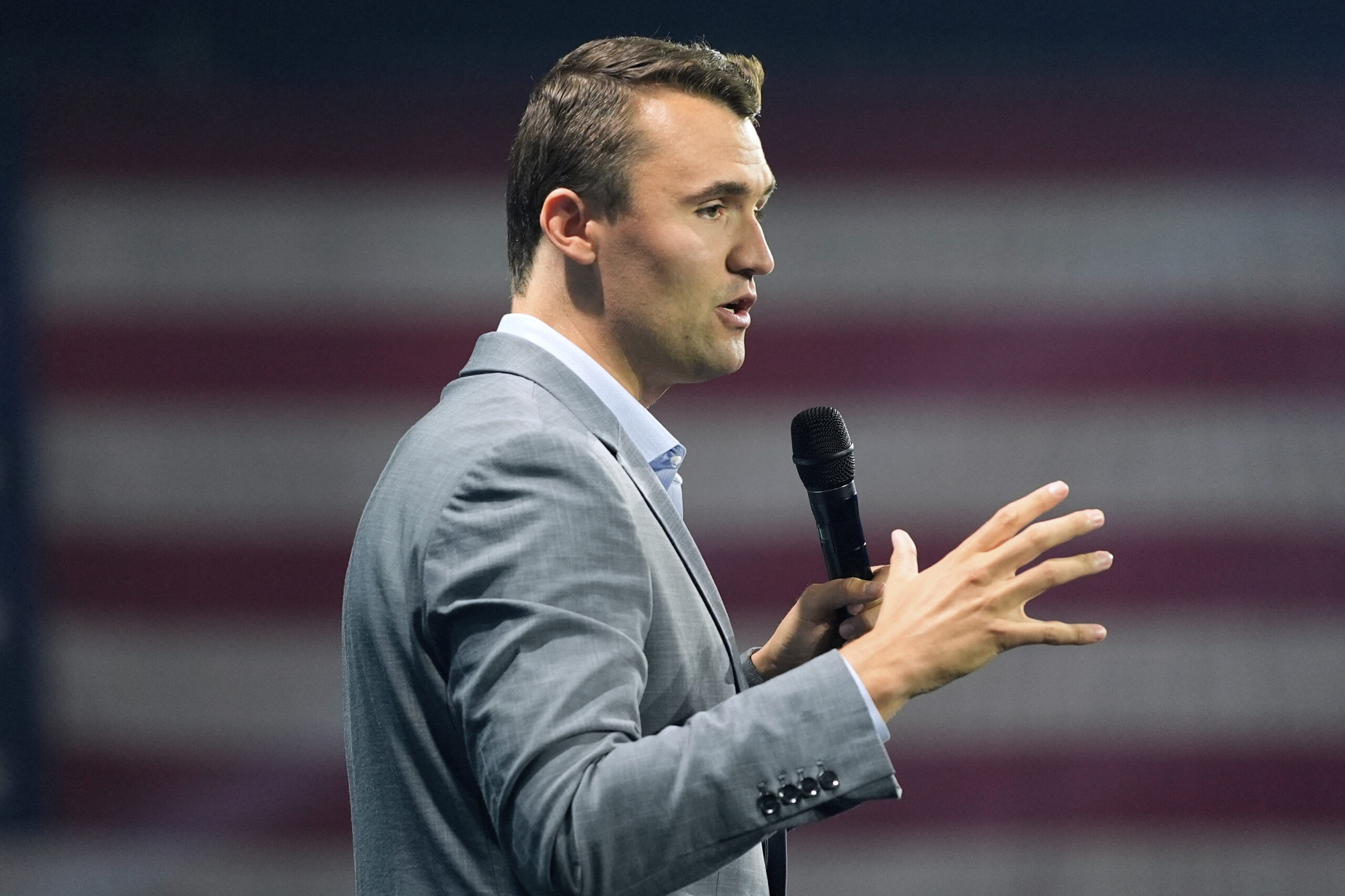
And look, if an individual person goes to Columbia to find regrettable things that people at a Palestine encampment say, I don't love that as a job, but that person wandered in there, whatever. It's fucking weird if a news organ clearly sets it up that way. It's like, "We don't need to hear from two thirds of the country — we want to hear from brown undergraduates." And it's like, well, think about what you're doing. This is someone's job. The number of people whose job at The New York Times it is, or at The Atlantic, to stick a microphone in undergraduates' faces and hope that they say things that are maybe less than thought out — that's their job. And we should name it — we know what that is, that's Charlie Kirk. They're essentially running fifteen Charlie Kirks, and it's basically content mill. And that's fine, but then you're a right-wing news outlet — you're not really reporting the news.
That's the same way that the guy who makes the exploding packages from Amazon and hopes to catch people getting covered in green glitter — that man is not saying, "Oh, this is independent of what I did." He's like, "This is bait, I'm baiting people, and that's content I create." No hate, but that man does not have a section in The New York Times about porch piracy. He's like, "No, this is an entertainment product, and you can enjoy that, and it's gonna be a skewed version of reality, but glitter in someone's face is fucking hilarious." That's different from, "We're telling you what's really happening at universities based on our six gomers that we send to the Ivy League on the Acela corridor — so no Dartmouth and no Cornell — and just hope that we get some good tape." That's really not even journalism. It really feels like content creation.
Caitlin M. Green [43:07] I did this.
Adrian Daub [43:10] Yeah.
Caitlin M. Green [43:59] Whoops.
Caitlin M. Green [44:27] And again I'm gonna say Alex Jones again. It's Alex Jones going down to the border, hoping to catch some illegals, and being like, "This is journalism that I'm doing." I don't know if it is.
Trent R. Nelson [44:30] Absolutely. Well, again, you're fishing for young people, and then, as you noted, Adrian, framing them — aging them, framing them as though they should be more wise and old. When we know, when again we take a step back and we distill it down, we know that that's irrational, we know that that's insane, we know that they deserve grace. And if they do deserve pushback, then push back in the way that we would hope to be pushed back on ourselves in a civilized society.
Adrian Daub [45:13] Yeah, I agree with you. At the same time, I think that in some ways we also owe it to them to push back as part of their education. So I do think that saying "hey, this is not okay, and you shouldn't have done this" is fine. The question is about the additional layer of packaging that incident and then doing something with it. I don't think that can never happen, right? I think something like the Brock Turner case at Stanford is a good example of saying this individual infraction actually shines a light on something big. But you got to justify it, and it can't just be like, "Well, here's an NKVD comparison" that's really dumb. It has to be, "This is happening at colleges all over the country, we have data on this, this is why we should look at this case more carefully."
Caitlin M. Green [45:54] Right. Well, because you say it represented a larger trend that actually exists that can be documented, whereas in the case of cancel culture events on campuses, what you have instead is these surveys that FIRE does, and that these other organizations do, that are just — I did a PhD in linguistics, right? Part of that program involved learning how to do questionnaires. And wow, these questionnaires are not done right. They are weird as hell. Every item is written in a way that's like, "Why would you word it like this, unless you were looking for something specific?"
Adrian Daub [47:01] Yeah, the questionnaires often — just to give listeners a couple of examples — they often ask about, "Would you feel comfortable," right? There's a lot of language of comfort, which is very, very subjective. They never ask, "Have you faced adverse consequences?" — which would be, again, that can also be subjective, but the bar you're setting for people is clearly higher.
The other thing that you often get is the question, "Would you feel comfortable discussing controversial issues around race, gender, and sexuality?" — and it's like, well, you're clearly imagining a white person discussing Black Lives Matter, not a Black person discussing Black Lives Matter. It's homosexuality as a topic, not as your own identity. So you're already sending a pretty clear message about who's supposed to respond to this, and whose silence matters, and whose silence is just par for the course. "That's just what it is to be a person of color in a majority-white workplace — you just don't say controversial shit."
They never ask, "Are you okay being out as trans at your workplace?" — because they wouldn't like the answer, but it's also not the kind of self-censorship they care about. They care about Jonathan Whiteman the Third saying, "I can't — I didn't get to say the N word in my sociology class." And you're like, that's the civil rights struggle of our day. And now we have an administration that seems to be there for him, which is just so great.
But it just becomes this — it's not that they're just poorly phrased. They really tell a story and communicate a lesson about what free speech really means and whose we value and are invested in.
Caitlin M. Green [48:44] Yeah, it is so interesting the way that they desperately avoid asking questions that would reveal, "Oh, I wouldn't want anyone to know that I'm trans in these particular places," or "I don't correct people when they stereotype me based on my race, because it would start a whole thing." There's a lot of stuff like that going on.
Adrian Daub [49:10] I mean, ask any gay person whether they've said "my partner." That's a form of self-censorship — we don't even think about it anymore, but that's a form of self-censorship. I'd be interested if that was ever asked about. It's just not quite what they're interested in.
I also think that there's an element here of — with something like these questionnaires, you also get a very clear sense that they're really banking on recency bias. Because one of the problems you run into when you sort of grant these anecdotes — like, some of these are even true, some of these are even regrettable — it's like, "Well, isn't that a problem?" It's like, well, is it getting worse or better? And here you can look at these graphs, which all show that things have gotten much, much worse. And this is where recency bias is just an absolute motherfucker, because people will remember the cases from two years ago, three years ago. They will not remember the ones from ten years ago. In many cases, they will, in fact — the people who wrote the pieces fifteen years ago will have kind of forgotten that they've done this, because they don't give a shit, ultimately. It's not that important to them.
The people who are like, "Oh, well, I was for gay marriage, and now — but this whole trans stuff has gone too far" — and you read back, and you're like, "Point of order — you also were not in favor of gay marriage." It's like, maybe in your sundowning mind, but not in actual fact in print. We do have LexisNexis, unfortunately — that's their big enemy.
Caitlin M. Green [50:36] Right. And you talk in the book about this kind of amnesia that you have to get with a moral panic, because if you remembered how freaked out you were about the last one that didn't turn into anything catastrophic, then you wouldn't be able to get appropriately freaked out about this one, because you'd be like, "Oh right — it's actually fine, probably."
Adrian Daub [51:15] Yeah, I mean, I'll encourage listeners to think about trigger warnings, safe spaces, social emotional learning — these are all trial balloons that waft through our living rooms, and it's like, "Oh wait, yeah, everyone had an opinion about this, and then it was like, 'Oh, is this a big deal, or should we just move on?'" But you're right, it does — that's also why it succeeds in print media, because very rarely do people sort of remember what they read in a daily newspaper six years ago. Even if you're a religious reader of one of these newspapers, it's 1,800 issues ago. The human brain does take the trash out at some point, and you're like, "I don't... this feels familiar, but I can't remember."
Caitlin M. Green [51:55] You have to prune.
Adrian Daub [52:00] Yeah. I do think — again, it's like, I'm not chastising anyone who finds these stories persuasive. I am chastising institutions. Could The Atlantic be like, "Hey, can we do a quick search in our own archives whether we've done this article before we do it again?" That would be nice, because precisely because their readership is to some extent vulnerable — it's true, you will not remember.
There's a famous cancel culture warrior — or anti-cancel culture warrior — I won't name him here, who wrote a piece four years apart in which a student told him the exact same thing "just last month." And it's like, I don't know, man — either you have a student coming in reciting the same text every month, or it feels like you have this polished turd of an anecdote, and you're just submitting it each time. The point is, they know they're not going to get checked up on it, and they know they're not going to get fact-checked, and it's also unfact-checkable. Maybe a student said something kind of similar.
Caitlin M. Green [53:00] My favorite example from the book really was the flip chart example, where every couple of years somebody's like, "Well, I heard there was a meeting where somebody told them they couldn't say the word 'flip chart' because 'flip' is a slur for Filipino people." And it's continuing now in a time when nobody has a flip chart. And they'll even say, "Now I understand that the technology seems a little outdated, but some places they're still probably using flip charts, and in one of them, somebody was scolded for using the phrase." So they can avoid it.
Trent R. Nelson [53:49] I mean, being 35 myself, I have lived through a few moral panics, but I can't help but wonder — Adrian, you've been so wonderful, we appreciate you so much for coming on and chatting with us — but how do people keep falling for the banana in the tailpipe? With the satanic panic and the gay panic and this panic — it seems like there's at least one or two every decade. How is it so simple to fall back into these holes that seem, as you just noted, if we look from the hills afterwards, they seem like very clear valleys? We shouldn't be getting shocked by them.
Adrian Daub [54:59] That's the level of virtue signaling I can only aspire to — I'm not bringing a flip chart in here.
Adrian Daub [55:05] Yeah, so I think for the individual consumer, the outlook is unfortunately fairly bleak. I think that it's about attention management, attention economy. A lot of things we read and hear about, we just don't pay that much attention to, which is fine. And then we're extremely dependent on the kind of information that is pre-selected for us, and that can lead you in an okay direction if you trust the right outlet about the right issue, or it can be really misleading if you get that wrong. I do think we have a real problem there.
I really think it's at the level of institutions. A lot of these moral panics right now are at the intersection of internet culture and print culture, and I think insisting on a kind of professionalism and professional ethics for journalism on online spaces is key. I see my book as kind of a part of that effort.
There was a case — this was about another moral panic — where someone in Germany sort of cited a tweet comparing Hamas to Nelson Mandela. He's like, "This is what leftists are doing now — they're saying Hamas is like Nelson Mandela." And I was a little nonplussed, because I was like, this person has this whole tweet, and they don't show how many times it got liked or retweeted, which I would find very interesting information. If this has millions of retweets — yeah, that sounds pretty concerning. How do people think something like that? But if it's five or fifteen — I don't know. Well, it turns out it had none.
And I was like, well, this feels like the kind of thing that we really should have a press codex about, where we say, you can't do that. If a person online says it, that's like Googling something — you're gonna get a hit. You're getting into the brains of a couple hundred million of the most disturbed individuals on the planet. Someone will have said it. The question is, what's the — is there a clear line that we can draw? No. If only 10,000 people retweet something, but one of them is JD Vance, that feels significant, because that guy has some real impact. If Ibram X. Kendi retweets something, fine, you can talk about that. But it seems to me that some kind of effort to establish — and maybe even informing your readership — like, "So we found this, we should be clear, doesn't seem to have gone that far," but you know, there can be codices, there can be rules, they can also just be self-enforced norms.
I have, since writing this book, become very, very careful about using tweets as sources. I really only use them when I can reliably say, here's why it matters and represents something. So for my new book, for instance, I look a lot at VC Twitter, and I'm like, well, I'm not saying that this is what everyone thinks in Silicon Valley, but VC Twitter is like 1,000 guys, and if David Sacks tweets something and Marc Andreessen retweets it, then it kind of is fair game. We're really starting to be about the hive mind of this very particular group. But you have to be explicit, and you have to be specific about who's doing it and why you think it's evidence. What you can't do is "online, people were like..." — okay, that can mean anything. That could be a Tumblr post from a 14-year-old, that can be a Facebook post. Did anyone see this? Did people react? What was its reach?
Caitlin M. Green [58:33] Right. Were they welcomed with open arms, like by the whole community, or were they just yelling into the void?
Adrian Daub [58:40] Yeah, I mean — the infamous one about Frida Kahlo. There was a tweet by someone about Frida Kahlo that people sort of clowned on. It's like, "Oh, it went viral." It's like, yeah, it went viral because everyone dunked on the poor girl. Everyone was like, "I'm gonna do a dunk" — because it was a good setup. I don't love that for them, I don't think that's great, but still, it's how the internet works, and that's what you have to ask. You can't be like — virality can mean anything, right? Retweets can mean a bunch of things.
Caitlin M. Green [59:13] And some statements are just so riffable, and people cannot resist. Oh man — 30 to 50 feral hogs. One guy! It was just amazing the way it read.
Adrian Daub [59:25] Yeah, like the feral hogs — you can say, "Is the internet obsessed with feral hogs?" No, it's a funny fucking formula. So virality can mean anything.
Caitlin M. Green [59:30] We had a similar moment — we had a 30-to-50-feral-hogs moment with the Steven Pinker thing, where among those of us who were in the teacup where the storm was, we were obsessed with this thing that Steven Pinker kept saying. Because they love to be like, "Well, it's not just me — it's everybody everywhere, this actually impacts everybody everywhere," and then they'll cite an anecdote. And what was happening was John McWhorter was claiming to get dozens of emails every day from people from every professional sector you could imagine, talking about how silenced they felt about being sort of classical liberals or centrists or that kind of thing. And so then Steven Pinker said, "Not just profs — this a.m. from a worker," and then he quotes this absolutely fabricated-as-hell quote from "a worker." Like, what do you mean, "a worker"? First of all, you are so — the ivory tower is in space now. You can't even think of a kind of worker. But he's like, "From a worker," and the guy is like, "I just want to confess — I'm a liberal in the tradition of Locke and Hume, and I want to confess my liberal centrist feelings."
And so we were just like — "liberal centrist feelings" — "this a.m. from a worker" — I'm patting the dust off of my coveralls, just thinking about Hume. "Please let me confess my liberal feelings."
Trent R. Nelson [1:00:55] All I do is talk to workers who speak like that all the time, and they all think like that as well. Very normal way of thinking. Unbelievable.
Caitlin M. Green [1:01:15] He's also famously a guy you should email if you want to complain about cancel culture, so yeah, people are gonna email him. I get emails from parents of trans kids who are like, "I feel better, thanks." It's what you do when you have a beat — people respond to you about it.
Adrian Daub [1:02:00] I mean, I also think that a lot of the times — a lot of this is about the way aging brains and technology interact. I think a lot of what this is, is that these guys have long been in group chats together, so probably John McWhorter doesn't get all these emails — I'm sure he gets some, but also people will forward things to a Signal group that they're all in.
Caitlin M. Green [1:02:15] Yeah.
Adrian Daub [1:02:30] Yeah, and I mean — I write about how AI is bullshit, and people are like, "Here's a thing about AI." But it's like, again — does that mean it's marginal, does that mean it's central? You have no idea. These five people could be representing a groundswell, or as you say, they're the people who were primed to find you. There are ways to find out, but they don't do that.
In the book I argue that in some way, the cancel culture panic, as opposed to the political correctness panic, can be understood as a reaction to MeToo. And I think MeToo is a good example — or Black Lives Matter too — of what they think they're doing and what they're doing wrong, deliberately. Because in some ways — and I want to be very careful here to say that I'm not actually comparing these two things, but I'm saying if you were to assume that they were the same, the structure in both cases is: you have a bunch of individual cases, and you try to make a case that they indicate something really, really troubling. A bunch of African American motorists and people in apartments get killed by the police — this indicates a problem in policing. A bunch of speakers get shouted at at universities — that indicates a general problem.
The work that Black Lives Matter crucially did, and that MeToo crucially did, is to explain why and how these were more than individual incidents and why they were indicative. That's the whole point. Someone like McWhorter or Pinker may hate talk of white supremacy, but that is an attempt to get from the individual outrage to the systemic diagnosis — which is what they fail to provide in their case. What is the connection between an open letter against Steven Pinker and the supposed new Stalinism in our most august institutions? "Yes, but what about this case, what about this case?" No — I need you to explain to me how 19-year-olds have power at a university. "No, but have you heard of this case?" I need you to shut up about the cases. Tell me on a level of abstractness. But they never get to the level of abstractness, or if they do, it's a level of abstractness that's airless — it's vibes.
Caitlin M. Green [1:04:05] Right — well, it's woke orthodoxy, or it's the new something. Tell me mechanisms.
Adrian Daub [1:04:15] It just doesn't follow, or they have something, but it completely contradicts what their buddy on the next cubicle over thinks. Because you'll have one person being like, "Well, it's the infiltration of Marxist ideology into the university, and they're indoctrinating the students," and then you have somebody else who's like, "No, young people are just all mentally ill because of their phones." And it's like, well, okay — you have to actually explain how this works, because that's a lot.
Caitlin M. Green [1:04:30] Right — you can't do both. These are Marxist consumerist neoliberals. Okay, and you really have to watch out for them, because they could do anything at any moment. They're so erratic.
Trent R. Nelson [1:06:05] Just like Marx brought it up, yeah.
Adrian Daub [1:06:10] I mean, this is often a description that people know — this is how people talk about antisemitism, to sort of say, what's characteristic of antisemitism — classical descriptions are: they're all-powerful and totally powerless, they're dominant and super weak. If you are holding opposite beliefs about the same person, they're an ideological construct. You've made them up to displace contradictions on. It's the same way that today trans kids are marshaled as a discursive object — "Oh, they're totally dominant in the culture, but also they're just way out there." And it's like, well, you have to pick one. They're not both. That's an imaginary object that you are now using to prop up what's ultimately a contradictory attitude towards them.
And the other thing that I would point out is that it's also a picture of power that just seems itself internally contradictory, and that is often actively disinterested — or sometimes just plain ignorant — of how power is distributed at a university. I always say that if I were to find out that my students were upset at me for something I said in lecture — would I be annoyed by that? Possibly. Would I worry that it's really gonna impact my course evaluations, that maybe next year no one will sign up? Do I maybe think that I'm gonna get some mean emails? Yeah, I guess so. If I find out that a major donor to Stanford University is unhappy about what I said, I'm not sleeping that night. Because that is someone who holds real fucking power at the university.
And yet, how many stories do we know of cancelations at universities that involve a donor? The number one way to get shit-canned at a US university, I would contend, is to upset someone with money, whether or not that is a donor, or whether or not that's a member of the state legislature in the case of a public university. That's not where you want to be. And yet it's striking that they are never the actors in any of these scenarios, these anecdotes.
And that's what makes the cancel culture discourse kind of an ersatz — or a stupid person's, sorry — version of MeToo and Black Lives Matter, because those two operate with real theories of power. They're able to articulate: in this miniature interaction of the motorist and the cop, we can explain how power shapes that towards a certain outcome. In this high-pressure professional environment and this abusive boss, we can articulate how patriarchy, how these different vectors of power intersect to create vulnerability and the ripeness for abuse.
What they can't do is provide a theory of power that isn't anything but a funhouse mirror of reality, where suddenly it's like, "Well, you see, the student with blue hair, whom everyone listens to obviously, with neopronouns, is the one who's running this $40 billion university." And it's like — I need to stop you right there. How likely do you think that really is? Is the blue-haired person with neopronouns the one holding the reins at the $40 billion university, or is it maybe the person who gave five out of the forty billion? I don't know — I'm pretty stupid, so I can't tell you.
Caitlin M. Green [1:09:54] Right. This goes back also to the double standard of who needs to be mature and who needs to be calm. I have kind of two anecdotes — because we love anecdotes, and they obviously explain everything — but two anecdotes to put next to each other I think are instructive.
One is when Larry Summers was giving his speech about how women are bad at math because of our genes. A professional — it was a math professor at MIT, a woman — who told somebody in an interview later, "Oh, I thought I was gonna throw up or pass out, and so I left the room." That was treated as classic hysterical feminists — they are so sensitive they can't even stand in a room while somebody's making an argument. "This is so embarrassing for them, actually."
Meanwhile, on the other side, you have somebody like celebrated Canadian professor Gad Saad, whose wife one time went into a coffee shop and saw a barista who had short blue hair, and was so scared because she didn't know if she was going to use the wrong pronouns and make that person very angry, and so she left the cafe without buying a coffee. And this is, of course, a story of how the potential freak-out of a woke person is so oppressive to us as normal people that we actually can't even exist in the world normally anymore because of how in danger we actually are.
And it's like, okay — I'm not sure those are really the same story, because again — the power of a guy who has all the power saying, "People like you are simply not equipped for the industry that you work in," versus a barista who might not like you.
Adrian Daub [1:11:53] Right — their feelings are more precious than even the potential for feelings from the barista, which is — so yeah, it's just a way of hierarchizing people and giving people a permission structure for indulging in their worst impulses, while telling themselves they're actually the good guys. I do really think that's a lot of what's happening there.
And I think one thing that people can do on the individual level is to analyze their own emotions and be honest about them. It's okay if blue hair or pronouns discombobulate you. That's all right. At the same time, to derive from that moral superiority — no. I mean, there are things in the world that make me uncomfortable, and I tend to think that in some cases I come away eventually thinking, "No, I'm right to be morally uncomfortable with this." In other cases, I think, "Well, I probably have to get over that — it's just not for me, or they don't care." But the idea of "my freak-out is actually the thing that ennobles me" — that is exactly what they impute to the woke. And a lot of their caricatures of wokeness tend to be actually displaced self-portraits, precisely because they must, on some level of awareness, be like, "Oh, I don't like myself right now," but then, "Oh, but it's the woke who really are like this and are forcing me into this position, and therefore I'm actually okay here."
It's just meant to reduce cognitive dissonance. I think that there must be on some level awareness — when Gad Saad's wife is in there — to be like, "Am I the asshole here? Am I the baddie?" And be like, "No, no, no" — they reach for that Atlantic article, being like, "Please tell me I'm not the bad guy here."
Trent R. Nelson [1:13:45] And they find — it's — but they often don't see respect as being something that they have to give, it's only something that they are to receive. Blue hair girl — she doesn't mean anything, right? They're just these people who maybe don't understand anything properly, and they're just inconveniences to us, and they also speak to us poorly. "I don't get spoken to poorly in my ivory tower."
Caitlin M. Green [1:13:45] I'm fighting for liberalism, actually, so whatever I do to stop someone else from living their life is in pursuit of making sure all the rest of us can breathe free. That's so beautiful.
So I tried to collect a sample of either the people who love to talk about cancel culture in 2023 or 2022 or 2021, and also just what people are saying about the state of cancel culture — or its kind of proxy term, "wokeness." So yeah, some of them are along the lines of, "Well, cancel culture has been defeated in the year of our Lord 2025-2026." So we have Michael Shermer writing an essay in Persuasion called "Why Woke Failed," who starts with anecdotes that are like, "Did you know that they are woke sometimes at school? And yes, I did actually know that. Did you know that DEI is really big?" And then spends a while being really mad at Scientific American, because of course he has Skeptic magazine, and he likes to write about how woke Scientific American is, and how they deny the reality of sex differences, and they're blank slatists, because everybody has Steven Pinker living in their own brain.
Adrian Daub [1:15:01] Yeah — which, also by the way, is a debate, right? If his claim is, "Oh, they're not open to debates" — well, no, it sounds like they have the opposite view of you in this debate. I happen to think that's not much of a debate, but still — even if you're just like, "I disagree with them" — well, is that why you're mad at them?
Caitlin M. Green [1:15:23] Yeah. And there's a problem that happens a lot with the blank slate thing, which is that Pinker and people who agree with him will say, "I'm here telling you that blank slatism is incorrect, and I'm gonna go debate a blank slatist," and who they actually find is somebody who thinks that sometimes your experiences impact your life, and that's not the same thing.
Adrian Daub [1:15:50] Yeah, it's the whole thing — like the "words are violence" thing, where they frame a perfectly common-sense position and heighten it, and then impute it to people, and everyone's always like, "I wouldn't say it that way." And then they turn around and they're like, "Well, but these words I don't like, and they are violence."
Caitlin M. Green [1:16:10] So, in what way? Are words violence? Are they not? Steven Pinker likes to call it "primitive word magic." Anytime you suggest that it's not a great idea to use a certain phrase in a certain way, or maybe it's not so fun to try to get your class of undergraduates to chant a slur in order to "defang" it or whatever — if you suggest that maybe that's not an amazing classroom activity, you're saying that words kill. It's like, well, okay — I was actually just saying that kind of sucked, but sure.
Adrian Daub [1:17:01] That's the other thing, right? They always have to kind of make every critique fundamental, because what's often behind this — think of the bánh mì at Oberlin — are kind of social codes around politeness. People will often say, "Well, that was impolite, it was just not respectful. We'd like you to do better." And it's, "You're destroying the Enlightenment ideals!" It's like, no, no — we're not saying you can't say it. We're saying we're pointing out that the thing you said was kind of shit, and you're gonna have to live with that.
Caitlin M. Green [1:17:17] Well, I mean, have you heard about the Gen Z stare? Okay, this is the real national emergency. We need to really deal with this.
Adrian Daub [1:17:30] This is where, like — I always say, if I were to find out that my students were upset at me — I mean, do I think about what I said? Yeah, okay. But —
Adrian Daub [1:18:10] That's by the way, Trent, the reason why the whole trickle-down model of cancelation doesn't work, because cancel culture stories are deeply credulous when it comes to hierarchies. What do we mean by cancelation? It means that someone was somewhere in a hierarchy and then got unjustly or illegitimately demoted. The reason we talk about film directors, and the Steven Pinkers of the world, and big professors, and editors of the New York Review of Books — the reason why we don't talk about the barista at Starbucks where a cop lied about them writing "pig" on their coffee or whatever — is because we all understand pragmatically cancel culture to mean a demotion from a certain status that the story implies they were naturally, organically due.
And that exactly gets to your point that there is, in the end, a real clear picture behind cancel culture stories of who deserves what in society. And real outrage is: "You're treating me like I'm other people. You're treating me like I'm not where I am. You're treating Steven Pinker like he's not Steven Pinker." And Michael Hobbs will always point out that that's one of the dynamics here — our elite is on Twitter and is watching other people react to them, and it's cooking their fucking brains. They're like, "This is not how I'm being talked to. I'm a New York Times fucking columnist. You dare make a joke about bedbugs?" And then you have to make it into a fucking thing.
Caitlin M. Green [1:19:31] Yeah — do you know who I am? Right. And then you're like, "I do know who you are. You're a bedbug."
Yeah, that's such a good point. And also, it is why cancel culture — the cloud of things that are cancel culture — doesn't include people who are at lower ranks that are being prevented from moving up by some kind of disagreement by people more powerful. You'll have somebody like the Heterodox Academy people who are like, "We are champions of making sure that nobody will ever get punished for saying something that somebody else disagrees with." And then meanwhile, in the background, they are finding people who say something that's too woke, or who advocate for things like citational justice, and they are doing group emails with that person, CC'ing other people who are powerful in their field, saying, "I didn't really appreciate it when you said that" — CC'd are like fucking Noam Chomsky and Steven Pinker, and people who can really fuck your shit up. But that's like, "We just copy-pasted the whole black book over, and now they know how mad I am at you."
And that also — first of all, it happens behind closed doors, in private emails, and it is protecting these big guys from having their status diminished, while at the same time making it harder for the person that was attacking them to progress. But that's not cancel culture, right? That's like normal — I don't know what it is. It doesn't even have a name, because it just is.
Adrian Daub [1:21:28] In the end, the utopia of cancel culture discourse is not that everyone can say what they want to say. The utopia that's behind cancel culture warnings is that the powerful deserve their power, and they get the respect they deserve, and that those who are their natural lessers learn to live with that fact. And it's like, well, I'm not sure how liberal that is. It sounds like a feudal matter if you ask me, but that's the future that they want.
Oh my god — total, I mean, given that I have a linguist on the call — total non sequitur, but I just learned "to the manner born" — that's M-A-N-N-E-R. I was so embarrassed because I feel like I've misspelled that all this time. It's not my first language.
Caitlin M. Green [1:22:00] Oh, I had no idea. I thought it was M-A-N-O-R. Wow, incredible. That guy's devious.
Adrian Daub [1:22:10] Yes — it's Shakespeare, I believe. "To the manner born." I googled all my stuff and was like, "Have I used this?" Yeah, because I was like, "Oh, this... oh, fuck, this is bad."
Caitlin M. Green [1:22:25] Well, you know — it's a good thing we don't teach Shakespeare anymore, so we won't have to deal with that.
Adrian Daub [1:22:30] It's all Alice Walker all the way down, it's really funny to me. For listeners who've not read the book — I went through and just tried to trace how often people claimed that Alice Walker's taught more often than Shakespeare, and it's surprisingly resilient for a talking point that's complete bullshit.
Caitlin M. Green [1:22:50] Why are we so obsessed with The Color Purple?
Caitlin M. Green [1:23:10] Anyway, I was working on something. Okay, so cancel culture is dead, right? There's also an article in Slate that I was fascinated by, which is about Grimes Platinum — and how some people don't love that he had a Totenkopf on his chest, and also that he keeps using slurs all the time, including to this day, and that he was involved in some bad stuff with the military-industrial complex before he came here. There's a lot of stuff to not love about this guy, right? But he continues to enjoy popularity, and so Luke Winkie is like, "It's because all of the woke people went to Bluesky, where they just poop back and forth forever, and all the normal people got to breathe free and just like what they like, and they like Grimes Platinum because he's cool."
Adrian Daub [1:24:15] "Normal people" being people on Twitter. Yeah, great.
I do think that this is — cancel culture discourse hasn't gone away, it has mutated. You got it in 2024 and '25 as discourses about campus antisemitism, and you get it in 2026 as complaints about Bluesky. If you think about the function — when people heard that Charlie Kirk died, some people logged on to Bluesky to look for unhinged reactions, and you're like, whatever gave you that impulse, I think it's fucking inane. But it is the same thing — like, "I went to Columbia to get someone to say something kind of dumb about Israel into a microphone." It's this structure, the same story, except it's even lazier, because you literally just download another app. You didn't even take the fucking A train. You're just in your undies, like, "Get a load of what big_balls_443 is saying on Bluesky."
Caitlin M. Green [1:25:21] You didn't even leave your apartment.
Adrian Daub [1:25:25] Yeah — these things migrate because they're time-savers. The people wanted to have something interesting to dunk on people with, to get some retweets, and to frankly appeal to the Nazis that now call Twitter home. And this was the way to do it.
So yeah, I think Blueskyism is a big, big part of this. I do not subscribe to Persuasion, but I would bet that the number of people who bring up Bluesky to prove that a trend is real is just going to be huge. And it's like, well —
Caitlin M. Green [1:26:02] Yeah, and it's always tagged to a particular thing where you can think of the opposite being the case five seconds later. Just ask current member of the House of Representatives Eric Swalwell. Oh, wait — turns out woke is just as alive as it was. It's insane, right? You pick up on one example and you're like, "Oh, woke is dead," and —
Adrian Daub [1:26:20] Yeah — it's the thing at the end of a moral panic, frankly, where people try to do the wind-down. "Is it possible that we fell for a bunch of dumb right-wing lies for five years, six years? No, it must be that the thing that was totally real is now no longer around." And it's exactly a vibe shift, the same way that, "Oh, students are so different now in 2020 than they were in 2015." It's like, look, I taught kids in 2015 and 2020 — not that different. Better cell phones. I don't know — we were worried about them on Snapchat, now we're worried about them on TikTok. What the fuck are we doing here? And then — "Oh, now the new generation is not as woke." No, you got tired of your fucking language game, and you're looking to retire it, and you have a new tiny toy that came along.
Caitlin M. Green [1:26:11] Yeah, so this is a lot of, "Hey listen, Democrats are sick of self-flagellation, they're sick of purity," and so somehow Platinum is their reaction to that, and it's a logical reaction — which I've always found really fascinating — that anytime anybody moves right, it's because of really rational reasons, because they're responding to something that happened that was super unfair or whatever. Anytime somebody moves left, it's because they're going insane.
Trent R. Nelson [1:27:29] Principal Skinner. "No — it's the children who are wrong."
Caitlin M. Green [1:27:42] Right.
Caitlin M. Green [1:27:59] Right — and you're continuing to confuse the frequency of people chattering about it with the frequency of it actually happening. It didn't wind down — you wound down, media guy. You got into something else.
So those are kind of two examples of this idea that here's how we hop off of this moral panic: we just pretend that it's winding down, so we can just put it aside and laugh at the Bluesky people while we're at it, because they are very silly.
And yes — so we have that one. I have one — maybe I did it in the wrong order, but — it's being used "troublingly" by the right, is definitely one of them. Which is like the Charlie Kirk thing — anybody who wasn't sufficiently mournful about the murder of Charlie Kirk is now on multiple lists where you can talk to their bosses about what an asshole they are. People lost jobs. Cancel culture, sure.
Adrian Daub [1:29:30] Yeah — very, very worth thinking and talking about the fact that — that's a historical pattern, even from their own framing. The first articles about political correctness in the early '90s were kind of using the tone of, "We tend to know cancel campaigns" — they didn't call it that, but public campaigns against individuals from the Christian right. "But now the left is capable of it too." And the same way with early cancel culture discourse: "We know this stuff from the Christian right, now the left is doing it too." And now they're like, "We know it from the left, but now the right is doing it too." He's like, do you just not have memory? What the fuck is going on? Is this a right-wing phenomenon that went to the left or left that went to the right? It's all just rhetoric all the way down. You do not have a coherent story, because you don't have a coherent story of institutions. Power.
Caitlin M. Green [1:30:01] This is that truncated timeline of right-wing thought that we've talked about before, which is: all of my problems started five years ago, and all of my beliefs are going to be vindicated by evidence in five to ten years, and that's the lifespan of the universe, and it moves with you every year.
Trent R. Nelson [1:30:21] Amazing.
Caitlin M. Green [1:30:25] No, we're gonna be proven right about race science in five to ten years. I promise you, it's gonna be so clear. All of our amazing work has been slowed down by the woke mobs.
So, the next one is like — cancel culture is still very, very dangerous, and nobody can talk to each other, and we're all so polarized, and everyone's afraid, but we are taking care of it by creating 100,000 institutions across every university ever, funded by donor money, that is about dialogue and civic discourse, or civic participation, civil discourse. Just so many.
Adrian Daub [1:31:00] Viewpoint diversity.
Caitlin M. Green [1:31:05] We're having — I think it's Harvard. Yes, Harvard is soliciting $10 million gifts for endowed professorships to increase viewpoint diversity. So they're going around to alumni and people who have been historically donors and being like, "$10 million please, so I can hire somebody who disagrees with everyone else in their department, so that now we have viewpoint diversity."
Adrian Daub [1:31:21] A huge day for flat earthers. They're just gonna — that one geologist who hit his head on something hard ten years ago, and he's not totally right in the head, is gonna have a fucking payday, man. Held by four elephants, yes.
Caitlin M. Green [1:31:39] Yeah, it's actually just pancakes. The whole thing is a stack of pancakes, and we live on it. And now they work at Harvard, and that's beautiful. Yeah, why not on a turtle? And there's maple syrup everywhere — you just can't see it.
So yeah, that is definitely so cool. And also, all of these articles about these new institutions or these new initiatives to hire — they always have kind of at least two elements, one of which is: "Hey, actually it's not just that we're hiring conservatives, okay? The support for this is coming from all over the political spectrum."
Adrian Daub [1:32:10] Far right and right and center right. Yes, I mean — the whole thing is so absurd on its face, because look, disciplines are called disciplines for a reason. People have — disciplines have certain priors. A sociologist — sociology as a discipline — believes that there are explanations for how we hierarchize as a society, and that they're not nature. That's the premise of the fucking thing. If you think, "Well, maybe the people on top are just naturally better" — many things, but you're not a sociologist. You can be a political scientist, you can be a philosopher, all that stuff, but you're gonna have a hard time being a good sociologist.
Similarly, if you're in the business school and you're like, "I don't believe in capitalism — I believe the workers should own the means of production" — well, okay, but you're not really useful to these kids who are trying to be business leaders. They're getting bad preparation right now. And I'll defend that. I think business schools tend conservative, and that's all right — they're meant to create CEOs. What they're for. Do I agree that every university needs one? Not really, but that's fine.
We have them now, and I definitely understand the logic of what they're trying to do and what the value proposition is, and the value proposition is very integrally tied up with a Marxist not getting to teach in it. That person would have a really sad time. It's just the way we fixate on the fact that our English department has maybe a little bit more leftists than right-wingers — okay, but no one worries about the ideological balance of our fucking business schools or law schools, where everyone is like, "Oh, well, we have to understand the wisdom of the Supreme Court." It's like, they appear to just be making it up as they go.
Even if you're a guy who — a majority of Americans, I think, at this point — believe that the Supreme Court is just making it up as they go along and doing whatever their right-wing friends want them to do. That majority cannot get hired by a law school, because you have to buy into the fiction that these people are not sundowning corrupt weirdos, but that they are these august Olympian figures. Is that the kind of diversity of opinions that we want? No. It's not what they're looking for. What they want is a conservative in an English department.
The other thing that I always worry about there is just like — how the fuck do you figure this out? What's the contrarian take on Melville? How do I know how this person voted depending on their book on Brahms? Is that going to be clear to me? Brahms is a classical composer, so maybe that's kind of a traditionalist, but then he uses the word "gender," so maybe he's a left-winger. I don't know. Is he a gay guy who just happens to love classical music? We don't know.
We tend not to have litmus tests for these things, for the very simple reason that there is a line between someone's lived experience and how they study and what they study, but it's not straight, it's not easy to draw. These kinds of dumb endowments are going to make that important. And the way I think the only way to resolve that contradiction for them is — you can't ask an applicant, "Hey, are you a Republican?" I hope we're not going to start doing that at Harvard — that would be really inimical to the enterprise of scholarship. What they're going to do is they're going to be like, "Oh, but this person did a bunch of shit with the American Enterprise Institute." So it's not checking for "do you think conservative thoughts" — what it checks for is, "Do you hang out with other right-wing weirdos?" Are you beer pong buddies with Brett Kavanaugh? That's what's being tested here. Which is not the same thing as diversity at all. It's basically, "Which country club are you in?" It's an absolute nightmare, frankly.
Caitlin M. Green [1:33:26] It's what they're for, right?
Caitlin M. Green [1:33:45] Right.
Trent R. Nelson [1:36:53] Just like, yeah, all the workers — absolutely every factory worker. Viewpoint diversity.
Adrian Daub [1:37:00] Yeah — they're actually classical liberals in the mode of Locke and Hume, yeah, like the worker at the Chrysler plant.
Caitlin M. Green [1:36:33] But then you'll probably end up with a left-winger anyway, because as we know, the right is so super good at hanging out with people that they don't agree with, so even if you're hanging out with AI people, it doesn't mean that you — anyway, I can't even finish the sentence, it's too silly.
Oh, right — I think I did. I called an AEI fellow a conservative, and she got really mad at me, and I'm so sorry. I misunderstood the situation. It was really bad. The feelings that were being felt were strong.
So yeah — unfortunately, they do seem to think that they are speaking to a quiet, silent-majority style, like everybody is really feeling this way, and so we're meeting a need. However — the University of Iowa has their Center for Intellectual Freedom, and they were so excited about this, and they had this big old kickoff gala, and they paid Chris Rufo buckets of money to show up there and speak, and it was so very exciting. They invited a whole bunch of Republican lawmakers but no Democrat ones, for some reason — because of diversity. And then they did have to cancel their upcoming class, because only one student signed up. So, RIP to that.
Trent R. Nelson [1:37:50] There were very many card-carrying communists in the State Department until it was looked into, that there were card-carrying communists in the State Department, and none were to be found from all of that which Tail Gunner Joe had to say. There was nothing they could find in evidence. And that's why it works so much better to just keep pushing it down the line, right? Like, "We're not allowed to do it, but it exists." Because if we ever were allowed to do it, then everyone would realize it was nonsense.
Caitlin M. Green [1:38:48] What do you think? Tell me why it's true.
Adrian Daub [1:39:00] I also think that — moving these debates to the meta — "Why are we not having the debate?" as opposed to having the debate. "Why can't we hear other people's opinions?" rather than debating the opinions. It gives this kind of discourse a kind of airlessness, and I think it gives it a lack of traction.
I always think about this — there's always this claim that there's research we're not allowed to do, and it's like, well, then do the fucking research. I never see you do the research. I see you complaining about how you can't do it, and then you don't do it. There's all these academic freedom arguments, and then it's like this person seems to be professionally concerned with saying what they can't say, which is already kind of weird.
People say, "Oh, gender theory is this, gender studies is bad" — my big counter-argument to that is not, "Oh, we are good and you should not cancel us." My answer to that is: here's our research, tell me what's wrong with it. There's that story that Hegel tells, that Marx repeats — I think it's an Aesop fable — of the braggart, a man who goes around Greece and is always like, "I jumped this far in Rhodes," and then eventually he gets to a place and someone's like, "Okay, this is Rhodes — now jump." And I like that, because these people are always like, "If only we could get to Rhodes, I could jump extremely high." We could finally prove that there's biological difference between the races, blah blah blah. But in the end, all they can muster is, "Maybe possibly, should we entertain the possibilities?" — no, you can fucking research it. And frankly, if you've been saying we should have been researching this for 30 years, why have you not been researching it for 30 years? Where are these amazing findings that will just stop the presses?
Caitlin M. Green [1:41:00] Right. It's a forever receding horizon.
Adrian Daub [1:41:10] Exactly. "Oh, gender studies focuses too much on women." Okay, well, we have masculinity studies. "Oh, but not like that — that regards masculinity as a problem." "Oh, not like that. Not like that." It's like, well —
And that's why it's more persuasive to groups like deans and presidents of universities and people at The Atlantic, which means people who, frankly, haven't done a whole lot of research in the last ten to fifteen years — who pontificate about the process of research more than they actually engage in it. Otherwise, the obvious answer to saying "this is not a serious field of study" is to just study it and prove that it's serious. It would be the easiest thing. But the fact that they can't do it is because the people that they appeal to — as you say, the donors at Harvard — I mean, we have wonderful donors sometimes at Stanford who do read this stuff, but they're not the kinds of people who are gonna fall for this. You're gonna get someone who's like, "Whoa, well, I read Steven Pinker's book, and he says it's a big problem, so here's $10 million." Or, "I read that piece in The Atlantic, and now here's $10 million."
There are good people out there who do read, who do think a study is very cool and will support something — that's great. But that's not the vast majority of your donors.
So everyone is sort of sitting at that meta level — "Oh, we're not having the debate." And what it often means is either it's not really a debate, or we had the debate and we moved the fuck on. Sometimes these things — this is where some disciplines are different. Philosophy has a tendency to sort of come back to debates again and again. That's okay — that's part of its job. But in many cases, especially in the empirical social sciences, you get to, "Well, this is pretty well established now. We would check if it obtains over there, but we're not going to revisit our earlier thing unless we find that there was serious research misconduct or people changed or something. We're pretty comfortable saying that this is an effect we have observed. Now, let's check this other stuff."
And it's just like, yeah, we've moved on. For instance, trans healthcare is one of those examples — we've looked into it, and now we're trying to figure out the next steps. And it's like, "No, we want to have that debate again that we liked so much 20 years ago." It's like, yes, time stops for no man. I'm sorry. We moved on.
Caitlin M. Green [1:42:02] I've just never been in a position where I read something in a book and was able to give somebody $10 million about it.
Caitlin M. Green [1:43:35] Yeah — like, we do have other issues we need to go on to, actually. So another theme in talk about cancel culture and viewpoint diversity and that kind of thing now is something that I summarized as: "Thank you, Mr. Trump, for acknowledging a real problem, but do you have to be so crass about it?" — which is articles that are about, "Listen, Trump's compact with Harvard about how we need to be eliminating all of these kinds of disciplines — that goes too far, but at least we're finally having the conversation about how much of a problem has been plaguing our universities for this long." Nobody was talking about it.
Adrian Daub [1:44:18] As an owner of a data set of 8,000 articles complaining about this very thing — we had that conversation. And I think that "nobody was talking about it" — except for just about the entire media, exactly.
And the other thing to say to that is, I always loved that before Trump's crackdown, a lot of these books and articles would describe this supposed problem in truly apocalyptic terms — "This is the new Stalinism" — which always raises the question: well, what do you think should be done about it? Because that sounds like a very serious description of a problem. And it's, "Well, they should invite more conservative speakers." It's like — either you do not really mean your diagnosis seriously, either you're not really serious about the Stalinism comparison, or you're lying to me about your remedies.
And I think we're finding out now — some were column A, some were column B. And the ones who were column B basically always wanted — they were like, "I want viewpoint diversity," which meant, "I want gender studies to get defunded. I don't want Alice Walker taught. I don't think she ought to be taught." And now we're learning that. And those are the "Thank you, Mr. Trump" kind. Like, why do you have to give away what I've spent years prevaricating on in this uncouth way?
Caitlin M. Green [1:45:36] Right — "Now it's out from under me, and I don't like it."
So I, in 2022, attended a conference at your university — it was the Hoover Institution — the conference on academic freedom. It was a good time.
Adrian Daub [1:45:50] I was not invited.
Caitlin M. Green [1:45:52] Well, neither was I. I had to log in and do it on my computer, even though I could see it in front of me. But anyway, that was something that I noted when I was trying to catalog all the different perspectives of all the different participants, which was they could not agree on what their preferred remedy was. And in fact, once they were all in a room together, sometimes that caused some real strife between them, because some of them would say, "I want legislation that restricts the ability of universities," or "I want universities defunded if they continue to pursue grievance studies or whatever," versus other people who are like, "I want affirmative action for Republican students," or "I want universities to try really hard to do more invitations of conservative speakers" — these kind of cultural norm-based changes that they wanted. And they were really put off by the idea that there were people in their camp that were like, "Actually, I would really love some good old-fashioned authoritarianism if I could get it."
Adrian Daub [1:47:10] Which is — the other thing that, if you — if in the end this was about authoritarianism all along, I almost have more respect for that than the people who kind of used — where it was basically, "I want to feel better." I'm conjuring this supposedly existential threat, and I'm frankly paving the ground for an actual existential threat to liberty, to freedom of speech on campuses, to American democracy. I'm helping usher that into office by making woke the problem, the supposed problem. But really I'm doing that as a form of self-soothing. It's like, just fucking suck your thumb, man — that's what works for my child. Just do a fetal position. Cold compresses. Not a good idea.
Caitlin M. Green [1:47:10] Exactly — and it caused some really weird silences and discomfort, and some weird jokes that didn't land, like Tyler Cowen being like, "Hey, Steven Pinker, you should try being a right-winger, because we don't cancel people over here," and everybody being like, "Huh." It was just so awkward, because it was a real disconnect between Group A and Group B that you describe.
Caitlin M. Green [1:48:22] Yeah. And we have these Charlie Kirk Acts that keep coming up, and some of them have actually passed now, and they impose these crazy penalties on universities that they feel are hostile to conservative viewpoints. And when asked how they felt, a spokesperson for FIRE was like, "This is pretty great, actually." And I know that to be contradictory to other things that FIRE has said. And in that conference, you had Lukianoff going one way, but you had Haidt being like, "No, I just want the vibes to be a little different."
Adrian Daub [1:49:05] And what did you think the remedy was gonna be? "Oh, the vibes need to be better" — that's where the "culture" part of cancel culture comes in. It's describing a supposed cultural problem — not an institutional, not a political one. And the remedies are often presumed to be cultural. It's just like, "Oh, we should all be nicer." It's like, yeah, la-di-fucking-da, man. What does that mean?
Caitlin M. Green [1:49:35] Yeah — do something less destructive, if you could. Watch The Office again. Do something else.
Yeah, so that's a very good point, and very frustrating, because the thing is that they were in lockstep with each other, kind of, until shit got real. And then now some of them are like, "Oh no, not that, oh no, that's yucky." And it's like, well, you were marching along with these guys for so long —
Caitlin M. Green [1:50:24] What did you think was going to happen? Okay, would love that. Let's try it. But also — what are you doing right now? Right — the vibes need to be better. "I want to feel better, and that's why I went along with the story that Donald Trump was telling when he said he wanted to be president." It's like, well, that was a big mistake, buddy.
And this is something that I've talked to TERFs about too. When I asked them, "Hey, how come you were happy to go on Tucker Carlson, or how come you're sharing Matt Walsh's documentary when you know what his attitude is towards women and girls, and what should be allowed to be done to girls, and you find that disgusting?" And they're like, "Yeah, yeah, yeah, but don't worry — he's just right about this one thing. We're not going to help him achieve all those other goals." And it's like, buddy — you're in the boat. He's rowing and you're in it, so you helped.
Adrian Daub [1:51:20] Yeah. Also, the number of them that are then like, "Oh, also immigrants are bad," and you're like, okay — so at this point, that's two-thirds of the playbook. Your liberalism is vestigial at that point.
Caitlin M. Green [1:51:40] Yeah. You're almost there. You just need to stop pretending.
Yeah — so those are the main things that I have noticed people saying about cancel culture, which is: it's dead; it's not dead, but we're working on killing it; or Trump is taking care of it, but he's being real weird about it — I'm uncomfortable. So, cool. It's all very principled and definitely backed up by empirical data, because of how objective they are as people.
Trent R. Nelson [1:52:19] Very objective. Sacred, almost.
Caitlin M. Green [1:52:30] Yeah — and I'm so sorry. I held you captive for two hours and was just hyperbolic and emotional the whole time, right? Like, I was just hysterically screaming.
Adrian Daub [1:52:40] That's beautiful.
Caitlin M. Green [1:52:45] Well, if you ever get sick of doing real scholarship and you want to coast on the fame and adulation that comes with being canceled, you just let me know, and I'll figure something out. I'll do it for you.
Adrian Daub [1:52:55] Nice — you'll write an open letter. "Adrian wants to get canceled."
Caitlin M. Green [1:53:00] About how we need to take you down, yeah. Adrian would like to relax for a little while, so if we could just cancel him, and then he can become rich and famous and get 100 book deals, that would be so cool. Everybody, please sign below the line.
Adrian Daub [1:53:15] I'll forward it to Barry and be like, "Take me to the Free Press, please, or CBS News." Yeah, it's gonna be good — plus the campus money.
Trent R. Nelson [1:53:30] Protect Adrian. Help. Yes — that'd be great.
Caitlin M. Green [1:53:35] Oh God, you don't — yeah, at this point you get the real stuff. You get to put on the real fancy coats and sit in the nice chairs.
Well, thank you so much for joining us. It was a true pleasure. I am a huge fan. I tried to be normal to you, and I think I got maybe an 85% success. So thank you very much. Let's do — yeah, let's do your new book. That would be really fun, exciting.
Adrian Daub [1:53:50] Thank you. This was great. Anytime, anytime. This was fantastic. Thank you so much. Yeah — out in August, What Tech Calls Governing, and people can already pre-order it. Feel free. I'd love to be back.
Trent R. Nelson [1:54:00] Thank you. Adrian, we need you back. You got to come back and talk to us more. We'd love to.
Caitlin M. Green [1:54:05] Me too. I will also be screaming at you about that. That'll be very fun.
Well, this has been Half the Answer, where understanding a question is half the answer. We will see you next time. Bye bye.
Trent R. Nelson [1:54:14] Excellent.

How elites got hoodwinked by the vibe shift.

The Texas drag ban and more.

Liberal democracy's fight to survive the fascist night.

What is the current state of affairs in Israel, Palestine, and the surrounding nations?
Sign up for the newsletter and get our latest stories delivered straight to your inbox.