
On the Practical Case for a Book of Grudges
While headlines chronicle the unending misdeeds of this sordid decade, a comprehensive list is needed.

How did sports betting burst onto the scene so violently in the last half-decade? Danny Funt, author of Everybody Loses: The Tumultuous Rise of American Sports Gambling, explains the legal, regulatory and business changes that have led us here.
For immediate help with problem gambling, please call 1-800-MY-RESET (800-522-4700) or visit:


Half the Answer can be heard on Spotify, on Apple, on YouTube, on Amazon, and elsewhere via its RSS feed.
 Danny Funt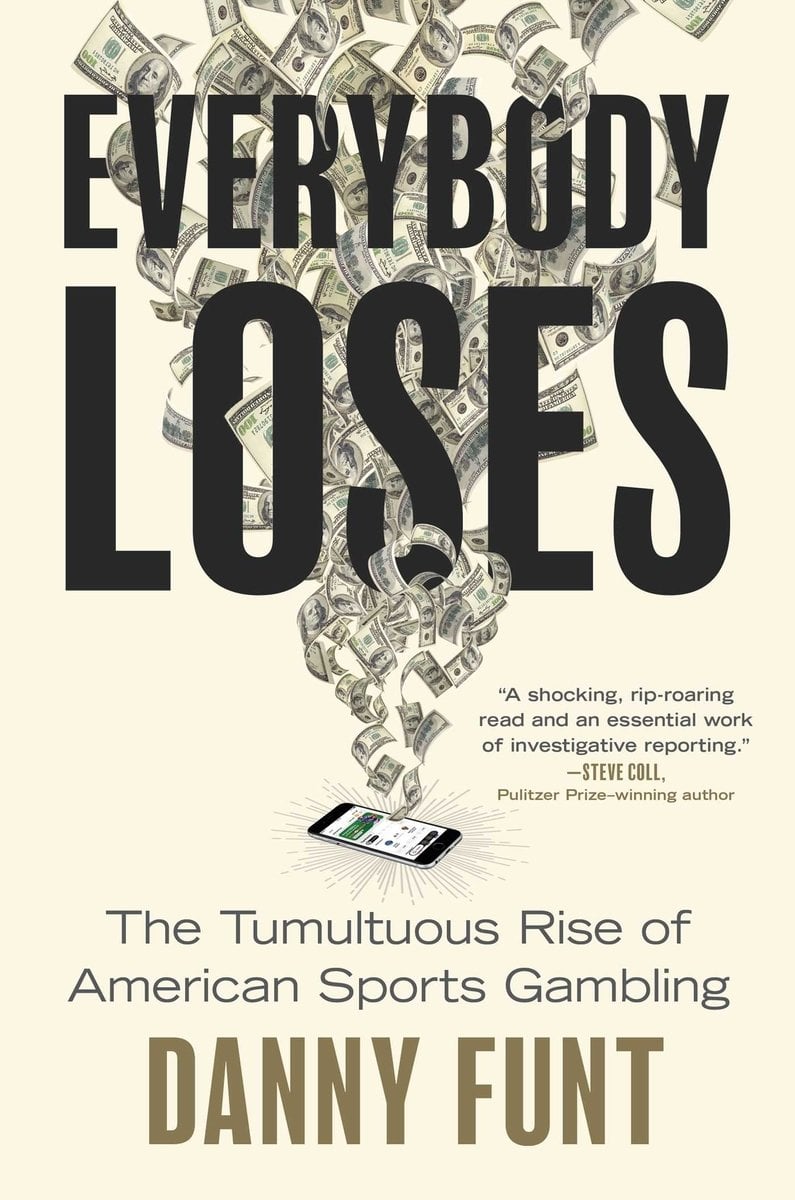
 Danny Funt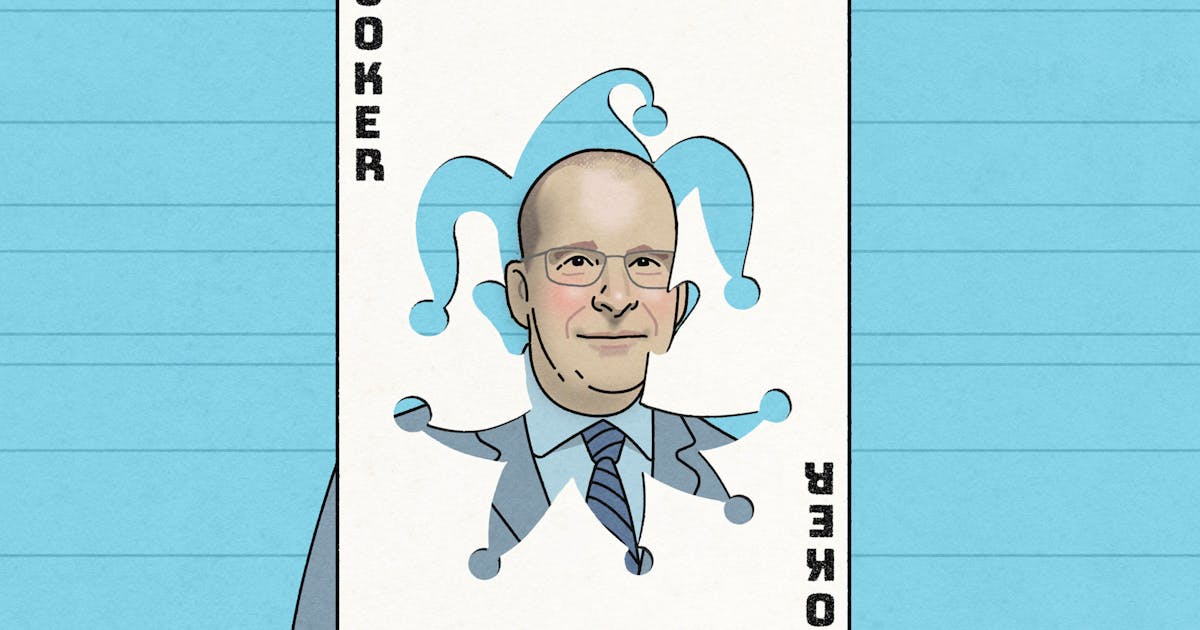
Washington Post Review of Everybody Loses
 Danny Funt
 Danny Funt
S.474 - Professional and Amateur Sports Protection Act
 admin
admin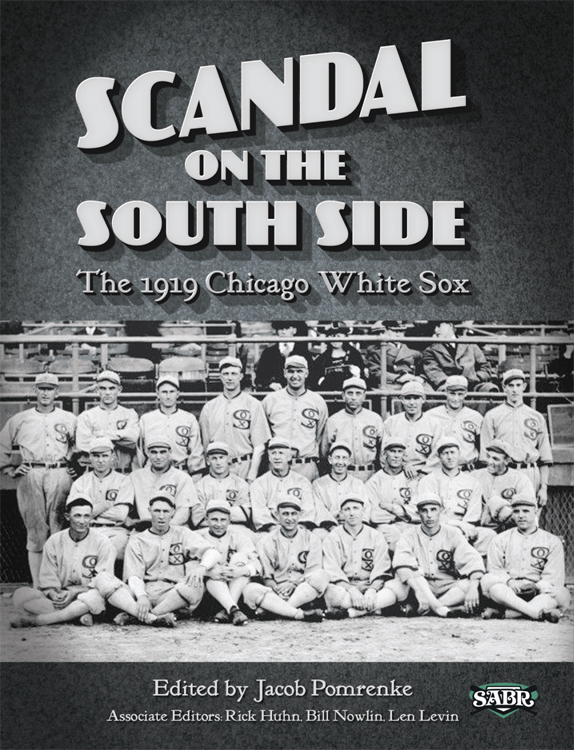
Murphy v. National Collegiate Athletic Association, 584 U.S. ___ (2018)
 Siena Research Institute
‘Really annoying’ sports betting ads are protected by 1st Amendment, lawmakers say
**Caitlin M. Green [00:00:30]**
Well, happy days are here again. This is Half the Answer, where understanding a question is half the answer. I almost said it wrong this time, because I'm in cooking show mode — I was like, "half the recipe." No, it's not. I am Caitlin Green, and with me, of course, is my co-host, Trent Nelson, reporting live from a void of some kind.
**Trent R. Nelson [00:00:42]**
Thank you. It's the end of moving, and I'm just gonna let all of our listeners and viewers and the like know that if you get a chance to move and do it all yourself — don't. Don't do that. Hire somebody, ask your family, guilt them, tell them that you thought they loved you, anything. I am essentially Kip for the dog.
**Caitlin M. Green [00:01:30]**
Yeah, yeah — a void, honestly. The money it costs to get help is so worth the pain and suffering and difficulty of actually moving. I just love that we're really contrasting, because I'm, like, maximalist background person, and you've now gone full minimalist. I know I still have so much Jello in my fridge, Trent. I don't know what I'm going to do with all that.
**Trent R. Nelson [00:01:50]**
Well, Caitlin, this has been what a great set of guests that we get to hang out with across the breadth of this show. Yeah, that was a delectable program we had last time, and this one will not disappoint either. As if produced by a chef, we have the brilliant Danny Funt, and, well, today we are talking about sports gambling, because he's the author of a book entitled *Everybody Loses: The Tumultuous Rise of American Sports Gambling*, that just came out in January, and certainly you can find his work all over — Washington Post, The New Republic, just now as we speak, Wall Street Journal, all sorts of different places.
Good day, sir. How are you? We are so glad to have you.
**Danny Funt [00:02:22]**
I'm great, glad to be with you.
**Trent R. Nelson [00:02:31]**
Absolutely. So first of all, we'd love a better biography than the one that I gave, because I don't claim that it's my strongest suit. But I would absolutely, after that, love to just dive in and get into — how did this whole, what I will call a kerfuffle, a nightmare kerfuffle — how did it all begin? Because I was alive when, in order to gamble, you needed to find a guy, right, who knew a guy, and then you'd give him some money, right, and you really had to go looking for it. Which I think juxtaposes really well with our current atmosphere, in which it is everywhere. It is everywhere, it is in your face, it is telling you to make profit off of if so-and-so throws a strike on his 78th pitch.
**Caitlin M. Green [00:03:23]**
Right — it's on your phone, it has celebrity endorsements. It is so entrenched.
**Trent R. Nelson [00:03:30]**
Absolutely. And now it's taken a step even further with what are being called prediction markets, right, which is really just the monetization of everyday minutiae. So, so — please. First about you, and then about the nightmare.
**Danny Funt [00:03:52]**
So my name is Danny Funt. I live in Charlotte, North Carolina, now. I used to live in Colorado, and then New York, and then DC, and grew up in California. I've just been a big sports fan my whole life, and like so many people, this happened so suddenly. Now that I've been reporting on it for several years, I've looked back on the record of actual statements from the leagues, politicians, broadcasters, and sports media in general — which play a big part in the normalization of all this. They used to be so militantly anti-gambling, as recently as, like, a decade ago or less.
You had the commissioner of Major League Baseball, Bud Selig, the former commissioner, less than a decade ago say if gambling were expanded beyond Nevada, it would be the deadliest possible thing that could happen to sports — an evil, as he put it. His predecessor was a man named Fay Vincent, who testified before Congress in 1992, when they passed this federal law that officially contained the business of sports betting in Nevada. He was asked, would pro baseball ever partner with gambling operators? And he said that would make a mockery of the office I hold. Because — some sports history that was new to me — the office of the Commissioner of Baseball was founded specifically to rid the game of gambling. This was right after the Chicago Black Sox scandal in 1919. It was viewed as, like, an existential threat to sports, that so many people were keen on fixing games, and even it just felt like it was sort of degrading the fan experience to have a lot of people at ballparks taking bets. So this guy, who was a federal judge in Chicago, Kenesaw Mountain Landis — a very, very august name. Yeah, yeah, for real. He was the first commissioner, with that job as his number one priority.
So to see them go from that — literally a century of the sternest possible opposition — to seemingly overnight being the biggest evangelists for the spread of legalization, and being very hands-on in convincing states and their media partners and all these stakeholders in sports to get on board, that was perplexing to me. And I found their answers unsatisfying, when they offered an answer at all, about why they had that change of heart. So I was pretty determined to get to the bottom of that — why we signed up for this, and what the consequences are. Because you'd think pivoting so hard from a prohibitionist mindset would require a big national debate about what's going to come with this. Are there going to be more addictions? Are there going to be more suicides? Are there going to be more financial problems that stem from excess gambling? Is there going to be more corruption in sports? On and on. It felt like in one state after another, we just blew by that and said, the bandwagon is taking off, let's get on board. And so a big motivator for the book was: maybe I can force people to confront those questions belatedly, at least, and justify what we're doing — because it's momentous, whether you like it or not.
**Caitlin M. Green [00:07:21]**
Let's imagine for a moment that you were a musical theater nerd and don't know anything about sports. What was the Black Sox scandal?
**Danny Funt [00:07:35]**
Good question. I will point out, if you're a musical theater nerd — which I would sort of call myself — you know a lot about gambling, if you've seen Guys and Dolls, The Music Man. There's a lot of gambling in, like, mid-century art.
Anyway, in 1919 the Chicago White Sox were playing in the World Series. They were considered the best team in baseball and an overwhelming favorite to win. I think they were playing the Cincinnati Reds — don't quote me on that. But anyway, very quickly it seemed like something was amiss. They lost the first game, they weren't playing the way they usually do, and there were some rumors that maybe they had been bribed by gamblers to throw the World Series. By the way, this is happening right after World War One. Baseball is setting records for attendance. All sports in general are kind of exploding in popularity. It was really this euphoric time in America, and sports was a big part of that.
**Danny Funt [00:08:31]**
You had, like, Man o' War, the legendary racehorse, back when horse racing was a huge American staple. So people cared a lot about sports, and the idea that these beloved ballplayers would do something like that was seen as a betrayal. You had a rising star in Major League Baseball named Babe Ruth who, when it finally came to light that the White Sox had actually taken bribes to intentionally lose those games, said it was as if my church had sold out — like the ultimate betrayal to someone who cares about this stuff.
Ultimately, they were found not guilty. There's a funny scene that I quote in my book, that's taken from another book, where it was very clear that the case was tainted — after the verdict was read, the jurors and the ballplayers, who were the defendants, went out to this big Italian dinner and celebrated. So I don't know how credible the jurors were, the prosecutors were. But anyway, it was really damaging to the perception of baseball. Because it's not just "we don't like gambling, and we have this Puritan opposition to people betting." It was also: what does this mean about these players who we idolize, that they would sell out, if you will? And back then, the idea of a professional athlete was very different. Even in golf, you didn't really have professional golfers — you were sort of a hack if you played golf for money. There was this real honor and dignity in being a star athlete, and this really undermined that. Not to mention people in the stands, as I was saying, didn't like rubbing shoulders with the shady types of people who take bets. It's a very mob-affiliated activity back then — you wouldn't necessarily want them infiltrating stadiums.
So yeah, they were sort of feeling like baseball was in limbo as far as whether it would remain as popular as it was, and the commissioner, as I described, was hired explicitly to rid the game of gambling. And so you had gigantic signs in the bleachers that said NO GAMBLING in capital letters, you had plainclothes police officers who would throw people out of games if they heard them talking about bets. It was something they took really seriously, and that persisted for decades — up until, you know, several years ago, really.
**Trent R. Nelson [00:11:09]**
Right. Well, because, I mean, many of us remember Pete Rose and the amount of fuss that was put into keeping him out of the Hall of Fame — the all-time hit king. But many of us also remember numerous match-fixing events in sports like tennis, point-shaving scandals in college basketball, the Tim Donaghy scandal in the NBA, which, again, not too far off. And that sort of brings us, I guess, to the Supreme Court ruling, right, that changed how this was all going to be governed. Can you walk us through that, if possible?
**Danny Funt [00:11:50]**
Yeah. So the case was in 2018, but it's important to look at what preceded it, because there's actually — I'm going to tell you what kicked it off, the real thing that kicked it off. I don't want to get too in the weeds, but I think it's amusing and sort of revealing.
**Trent R. Nelson [00:12:10]**
We love weeds.
**Danny Funt [00:12:14]**
Yeah, okay, love that. People think that the push for legalization was a recognition that there was a lot of black market betting happening, and you wouldn't want people patronizing these illegal businesses — a lot of them are based offshore; maybe that business funds other criminal activity. So once people recognized that, whether you like it or not, a lot of money — like tens of billions of dollars — was being wagered every year illegally, that might motivate you, similar with cannabis, to say: people want to do this, let's tax and regulate it, rather than having it forced to be done under the table.
The fact, though, is, as I learned, there was a group of offshore sportsbook executives who were funding the initial — it was a lawsuit, and then some other activity — to get this off the ground in New Jersey. And their predicament was: we're making boatloads of money, but it's tied up in, like, Costa Rica or Panama or Curaçao, these places where you can't just bring it back to the States and live happily ever after. As someone said, you could have a billion dollars, but what good is it if you're sort of trapped with that money in Latin America? So those guys wanted the US to legitimize the business of sports betting, so they would now be seen as legitimate business people who could move their money back to the US. Ultimately, they were kind of blackballed from the legal industry for a variety of reasons, but it's just sort of a funny footnote to how this all played out.
**Danny Funt [00:13:52]**
Beyond that, New Jersey was the state that got the legal fight underway. They were seeing casinos closing in Atlantic City, racetracks really suffering, and they looked at Nevada and said: why is it fair that sports betting is this draw for a lot of tourists, especially around March Madness and the Super Bowl, but really all year, and it helps support these casinos and all the jobs connected with casinos? It feels like a double standard that they get this and we don't, and we're suffering as a result. So Chris Christie, who was governor at the time, eventually comes around on that, and he passes a bill that would legalize sports betting in New Jersey. It's worth noting it would only legalize it in those in-person venues — not this online world that we now live in. But immediately the pro leagues and the NCAA sued to stop them, saying this violates PASPA, and we don't want it. PASPA is the federal ban that was passed in 1992.
Jersey goes zero for six in federal appellate court. They sort of found little workarounds to keep the case alive, and kind of out of nowhere, the Supreme Court in late 2017 grants cert and says, okay, we'll hear the case. And if you know how to read the tea leaves with the Supreme Court's docket, that's a big tell, because there's no circuit split as far as how judges are interpreting this law. It's been the law of the land for a quarter century. It's established law. Why else would you take the case unless you were intent on overturning that law? So they hear the case. It's a 6-3 decision — somewhat surprisingly, Elena Kagan joins the five conservatives in voting to strike down PASPA.
Now, a lot of people misunderstand a lot of Supreme Court decisions, and I think that's understandable — it often can be kind of technical. But they misunderstand this case in some pretty important ways. People have said, including powerful people who have a stake in this — they say the Supreme Court legalized sports betting, or the Supreme Court said Congress lacks the authority to regulate sports betting, or the Supreme Court said it would be good if sports betting were available nationwide. None of that is true. They actually explicitly said Congress does have the authority to regulate this, or ban it if they so choose — they just went about doing that in a constitutionally defective way in '92.
But by then the political dynamics had changed. The industry was way more intent on pushing this. There's a whole backstory to that, that I explain in the book, of how even when the leagues were fighting in court to stop this, they were meeting secretively with the gambling industry behind closed doors and recognizing how this could be so good for their business — but maybe more importantly, how they could justify it. Because they were conscientious of the idea that it would be seen as a total flip-flop to go from speaking in the language we were discussing to now saying, hey, let's legalize this. So they learned some clever rationales for that, and also the Supreme Court gave them cover, because they were able to say, well, this is our new legal reality, we may as well adapt — when in fact none of this would have happened if it weren't for the fact that the leagues became such aggressive promoters of the betting business.
**Trent R. Nelson [00:17:36]**
And so let's just go on — why did they become such aggressive promoters of something that, as you noted, for most of my life — I mean, I was born before PASPA — it's just been understood that not only is gambling unbecoming for sports to be associated with, but that it's unhealthy for society in various, numerous, and reasonably obvious ways?
**Danny Funt [00:17:55]**
I totally — and one thing that kind of annoys me is people very dismissively are like, "well, money — they realized they can make a lot of money." It's not like sports suddenly became profit-motivated in 2018, right? They've always been trying to maximize profits. It's just their calculation — kind of their long-term versus short-term priorities — may have shifted. The commissioners, as you said, had a lot of reasons why they were opposed.
**Danny Funt [00:18:38]**
They recognized that basically every decade has a gambling scandal that demonstrated that athletes like to gamble about as much as anyone, and no matter how much money they make, they're susceptible to succumbing to that temptation — especially because a lot of athletes sort of have all the characteristics of a potential problem gambler. Think about what it takes to be a star athlete: a maniacal desire to win, refusing to accept that the odds are against you, tenacity — all this stuff that, if you applied it to gambling, could be really perilous. So the commissioners recognized this is playing with fire if you make it available to your players. They also saw the damage it does from an addiction standpoint, and even just how it kind of cheapens the relationship that fans have with sports. They liked the idea of you loving your local team, or the team you've been rooting for since childhood — not you just thinking about who's making or losing you money on a game-by-game basis. That kind of hollows out the fan experience, and that sort of generational fandom makes them a lot of money and motivates people to spend a lot of time watching all sorts of games and paying for all sorts of things. So, again, it wasn't like they didn't want to enhance the business of sports — they just went about it differently.
What changed is the leagues were recognizing that there was some jeopardy facing their most profitable asset. Let me just quiz you guys for fun: what do you think is the biggest moneymaker for pro and college sports — how the leagues make the most money?
**Trent R. Nelson [00:19:55]**
You first, Caitlin.
**Caitlin M. Green [00:20:27]**
Okay, so — yeah, go ahead. No, no, please. I will not know. So I think you should go first, right?
**Trent R. Nelson [00:20:35]**
Media deals.
**Danny Funt [00:20:38]**
Bingo.
**Caitlin M. Green [00:20:40]**
Merch. Yeah, I probably would have said merch.
**Trent R. Nelson [00:20:43]**
Right — merch. Yep.
**Danny Funt [00:20:46]**
I think a lot of people would think, okay, ticket sales, merch, whatever. It's by far media deals. And they were seeing — okay, they're doing great now, but young people don't have the patience to sit through a three-hour game, our audience is aging in general, people are canceling cable subscriptions. So sports is really valuable now, because it's one of the only things that'll make people sit through commercials. But can we bank on that, looking down the road?
And what the gambling industry did, very shrewdly, was commission a study from Nielsen, the firm that measures TV audiences, and they looked at 500 gamblers and 500 non-gamblers over the course of an NFL season. The gamblers watched more than twice as many games as the non-gamblers — but maybe more importantly, they watched more than twice as many minutes, because they're watching till the ends of blowouts to see how their bets will play out, as opposed to just being like, the game is decided, I'm going to change the channel or move on with my day. And that was very enticing to the leagues — this idea of, we can hook a new generation of fans to be rabid consumers of our games on TV or a streamer or wherever, and this will shore up the value of our media rights and even improve it. That, from what I've learned, is what really persuaded them.
They were meeting with all the different leagues. In some cases, like with the NFL, they were so opposed publicly to gambling, they wouldn't even let these meetings be conducted in their league office in Manhattan — it had to be at these cafes along Park Avenue, where it felt a little more discreet. Like, we can't be seen welcoming in the gambling industry to our building.
**Caitlin M. Green [00:22:40]**
It all feels very, like, Thank You for Smoking — like, we're not... we're gonna go off campus, we're gonna have these discussions.
**Danny Funt [00:22:50]**
But anyway, in those meetings, they said: we've studied this. Between the direct revenue you'll make from partnerships with the gambling companies, but more important — as Trent identified — the indirect revenue from what this will do for your TV audience, the NFL would stand to make more than $2.3 billion every year if this were legalized across the country. That's like the average value of a franchise, every year, infused into the league. So at that point they're like, yeah — if we can have the rationale to justify this, we're in.
**Trent R. Nelson [00:23:19]**
Absolutely. And there has been those consequences, right — the money, the addiction, the rabid watching of sports, the rabid consumption of sports. But there have also been some of those what might be called by this generation unintended consequences — but by the generation of Mountain Landis would probably have been considered intended consequences. We've seen abuse against players, we've seen stalking and harassment and threats — and that's not even to say the negative things that have happened to the leagues as well. These are just individual players that get this from missing a shot, from turning the ball over in the final minutes of the game, from this, that, the other thing. Can you go into that a little bit? Because I think that is something that certainly in Europe they talk a lot about with soccer, and with the more stringent regulations that they have in some countries around gambling. But here it's sometimes, I think, considered the cost of doing business — even though the cost is human emotion.
**Danny Funt [00:24:39]**
Couldn't agree more. And I just want to back up to say, contextually, one of the promises behind legalization was — I was telling you about this robust black market for betting — so the promise was, all we're going to do is transfer that to a legal market; we're not actually going to grow the number of people betting. And common sense is just so obviously going to refute that. Because, similar to cannabis — and I'm not by any means judgy about weed smoking — if you make it legal and you can get it delivered, or you can pay with a credit card or whatever, of course you're going to have more people smoking. It's just inevitable, versus tracking down a dealer. With betting, the same logic applies. If you have billions of dollars being spent to advertise this, if you've got celebrities endorsing it, the leagues endorsing it, the ability to download an app on the App Store and deposit money with Venmo or PayPal or your credit card or your bank account or whatever, and bet in a matter of seconds from your couch — obviously way more people are going to be betting.
And I start my book with that issue that you identified, which is the harassment and abuse of athletes, because to me it's such an obvious example of how way more people are betting than ever before. There were always — you'd hear about this then and now, of, like, we heard a heckler in the stands bring up betting, or someone got way out of control and was threatening an athlete. But it's kind of an epidemic now. It's something athletes at all levels say they deal with on a literal game-by-game basis. You don't even have to be the quarterback or the star player to be suffering that abuse — basically everyone with any ability to influence a bet is subjected to that.
I tell the story in the book of this very obscure college basketball player who makes a totally irrelevant three-pointer at the end of a March Madness game. It was actually just his second basket that season — he had been injured, but he stuck around to support the team. A really heartwarming, kind of storybook moment in the basketball tournament. And after the game, as players do nowadays, he pulls out his phone, he starts going through his notifications and DMs on social media, and it's just one message after another of "kill yourself," "enjoy selling cars as soon as you graduate," "what's wrong with you" — in the worst possible language. All because that irrelevant three caused his team to cover the point spread. So people who bet on his team not to cover the spread were furious and took it out on him — like he could have any clue, or care less, about the point spread.
**Caitlin M. Green [00:27:36]**
Right — and his job is supposed to be to do the best he can do, right? And he did, and people are like, "I'll hate you forever."
**Danny Funt [00:27:58]**
Yeah, yeah. And this is just a reality of being an athlete now. And I think, in today's world, you can't just be dismissive of online harassment — like, oh, just close your laptop or turn off your phone. I heard that from Chris Christie when I brought this up. He's like, "then just get off the internet — what's the big deal?" I think that's — you know, wrong. I'm blanking on a better word than that. But it's just ignorant.
**Caitlin M. Green [00:28:08]**
Yeah — it seems like they're a little bit divorced from the consequences of the decision, because it's not them under the spotlight.
**Danny Funt [00:28:25]**
But beyond that, this extends beyond the internet. You've had, as you alluded to, players stalked at their team hotels or at home. J.B. Bickerstaff, the coach of the Detroit Pistons, said people texted him that they know the identities of his kids and where he lives. The manager of the San Diego Padres resigned at the end of last season because he said he was so fed up with all these death threats he was facing. All this leads to the former chief security officer of the NFL telling me it's only a matter of time before some enraged gambler tries to kill an athlete who cost them money.
And Trent, you used the word trade-offs, and this is an obvious trade-off that we are accepting by making it this easy to bet and encouraging so many people to bet. We're saying we are willing to endanger athletes — or even if they're not going to suffer violence, they're going to suffer nonstop abuse for doing nothing more than playing their hardest. And that, to me, is a tough pill to swallow. And I wish the leagues had to actually answer for that. I think they will if that prediction proves true and someone is attacked — but until then, it's just something they look the other way on.
Absolutely — I'm actually reading a great book called Turf Wars, by the former head of the NFL Players Association, DeMaurice Smith. I'm not through with it, but I picked it up because I heard him talk about betting and how dangerous betting is for the business of the NFL. And it just is a reminder that they really don't care about the fans and the fans' well-being, and they don't even really care about the players. It's a business, and they're as ruthless about that as they can be. So there's just so many examples of this, where the well-being of the fans, the well-being of the players, their safety, how they experience sports, is a total afterthought.
**Caitlin M. Green [00:31:30]**
Yeah. So we've talked a little bit about betting in language that's kind of mental-health related, or health in general — calling it things like an epidemic, talking about addiction, and thinking about these kind of way-out-of-bounds behaviors from people who had money on the line because they were betting. Do you have any information about the mental health effects of betting on the fans?
**Danny Funt [00:31:50]**
Definitely — both people who suffer from addiction, and also people who just have an increasingly problematic relationship with gambling, even if they're not technically a quote-unquote "problem gambler." By the way, as we're talking about this — as I've covered it and spoken with a lot of people in recovery, or psychiatrists and counselors — I'm just increasingly conscientious of the language we use, and how a lot of the language serves to minimize this, or stigmatize it, or let the operators off the hook for their responsibility in getting people addicted. So even the expression "problem gambler," which is so entrenched, to me is like, you know, "a problem child" — as opposed to maybe a child who has a mental health issue that they're dealing with, or some other trauma, or whatever. Or "responsible gambling" — as in, if you have an addiction, you're irresponsible, and it's a character flaw.
**Caitlin M. Green [00:32:20]**
Yeah — it feels really similar to talk about alcohol, right? Like "problem drinkers," and "please drink responsibly" — like it's really down to you, the consumer, to do it right.
**Danny Funt [00:32:35]**
Yeah, 100%. And even then — as inadequate as the whole language around alcohol is — at least when you evoke that, people know: don't drink and drive, don't over-serve a patron who's visibly drunk, take the keys from a friend who seems like they're about to get in the car and get a DUI. There are some behaviors that we have sort of understood are what you can do to drink responsibly. Whereas with gambling, I don't think people have any clue what "bet responsibly" means — and they certainly don't, because the things that the industry is incentivizing while they say "bet responsibly" would seem to be the complete opposite. Like, how could responsible betting mean betting constantly, day and night?
**Danny Funt [00:32:50]**
How could it mean betting in the early hours of the morning on all sorts of random sports that really only exist for people with gambling problems?
**Trent R. Nelson [00:33:20]**
Absolutely. And I'd love to hear, obviously, your thoughts on this. To me — I hear the commercials, I watch the commercials — and I hear a sort of hijacking of what some might call the Protestant ethic, right? This sort of profit, right? This is not like some — yes, this is something that has the potential to positively change your life. It could almost be like a job, right? "Profit boost," "revenue," right? They use all of this language which I think conjures in the consumer a sense of: I'm taking this into my own hands. I am a responsible money mover, and this is my theater in which to perform.
**Caitlin M. Green [00:34:10]**
Be on the grind all the time. "This is a side hustle. Actually, this is the right choice for your family." Yeah, it's like a Wolf of Wall Street kind of presentation — like, you're a trader, actually, you're trading stocks, not making bets. And it's like, no — you're making bets.
**Danny Funt [00:34:30]**
I couldn't agree more. I could spend another hour on that question alone. I'll give you two examples, though, that I think speak to it very directly — one from the industry side, and one from the customer side.
So, from the industry side: I completely agree that they do everything they can to make this seem like an investing strategy, or a side hustle, as you put it, Caitlin — or almost like, if you're watching sports and you're not betting, you're kind of irresponsible. What are you doing? It's right there for you. You've put in all the time — cash in.
**Caitlin M. Green [00:35:10]**
Yes — wasting the opportunity.
**Danny Funt [00:35:15]**
So there's a billboard near where I live in Charlotte that for a long time was a FanDuel ad that said, "Turns out watching football can really pay off" — and they even went so far as to underline those words, "pay off." So I'm on the phone with the head of an organization called the Responsible Online Gambling Association, which is a group that the industry came up with, and all the operators are a part of, to reinforce the idea that they're taking this seriously, they're being proactive, they don't need regulators to step in and crack down on them — ROGA is the acronym. And I read the president of that group the text of that billboard, and I said: you just told me that one of the central tenets of responsible gambling, as you put it, is recognizing that this isn't a way to make money — that the odds are overwhelmingly against you actually coming out ahead long-term. How does this billboard not possibly contradict that? And she said, "I don't know how someone's going to interpret that billboard."
**Caitlin M. Green [00:36:10]**
Okay, I'm sorry — I am a linguist. I can tell you how they're going to interpret it. Be serious.
**Danny Funt [00:36:20]**
Yeah — it's like, come on. Come on.
The other story: I was doing an interview for the book with WNYC in New York, and they're taking listener calls — and you never know what someone's going to call in about. Complain about a bet they placed, ask for betting advice, whatever. And this guy calls in, and he says: I wanted to share that my son started betting as a teenager, and he's now down more than $200,000 betting on sports, and my wife and I just can't get through to him. And the problem isn't just how much money he's losing — it's he won't concede that what he's doing is gambling. He's convinced he's an investor, and eventually he's going to come out on top. And because that is just so frustrating, we're estranged from our son. It's just too much for us to bear, to have that debate again and again. We can't keep bailing him out if he's not even going to own that he's a gambler.
And it just echoed what I had heard from so many counselors, who say their biggest hurdle initially is just convincing these people that what they're doing is gambling — because there's so much advertising that convinces you otherwise.
**Caitlin M. Green [00:38:08]**
Oh, I was just thinking how wild it is that you can have a person who's gambling all the time, and they're like, "that's not what this is — this is not gambling." That's an incredible amount of mind games to play on your consumer: to say, you have signed up for this sports betting program, and you are going to be placing bets 24/7, and that's not gambling, actually. That's essentially — I mean, back to the Wolf of Wall Street — like, no, no, what you're doing is you're moving money around, you're trading, is what you're really doing.
**Trent R. Nelson [00:38:40]**
You're setting yourself up for the future.
**Danny Funt [00:38:45]**
Even just the central appeal of sports betting, I would say, is — unlike blackjack or craps or slots, that have these fixed odds and there's no real strategy — sports betting is a battle of wits. It's a battle of knowledge of sports, and if you know your favorite team or league or whatever, you can outsmart the bookie. And it just doesn't work that way. It's about as difficult to pick who's going to win an NFL game and make money as it is to outsmart the stock market as an individual — it's almost impossible. And if you do start winning, the industry is very aggressive in cutting down your ability to bet, so you can't even keep betting. But that story from that caller was so heartbreaking, and so unfortunately common nowadays, and I think the industry has to be held responsible for that.
I totally — and I just want to point out, I think it's clear that gambling addiction rates are growing, especially among young men, who are really the target audience for this.
**Danny Funt [00:38:53]**
I think what's going to cause people to freak out and act, eventually, is just seeing a crisis among teenagers and college students that's impossible to deny — when your kids are in jeopardy, it just activates people more than if some adult is having their life upended. That said, sometimes people can be very dismissive of the whole gambling addiction issue, and they're like, "I feel for them, I suppose, but that's a fringe segment of the population. It really doesn't affect me. I know what I'm doing. I have this under control." And I think what we're seeing is a lot of people who are getting in over their heads, where this is affecting their lives, even if they wouldn't necessarily fall under a clinical definition of a gambling addiction.
An example of that: Siena College does an annual survey of sports bettors. Their latest findings came out a few weeks ago, and nearly half of respondents said after losing a bet they felt ashamed of having done that. Also, nearly half of bettors said they've struggled to pay their bills or just manage their personal finances as a result of their sports betting. When you hear numbers like that, that are growing year after year, it reinforces that this is not just a sad peripheral issue — it's something that the mainstream sports bettor is at risk for.
**Caitlin M. Green [00:40:05]**
Yeah. So here on Half the Answer we've talked a lot about moral panics. We've talked a lot about "think of the children" rhetoric when it's really hollow and it's used to control people. And it is really kind of bone-chilling to see an example of something that — this is not one of those. This is something that really could hurt a lot of people, and a lot of young people. And we have the numbers to back it up. We're looking at cold, hard data here, and it's like — well, we don't get to wave this one away, I don't think.
**Danny Funt [00:40:54]**
Yeah — what is a recent "think of the children" example that is maybe hollow or disingenuous?
**Caitlin M. Green [00:41:00]**
Oh — like transgender rapid-onset gender dysphoria, you know, like social contagion of being trans. Or autism, especially if you think it's because of vaccines or whatever.
**Danny Funt [00:41:17]**
Oh, sure. Yeah — of course. Two important ones.
**Trent R. Nelson [00:41:21]**
And so I think that on the back of this discussion concerning "how can we make this not look like gambling" — well, that brings us to prediction markets, right? Can you explain to our listeners — who may also not have known the White Sox scandal, the Black Sox scandal — can you explain to them—
**Caitlin M. Green [00:41:45]**
Listen, I'm doing my best here. I'm the audience representative of the true dumbasses, who are like — I can name a few sports, sure, but can I name more than ten teams? I don't think so.
**Trent R. Nelson [00:41:55]**
I am in full support of those listeners and viewers — I'm on your side. You know what, let's not measure ourselves here. You are our Guys and Dolls correspondent. All right.
Danny — what is a prediction market? And how are prediction markets — which, with Kalshi and Polymarket, we first maybe came to see them doing political or just circumstantial predictions — they moved to sports, but also sports gambling groups have moved to prediction markets as well. What is the difference, and how are they convincing people that there is one?
**Danny Funt [00:42:40]**
So, from a legal and regulatory standpoint, for now at least, they're derivatives exchanges. From a slightly less technical standpoint, they are giving people the chance to trade futures contracts on all sorts of current events. And from a practical standpoint, they're gambling — I think we all know it when we see it.
Maybe in a traditional sense, if you're a farmer and you want to hedge on a potential threat to your crop, you would use a prediction market to hedge on, like, soybean futures. That's where they've existed forever. Even more recently, there were some academic experiments around political prediction markets, and that was the first time I had heard of them, and I was pretty intrigued by the potential upside. Betting on politics sounds pretty cynical and corrosive, but there's actually maybe some merit to it. For one, it's a very effective way of forecasting elections — way more predictive, if you will, than polls. And as a lot of us are losing faith in opinion polls, to gauge the real-time odds of a race, the idea that you would have markets that would much more accurately demonstrate who's up and down could be useful. It could also make people more engaged, make them more avid news consumers. I could see various upsides. It could even combat disinformation, which I can tell you more about if you're interested.
But political prediction markets for a long time were kind of a fringe idea. And then this company, Kalshi, came along a few years ago. Initially they were focused on politics, but they had some connections to the Commodity Futures Trading Commission, the CFTC, which regulates this at the federal level, and they convinced the CFTC and some courts to recognize that political prediction markets ought to be treated like any other futures product, and not subjected to the constraints that had been imposed until then — where it was really like these academic products. There was a site called PredictIt that was out of a university in New Zealand; Iowa University had an exchange that was sort of notorious. But other than that, the average person wasn't able to bet a lot of money on politics, until Kalshi prevailed in court and with the CFTC and was off and running.
And once that happened, they were able to sort of say: okay, politics is fair game — why not basically everything else? There's a few things that for a long time have been forbidden, like betting on terrorist attacks or assassinations. Beyond that, it's almost like anything goes. So, as you said, a big piece of the business became sports, especially in states that have yet to legalize. Although about 39 states have legalized some form of sports betting, some haven't — notably California and Texas — so the idea that they could come in and say, trade a futures contract on "will the Bears win on Sunday," or "will Alabama win on Saturday," that was a huge business opportunity. And it's a big reason why Kalshi is now valued at $23 billion, and Polymarket, its main competitor, is right around there, and why FanDuel and DraftKings and all the other sportsbooks have also launched prediction markets — because they see that that might be where this is headed, if you could allow betting on everything under the sun in all 50 states.
There are efforts to curtail that. States have sued and said this is illegal gambling, you're circumventing state taxes, you need to be licensed if you want to do this. Congress has been pretty worked up about these inside-information scandals, where you've had soldiers — most notoriously, in the raid to arrest Nicolas Maduro of Venezuela, it seems like someone who was privy to the battle plan bet on Polymarket and tried to make hundreds of thousands of dollars before the raid was executed.
**Danny Funt [00:47:10]**
You have issues in the war in Gaza, the war in Iran, that to people feels like a bridge too far — although obviously people have been betting on wars forever, just a little bit more discreetly, with oil futures and stuff like that, as opposed to literally saying, "will there be bombs dropped in Gaza tomorrow?"
**Caitlin M. Green [00:47:35]**
Right — or like when the Strait of Hormuz will be open versus closed.
**Danny Funt [00:47:42]**
Yes — or, for a while, "will a nuke be detonated in the next week?" So I do think the status of prediction markets is sort of up in the air. But for now, at least, it's broadened what you can bet on so dramatically, it appeals to a lot more people, who might say — "I never wanted to figure out how betting odds work with sports, but the idea that I can bet on the Oscars, or album sales, or something as frivolous as will it rain tomorrow in a certain city — that sounds fun."
Yeah, it's sort of like — if you were very cynical and thought, where is this all headed? This is sort of the endgame: as the CEO of Kalshi put it, in his ideal world, every possible dispute that two people could have, they could then bet on Kalshi on that thing. That's his vision of the best-case scenario — and to a lot of people, that sounds like sort of a hellish worst-case scenario.
**Caitlin M. Green [00:48:35]**
I don't like him. I don't think I would be friends with that guy. That guy sounds like he kind of sucks. I know it's kind of hack to bring up Black Mirror, but that does feel like a Black Mirror episode.
**Danny Funt [00:48:44]**
Okay. Absolutely.
**Trent R. Nelson [00:48:47]**
Absolutely dystopian dream to wish upon us all. It totally does. No — no hack, no hack. Guys, guys and dolls.
I think that, Danny, this has just been a really, really interesting and thoughtful discussion, and we're not done, but I would be remiss if I didn't ask you — you've used the terms cynical, cynicism, cynic; we've gone through all of those across this discussion. All the way at the beginning of it, we spoke about the fears of baseball fans, of baseball administrators — Mountain Landis, Fay Vincent, Bud Selig. What has all of this produced in terms of the relationship between fans and the leagues? Not the players and the fans, but in a larger sense — has that cynicism, that sort of "I only care about this not because my great-grandfather was a Cincinnati Reds fan, but because they can get me $130 if this double gets hit in the ninth inning"? And we have examples — we have Terry Rozier going on right now, and we have others. I think one of the top college quarterbacks had to go into gambling rehab recently — Sorsby. So we have a lot of examples.
**Danny Funt [00:50:16]**
It was one of the things that the commissioners predicted very explicitly — it didn't take a genius to see this coming. And it's also one of the reasons why this story is relevant to people who aren't betting at all, and yet they see what's happening, and their relationship with sports is compromised because of that. Because, predictably, as we discussed, you've had a string of high-profile athletes indicted, or in some cases convicted, for fixing games, or betting on their own games, or altering their play in some form or another to swing the outcomes of bets. And as a result, there was a survey toward the end of last year from YouGov that found that 65% of Americans now suspect that at least some athletes alter their play to influence bets. That's not some fringe conspiracy theory — that's a majority of Americans feeling that way.
**Caitlin M. Green [00:51:20]**
Yeah — and that's logical, just looking at the incentives. And you don't need, like, a shadowy New World Order pulling strings for that, because that's just sort of the rational choice for certain players to make on their own.
**Danny Funt [00:51:45]**
Sure — it is totally, like, sort of inevitable, if you understand how this all works. Just anecdotally—
**Trent R. Nelson [00:52:00]**
Absolutely — but I do want to jump back in on something you said just a squirt before. You know, the conspiratorial lean of sports fans, especially now that gambling is more prominent and more frontward-facing. I find that the desire to use the conspiracy sort of plays into something you brought up earlier — that for people who endeavor in sports gambling, they often conceive of it to be stored knowledge that they're now using. Right? "I've been watching the New York Giants play for 35 years. I know how they play. I know exactly, and I am an expert. I watch every Giants game, and I go to all the games, and I know all the players, and I go to training camp and minicamp, and I'm right there — I'm top tier. But now I've lost my bet. How is it possible that I, an expert on the Giants, lost my bet? Well, there must have been something else afoot. There must have been something sneaky afoot. My team couldn't have lost, because they're very good — and also, I couldn't have lost, because I'm very good." It's protecting myself to some degree, right?
I mean, you brought up earlier, in the poll — a certain reasonably large percentage of people said that they feel shame after losing a bet. Shame. That's really interesting, because if it's a wager of chance, then there would really not be a reason to feel shame for losing, because you go into the endeavor thinking that there was always a chance you were going to lose. You don't have any control of this thing.
**Danny Funt [00:54:43]**
Yeah, I agree. I mean, it's a very insidious way of thinking — but who could blame them, to some extent? So a lot of it is, yes, athletes face a really significant temptation to bet, and inevitably some of them will succumb to that. But it's also — the business of sports is now so entangled with the business of gambling, it has a lot of fans wondering: are games rigged by the leagues or officials? Or are they catching these sorts of scandals and sweeping them under the rug, because they don't want to embarrass their sportsbook partners, or confirm fears that this would corrupt sports?
So I just think that cynicism is really destructive. There are so many aspects of American life that people are cynical about — in some cases deservedly so — but fueling that, and giving people reason to suspect that the fix is in, or to cry "rigged" every time something unusual happens in a game, or their team doesn't win, or a call is made that feels inappropriate — that, I think, is just incredibly corrosive to something that, in an ideal world, is kind of an inspiring, communal, productive aspect of culture. To just turn it into fodder for gambling, and breed the cynicism, and make it more transactional and less emotional — which was a phrase I heard from Bob Costas, the legendary broadcaster, when we were speaking about trade-offs — is a really significant trade-off in part of the equation.
**Caitlin M. Green [00:55:30]**
Yeah. Well, even as a sports ignoramus like myself — I am fully aware of the cultural relationship that America has to, like, baseball and football especially. We have like a spiritual connection to it. We have things like Field of Dreams, and like Angels in the Outfield and stuff, where we think about sports as this communal activity — it's the players and it's the fans, and it's all the players that came before, and all the fans that came before. And we have this sense of, like, fathers pass jerseys down to their children, and having this be a family activity — we all get together to watch these games. I remember when I got taken to the stadium for the first time. Even me — I remember my first Cardinals game. I grew up in Phoenix, so I remember my first Cardinals game, I remember my first Diamondbacks game, I remember when the Diamondbacks were formed — that was very exciting. And I remember 2001, the best year in American history, which was when the Diamondbacks won the World Series. Nothing bad happened all year — only good things happened. Good year, if you were an Arizona Diamondback.
**Trent R. Nelson [00:56:40]**
It was a good year — other than the bad day.
**Caitlin M. Green [00:56:45]**
Yes. But we do have this really beautiful sort of ideal of what we think our relationship to sports should be. And to cheapen it like this, I think — even, like you said, people who are not even interested in sports betting are feeling that loss. Right? "I passively became an expert over time, and so why wouldn't I use this expertise? I know how to predict this stuff."
**Danny Funt [00:57:09]**
Yeah — you know, I think a piece of it, too, is just it really distorts your relationship with money. And I've heard people in the industry describe that very callously — like, how you think about dollars is really out of whack when you step into a casino or start placing bets on your phone.
I think another piece of it is this thing that I picked up on that I found very jarring, which was: I used to speak with people in recovery who'd say it reached a point where I couldn't enjoy the sports that I'd always loved unless I had a bet to worry about — unless I had skin in the game, in a gambling sense, it just didn't do it for me. And I gradually started to hear a lot more people speak that way who, again, don't necessarily have a full-blown gambling addiction, but identified: these sports that I've always loved, it just feels kind of dull if I don't also have money on the line to worry about. And that, I think, in the back of some people's heads at least, sort of eats at them and bothers them, and they worry about, am I sort of corrupting or poisoning the joy that I get from sports? And it drifts into a very moralistic realm, and I'm cautious of that, but I've felt it myself.
And also sort of the things that sports bring out of you. I remember once I was watching the USA basketball team in the last Olympics — it was this group of old-timers who got together for one last Olympics: LeBron, Steph Curry, Kevin Durant, all of them. And I was, like, bursting out laughing on the couch at how good they were. And my wife came in and was like, "What's going on?" She just thought I was watching sports, and I'm like, this is just such a delight. And that reaction — gamblers can be cheering. I've placed many a bet, I've been in that position — you're cheering, you're pumping your fist, you're high-fiving people. You don't get that burst of laughter from betting, and I feel like that's a huge loss if that were taken away from you. And again, I don't want to sound like some scold or puritan about this, because I've done everything that we're talking about, but it's just something on a personal level that I've picked up on.
**Caitlin M. Green [00:59:39]**
Yeah — you do risk being like, "the most natural high is a child's giggle," and you're like, oh no. "Have you ever tried being high on life, son?"
And also the shame, too — that plays into the shame, that you indulged in a vice that maybe you even had agreed with yourself that you wouldn't do, and then you did it, and now you are reporting those feelings.
Yeah — where's JD Vance on this, our best religious guy?
**Trent R. Nelson [01:00:40]**
Well, it is — I mean, it is really, you know, the word Puritan. Canonical. We go back to the turn of the 19th into the 20th century, and certainly there is historical reasoning for that disdain for gambling, for that sort of conservative bent. Are there still conservative groups that care about gambling? I mean, it feels to me that I hear a lot of pushback from more liberal or leftist groups at this point, you know, 125 years down the line. Where are we on everyone?
And this doesn't even get into — I mean, I lived in Las Vegas for almost a decade, and there's a reason why they don't have any windows in the casinos: because they don't want you leaving. They want you coming in with your social security check, and they'll cash it for you, right? You can just walk up to the cashier and they'll cash your work check, your social security check, and then you just sit down. You just sit down there.
**Caitlin M. Green [01:01:15]**
Very tawdry.
**Trent R. Nelson [01:01:20]**
There is a nefariousness here that I will risk being called a scold to say — yeah, it has to be said. I mean, this is an economic circumstance, because certainly all of that money could be better used to help ourselves, to develop ourselves in better, more productive lights. But of course there is this moral sense that we are just watching men, women, and children, in some instances, just throw their lives into billionaire dens of hope — and ultimately of a sort of dismal dystopia. That's my take.
**Danny Funt [01:02:11]**
I have a lot of feelings about that. And it's maybe obvious, but it's worth noting that, as far as the roots of wariness to gambling — it's not only literal Puritans, and a big reason why New England was so anti-gambling for a while. All monotheistic faiths are very explicitly anti-gambling. In the Quran, it's referred to as, like, Satan's handiwork. In Judaism, it's equated with theft. In Christianity, it's considered the ultimate form of greed, and there's even the tale of the Roman soldiers gambling over who would get the clothes that Jesus wore on the cross. So there's no real ambiguity about where, from a theological standpoint, the major faiths fall on this. But over time, we've seen them sort of pull back.
So, you asked what groups are actually opposed still. The Mormon Church is definitely anti-gambling — it's why there's no legal gambling in Utah, and I don't think there ever will be. The Southern Baptists continue to prioritize it. But a lot of other big Christian groups have sort of prioritized other things. I was curious about that, and I just think, in terms of the culture wars, they got their sights and resources set on different things.
And when we were talking about why people stigmatize gamblers, and the sort of Puritan judgmentalism behind that — I really juggle that in my head. Some of that feels very regressive, and, honestly, just hateful and arbitrary. Some of it I find kind of redeeming, as far as: is there a moral way to make money or an immoral way to make money? Should you be conscientious of the fact that this business can't really exist without gambling addicts? Like, it'd be very hard to turn a profit if everyone were quote-unquote betting responsibly. So whether you're on the business side of it or the customer side of it, you're complicit in an industry that depends on people suffering — all of those things, and the sort of moral calculus that goes into that. I just think, in general, Americans don't like to talk that way or think that way much anymore, and I think it's one of the many cultural variables that allowed gambling to take off the way it has.
**Caitlin M. Green [01:04:35]**
Yeah — I think it kind of falls under their general anti-regulation attitude, where they're like, we're not gonna contradict that for this. And I think you can tie in, like, RFK Junior's attitudes about illness and things like that being your own responsibility — nothing that couldn't be solved with a few months of hard labor outdoors, right? That we would rather have that bootstraps mentality, and that individualistic, personal-responsibility kind of mentality, than address — this is an industry that depends on people being a victim to it.
**Trent R. Nelson [01:05:25]**
No, absolutely. But what you brought up — you brought up Islam and Judaism and Christianity. I will bring up Aristotle, and the term tokos, right? That is financial interest, but it translates into "offspring" — it is money breeding. And this was thought of as being wrong, even thousands of years ago: that money is meant for exchange of services or goods, right? This idea that money could make more of itself — I think it really actually ties into how gambling is perceived as well, because there is no service or good being provided. It is money breeding, and there is something unsettling about that, I think, if we think about it properly.
**Danny Funt [01:06:10]**
Yeah — and you're right, because claiming a faith motivation can definitely inspire opposition to gambling, but also an opposition to holding systems responsible for individual suffering. And an example of that — not to sound too abstract, I'll give you a very unabstract example. I was covering in the book how lopsided it is, the money that the industry has to lobby for its agenda, and the money that any sort of health advocates have to resist them or be a counterbalance. It's kind of a joke when you think about it. And there was one person who worked for the National Council on Problem Gambling who was told to go state by state and try to convince them to allocate money for people with gambling problems. Because you'd think — well, first of all, if you're legalizing this, you're creating a risk that's inevitably going to get some people in trouble; you owe it to them to divert some of the tax revenue this brings in to offer a safety net.
**Caitlin M. Green [01:06:55]**
Yeah — you're creating a public health challenge, so you need to meet it.
**Danny Funt [01:07:00]**
You'd think that makes sense — to us. Not to a lot of states writing these laws. But also, we know there's a robust black market, or people cross state lines to bet — so even if your state doesn't legalize a form of gambling, in an ideal world you would look out for people who have gambling problems. And yet, what she told me was one story in particular. She went to Texas, was meeting with an aide for an influential Republican member of the legislature, and was saying, you know, Texas doesn't allocate any money for people with gambling problems, and she was explaining why that was a mistake. And this guy cut her off and said, "Ma'am, how many Bibles do y'all pass out?"
**Danny Funt [01:07:32]**
And she said, "We're really not a denominational group — that's not really our thing. We're advocating from a public health standpoint." And he said, "I think if you gave out more Bibles, people would find Jesus, and this problem wouldn't exist." And she was like — that's like a microcosm of what she was up against. I just want to be clear: let's not give people who pound the Bible too much credit for looking out for the—
**Caitlin M. Green [01:07:50]**
Because Christians don't gamble. Yeah, yep. Right — well, yeah, like, if all you have to offer them is a Bible, then you're like, oh, okay — still have the problem.
**Caitlin M. Green [01:08:50]**
Well, that's just because Aristotle never got to experience the joy of passive income. Like, if he really had a side hustle that was truly passive, he would have absolutely understood what this is doing for us. Do you think Plato ever threw a match? Oh my gosh — scandal.
**Danny Funt [01:09:33]**
Yes — Plato, yes. And I know a lot of those guys, like Plato in particular, were big wrestlers. They're probably betting on some of their wrestling. Yeah — in seriousness, wow, maybe that's why Socrates was executed.
You know, I do think, beyond the morality that you're getting at, also just from an economic standpoint it's super relevant, because these industries don't generate a lot of jobs, especially in certain states. There have been studies that found it's sort of ridiculous how few jobs an online sportsbook brings into a state, even though it's extracting so much. And also, if you lose money gambling, you're not spending it through other businesses, you're not investing it even in more conventional ways. It's net negative in a lot of respects. And so, whether from public health or just pure economics, I think over time people are going to realize that whatever tax revenue this brings in — which is not even that significant, strictly speaking — is so dwarfed by what it's costing states financially, and from a health or even spiritual standpoint.
**Caitlin M. Green [01:10:45]**
So your recent article was about comparing the kind of regulation system to what tobacco has done in the past. Could you give us, like, a brief rundown of what you think the similarities are there?
**Danny Funt [01:11:00]**
Yeah — I'd love to tell you about that article in particular, but the other similarity first. Because I've always been very careful with "this is the new opioid crisis," or "this is the new tobacco," just because those are very serious and deadly things, and I don't want to be loose with that analogy. But I think a couple parallels are undeniable. One is the use of celebrities to normalize this and make it seem like the cool thing to do, especially for kids.
**Caitlin M. Green [01:11:31]**
Kevin Hart really wants me to be placing a lot of bets. I'm not sure why.
**Danny Funt [01:11:40]**
Indeed, indeed. I spoke with the mother of someone who is in recovery, who said — as she put it — you know how you have a relative or someone who smokes, and you get repulsed over time by the smell of smoking? For her, she can't see Kevin Hart without recoiling, just because of what he represents.
**Caitlin M. Green [01:12:20]**
Oh, no — Jumanji is ruined.
**Danny Funt [01:12:25]**
Yeah, yeah. But, I mean, these people who are promoting gambling don't seem to have much of a conscience about it. So that, I think, is a clear parallel. And the other, which is what the article you reference gets into, is co-opting health experts to vouch for the safety of the product — whether it's tobacco, notoriously, or now gambling. That extends throughout kind of the nonprofit advocacy world, where a lot of their money for research, or just keeping the lights on, comes from the business — comes from sportsbooks, or the leagues, which are just sort of one degree removed from the business of gambling now. So it is such a conflict of interest — are they really going to challenge the people who are their main benefactors, and call them out for potentially predatory behavior?
In the article in The New Republic, I specifically get at this guy named Keith Whyte, who was the head of the National Council on Problem Gambling for 26 years, until last year. He gave thousands of media interviews, testified before Congress and in a bunch of states.
**Danny Funt [01:13:15]**
I think you could safely call him the most prominent advocate for mitigating gambling harm in the country — someone who was very respected by a lot of people on all sides of this debate, or situation. And then last year, for a variety of reasons, he was let go from the National Council, and before long he was hired to be a lobbyist for the industry. He disguised that in op-eds he wrote and testimony he gave, but I found out he's being paid a ton of money, and as a result he's basically abandoned all of his reservations about the business, all of his attitudes about how they ought to be regulated, and said: basically, this is an individual issue, they're responsible for their own behavior, states should not impose restrictions on these companies.
**Caitlin M. Green [01:13:46]**
Sure. Wow. So this is reminiscent of tobacco, but also, like, Purdue Pharma — and like you were talking about opioids, that was a similar playbook, right? Where they would take somebody from the FDA and put them on their board, or people would kind of move back and forth between the business side and the regulatory side. It's valuable to them.
**Danny Funt [01:14:31]**
Totally. And it feels like a betrayal to a lot of people who trusted him and felt like he was committed to these issues. But also, it's just so dangerous — because when you've got someone of that standing saying, "oh yes, the industry can be trusted to self-police, these responsible gambling initiatives are enough to stem the risk of an addiction crisis," on and on, it has a huge impact. That's why they're paying him so much. So hopefully the article sheds light not just on him, but on those dynamics, and why we should be really wary of that sort of co-opting.
**Trent R. Nelson [01:15:15]**
Well, we certainly thank you for that article, as well as for the other hard work that you've done, and your book — it is really important. I think that everyone should do their best to pick her up and give her a read, and really understand what moment we're in. Because, as Caitlin noted — and it's really important — we on Half the Answer, we've gone into the transgender panic, we've gone into the gay panic, we've gone into the lavender scare, the red scare—
**Caitlin M. Green [01:15:45]**
The free speech on the campuses panic.
**Trent R. Nelson [01:15:48]**
Absolutely — the satanic panic of the 80s. We've been all over. But this is real, and this is probably inflicting and afflicting people that you know. You're someone that you know — maybe it's a friend, maybe it's a family member, maybe it's a nephew or a niece. But you're not making it out — as Jim Morrison said, no one gets out alive. So we're going to have to do our best to make sure that we are protecting one another, that we don't consider this to be a personal, social issue. This is a collective issue. We've got to watch out for each other. We've got to protect one another.
**Caitlin M. Green [01:16:28]**
And also to resist that sense that you might be above it — that you wouldn't fall prey to this because you're smarter than the average bear, you're pretty savvy, you're not going to get sucked into something like this. And that's kind of the best person to get, right? This is like — the people who are the most confident they won't be fooled by the magician get fooled by the magician. You have to kind of divorce yourself from that sense of superiority over the people who are suffering from this problem.
**Danny Funt [01:16:50]**
Absolutely. Can I say one more thing? Which is — we've sort of circled a lot of this, as far as bad things that the industry does, whether it's neutralizing or co-opting health advocates, or the advertising misrepresenting that this is gambling. But I just want to be as adamant as possible that I'm not judging people who gamble. I bet from time to time. I go to the casino with friends every so often. I think a lot of us might have this libertarian streak of, like, it's people's money, they should spend it how they will. What I think unifies us is the belief that an industry — but especially an industry that deals with a potentially addictive product — shouldn't be preying on people, and shouldn't be allowed to get away with outright exploiting and deceiving and targeting the most vulnerable people. And there is so much evidence in my book of that, including people in the industry copping to it, and saying: we feel bad about what we're allowed to get away with, and it's very difficult for us to break from the pack and be extra considerate of consumer protections, just because there's so much pressure on us to make money — but in an ideal world, we would be regulated differently, because this is endangering people.
And that, to me, I think, is a thing that can rally support, maybe, for rethinking what legalization looks like. It's not "we should go back to prohibition" — it's "the industry cannot be trusted to self-police." We've learned that from so many other countries that have had legal sports betting for a while, and you must install guardrails if this is going to work.
**Caitlin M. Green [01:18:31]**
Yeah, for goodness' sake. Right — to leave them to fix it themselves.
**Trent R. Nelson [01:18:48]**
Yeah. No — 1,000%. And we appreciate you making that clear. We should not be making the people who are suffering feel bad. They need help. And to be frank — as I said in the beginning, actually, I think it was off air, Danny — it seems to me that the businesses, upon the sort of change in the legal process and the legal standing, they were just faster to the pumps than the government was. They were faster to understand what all of this meant. And so we have a responsibility to stand up and push back and try to protect those folks who have been caught up — not to vilify them or to ostracize them, to be sure.
And Danny — well, we're not ostracizing you, right? You won't have to leave the city for seven years. You're here as long as you'd like. But unfortunately, we have to let you go, because you're a busy fella, and we certainly appreciate the time that you gave to us. We'd love to have you back. But before we say goodbye — well, we need you to plug yourself, in all of the various places where one can find Danny Funt, as well as the book, which we will have listed in the resource section of the description.
**Danny Funt [01:20:00]**
Yeah — my social handles, my Substack, it's just my name: Danny Funt, F-U-N-T. My email is very easy to find. I'd love to hear from people if they've had experiences with literally anything we've been talking about — it's one of the most gratifying sides of this, hearing that sort of feedback from people. So please reach out, please check out the book — it's called *Everybody Loses*. Patronize a local bookstore if you can, and I hope you like it. Thank you so much for having me on. This is a real pleasure.
**Caitlin M. Green [01:20:45]**
Thanks, Danny. This has been Half the Answer, where understanding a question is half the answer. Thank you. We love you. Bye bye.

Regaining a sense of ourselves as constitutional actors.

News of the Old World and the ongoing adventures of our "special envoy for peace."

With great wealth comes great power and great responsibility.

Taking a look at the ways that tech elites exert, and wish to exert, their power.
Sign up for the newsletter and get our latest stories delivered straight to your inbox.