
The Reconstruction Papers is Now Available in Audio
Premium and Major Subscribers can download all the chapters today.
Today it is not revolutionary communists but so-called conservatives who wish to trample on human individuality in service of dreams of a remade society.

"There is no such thing as society. There is a living tapestry of men and women and people and the beauty of that tapestry and the quality of our lives will depend upon how much each of us is prepared to take responsibility for ourselves and each of us prepared to turn round and help by our own efforts those who are unfortunate."
—Margaret Thatcher
I’ve always had something of a soft spot for the above quote, which might seem odd, coming from somebody who would describe themselves as a left-liberal, or a social democrat. But while I certainly don’t condone the anti-welfare crusading and cruelty that Prime Minister Thatcher invoked it to justify, I do think it speaks to something extremely real about politics—ideas aren’t real. Liberalism, communism, socialism, fascism, conservatism; whatever ideology we proclaim, it is merely an imperfect attempt to impose some kind of semiotic order on a chaotic world. But people are real. People are human beings, and the existence of every human being is an individual miracle, a spark of defiance in a universe driven by the wheels of entropy. Any philosophy that forgets that, or places itself above its adherents in importance, is less than useless.
Alan Watts once quoted a Russian intellectual, criticizing the Communists as saying “You are turning all men into caryatids to support a stage upon which others will dance.” It’s a fair critique. In the Talmud, it is stated that “Whoever saves a single life is considered by scripture to have saved the whole world,” and perhaps that’s why I’ve semi-jokingly referred to myself as a ‘socialist individualist’ before. Building a better world cannot be done at the expense of the people who live in it.
This is supposed to be one of the great insights of classical, traditional conservatism—the kind of Burkean reluctance to wield untrammeled power that supposedly helps restrain our worst instincts and our best intentions. It’s another form of Chesterton’s Fence, a deep suspicion of utopian dreams and radical social engineering which fail to take reality into account. Conservatives, after all, are supposed to be realists.
This goes back to John Locke, and the beginning of the Western tradition of civil government and liberty. In his telling, Man originally existed in the State of Nature, whereby we each sought to preserve our natural and inalienable rights to “life, health, liberty, or possession”. Eventually, we discover the concept of the ‘social contract’, and form a bond between people in order to enforce these rights more correctly and equitably.
"MEN being, as has been said, by nature, all free, equal, and independent, no one can be put out of this estate, and subjected to the political power of another, without his own consent. The only way whereby any one divests himself of his natural liberty, and puts on the bonds of civil society, is by agreeing with other men to join and unite into a community for their comfortable, safe, and peaceable living one amongst another, in a secure enjoyment of their properties, and a greater security against any, that are not of it. This any number of men may do, because it injures not the freedom of the rest; they are left as they were in the liberty of the state of nature. When any number of men have so consented to make one community or government, they are thereby presently incorporated, and make one body politic, wherein the majority have a right to act and conclude the rest."
—John Locke, Second Treatise of Government, Chapter VIII, Sect. 95
Society, in this interpretation, is merely a reciprocal contract that we all enter into as human beings to protect our rights, liberty, and possessions. It exists as a manifestation of our collective individual rights, rather than as a superseding force that we are supposed to sacrifice them to in order to pacify. There has been much complaining, in recent years, that these ‘Enlightenment Values’ are under attack, that the Left no longer respects individual rights and responsibilities, and instead has embraced ‘identity politics,’ and the idea that your worth as a human being as dependent upon who you are, rather than what you do. Surely defending this tradition is a worthy endeavor, and a political project deserving of support, or at least respect.
Which is why I can’t help but marvel at the degree to which any awareness of this seems absent from contemporary Western conservative politics.

There is perhaps no better example of this than the “anti-diversity” obsession which has gripped hold of the GOP. Once limited to rants from Tucker Carlson, this has become a shibboleth for conservative activists and politicians. Campaigning against “DEI” has become de rigueur, and it is clear that what they mean by this is not merely banal celebrations of diversity or affirmative actions, but merely the presence of non-white people in any institution they take notice of—or even in the general population. Congressman and GOP Whip Tom Emmer lashes out at Somali Minnesotans, demanding they “go the hell back to where they came from”. In this, he echoes Lyman Stone, a writer for The Atlantic and The New York Times, who has called Somalis “a scourge on the Republic.” The Spectator cheers on anti-immigrant pogroms in Belfast as a reasonable response to policies that the author dislikes.
Adherents promote this as a return to meritocracy, a reversal of radical social engineering. They talk about “importing foreigners” and “the Great Replacement”, obsess over the demographics of election results, implying that the existence of non-white people is the result of a conspiracy against them, but the truth is obvious—the United States is a very diverse country, and always has been. The reason the US military has Black servicepeople is because there are a lot of Black people in America. The reason we say that “diversity is our strength” is because it has to be, because we don’t have any other choice.
Tucker Carlson and Pete Hegseth say that we’d be a better, stronger country if we were ethnically homogenous. I doubt it, but who cares? The boat sailed on that two hundred and fifty years ago. We’re trying to run a military for the country that really exists, not some academic experiment in an ivory tower. Stone and Emmer rattle off their statistics about Somalian assimilation and rates of crime from pastoralist populations—there are between 80,000 and 100,000 Americans of Somali descent in Minnesota. Is each one a spark of divine light in a cold, material universe, or are they mere automatons, valuable only in how they contribute to some utilitarian calculation? Is a human being a human being or not? JD Vance complains about people having to live next to people who speak a different language—so what?
I live next to people who vote for Trump and smoke cigarettes outside my window while listening to Frank Sinatra too loud, that’s just called living in the real world, where other people exist. We’re told that setting fire to the homes of people for the crime of looking like a totally unrelated person is a reasonable response to “unrestricted immigration”, and that we need to ignore the fact that the foreign-born population of Northern Ireland is minuscule. The anger of the mob is treated as more important than the individual rights and dignity of its victims, but as a wise philosopher once reminded us: “facts don’t care about your feelings.”
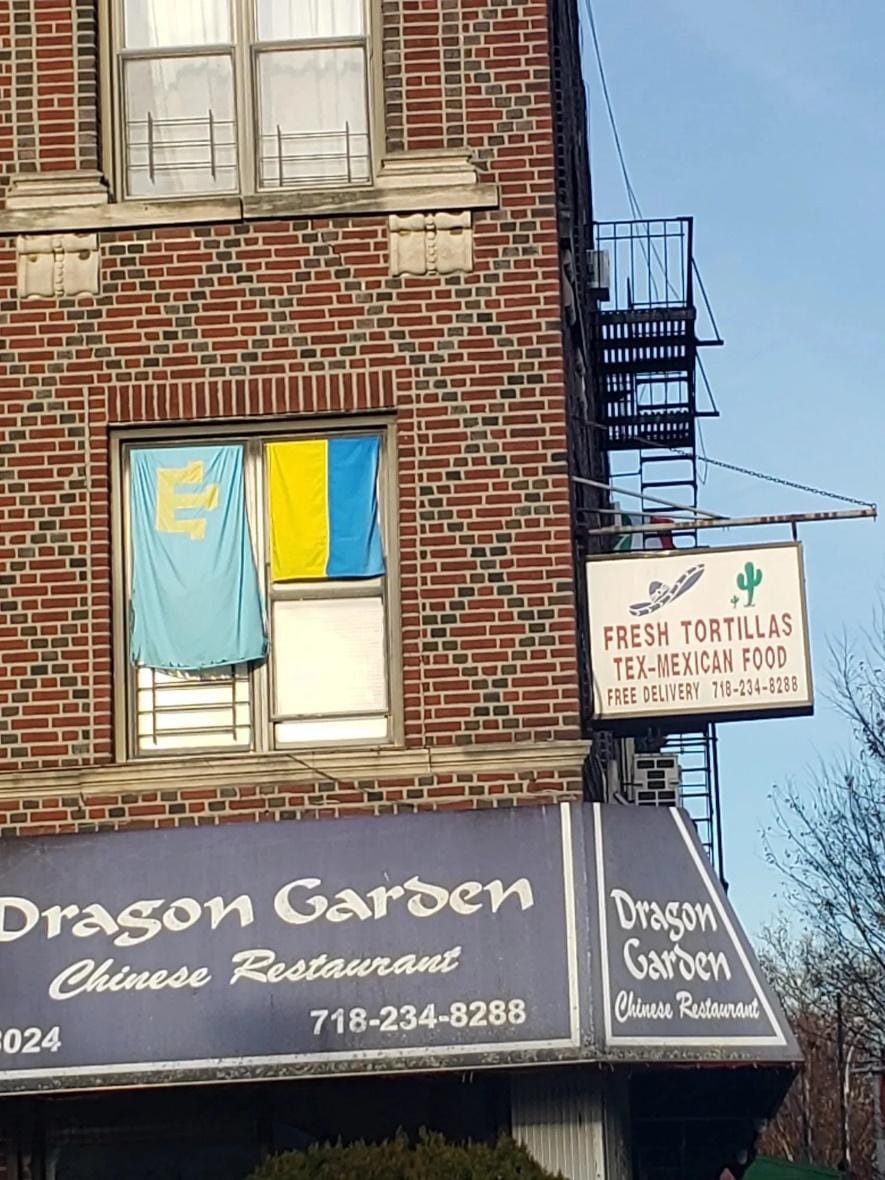
Postliberal intellectual and perennial convert Sohrab Ahmari complains about “diversity stress”, the physiological impact of having to live near people who are different from you, and it’s hard not to laugh. There are eight million people in New York—mothers, daughters, sons, fathers, cousins, grandparents, immigrants, baristas, cab drivers, deliveristas, stock brokers, Jews, Muslims, Russians, Dominicans, Democrats, Republicans—and their right to live as individual human beings is more important than your right to live in the imagined utopia of your mind. When did we stop believing that? What could possibly be a worse expression of ‘identity politics’ than condemning tens of thousands of your neighbors because of your statistical interpretation of their genetics?
Race isn’t the only topic where conservatives betray their supposed individualist values. We can see it happening just as badly in regards to gender and families. The State of Tennessee a month ago attempted to define the family as “a man, a woman, and their children”, a cause also championed by British populist Nigel Farage, claiming that children raised by single parents or same-sex couples are not getting the benefit of “the most stable relationships, the ones that last the longest”. Again, we find ourselves speaking in idealizations and abstractions, because the truth is too blatant to ignore.
There have always been multitudes of different kinds of families in the real world. There have always been children raised by single parents, or grandparents, or adoptive parents, or siblings, or polygamous families, or families shaped by divorce and death and remarriage. Are we expected to condemn them for not living up to this standard of perfection we’ve created? If studies showed that the children of lesbian parents fared better by some metrics, would we advocate the state seizing children from heterosexual families, or changing tax credits to incentivize lesbian adoption? No, of course not—which is good, because that is what studies have tended to show.
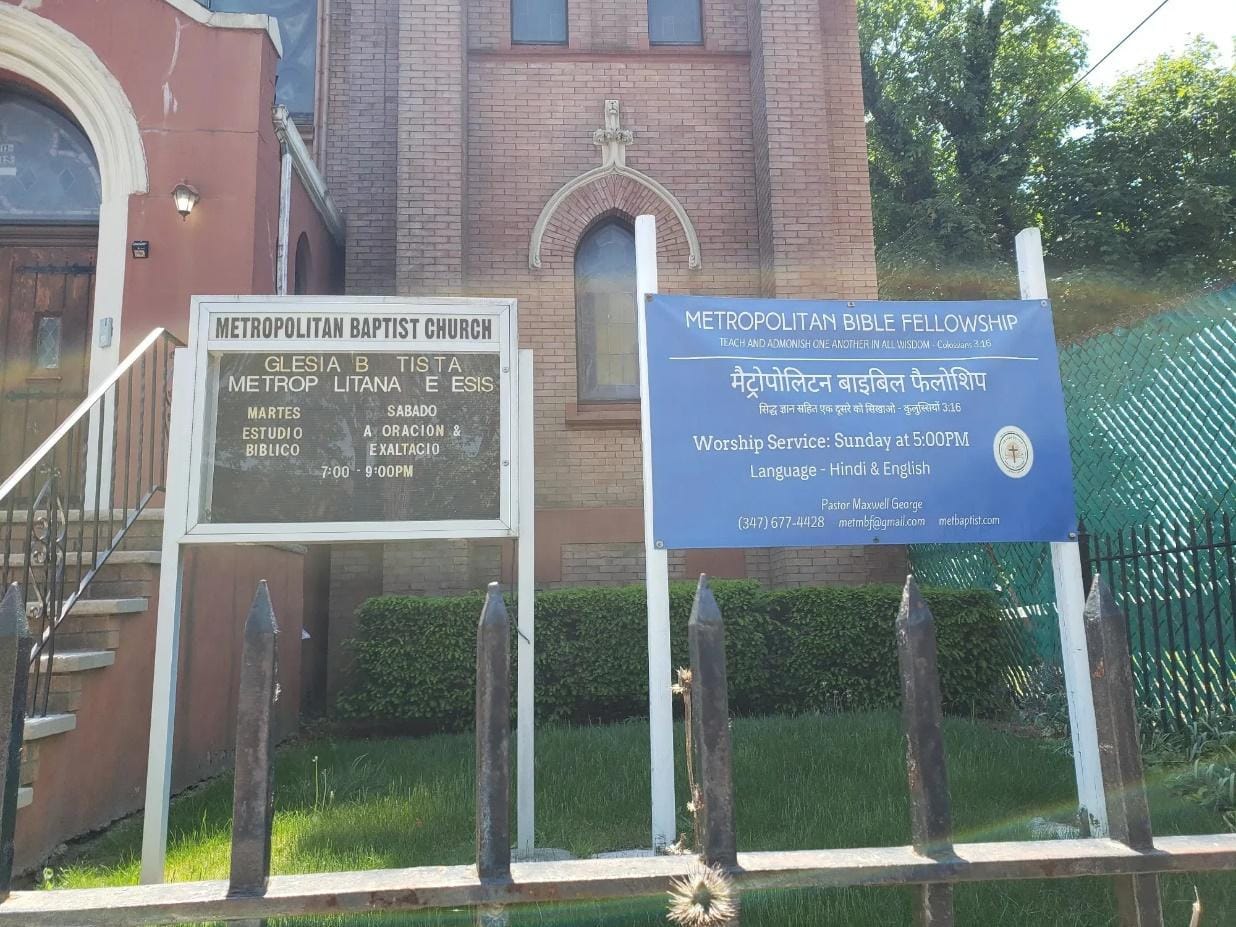
Conservatives and reactionaries have cloaked their attempts to shove LGBT+ people back into the closet as defending “traditional families” from “gender ideology”, implying again that this is some foreign imposition, forced upon people by rootless cosmopolitans and intellectuals. But same-sex relationships and attractions and all the wonderful, complicated, messy rainbow of gender identities have always existed. The demand is that we immiserate millions of human beings for the sake of a noble lie, a myth of homogeneity designed to maintain peace and order in the polity. It turns out that society does matter more than the individual, at least in this case.
Of course, nothing has demonstrated this more clearly than the hysterical backlash to the existence of transgender people, ongoing on both sides of the Atlantic, but reaching a fever pitch in the United Kingdom now. It has become unambiguously clear that sex and gender are ambiguous. The binary set we were taught in school is a useful approximation, like Newtonian physics, not the instruction manual to reality. But people don’t want to accept this, and so we have cases like the attacks on Algerian boxer Imane Khelif, in which conservative political figures and gender-critical activists have universally declared that a person born female, raised female, with a female birth certificate and a vagina and everything—is really male because of her genetic irregularities.
It’s a rejection of reality in favor of a comforting and simplistic lie, and a demand to use the powers of the state to enforce that illusion on the rest of us, which is how the United Kingdom has gotten to the point of demanding genital inspections at every Ladies’ Book Club and bathroom. Once again, the real experience of human beings is cast aside in favor of a simplistic vision, and ideologues insist on the destruction of anybody whose existence stands in its way. I don’t care what gender or sex really is, I care about the lives and happiness of the people I love, and I condemn unreservedly as unamerican and anti-Western every attempt to insist upon their invisibility for the ideological convenience of some intellectual or politician. I can’t say it better than Utah Governor Spencer Cox in 2022, in his attempt to veto a trans sports ban:
"Four kids and only one of them playing girls sports. That’s what all of this is about. Four kids who aren’t dominating or winning trophies or taking scholarships. Four kids who are just trying to find some friends and feel like they are a part of something. Four kids trying to get through each day. Rarely has so much fear and anger been directed at so few. I don’t understand what they are going through or why they feel the way they do. But I want them to live."
A society that is threatened by children playing is a worthless society. A philosophy that can be threatened by children playing has no value to a free people.
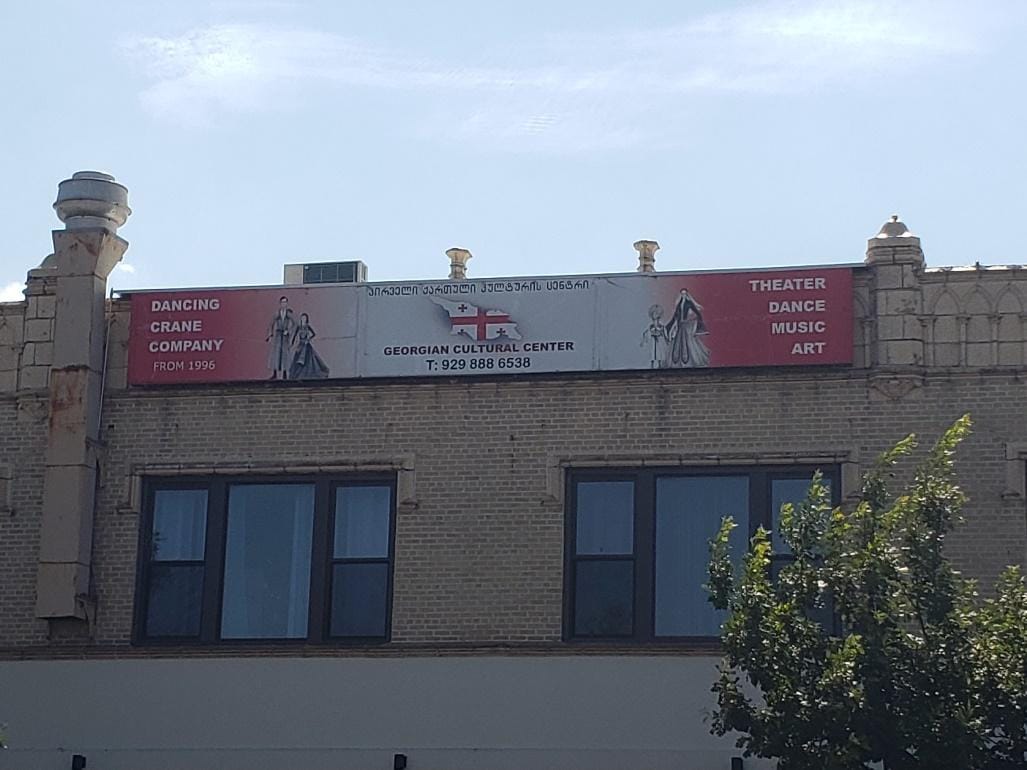
I live in New York, a city of eight million people who get along—more or less, most of the time—without killing each other. I go outside every day, and I see the old Italian men sitting outside on the sidewalk drinking beer, and the little girls in their hijabs and Paw Patrol backpacks, and the plumbers setting off strings of firecrackers in the street on a Friday afternoon because they’re bored, and the Hasidic families riding Surrey bikes or Segways down by the waterfront, and the white guy eagerly confirming the MTA conductor is Bengali so he can proudly trot out his five words of Urdu, and the Puerto Rican family who run the breakfast shop I go to most mornings with the discord signup sheet for queer meetups on the counter, and the Yemeni bodega with the hand-written cardboard ‘Happy Rosh Hashanah!’ sign in the door.
I think about the little neighborhood associations and societies, tucked away in storefronts and basements—The Citizens of Pozzallo, Sicily, and the Sandwip Society and the Trinidad and Tobago Ex-Police Association—and I remember the older Black woman on the subway, sitting down next to the girl who has suddenly and silently started crying and telling her ‘God loves you’ until she reaches her stop and I think—these people matter. They’re real. They exist, and they have hopes and dreams and lives of their own, and it’s a miracle that any one of us exists. And I think that matters more than any utopian dream of social homogeneity, or academic theorizing about the idealized state of society.
Wouldn’t you?
Featured image is "Face Eccentricity"; other photos credit author.
Sign up for the newsletter and get our latest stories delivered straight to your inbox.
.png?ref=liberalcurrents.com)